Leland's: The Original Vanguard of the Hobby
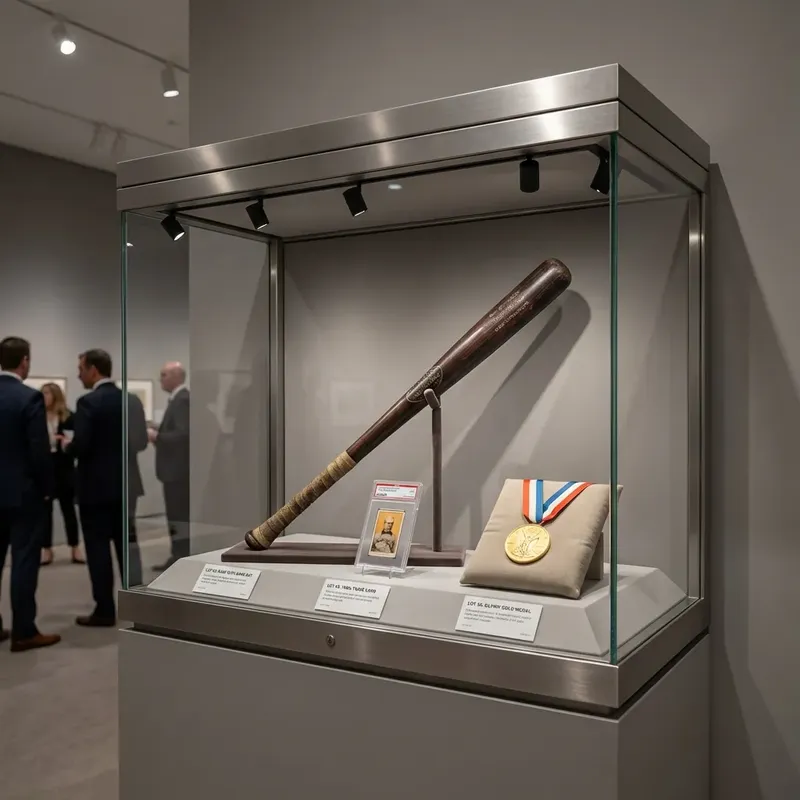
Before the multi-billion dollar "investor era" of sports cards, before fractional ownership apps, and before the Netflix documentaries, there was Leland's. Founded in 1985 by Josh Evans, Leland's didn't just join the sports memorabilia market—they effectively invented it.
While other houses fight over the latest Prism RPA (Rookie Patch Auto) or shiny Pokémon card, Leland's operates in a different stratosphere: The Museum Level. They are the firm that sold the Babe Ruth 1920 Yankees jersey for $4.4 million (a record at the time). They are the house that handled the "Mookie" Wilson ball from the 1986 World Series.
In 2026, Leland's remains the "Old Guard" of the hobby. They may not have the flashiest app or the loudest social media presence, but when a piece of genuine American history surfaces from an attic in Ohio, it usually goes to Leland's. This guide explores why they remain the "Historian's Choice" for buying and selling the hobby's most significant artifacts.
The Origin Story: Inventing the "Sports Auction"
It is hard to overstate how radical Leland's was in the 1980s. At the time, sports collectibles were largely relegated to baseball card shows and coin shops. The idea of selling a sweaty, used baseball jersey for the price of a luxury car was laughable.
Leland's changed the paradigm by applying Fine Art Standards to sports equipment. They were the first to rigorously photo-match jerseys before "photomatching" was an industry term. They treated a Ty Cobb bat with the same reverence as a Stradivarius violin.
The Leland's "Moat": Memorabilia Supremacy
While Goldin and PWCC dominate the modern card market, Leland's owns the "heavy metal" sector: Game-Used equipment. If you are looking for a slabbed card, you have 50 options. If you are looking for the glove Willie Mays wore in 1954, you check Leland's first.
Why They Dominate "Hard Goods"
Authentication depth powers photomatching and provenance research → higher hammer prices → seller loyalty.
The "Hard Goods" Advantage: Leland's experts are widely considered the best in the world at identifying "alterations" in jerseys (e.g., restored numbers, switched nameplates). In a market rife with fake patches, this trust allows bidders to spend seven figures with confidence.
Iconic Sales: When History hits the Block
Leland's resume of sales reads like a "Greatest Hits" of 20th-century American sports.
Tactical Buyer's Guide: Navigating Leland's
Leland's runs two distinct types of auctions: The Classic (their premier, quarterly catalog event) and the Pop-Up (smaller, more frequent collections). Knowing the difference is key to finding value.
1. The "Classic" Auction Strategy
These are the marathons. They run for weeks. The catalogs are physical books.
The Trick: Look for the "mixed lots" at the back of the catalog. Leland's often groups mid-tier vintage cards (VG-EX commons) into massive lots. "Break-apart" specialists often find 20-30% margins by buying these lots and grading the singles.
2. Extended Bidding Rules
Leland's utilizes a "15-Minute Rule" per lot. Unlike some sites where the whole auction closes at once, Leland's closes lot-by-lot.
Warning: This can lead to late nights. If two bidders are fighting over Lot #45, Lot #45 stays open, but Lot #46 might close. You must monitor your specific watchlist, not just the general clock.
3. Buyer's Premium (BP) & Fees
Standard Rate: 20% BP.
Sales Tax: They are strict on nexus laws. Unless you have a valid Resale Certificate on file before the auction closes, expect to pay your local sales tax. They will not "fix it later."
Seller's Strategy: What to Consign?
If you have a Michael Jordan rookie card, you can sell it anywhere. But if you have something weird, you call Leland's.
The Leland's "Sweet Spot" Matrix
Use this guide to determine if your item belongs in a Leland's Classic Auction.
-
✅
Game-Used Equipment: Specifically pre-1990. Their buyer base for flannel jerseys and 50s bats is unmatched.
-
✅
Obscure Ephemera: Ticket stubs to historic games, signed contracts, stadium relics (turnstiles, seats).
-
❌
Modern Ultra-High End: If you have a $500k Luka Dončić RPA, you are likely better off at Goldin or PWCC where the "crypto-bros" and modern investors congregate.
Critical Analysis: The Pros and Cons
The Good: Trust. Absolute, unshakeable trust. When Leland's says a jersey is game-worn, the market believes them. There is zero "pumping" of modern hype.
The "Old School" Drawback: Their technology feels dated compared to the slick, app-based experiences of 2026 competitors. The website works, but it lacks the real-time analytics, instant-valuation tools, and flashy UI of the VC-backed giants. You are bidding on a website that prioritizes function over form.
Final Verdict
Leland's is the "Grown Up" table of the hobby. If you are tired of the hype, the scams, and the volatility of the modern market, Leland's offers a sanctuary of history and substance.