How to Safely Crack a PSA or BGS Slab for Regrading
The complete 2026 expert protocol for removing cards from graded slabs. Covers tool selection, step-by-step technique, PSA vs BGS slab differences, common mistakes, and when cracking is actually worth the risk.
Cracking a slab permanently voids the original grade and certificate number. If your card is damaged during this process, its value could drop by 90%+. We strongly recommend using our AI Pre-Grade Scan to evaluate whether the card is worth cracking before you start.
1. Should You Crack Your Slab?
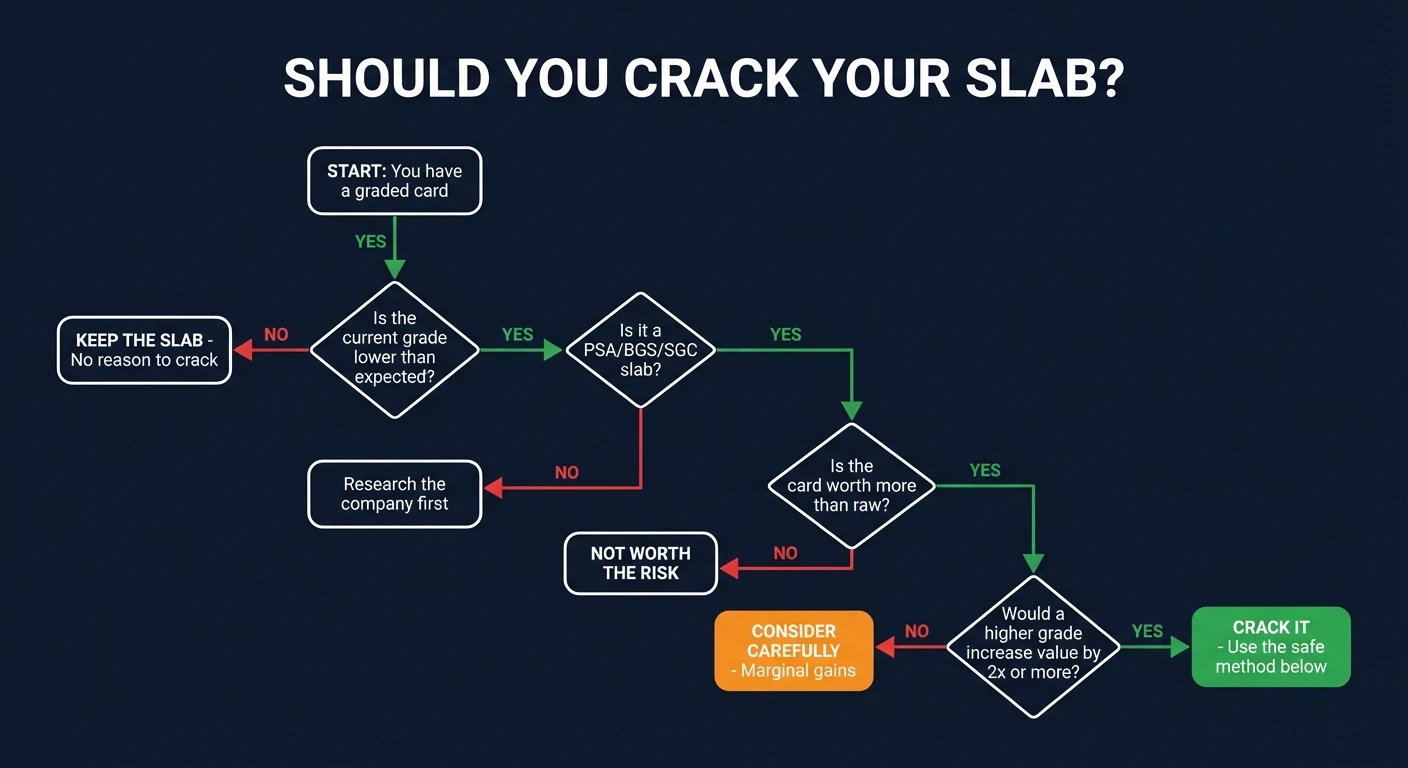
Not every graded card is worth cracking. The decision should be driven by data, not emotion. Before you pick up the nippers, ask yourself these questions:
✅ Good Reasons to Crack
❌ Bad Reasons to Crack
- "I think it deserves a 10" without evidence
- Card is worth less than $50 raw (risk outweighs reward)
- Already a PSA 10 — nowhere to go but down
- Vintage card with natural wear you can't fix
- Emotional attachment rather than financial logic
2. Tools & Materials Needed
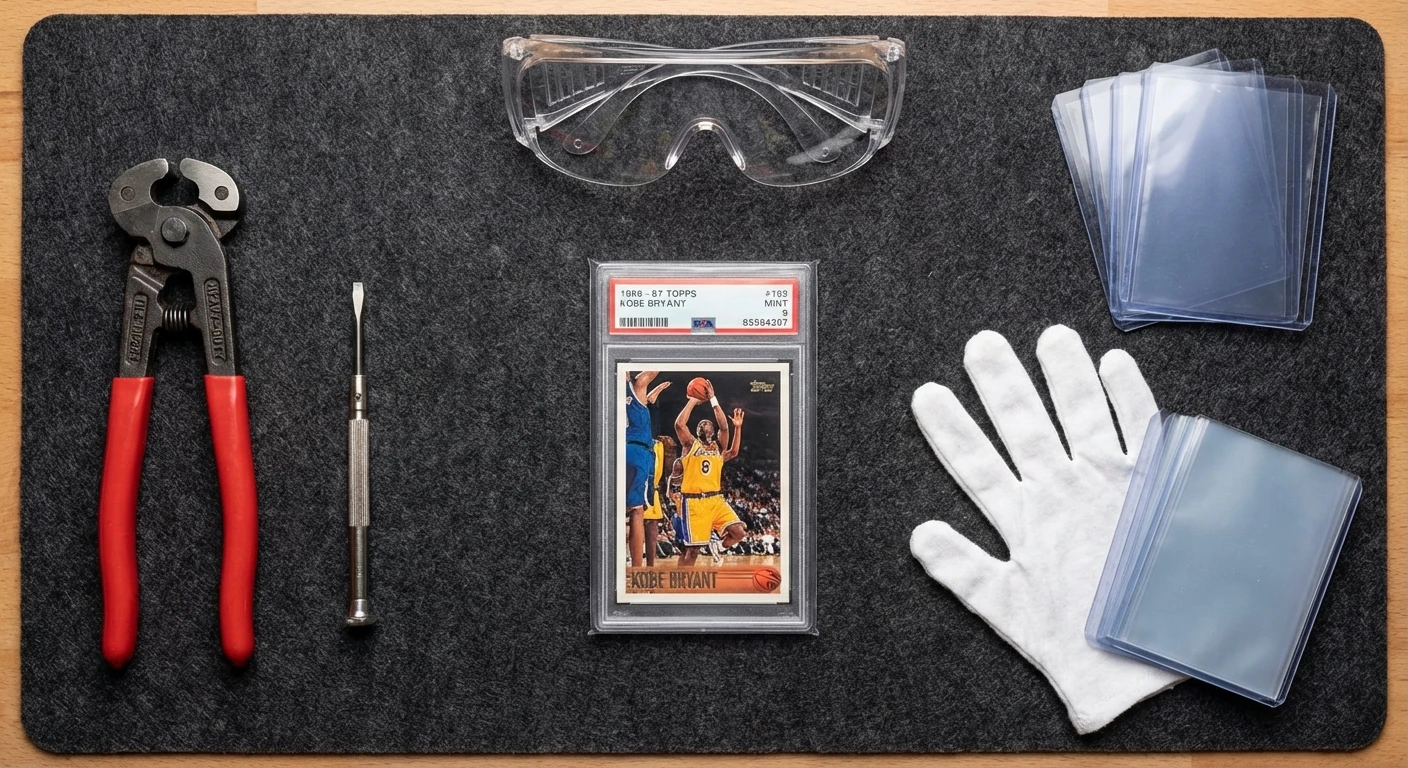
Using the right tools is the difference between a clean extraction and a destroyed card. Here's the complete kit:
🔧 Essential Tools
- Heavy-duty tile nippers — for the initial corner snap
- Flathead jeweler's screwdriver — for prying the seam
- Safety goggles — plastic shards are sharp and unpredictable
- Cotton or nitrile gloves — prevent fingerprints on the raw card
📦 Post-Crack Supplies
- Penny sleeve — immediate protection after extraction
- Semi-rigid toploader — for resubmission
- Microfiber cloth — for removing slab dust from the card
- Clean felt mat — soft work surface to prevent scratches
Hammers (shatters the slab unpredictably), rotary tools / Dremels (vibration causes surface chipping on Chrome/Prizm cards), box cutters (blade can slip and slice the card), or pliers without padding (can crush the slab inward onto the card).
3. PSA vs BGS vs SGC: Slab Construction Differences
Each grading company uses different slab construction. Understanding the differences is critical — the technique that works on a PSA slab can destroy a BGS slab.
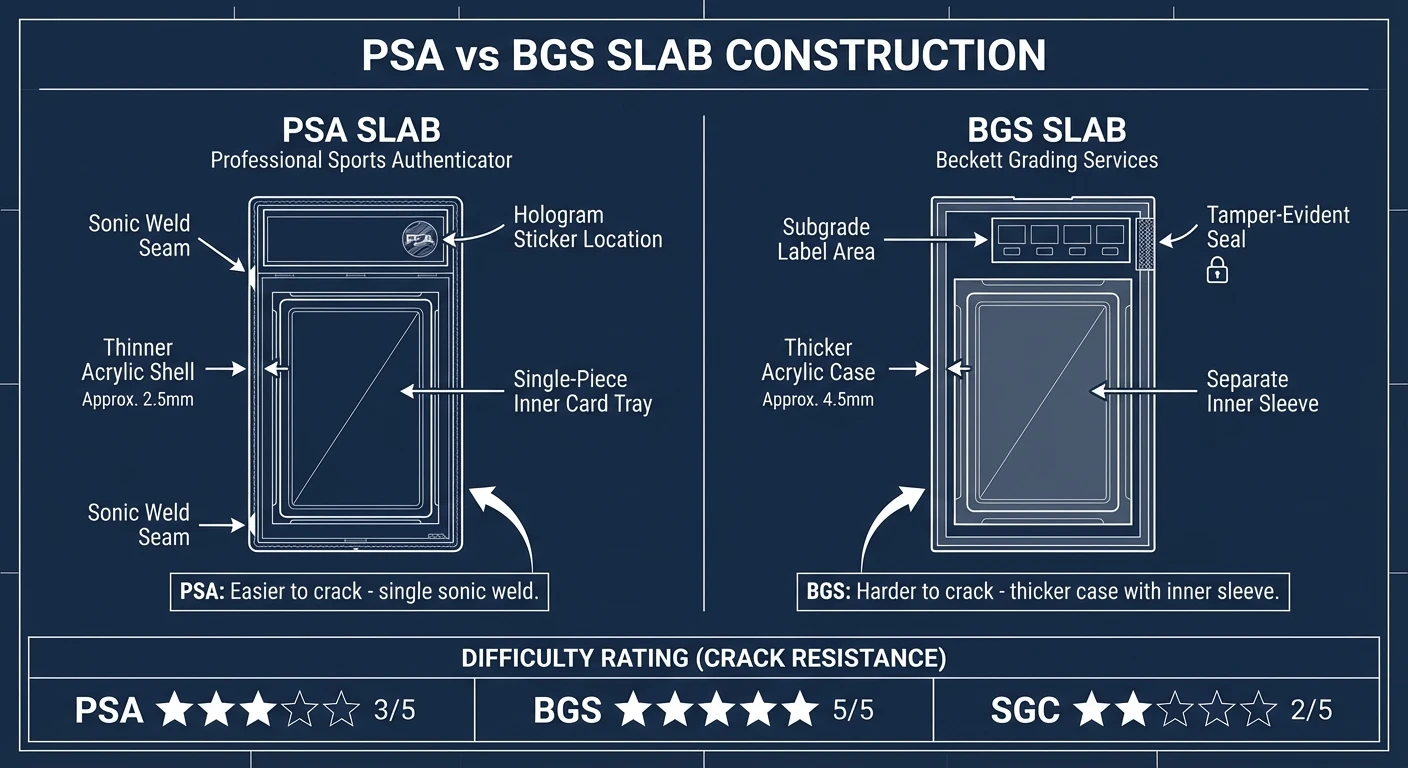
SGC slabs use a friction-fit design with a tab system. You can often open them with just a flathead screwdriver — no nippers needed. Insert the flathead into the seam near the tab and gently twist. The halves separate cleanly with minimal force.
4. Step-by-Step Cracking Process
Follow these steps exactly. Rushing or skipping steps is the #1 cause of card damage during slab cracking.
Workspace Preparation
Lay down a clean felt mat or microfiber towel on a flat, stable surface. Put on your safety goggles — plastic shards from sonic welds are sharp and can fly unpredictably. Wear cotton or nitrile gloves to prevent fingerprints on the card after extraction.
Have your penny sleeve and toploader ready before you start. The card should go directly from the slab into protection — never leave it sitting exposed on the table.
The Corner Snap
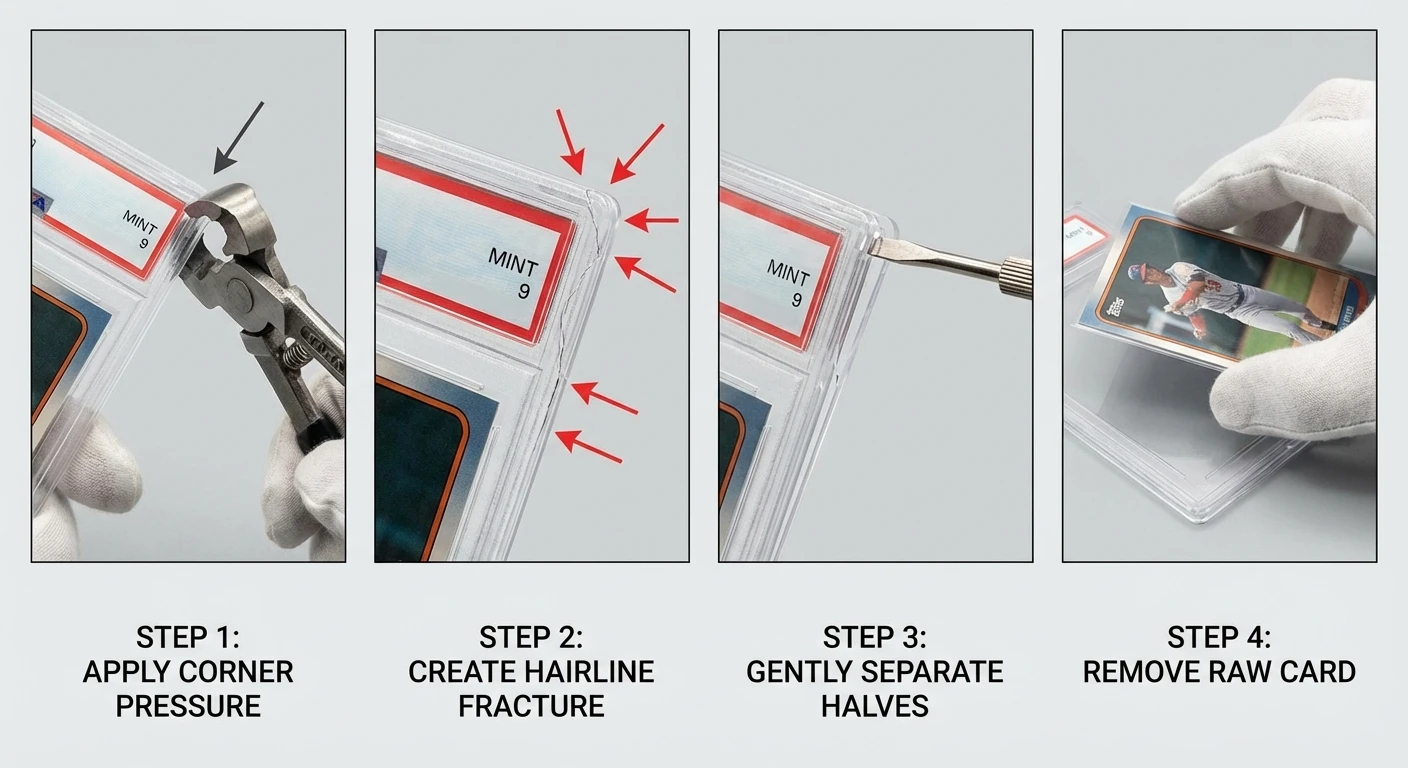
Grip the top corner of the slab (the end farthest from the card) with your tile nippers. Position the nippers so they bite into the corner at a 45-degree angle, right on the sonic weld seam.
Apply slow, steady pressure — don't squeeze hard and fast. You'll hear a loud "crack" as the weld breaks. This is normal. The goal is to compromise the weld integrity at one corner, not to shatter the entire slab.
The Air-Gap Pry
Insert the flathead jeweler's screwdriver into the hairline fracture you created. Gently twist to expand the gap across the top edge. Work slowly along the seam — you're separating the two halves of the acrylic shell.
Critical: Always push the screwdriver away from the card, never toward it. If the screwdriver slips inward, it can scratch the card surface or dent the edges. Keep the blade parallel to the slab edge at all times.
Card Extraction
Once the top and one side are separated, the two halves will spread apart. Do not force them — if they resist, continue prying along the remaining welded edge.
With clean, gloved hands, carefully lift the card from the inner tray. For BGS slabs, you'll need to also remove the card from the inner sleeve — slide it out gently, don't pull. Immediately place the card into a penny sleeve, then into a toploader or semi-rigid holder.
Post-Extraction Inspection
Before resubmitting, inspect the card under good lighting with a loupe. Check for any new damage: surface scratches from slab dust, edge nicks from the extraction, or corner dings. Use a microfiber cloth to gently remove any plastic dust particles. If you spot new damage, factor that into your resubmission decision.
5. Common Mistakes That Destroy Cards
These are the most frequent errors we see from collectors who attempt slab cracking without proper preparation. Every one of these is preventable.
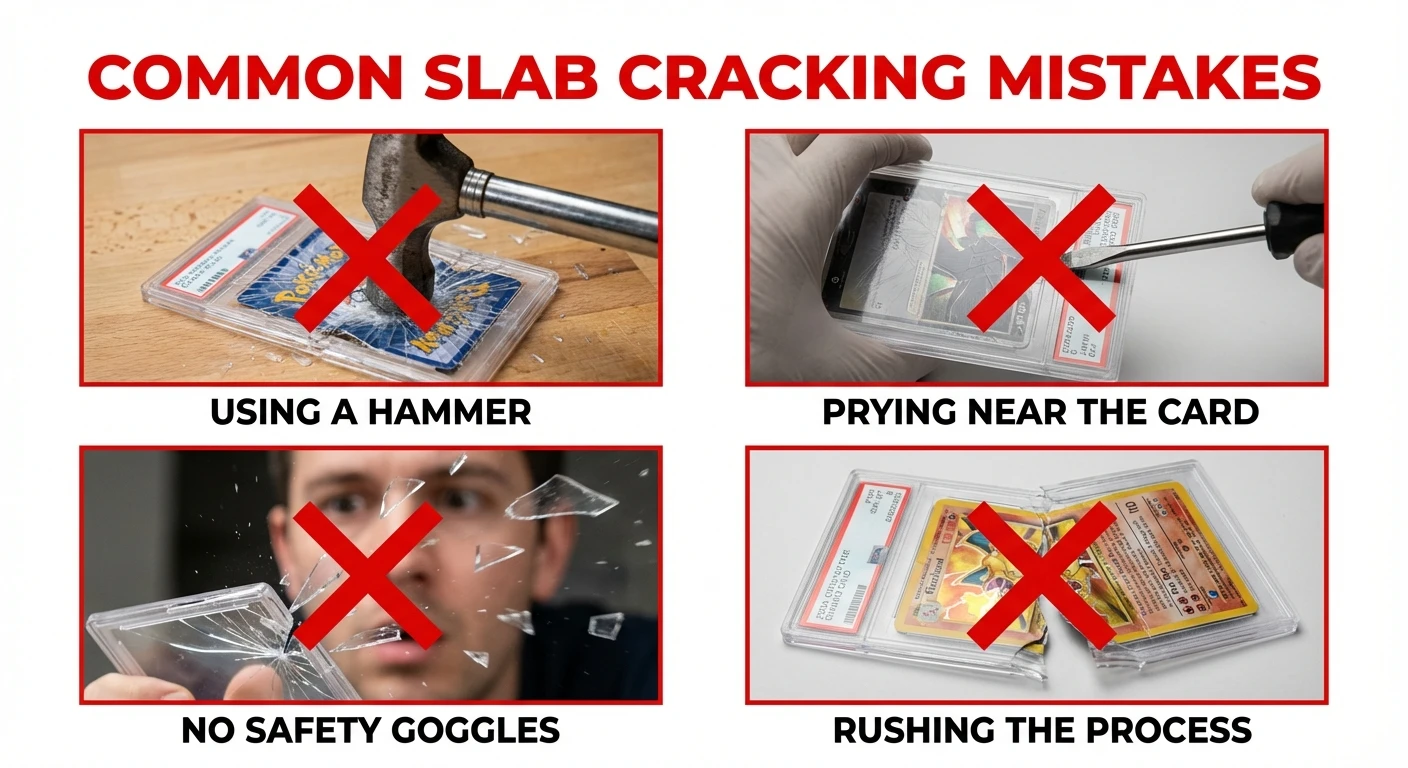
Using a Hammer or Mallet
Impact force shatters the slab unpredictably. Shards fly inward and scratch the card surface. The shock wave can also cause micro-creases invisible to the naked eye but detectable by graders.
Prying Too Close to the Card
If your screwdriver slips inward past the slab edge, it will gouge the card surface or nick the edges. Always work from the outside in, keeping the blade parallel to the slab wall.
Skipping Safety Goggles
Sonic weld acrylic produces sharp, fast-moving shards when it fractures. Eye injuries from slab cracking are more common than you'd think. Always wear safety goggles — not just glasses.
Rushing the Extraction
Pulling the card out before the slab is fully separated causes edge damage and corner dings. If the halves aren't spreading freely, keep prying — don't force the card through a tight gap.
Not Having Protection Ready
Once the card is out of the slab, it's completely unprotected. Having to fumble for a penny sleeve while holding a raw $500 card is a recipe for disaster. Have your sleeve and toploader staged and open before you start.
6. After Cracking: What to Do Next
The card is out. Now what? Your next steps depend on why you cracked it in the first place.
Resubmit for Regrade
Use our AI scan to confirm the card's condition before paying for a new submission. Target the company that gives the best ROI for your card type.
Crossover to Another Company
BGS to PSA crossovers are the most common. Check our conversion matrix to understand grade equivalencies between companies.
Sell Raw
Some cards sell better raw than in a low-grade slab. A PSA 6 can actually hurt resale value vs. selling the same card raw with good photos.
7. Regrade Success Rates: The Real Numbers
Based on community data from over 10,000 documented crack-and-resubmit attempts, here's what actually happens:
Only 30% of crack-and-resubmits result in a higher grade. That means 65% of the time, you're paying for a new submission just to get the same or worse result — plus you've voided the original cert. The collectors who beat these odds are the ones who use objective pre-screening tools to identify cards that were genuinely undergraded, rather than relying on gut feeling.
Don't Crack Blind — Scan First
Our AI pre-grade scan identifies "Weak 10s" and undergraded cards with upgrade potential. Know your odds before you void the cert.