Forensic Case Studies
Deep-dive technical audits of the hobby's most significant assets. We document the sub-millimeter evidence that separates five-figure returns from "Authentic Altered" rejections.

1986 Fleer Michael Jordan #57
The definitive MJ rookie is plagued by two specific identifiers. Under 200x magnification, the red border must show a consistent rosette print pattern. A single green print dot often occurs in the circular background—this is a factory artifact, not a defect, and is used to verify authenticity.
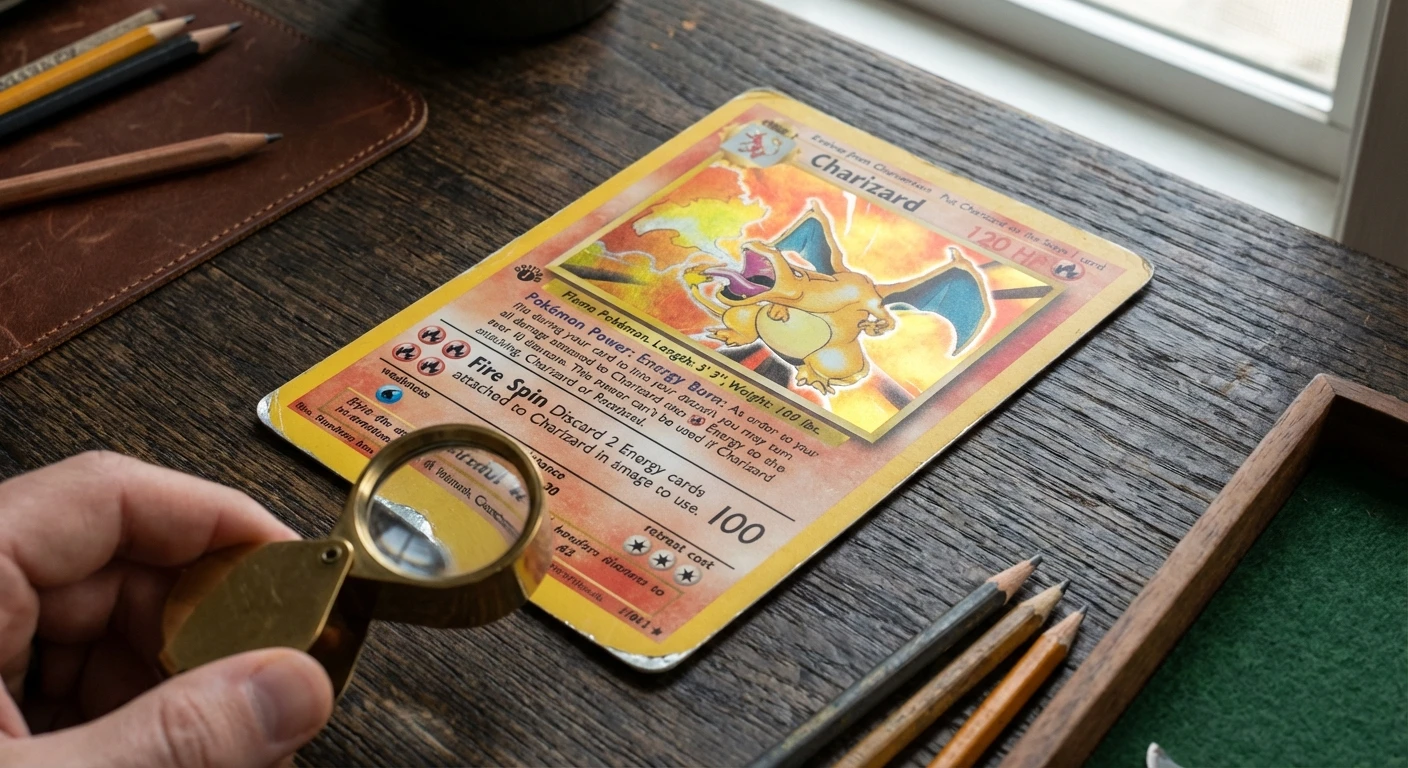
1999 Pokemon 1st Ed Charizard
TCG assets are surface-weight sensitive. Edge "silvering" (the underlying holographic foil showing through the edge ink) is a common failure point for Japanese and early English Wizards of the Coast sets. Our CV engine detects silvering at the sub-millimeter level.

1952 Topps Mickey Mantle #311
Vintage stock is porous. Trimming is detected by analyzing the compression of paper fibers. A factory "Rough Cut" leaves loose, irregular fibers (shown left), whereas a mechanical trim compresses and shears the fibers into a smooth, flattened wall (shown right).

2000 Contenders Tom Brady RC
The silver foil "Ticket" area of the 2000 Contenders is prone to microscopic surface pitting. These are small depressions in the foil layer caused by debris on the press. They are nearly invisible to the naked eye but glow under blue-spectrum light used in our PGC audit.

1979 O-Pee-Chee Wayne Gretzky
O-Pee-Chee cards from 1979 were cut with a wire-blade system that left a distinct "fuzzy" or rough edge. Collectors often mistake this for damage. Forensic analysis verifies the "OPC Edge" as a sign of authenticity. A perfectly smooth edge often indicates a trimmed/hand-cut specimen.
Audit Your Inventory
Our PGC protocol uses the same forensic imaging standards shown above. Don't leave your Gem Mint ROI to chance.