Memory Lane Inc.: Curating the Golden Age
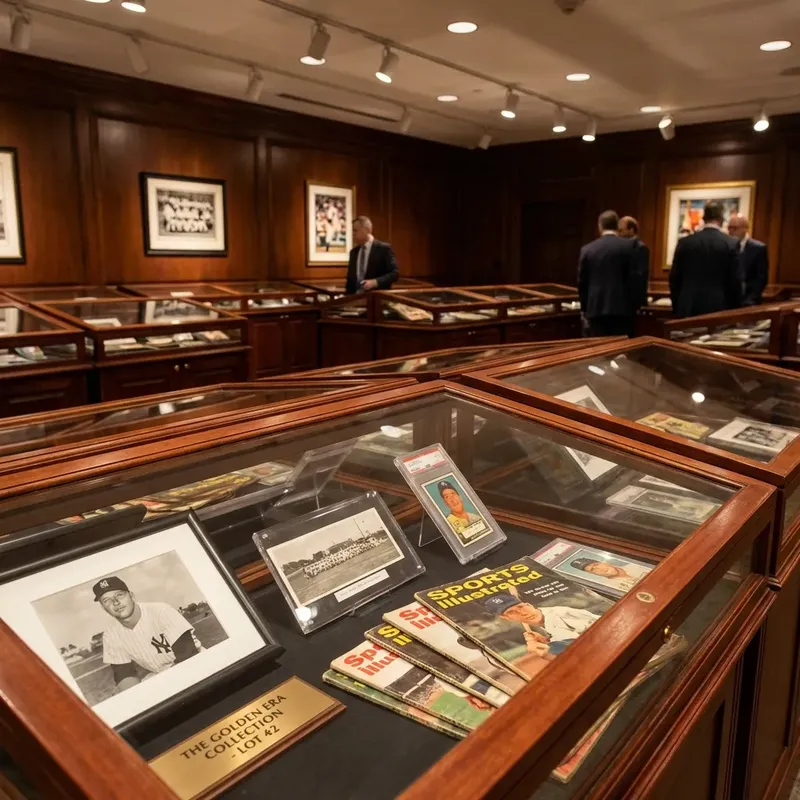
In an industry that often feels like a frenetic stock exchange, Memory Lane Inc. offers something different: Boutique Excellence. If Goldin is the NASDAQ and eBay is a flea market, Memory Lane is a private art gallery on 5th Avenue.
Established in Tustin, California, Memory Lane has staked its reputation on a simple premise: Eye Appeal is King. They do not traffic in volume. You will not find 5,000 lots of junk wax in their catalogs. What you will find are the most visually stunning examples of 19th and 20th-century sports history in existence.
In 2026, as the market bifurcation deepens between "commoditized slabs" and "true artifacts," Memory Lane has emerged as the sanctuary for the latter. This guide explores why seasoned collectors often save their absolute best pieces for a Memory Lane catalog.
The Origin: Built by Collectors, For Collectors
Memory Lane was founded by a group of serious enthusiasts who felt the hobby was losing its soul. They missed the days when a card was judged by its beauty, not just the number on the plastic flip.
This "Collector First" DNA is visible in every aspect of their operation. Their customer service is legendary—you can actually get a human on the phone who knows the difference between a piedmont and a sweet caporal back. This high-touch service model has built a loyal following of "Old Money" collectors who rarely sell but frequently buy.
The Memory Lane "Moat": The Photography Niche
While everyone sells cards, Memory Lane has quietly cornered the market on Type 1 Original Photography.
Why Type 1 Photos are the New Blue Chip
- Scarcity (1-of-1 nature) → value retention
- Historical weight (closest thing to time travel) → value retention
- Displayability (wall-art potential) → value retention
- Value retention → Memory Lane record prices
A "Type 1" photo is an original print made from the original negative within two years of the photo being taken. It is the "primary source" document of visual sports history. Memory Lane consistently brings fresh-to-market archives of Babe Ruth, Lou Gehrig, and Ty Cobb photos that shatter records.
Iconic Sales: Aesthetic Perfection
Memory Lane holds records for items that are visually superior to their technical grade.
Tactical Buyer's Guide
Memory Lane auctions are dangerous for your wallet because everything looks so good.
1. The "I Want That" Factor
Memory Lane's photography is the best in the business. They light their cards in a way that highlights color and gloss.
Tactical Advice: Trust the image, but check the VCP (Vintage Card Prices). Just because it looks amazing doesn't mean you should pay 3x market value... unless you plan to keep it forever. (Which, honestly, most Memory Lane buyers do).
2. The Printed Catalog
If you register, they send you a physical catalog. Keep it. These catalogs are high-quality reference books. In 10 years, the catalog itself often sells for $50-$100 on eBay.
3. Shipping Protocols
They are effectively a logistics company. Their packaging is bomb-proof. If you win a $10,000 card, it arrives in a box that could survive a drone strike. This peace of mind is part of the "Boutique" fee structure (20% BP).
Seller's Strategy: The "Eye Appeal" Premium
When should you choose Memory Lane over REA or Mile High?
The Memory Lane Sweet Spot
✅ PERFECT FIT
High Eye-Appeal Mid-Grades: You have a PSA 4 1952 Mantle that "looks like a 6." Memory Lane bidders pay up for the look.
Rare Photography: They have the best Type 1 Buyers in the world.
❌ POOR FIT
Ugly High Grades: A PSA 9 that is off-center (oc). Memory Lane buyers hate "ugly" cards, even if the technical grade is high.
Critical Analysis
The Pro: They are the curators of the hobby. If you build a collection exclusively from Memory Lane auctions, you will have one of the most beautiful collections on Earth.
The Con: You will pay for it. Deals are rare here. Bidding wars are fierce because everyone wants the "pretty" copy. If you are a specific "value investor" looking for mislabeled bargains, this is the wrong room.
Final Verdict
Memory Lane Inc. is for the collector who has graduated from "accumulating" to "curating." It is the gold standard for visual excellence.