1999 Pokemon 1st Ed Charizard
Silvering, Holo Hairlines & the Foil Problem
A forensic examination of the most valuable Pokemon card ever printed. We dissect the surface-level evidence that determines whether your Charizard is a $400,000 Gem Mint or a $40,000 PSA 8.
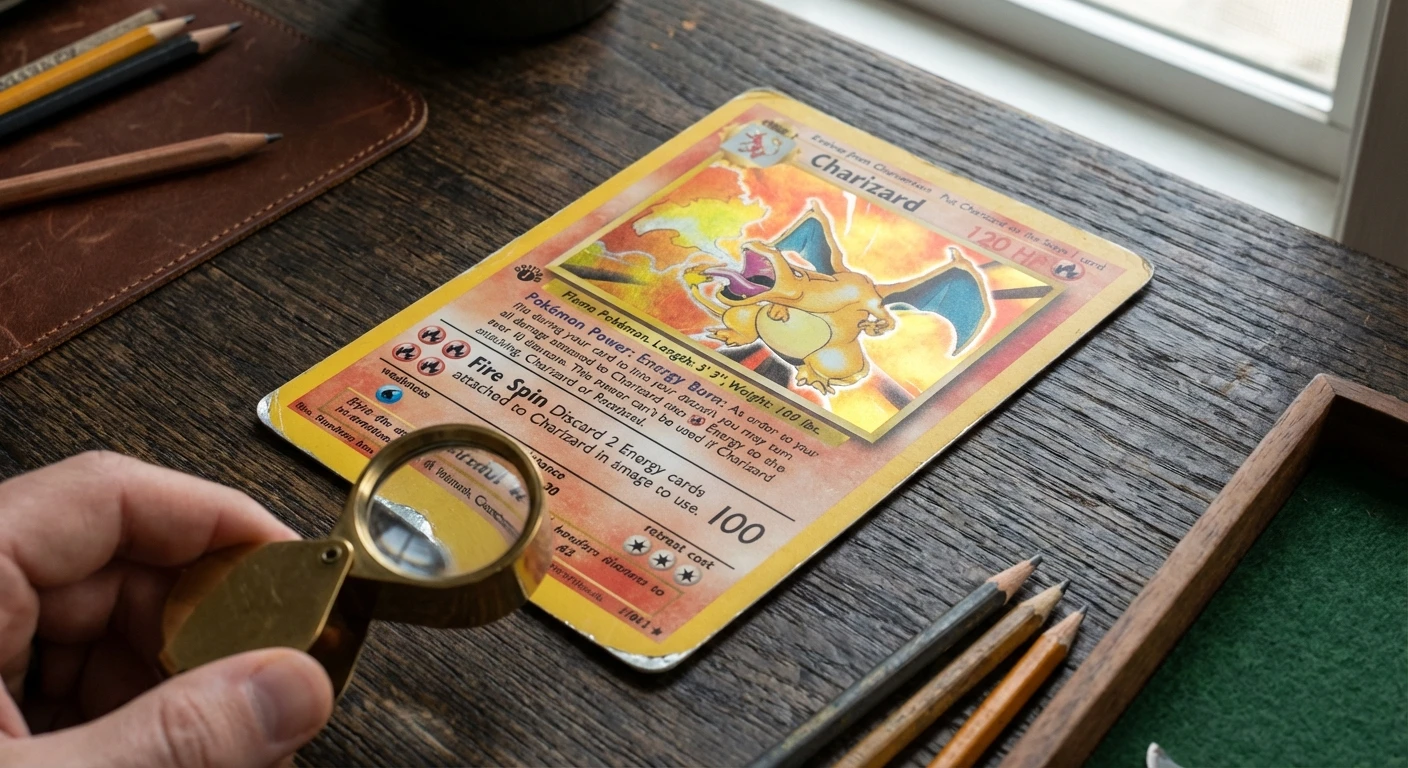
The 1999 1st Edition Base Set Charizard under forensic examination — edge silvering and holographic surface integrity under review.
Year: 1999
Set: Base Set 1st Edition
Card #: 4/102
Rarity: Holographic Rare
Magnification: 20x – 100x
Primary Target: Silvering & Holo Hairlines
Risk Level: Critical
The Crown Jewel of Pokemon
The 1999 1st Edition Base Set Charizard is the most valuable Pokemon card in existence. A PSA 10 Pristine copy sold for $420,000 in 2022. Only 121 copies have achieved PSA 10 status out of over 6,000 submissions — a Gem Mint rate of just 2%. The card's holographic surface and thin ink application make it extraordinarily condition-sensitive.
Unlike modern cards with protective coatings, the 1999 Base Set holographic layer is exposed and vulnerable. Every time the card is handled, shifted in a sleeve, or exposed to temperature changes, the surface accumulates microscopic damage that forensic analysis reveals.
Forensic Target #1: Edge Silvering
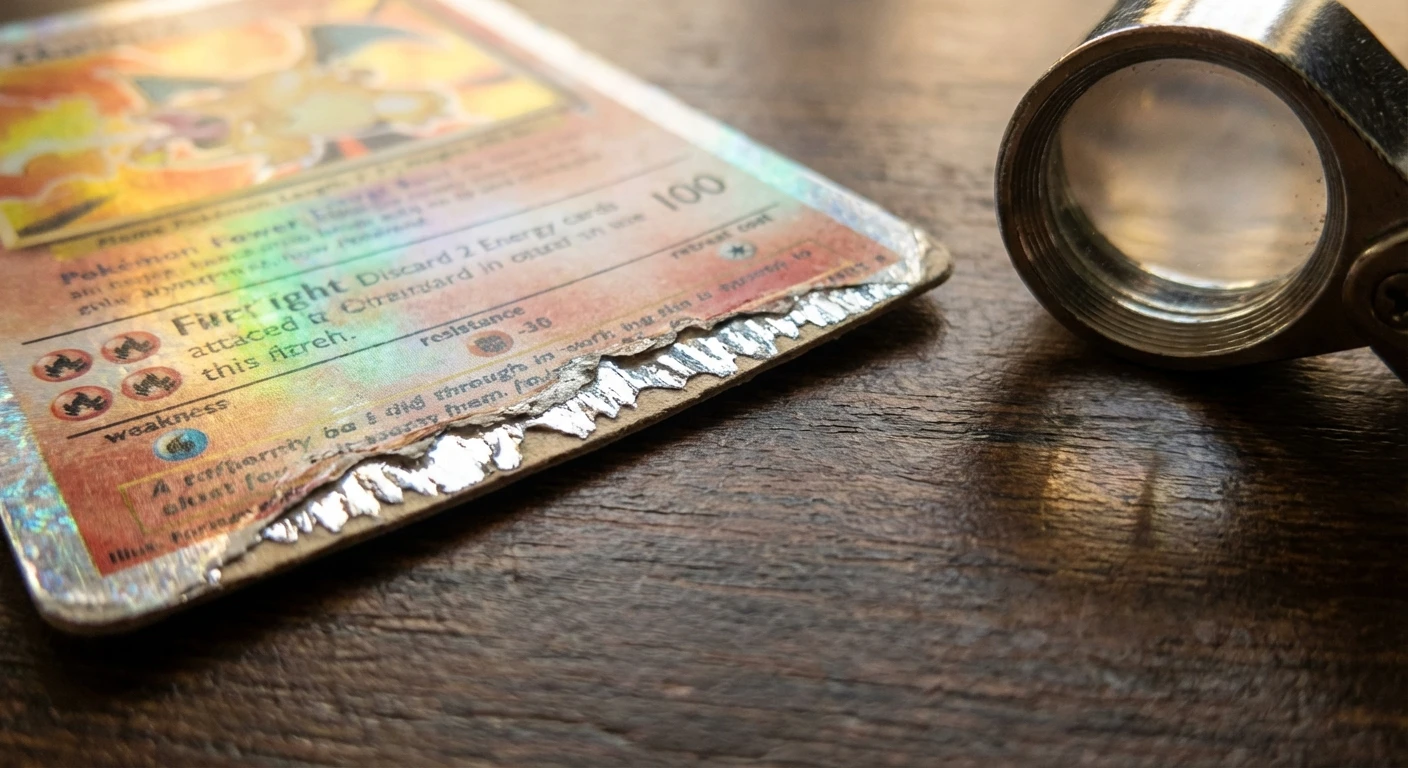
Edge silvering under 60x magnification — the holographic foil layer is visible where the printed ink has separated along the cut edge.
Silvering is the single most common defect on 1st Edition Base Set holographic cards. It occurs when the printed ink layer separates from the underlying holographic foil along the card's cut edges, exposing the reflective silver foil beneath. Under magnification, silvering appears as a thin, shimmering line running along one or more edges.
Why Silvering Is So Damaging
Silvering is considered a manufacturing defect that cannot be repaired. Unlike surface scratches that might be debatable, silvering is a definitive grade-limiting factor. Severe silvering on multiple edges restricts the edge sub-grade to 7.5 or lower, effectively capping the overall grade at PSA 8 regardless of how perfect the rest of the card appears.
Forensic Target #2: Holo Hairlines
Holo hairlines are microscopic scratches on the holographic surface that are invisible under normal viewing but become apparent under raking light (light directed at a low angle across the surface). They appear as fine white lines crossing the holographic pattern.
Pack-Fresh Hairlines
Cards can develop hairlines inside the pack from shifting during shipping. These "pack-fresh" hairlines are common and may still allow a PSA 9, but will prevent a BGS Pristine 10.
Handling Hairlines
Caused by sliding the card in and out of sleeves or top loaders. These tend to be longer and more directional than pack-fresh hairlines. Multiple handling hairlines will cap the surface grade at 8.0 or lower.
Detection Method
Hold the card at eye level under a single bright light source. Slowly tilt the card back and forth. Hairlines will catch the light and flash white against the holographic background. Our AI scan simulates this raking light analysis digitally.
1st Edition Stamp Authentication
The 1st Edition stamp on the left side of the card art is a critical authentication point. On genuine 1st Edition cards:
- Ink density — The stamp should be a deep, solid black. Grey or faded stamps indicate a potential counterfeit or a card that has been chemically altered.
- Edge sharpness — Under 40x magnification, the stamp edges should be crisp and well-defined. Blurry or feathered edges suggest a printed-on stamp rather than the original hot-stamp process.
- Positioning — The stamp should be consistently positioned relative to the card art border. Stamps that are too high, too low, or rotated may indicate tampering.
- Shadowless border — 1st Edition Base Set cards have no drop shadow on the right side of the card art box. The presence of a shadow indicates an Unlimited print run, not 1st Edition.
Grade Impact Summary
Scan Your Charizard Before Submission
Our AI detects silvering, holo hairlines, and centering issues at the sub-millimeter level. Don't risk a $150 grading fee on a card that won't make the cut.
Start Forensic Scan