How to Spot Doctored & Trimmed Cards A Collector's Forensic Guide
Card doctoring is a multi-million dollar problem in the hobby. Here's how to protect yourself from altered cards—whether you're buying raw or evaluating your own collection.
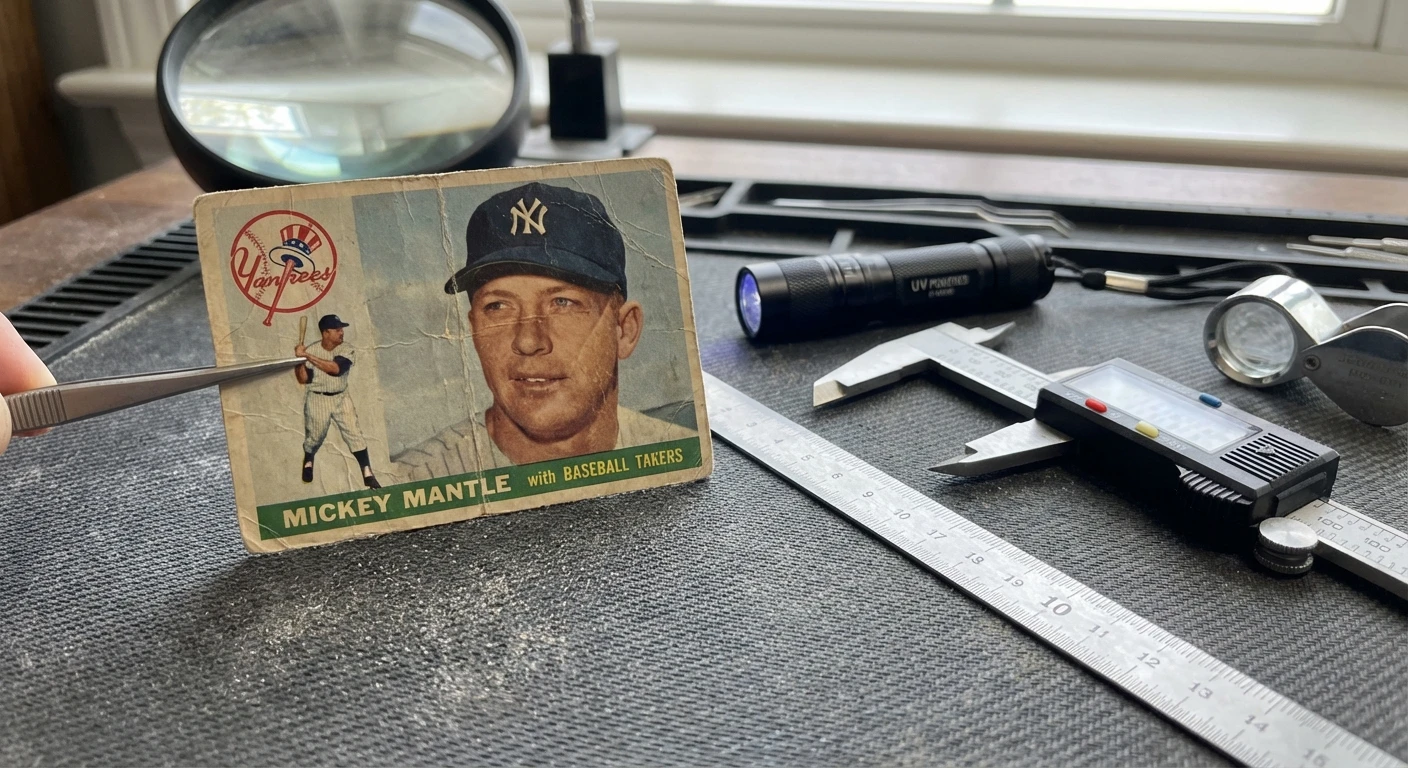
Card doctoring is any intentional alteration of a card's physical properties to make it appear in better condition than it actually is. It's the dark side of the hobby—and it's more common than most collectors realize. As Cardboard Connection warns, doctored cards are a persistent problem that every collector needs to understand.
Doctoring ranges from relatively crude (coloring edges with a Sharpie) to highly sophisticated (professional pressing services, precision trimming). The financial incentive is enormous: turning a PSA 8 into a PSA 10 on a key rookie card can mean thousands of dollars in additional value.
Grading companies invest heavily in detecting altered cards, but some slip through. Whether you're buying raw cards, evaluating your own collection, or pre-grading before submission, knowing how to spot doctored cards protects your investment.
The 6 Types of Card Doctoring
| Type | What It Is | Prevalence | Detection Difficulty |
|---|---|---|---|
| Trimming | Cutting edges to remove wear or improve centering | Very Common | Medium |
| Pressing | Applying heat/pressure to remove creases | Common | Hard |
| Edge Coloring | Using markers to hide edge whitening | Common | Easy |
| Rebacking | Replacing the back of a card with a better copy | Rare | Medium |
| Recoloring | Painting over surface damage or faded areas | Uncommon | Medium |
| Chemical Cleaning | Using solvents to remove stains or marks | Uncommon | Medium |
Trimming: The Most Common Alteration
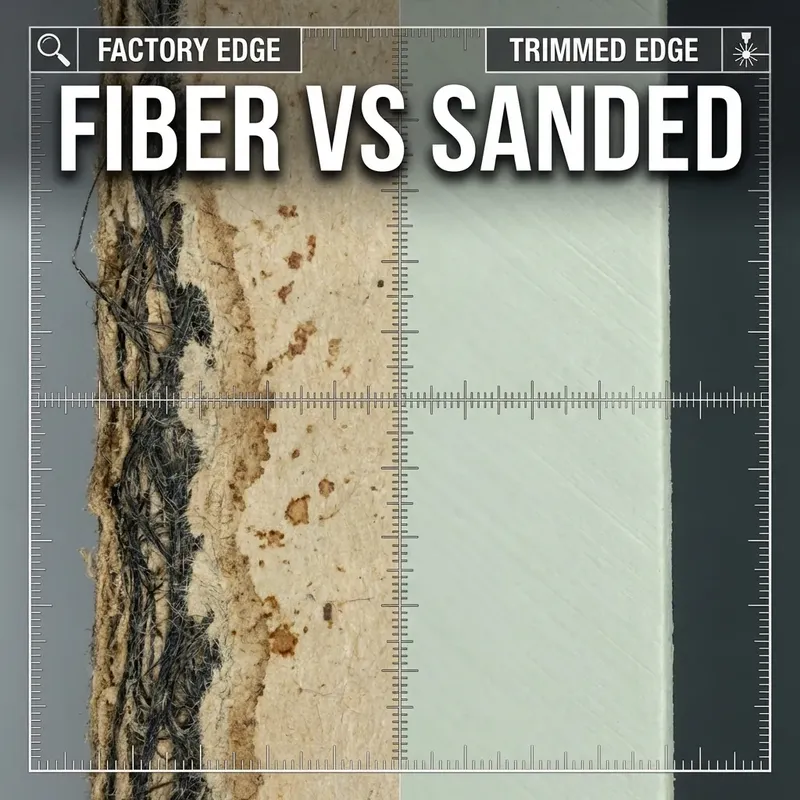
Under magnification, trimmed edges appear unnaturally smooth compared to factory-cut edges.
Trimming involves cutting a thin strip from one or more edges of a card. The goals are typically: (1) remove edge wear or chipping, (2) improve centering by making borders more even, or (3) sharpen corners by cutting away rounded tips.
How to Detect Trimming
1. Measure the Card
Standard modern card dimensions are 2.5" x 3.5" (63.5mm x 88.9mm). As Cardboard Connection recommends: "Use a ruler to measure the card's dimensions. Standard cards should measure 2.5 x 3.5 inches. Any deviation from this could indicate trimming." A card that measures 2.48" x 3.48" has likely been trimmed. Even 1/32" off standard is suspicious.
2. Compare Edge Texture
Factory-cut edges have a specific texture from the industrial cutting dies. Trimmed edges are smoother and cleaner. Under 10x magnification, compare the suspected edge to a known untrimmed card from the same set. Trimmed edges often look "too perfect"—unnaturally smooth and straight.
3. Check Corner Angles
Factory-cut corners have a consistent radius. Trimmed corners often have sharper angles or inconsistent radii between corners. If one corner looks significantly different from the others, it may have been individually trimmed.
4. Examine the Edge Under Magnification
Factory cuts leave microscopic fibers along the edge. Trimming removes these fibers and creates a cleaner cut line. Under 10x magnification, a trimmed edge appears smoother and more uniform than a factory edge.
5. Compare to Known Examples
Hold the suspect card next to a known untrimmed card from the same set. If the suspect card is noticeably smaller, has different corner radii, or has edges that look different under magnification, trimming is likely.
Vintage Card Warning
Trimming is especially prevalent in vintage cards where the value difference between grades is enormous. A 1952 Topps Mickey Mantle PSA 6 vs. PSA 8 can be a $100,000+ difference. As Cardboard Connection notes, always measure vintage cards with a ruler and compare to known standard dimensions for that era—card sizes varied by manufacturer and decade.
Pressing and Crease Removal

Pressing uses heat and pressure to flatten creases — a controversial form of card doctoring.
Pressing uses heat and pressure to flatten creases, bends, and surface irregularities. It's the most controversial form of doctoring because some collectors consider it acceptable "card care" while grading companies consider it alteration.
As Cardboard Connection describes: "Sometimes people will apply pressure to a card, often with a spoon, to alter a card and try to remove an undesirable crease. Under light and magnification, the surface will still display a slight wrinkle with a smoother, almost shinier area around the crease."
How to Detect Pressing
- Look for "ghost creases" under raking light. A pressed crease leaves a faint impression that's visible when light passes across the surface at a low angle, even though the crease itself has been flattened.
- Check for surface texture changes. Pressed areas often have a slightly different texture or sheen compared to the surrounding surface. The heat and pressure can alter the card's coating.
- Examine under magnification. Pressed creases leave microscopic evidence: the surface fibers are compressed differently in the pressed area, and the crease line may still be faintly visible as a change in surface texture.
- Feel the card. Pressed cards sometimes feel slightly thinner or have a different rigidity than unpressed cards from the same set. This is subtle and requires experience to detect.
Edge and Corner Coloring
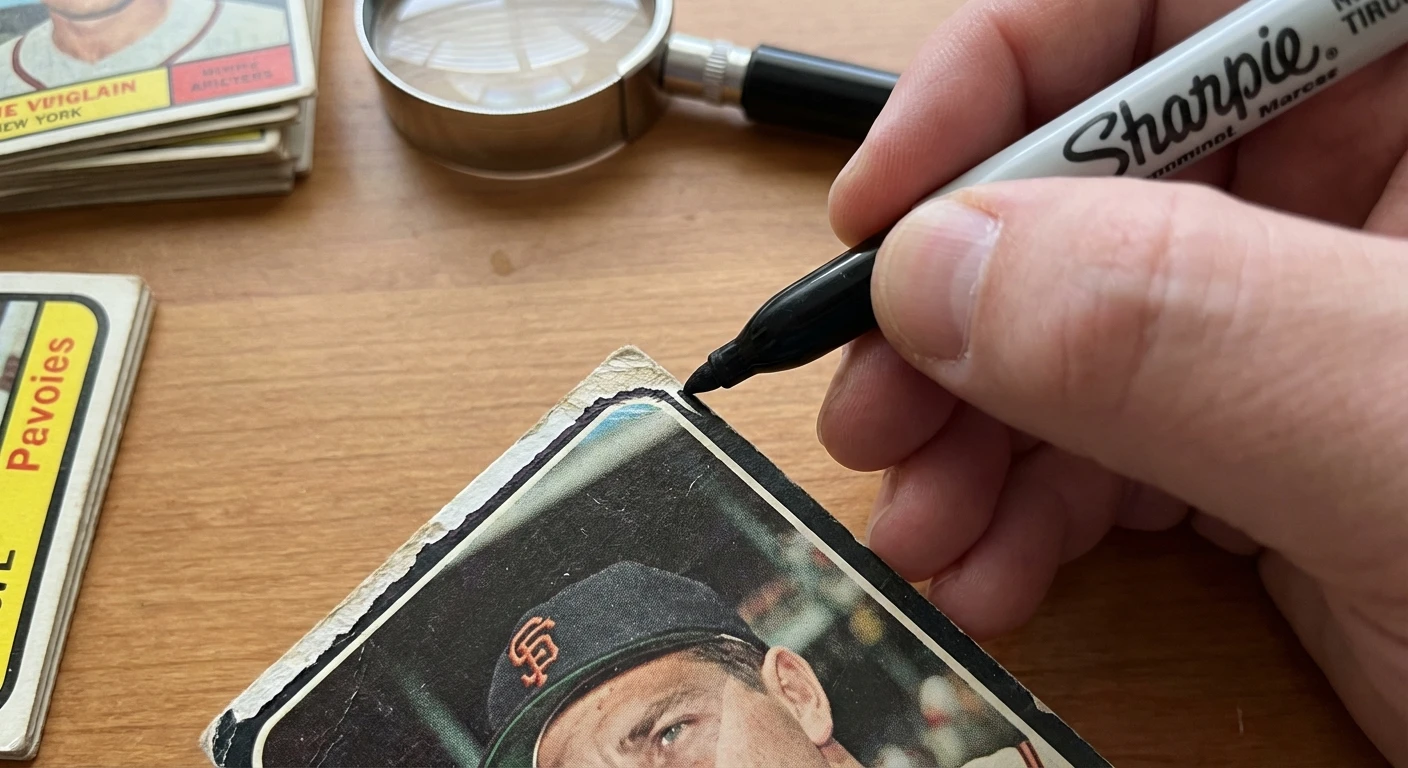
Edge coloring uses markers to hide whitening on dark-bordered cards — detectable under magnification and UV light.
Edge coloring involves using markers, paint, or dye to cover whitening on colored-border cards. It's one of the cruder forms of doctoring but remains surprisingly common because the value difference on dark-bordered cards between "clean edges" and "chipped edges" is significant.
As Cardboard Connection warns: "Some people will attempt to mask edge wear on colored bordered cards by using a similar color Sharpie marker to cover the damaged part. Under bright light and magnification, such modifications are easy to spot."
How to Detect Edge Coloring
- Color mismatch. Marker ink rarely matches the card's printed color exactly. Under bright light, colored areas appear slightly different in hue, saturation, or sheen compared to the original print.
- Ink bleed. Marker ink can bleed into the cardstock, creating a slightly wider colored area than the original edge. Under magnification, the ink may have wicked into the card's fibers beyond the edge line.
- Texture difference. Marker ink has a different surface texture than printed ink. Under magnification, colored areas may appear glossier or more uniform than the surrounding printed surface.
- UV light test. Some marker inks fluoresce differently under ultraviolet light than the card's original printing inks. A UV flashlight can reveal colored areas that are invisible under normal light.
Rebacking and Recoloring
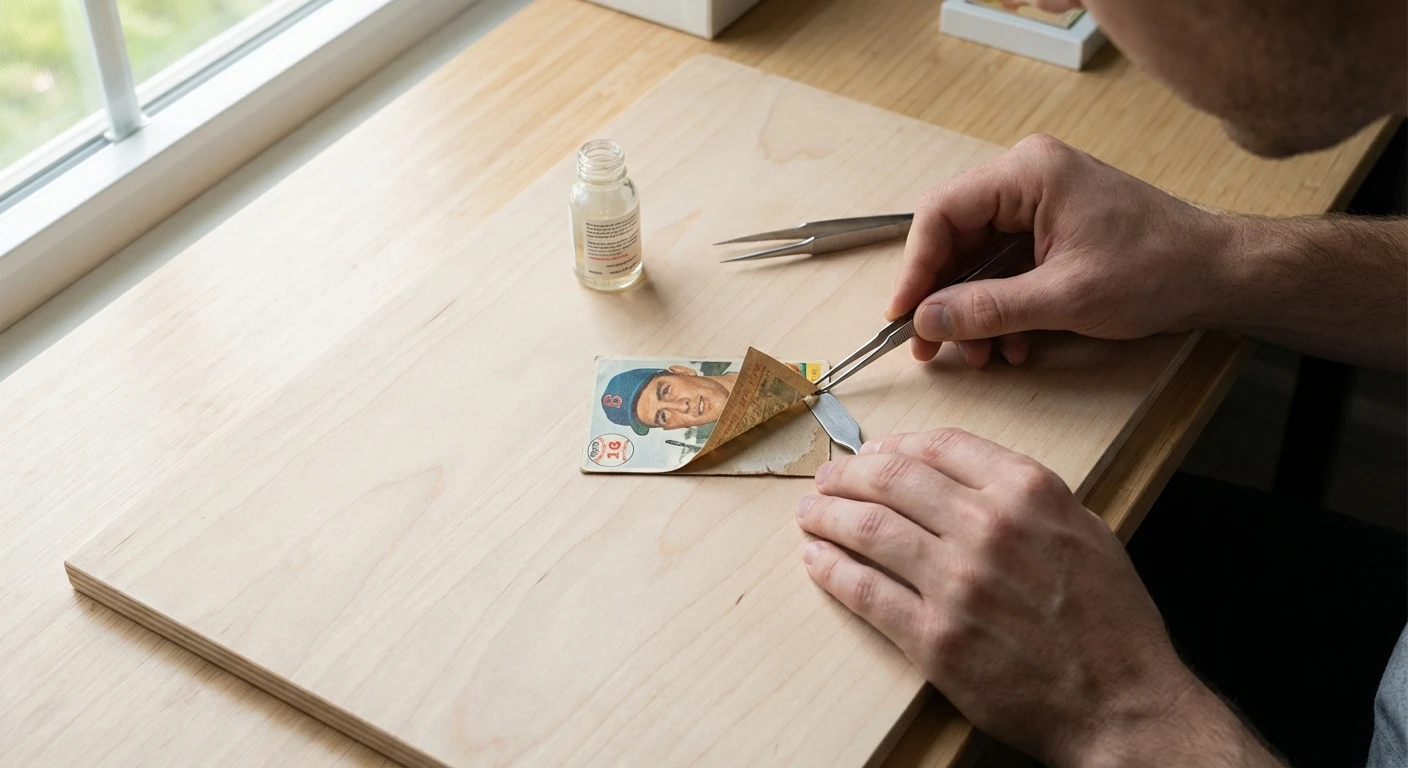
Rebacking involves separating card layers and replacing the back — detectable by thickness and edge seam examination.
Rebacking involves separating the layers of a card and replacing the back with a better-condition back from another copy. This is a sophisticated alteration primarily seen on high-value vintage cards where the front is pristine but the back has damage.
How to Detect Rebacking
- Card thickness. Rebacked cards are often slightly thicker than normal because the adhesive adds a thin layer. Compare thickness to a known genuine card from the same set.
- Edge examination. Look at the card's edge from the side under magnification. A rebacked card may show a visible seam or layer separation where the two halves were joined.
- Flexibility test. Gently flex the card (very carefully). Rebacked cards may flex differently or show resistance at the adhesive layer.
- Light test. Hold the card up to a bright light. A rebacked card may show different opacity or light transmission patterns compared to a genuine single-layer card.
Recoloring
Recoloring involves painting over surface damage, faded areas, or stains to make the card appear in better condition. This is detected by:
- Color inconsistency under magnification—painted areas have different texture and color depth
- Surface texture changes—paint creates a different surface feel than original printing
- UV light—paint and original inks fluoresce differently
Detection Tools and Techniques
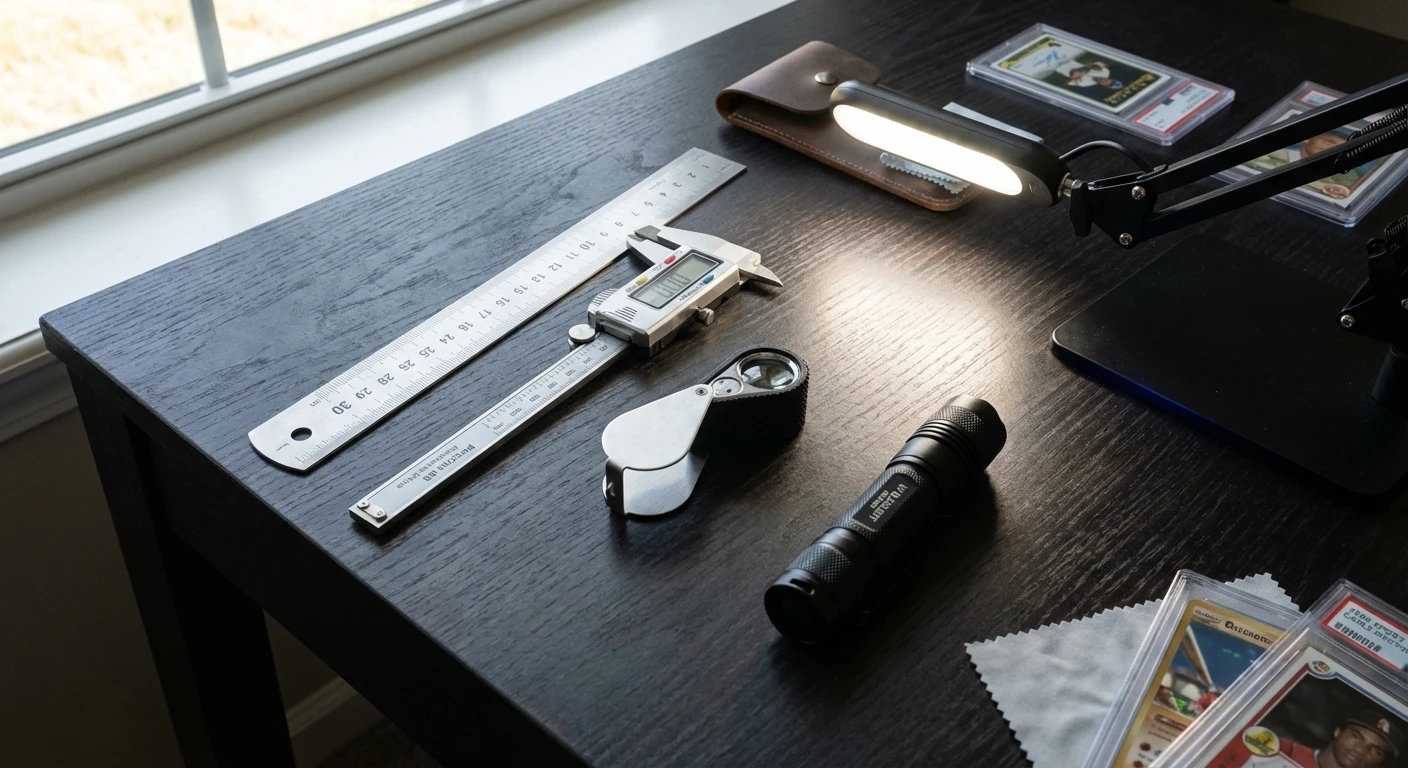
Essential tools for detecting card doctoring: precision ruler, digital calipers, jeweler's loupe, and UV flashlight.
Precision Ruler
Metal ruler with 1/32" or mm increments. Essential for detecting trimming. Measure all four edges and compare to standard dimensions.
Jeweler's Loupe (10x–20x)
Higher magnification than standard pre-grading. 20x reveals edge coloring, pressed creases, and trimming evidence that 10x may miss.
UV Flashlight
Reveals edge coloring, recoloring, and chemical cleaning. Different inks fluoresce differently under UV light. ~$10 on Amazon.
Digital Calipers
Measures card dimensions to 0.01mm precision. The most accurate tool for detecting trimming. Also measures card thickness for rebacking detection.
Protecting Yourself When Buying
Buy Graded When Possible
The simplest protection is buying cards already graded by a reputable company. PSA, BGS, SGC, and CGC all screen for doctoring. While some altered cards slip through, the risk is dramatically lower than buying raw.
Buy from Reputable Sellers
Established dealers with long track records have reputations to protect. eBay sellers with thousands of positive reviews, COMC, and established auction houses are generally safer than anonymous sellers on social media.
Request Detailed Photos
Before buying expensive raw cards, request close-up photos of all four corners, all four edges, and the surface under angled light. Sellers who refuse detailed photos may be hiding something.
If It Looks Too Good to Be True...
A vintage card in suspiciously perfect condition at a below-market price is a red flag. Legitimate gem mint vintage cards are extremely rare and command premium prices. If the price seems too low for the apparent condition, investigate further.
Inspect Immediately Upon Receipt
When you receive a raw card purchase, inspect it immediately using the techniques in this guide. If you detect signs of doctoring, contact the seller and platform immediately. Most platforms have buyer protection policies for misrepresented items.
How Grading Companies Detect Doctoring
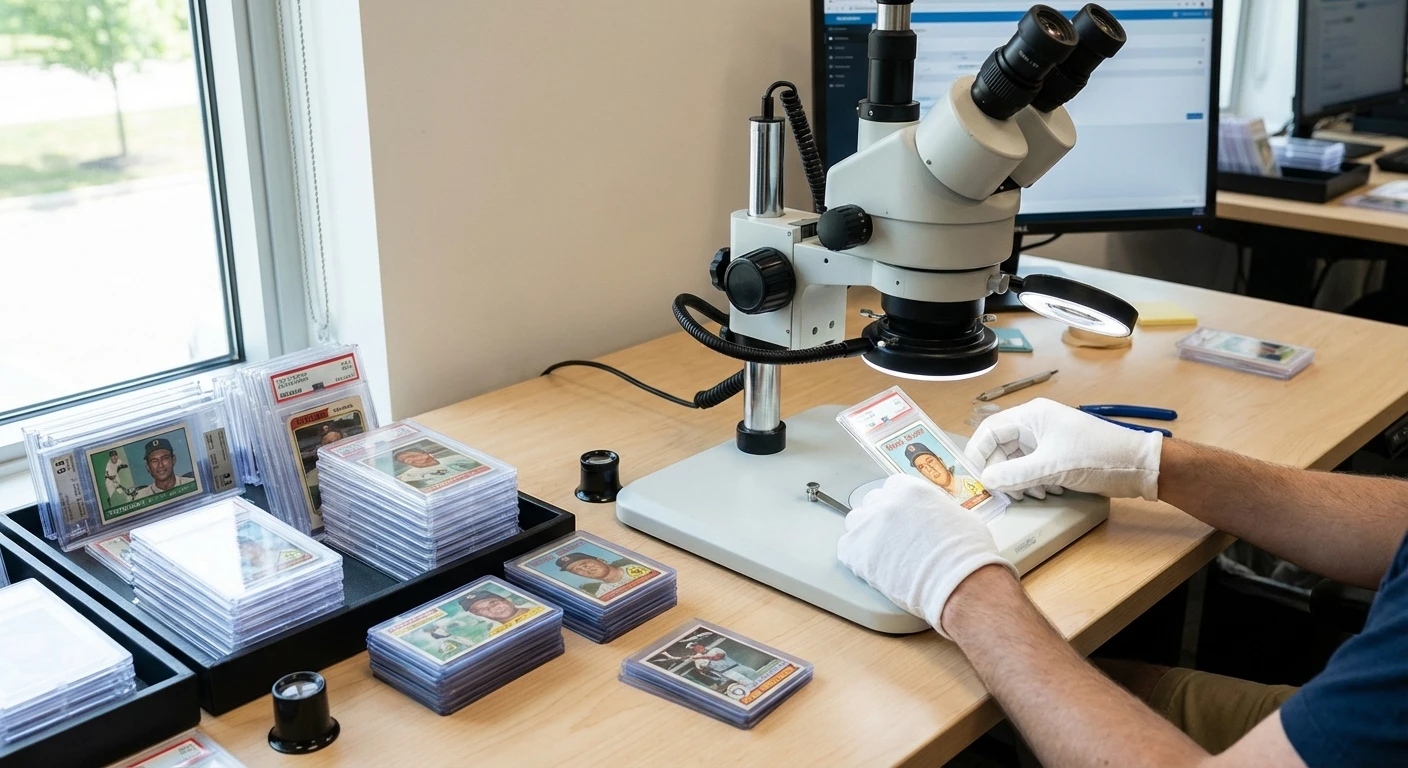
Professional graders use high-powered microscopes, calibrated lighting, and UV analysis to detect altered cards.
Grading companies employ multiple techniques to detect altered cards:
Precision Measurement
Digital calipers measure card dimensions to detect trimming. Cards outside standard tolerances are flagged.
Magnification
High-powered microscopes examine edges, corners, and surfaces for signs of alteration at 20x–60x magnification.
UV/Black Light
Ultraviolet light reveals chemical cleaning, edge coloring, and recoloring that's invisible under normal light.
Controlled Lighting
Calibrated raking light reveals pressed creases, surface texture changes, and other alterations invisible under normal conditions.
Thickness Gauges
Precise thickness measurement detects rebacking and other layering alterations.
Expert Experience
Experienced graders develop an intuitive sense for altered cards after examining thousands of examples. Pattern recognition is powerful.
When a grading company detects doctoring, the card is returned with one of several designations: "Altered", "Trimmed", "Evidence of Tampering", or simply "Ungradeable". Any of these designations effectively destroys the card's market value.
Frequently Asked Questions
Is card pressing considered doctoring?
This is debated. All major grading companies (PSA, BGS, SGC, CGC) consider pressing to be alteration and will return pressed cards as "Altered" if detected. However, some pressing is subtle enough to pass undetected. The hobby community is divided—some view it as acceptable card care, others as fraud. The safest approach: don't press cards you plan to submit for grading.
Can doctored cards pass grading?
Unfortunately, yes. While grading companies catch the majority of altered cards, sophisticated doctoring can sometimes pass inspection. This is why buying graded cards from reputable sources is important but not a 100% guarantee. If you suspect a graded card has been altered, you can submit it for review to the grading company.
What should I do if I discover I've bought a doctored card?
Contact the seller and the platform immediately. eBay, COMC, and most auction houses have buyer protection policies for misrepresented items. Document the evidence (photos under magnification, measurements) before contacting the seller. If the seller is unresponsive, escalate through the platform's dispute resolution process.
Is it illegal to sell doctored cards?
Selling a doctored card as genuine without disclosure is fraud. While criminal prosecution is rare for individual transactions, it does happen for large-scale operations. Civil liability is more common—buyers can sue for misrepresentation. Several high-profile cases have resulted in significant penalties for card doctors.
How common is card doctoring?
More common than most collectors realize, particularly in the vintage market where value differences between grades are enormous. Industry estimates suggest 5–15% of raw high-value vintage cards offered for sale have been altered in some way. Modern cards are less commonly doctored because the value differences are smaller, but it still occurs.
Verify Before You Buy or Submit
Our AI analysis detects signs of trimming, pressing, and edge coloring from high-resolution photos—giving you confidence before you spend.
Sources & Further Reading
- Pre-Grade Sports Cards: Detecting Alterations — Cardboard Connection
- PSA Grading Standards — PSA
- Card Doctoring Discussion — Blowout Forums
- Card Preparation Guide — Card Capsule