If you measure a vintage card and it is exactly 2.500 inches wide, be afraid. Factory guillotine blades in 1952 were not calibrated by NASA. They were operated by tired factory workers. Perfection is the first sign of guilt.
The Physics of the Cut
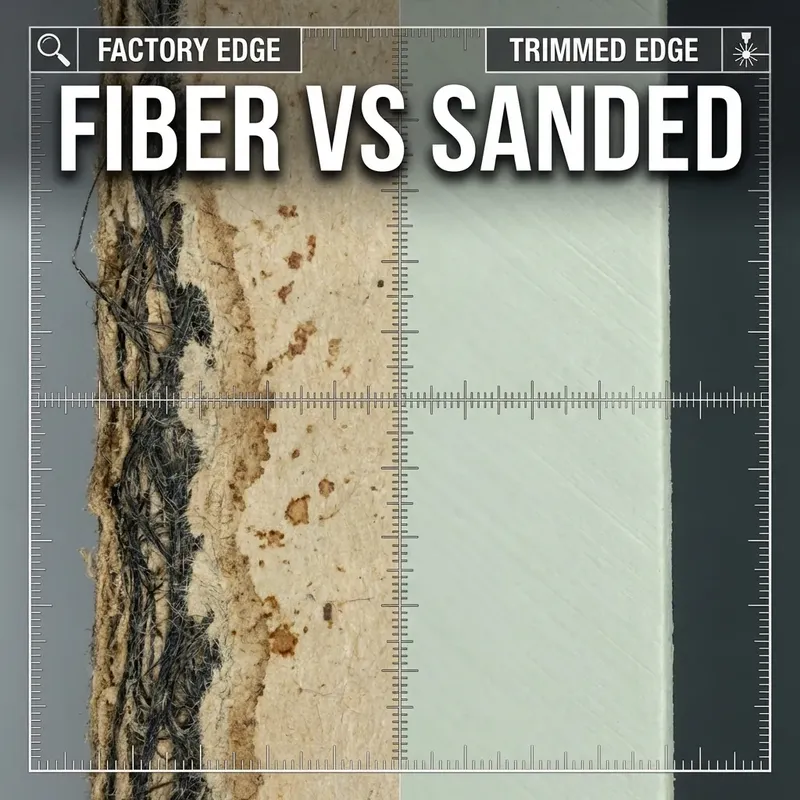
To understand trimming, you must understand how cards are made. Large sheets of cardboard are sliced by massive industrial blades. This process is violent. It crushes the paper fibers, creating a microscopic "tuft" or roughness.
Trimmers use different tools: laser cutters, paper trimmers, or high-grit sandpaper. These tools do not crush; they slice or erode.
The "Bevel" Test
When a card is trimmed by hand, the blade often enters at a slight angle, creating a "bevel" or slope on the edge. A factory cut is typically 90 degrees vertical.
How to check: Hold the card edge-on to a light source. If the edge reflects light like a polished gem, it has likely been sanded. A natural paper edge should be matte and absorb light.
The 2.500 Inch Myth
Many collectors believe a card must measure exactly 2.5" x 3.5". This is false. Factory tolerances vary wildly.
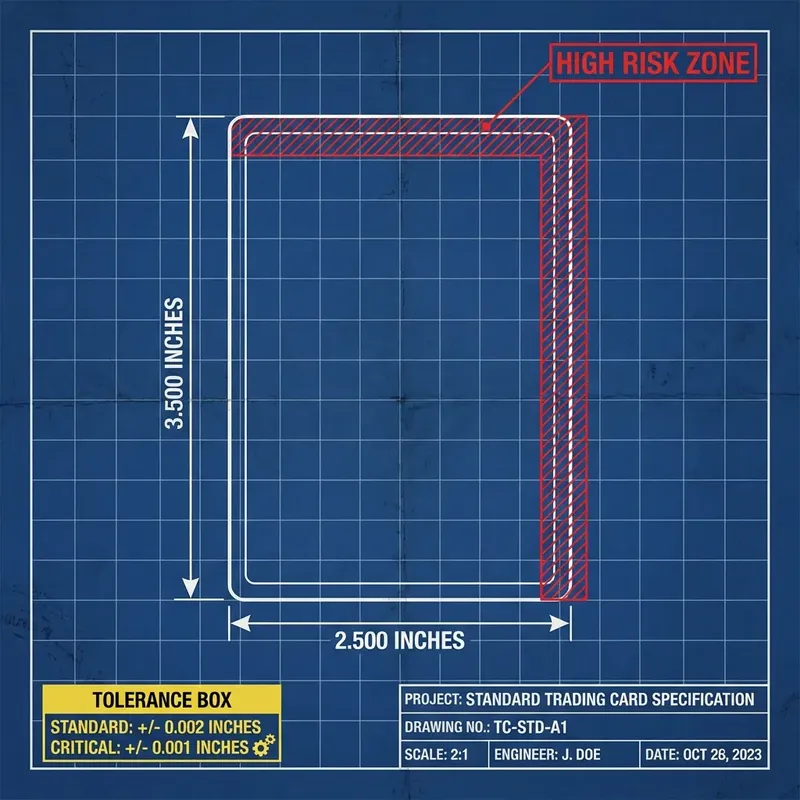
However, "short" is always suspicious. If a card is 1/64th of an inch short on the right side, and that same side has zero edge wear while the left side has heavy wear, it has been trimmed.
The Pixel Count Method (AI Detection)
Modern forensic analysis uses 1200 DPI scans. At this resolution, we can count the pixels across the card width.
- Standard 1986 Fleer: ~3,000 pixels wide.
- Trimmed Copy: ~2,985 pixels wide.
A loss of 15 pixels is invisible to the naked eye but obvious to a computer. This is how grading companies catch (some) alterations. But many still slip through.
Fibers appear pulled or crushed. Look "hairy" under magnification.
Fibers are sheared off cleanly. Edge reflects light uniformly.
Common "Trim Zones"
- Right Edge: Often cut to fix centering on horizontal cards.
- Top Right Corner: The most common damage point, often "shaved" to pointy sharpness.
- Bottom Edge (Vintage): Often hand-cut from sheets (strip cards) and incorrectly sized.
The Verdict
Never buy a high-value raw card that looks "too good to be true" unless you have a caliper and a loupe. If the edge is glossy, walk away. If it measures short, walk away. In the game of high-end grading, paranoia is your only protection.