The Short Answer
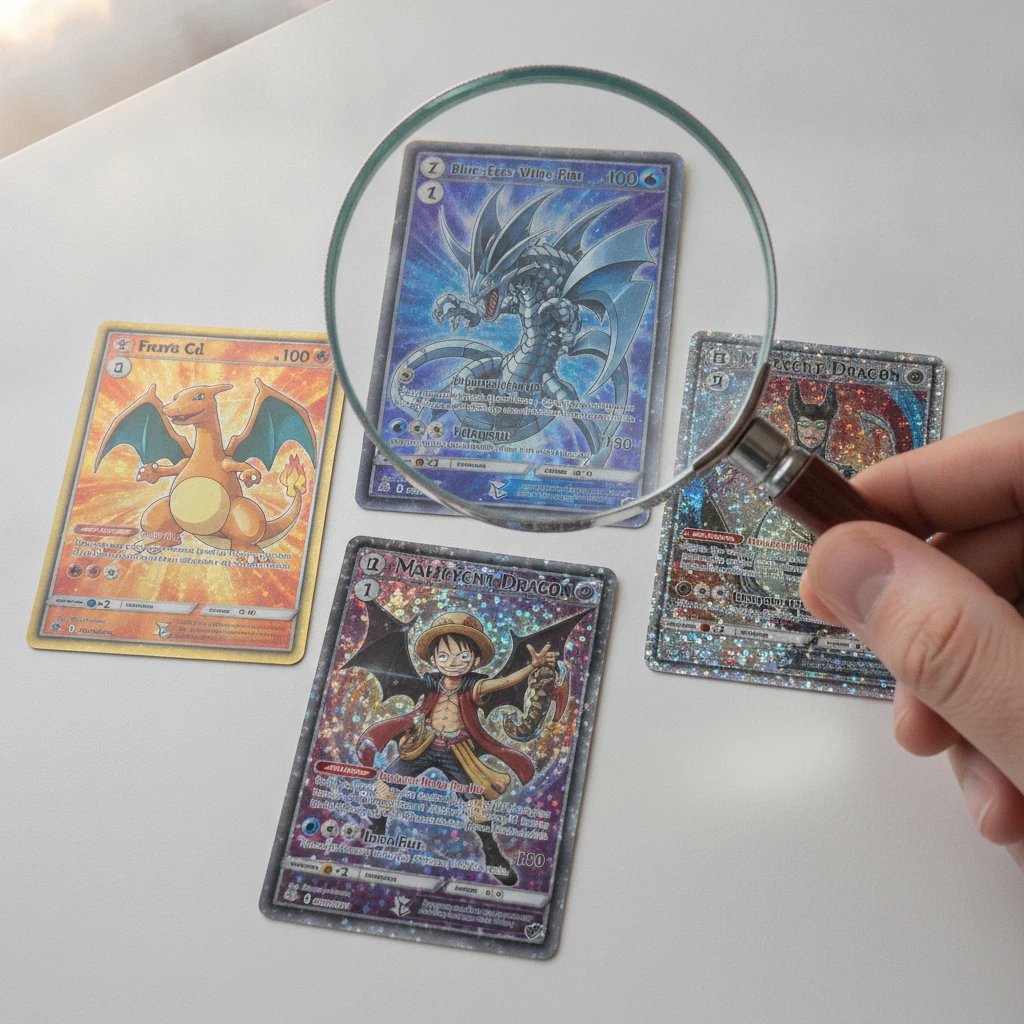
- Modern counterfeits pass the glance test but fail under magnification, UV light, and weight checks.
- Each TCG has tell-tale flaws: Pokémon holo texture errors, Yu-Gi-Oh! font and foil seal issues, One Piece texture registration problems, and Lorcana ink/edge gaps.
- Authentication is not grading. PSA, BGS, and CGC will reject counterfeits; they do not grade them. You must authenticate before submission.
- AI card identification on PreGradeCards cross-references set data and helps flag suspicious variants that do not match known print records.
- When in doubt, do not submit. The cost of missing a fake exceeds the $79.99 PSA fee — it can destroy trust with buyers and marketplaces.
The 2026 Counterfeit Landscape for Trading Card Games
Counterfeit trading cards reached a new level of sophistication in 2026. Reports from CardChill and Yahoo Sports note that scammers now use professional-grade offset lithography, high-fidelity foil layering, and correct-style card stock that survives a casual sleeve inspection. The primary targets are high-volume chase cards: Pokémon Mega Evolution ex cards, Yu-Gi-Oh! Chaos Origins Starlight 2.0 pulls, One Piece alt-art Leaders, and Lorcana Enchanted Rares.
The financial risk is real. PSA, BGS, and CGC will not grade a counterfeit card; they will return it ungraded and may keep it if policy requires. Worse, a fake slabbed by a lesser-known grader can enter the secondary market and hurt the reputation of sellers who trusted it. For collectors, the rule is simple: authenticate first, grade second, and never rely on a single visual test.
PreGradeCards does not replace professional authentication, but its AI identification system cross-references card set, rarity, and known legitimate print characteristics. A card that fails to match any known print record — wrong font, wrong holo pattern, or non-existent rarity symbol — should be treated as suspicious regardless of how clean it looks.
How to Spot Fake Pokémon Cards
Pokémon is the most-counterfeited TCG in history. The 2026 wave specifically targets Mega Evolution ex cards with their new Chaos Holo texture. Use this layered checklist:
1. Copyright Text and Font
Authentic Pokémon cards use a specific Helvetica-derived font family for copyright lines and card text. Fakes often use a slightly thicker or thinner substitute. Compare the copyright year and set symbol against a known legitimate copy from the same set. A 2026 Mega Evolution set has different copyright text than a 2022 Scarlet & Violet set.
2. Holo Texture Pattern
Legitimate Pokémon holo cards have a foil pattern that is consistent across the entire card. Fake holo patterns often shimmer in the wrong direction, have repeating “sparkle” grids, or stop abruptly at the card border. Modern special illustration rares have a textured surface that is extremely difficult to counterfeit — if the texture feels smooth under a fingernail, be suspicious.
3. Border Color and Cut
Pokémon card borders are a specific yellow tone on the front and blue tone on the back. Counterfeits frequently use a slightly off-yellow front or a navy back instead of the correct royal blue. Real cards are cut cleanly; fakes may show fuzzy edges or inconsistent corner radius.
4. Light Test
Hold the card up to a bright light. Authentic Pokémon cards block most light and show no see-through spots. Many counterfeits use thinner stock and reveal light bleeding through the card body or around the edges.
5. Weight and Flex
A standard Pokémon card weighs roughly 1.7–1.9 grams. Counterfeits printed on cheaper stock often weigh 1.4–1.6 grams and feel too flimsy or too rigid. The bend-and-release test can reveal poor stock memory.
How to Spot Fake Yu-Gi-Oh! Cards
Yu-Gi-Oh! counterfeits often look good in photos because the card frame is busy and hides flaws. Focus on these areas:
1. Edition Text and Font
First edition Yu-Gi-Oh! cards have a specific “1st Edition” stamp with tight kerning. Fakes frequently use too-bold or too-thin text, and the stamp may sit slightly too high or low on the card art.
2. Holofoil Name and Set Symbol
Ghost Rares, Starlight Rares, and Ultimate Rares use raised or layered foil on the card name and artwork. Authentic Yu-Gi-Oh! foils shift cleanly under light; fake foils often look painted on or have a cheap rainbow sheen.
3. Eye of Anubis / Konami Hologram
The square Konami hologram on the lower-right corner of modern Yu-Gi-Oh! cards should be sharp and show depth. Fakes often print a flat silver square or use a generic foil sticker. Tilt the card: the authentic hologram changes color and pattern; many fakes stay static.
4. Card Back Registration
The Yu-Gi-Oh! card back has a detailed Millennium Puzzle design. Counterfeits commonly misregister the back, leaving thin white edges where the blue border should meet the artwork. Check all four sides.
5. Texture on Starlight Rares
Starlight Rares from sets like Chaos Origins have a distinct raised texture across the entire card face. Fake Starlights may have texture only on the monster art or no texture at all. Run your finger gently across the surface — the texture should be evenly distributed.
How to Spot Fake One Piece TCG Cards
The One Piece Card Game exploded in value in 2025–2026, making it a prime counterfeit target. Fake Luffy alt-art Leaders and Treasure Rares have appeared on secondary marketplaces. Here is what to check:
1. Don!! Card Back and Border
One Piece card backs feature a distinctive straw-hat/compass design. Counterfeits often misalign the border or use the wrong shade of blue. The front character frame should be crisp, not pixelated.
2. Alt-Art Leader Texture
Authentic One Piece alt-art Leader cards have a subtle texture overlay on the character illustration. Fakes frequently leave the illustration smooth or apply a generic sparkle pattern that does not match the official print.
3. Treasure Rare Foil Quality
Treasure Rare cards have deep, shifting foil that catches light in multiple colors. Fake Treasure Rares often look like a single-color foil wrap. Check the card number and set marking; Treasure Rares should align with known print runs.
4. Card Thickness and Corner Cut
One Piece cards use a specific card stock and corner radius. Counterfeits may feel thinner or have corners that are too rounded. Compare side-by-side with a known authentic common card from the same set.
5. QR Code and Set Information
Modern One Piece cards include small print details and set codes that should match the official release. Fakes sometimes use wrong set abbreviations or outdated copyright dates.
How to Spot Fake Disney Lorcana Cards
Lorcana is a newer TCG, and counterfeiters have targeted its Enchanted Rares and high-end foils. Because the game has only been in wide release since 2023–2024, many collectors are less familiar with Lorcana authentication than with Pokémon or Yu-Gi-Oh!.
1. Ink Quality and Saturation
Lorcana cards use a distinctive matte/satin finish with rich ink saturation. Fakes often look too glossy or too dull. The character art should be crisp, and text should not look fuzzy under magnification.
2. Enchanted Rare Texture
Enchanted Rares have a textured, almost embossed feel across the artwork and frame. Counterfeit Enchanted cards may be flat or have texture only in random spots. The texture should be consistent and follow the card design.
3. Border and Inkwell Symbol
Lorcana cards have a clean white/lore-colored border and the inkwell cost symbol in the upper-left corner. Fakes commonly show ink bleed around the border or a misshaped inkwell icon.
4. Foil Pattern on Legendary and Rare Cards
Legendary and foil rare Lorcana cards use a specific rainbow foil. Fake foils often look like a cheap sticker or have visible seams where the foil sheet was applied.
5. Card Back and Set Code
The Lorcana card back should be uniform in color with sharp lore symbols. Check the set code and card number; counterfeiters sometimes use numbers that do not exist in the official set list.
Universal Authentication Tests for Any TCG
Regardless of the TCG, these tests catch the majority of counterfeits:
- UV light test: Authentic card stock usually does not glow bright white under a blacklight. Many counterfeits use optical brighteners that fluoresce.
- Water test: A tiny corner dab of water on a known common can reveal ink that runs — a fake hallmark. Do not test valuable cards this way.
- Magnification: A 10x loupe reveals dot patterns. Authentic cards use precise halftone screens; fakes often show irregular dot clusters or ink splatter.
- Side-by-side comparison: Nothing beats comparing the suspect card to a known authentic copy from the same set.
- Weight check: Invest in a small digital scale. Most TCG cards fall within a known weight range for their manufacturer.
- Seller due diligence: Counterfeit cards often appear in bulk lots, from zero-feedback sellers, or at prices below market by 30% or more.
Remember: no single test is definitive. Use a layered approach and trust your instincts. If a deal feels too good, the card is probably not authentic.
When to Submit and When to Walk Away
If you suspect a counterfeit, do not submit it to PSA, BGS, or CGC. Grading companies will reject the card and may charge an authentication fee or confiscate the item. You are better off selling the card raw as “unverified/replica” or disposing of it.
Submit only when:
- The card passes all visual, texture, weight, and light tests.
- You purchased from a reputable source with authenticity guarantees.
- The card number, set symbol, rarity, and copyright text match official records.
- A second experienced collector or dealer has confirmed authenticity.
- AI card identification returns a clean match with no anomaly flags.
Walk away when:
- The price is unusually low for the card’s apparent condition.
- The seller cannot provide clear front-and-back photos.
- The holo texture, font, or border looks slightly off compared to known authentic copies.
- The card fails the UV or weight test.
How AI Card Identification Helps Flag Counterfeits
PreGradeCards AI card identification is not an authenticity guarantee, but it is a powerful first filter. When you upload a card image, the system attempts to match it against known set databases for Pokémon, Yu-Gi-Oh!, One Piece, Lorcana, and 20+ other TCGs. If the AI cannot identify the set, rarity, or card number, that is a red flag.
Additional AI checks that help catch fakes:
- Corner and edge geometry: Counterfeit cards sometimes have slightly different corner radius or edge beveling.
- Centering and border ratios: Fakes may have borders that are visibly off even if the artwork looks correct.
- Surface reflection analysis: AI can flag holo patterns that do not match the expected foil for a given rarity.
For high-value cards, combine AI identification with human expert review and, when appropriate, professional authentication. Use PreGradeCards free credits to run the first screen at no cost before you commit to a PSA submission or a major purchase.
Frequently Asked Questions
How can I tell if my Pokémon card is fake before grading?
What are the most common fake Yu-Gi-Oh! cards in 2026?
Are fake One Piece TCG cards common?
Can PSA tell if a Lorcana card is fake?
What tools do I need to authenticate TCG cards at home?
Does PreGradeCards authenticate cards?
Sources & Further Reading
- CardChill — How to Spot Fake Pokémon Cards 2026
- Yahoo Sports — Spot Fake Pokemon Cards 2026
- Ravaver — How to Spot Fake Pokémon Cards: 9 Tests
Sarah Williams leads PreGradeCards educational content and collector onboarding. She has been a full-time collector and dealer for 12 years, specializing in modern sports cards and Pokémon TCG, and has written grading guides read by over 300,000 collectors.
Create a free account and get 1 free credit — enough for 1 complete AI grading with market pricing. No credit card required.
Sign Up Free →