How to Pack and Ship Cards for Grading The Sandwich Method & Beyond
You've pre-graded your cards and done the ROI math. Now you need to get them to the grading company without damage. Here's the industry-standard packing method.
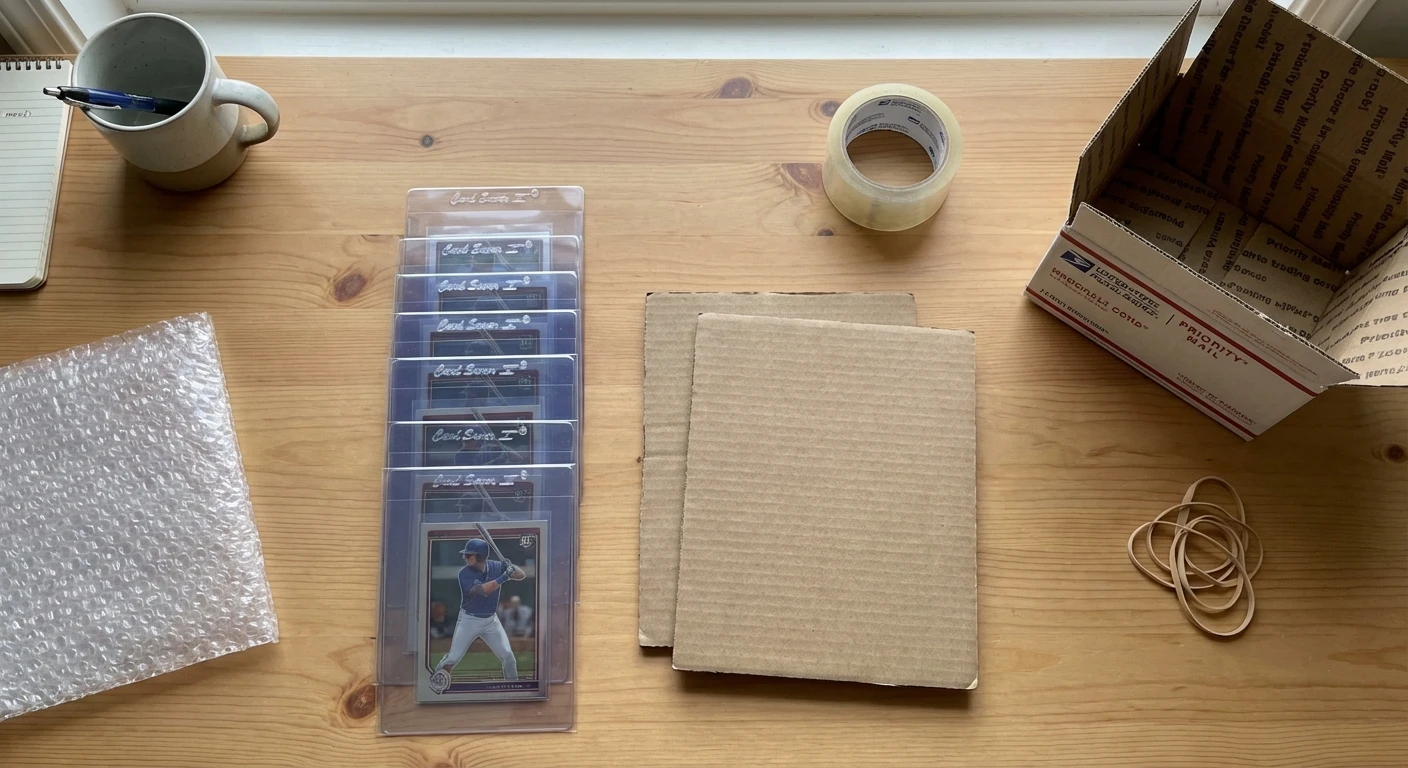
You've spent hours pre-grading, calculated the ROI, and selected only your best cards for submission. Now you need to get them safely from your hands to the grading company's hands. Improper packing is one of the most common—and most preventable—reasons cards arrive damaged.
Cards travel through sorting machines, conveyor belts, delivery trucks, and multiple handlers before reaching the grading room. A package that isn't properly padded and secured can result in bent corners, surface scratches, or worse. The grading company grades the card as-received—they don't know (or care) if the damage happened in transit.
Before you even think about packing, make sure you've done your homework. Use our AI Card Grading tool to pre-grade your cards and identify which ones are truly worth the submission cost. Our Centering Analysis can catch off-center cards that would fail before you waste money shipping them.
The Costly Mistake
A collector submits a $500 raw card that they've pre-graded as a PSA 10 candidate. During shipping, the card shifts inside a loose top loader, creating a micro-scratch on the surface. The card arrives and grades a PSA 9. The value difference: $200–$400. All because of a $0.50 Card Saver that wasn't used.
Required Supplies Checklist
| Supply | Purpose | Approx. Cost |
|---|---|---|
| Penny Sleeves | First layer of protection against surface scratches | $0.02/each |
| Card Saver 1 (Semi-Rigid) | Required by most grading companies; holds card securely | $0.25–0.50/each |
| Thick Cardboard (2 pieces) | Rigid protection for the "sandwich" | $1–2 |
| Rubber Bands or Painter's Tape | Secure the Card Saver stack (never tape directly to holders) | $1 |
| Bubble Wrap | Cushioning inside the shipping box | $3–5 |
| Small Shipping Box | Rigid outer container (never bubble mailers) | $2–4 |
| Packing Tape | Seal the box securely | $3 |
Card Savers vs. Top Loaders
This is one of the most important decisions in the packing process. Most grading companies require or strongly prefer Card Saver 1 semi-rigid holders over top loaders.
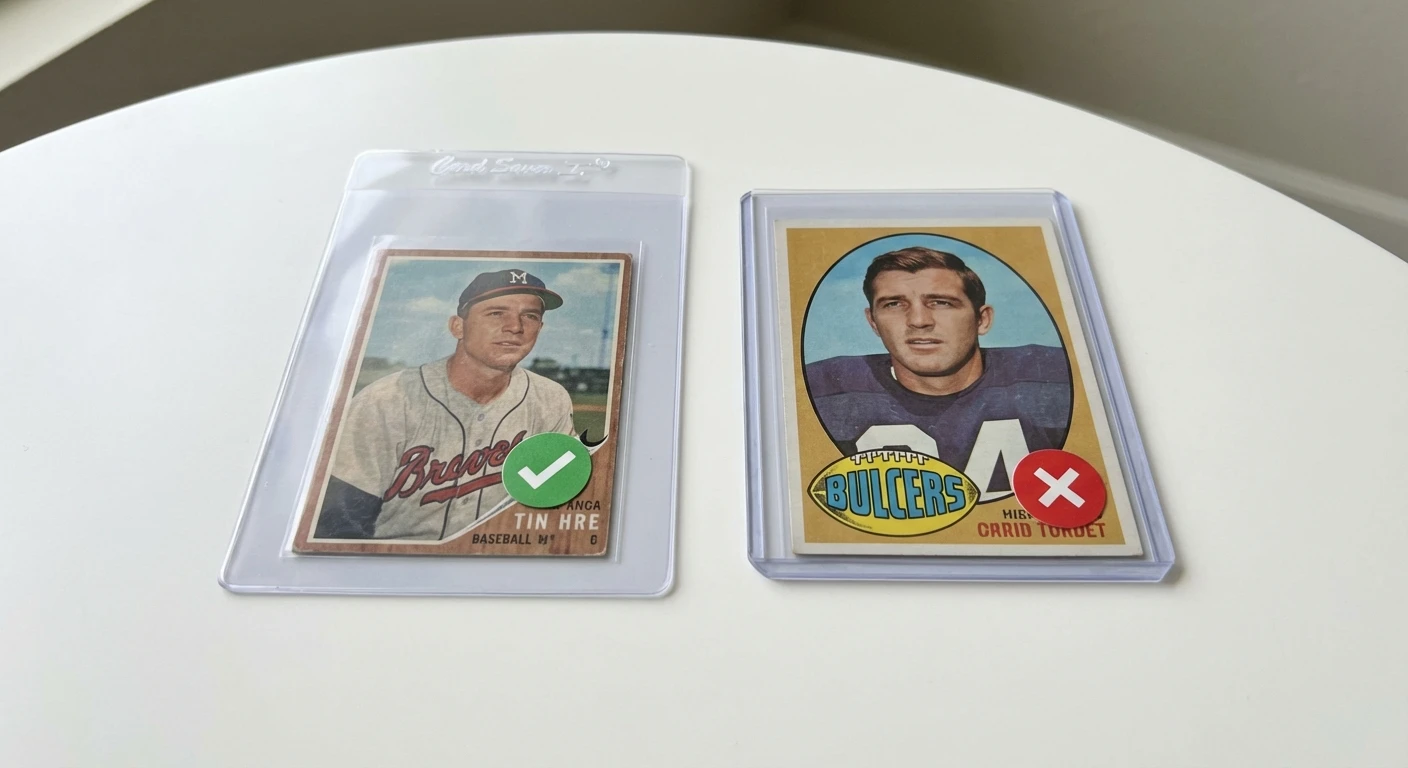
Card Saver 1 (Recommended)
- Semi-rigid—bends slightly to absorb impact
- Card fits snugly, minimal movement
- Required by PSA for most submissions
- Easy for grading companies to remove cards
- Industry standard for grading submissions
Top Loaders (Not Recommended)
- Rigid—can crack on impact
- Card slides around inside, causing scratches
- Not accepted by some grading companies
- Harder for grading staff to remove cards safely
- Better for storage, not for shipping
Step 1: Proper Sleeving
As Card Capsule's guide explains: "Choose high-quality, acid-free penny sleeves. These sleeves are designed to protect the card's surface from scratches, dust, and other potential contaminants."
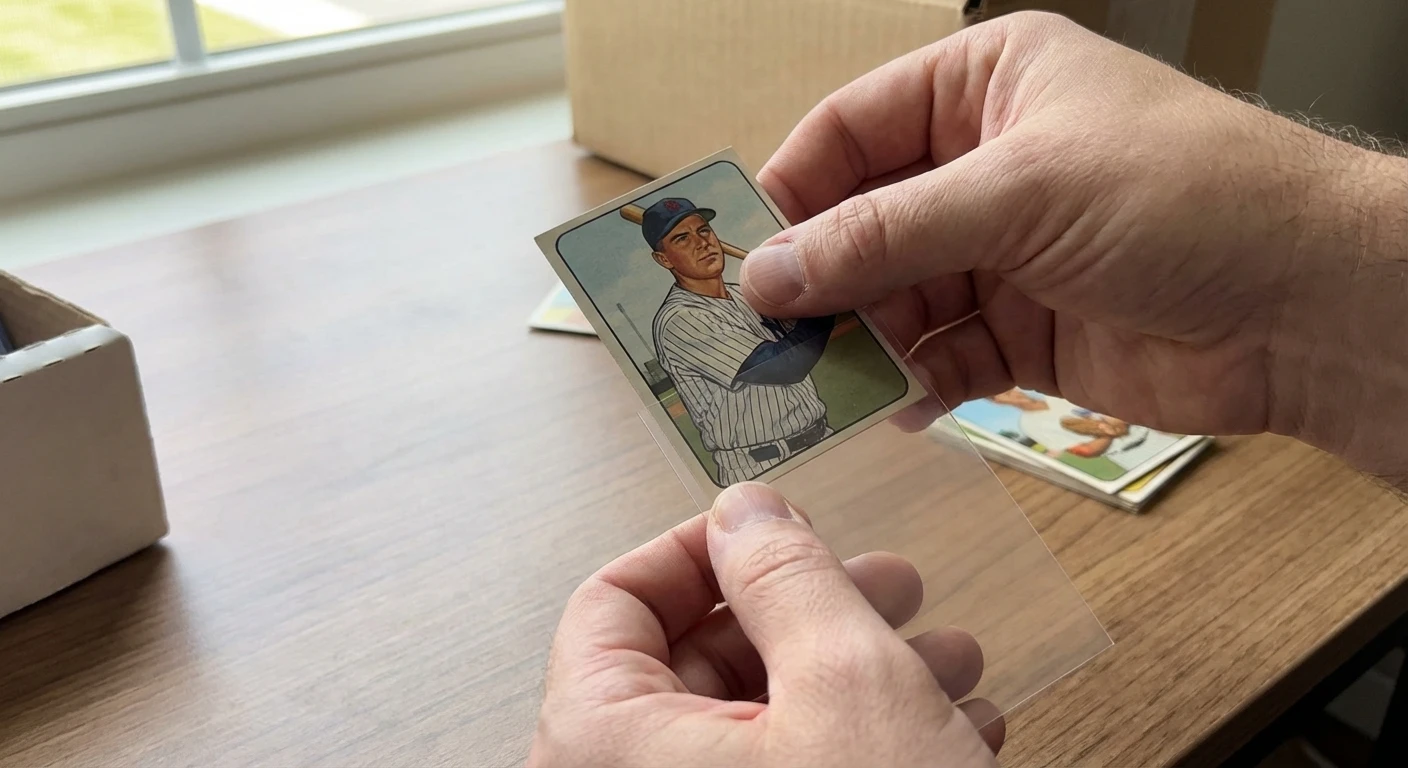
Sleeving Process
- Cut the corner of the penny sleeve. Snip a small diagonal cut on one corner of the open end. This prevents the card's corner from catching on the sleeve during insertion, which can cause corner damage.
- Slide the card in gently, top-first. Insert the card with the top edge going in first. Use a smooth, steady motion—don't force it.
- Ensure the card is fully seated in the sleeve with no part of the card exposed above the sleeve opening.
Step 2: Semi-Rigid Holders
- Insert the sleeved card into a Card Saver 1. The card should fit snugly with minimal room to shift. If the card moves around, the Card Saver is too large (use a Card Saver 1, not a Card Saver 2 or 3).
- Do NOT tape the Card Saver closed. Grading companies need to open them, and tape residue can damage cards. If you're concerned about the card sliding out, fold the flap of the Card Saver over gently.
- Label each Card Saver with a small sticker or piece of painter's tape on the back (not touching the card) with the card number from your submission form.
Step 3: The Sandwich Method
The "Sandwich Method" is the industry-standard technique for securing cards during shipping. It creates a rigid, protected stack that prevents bending and impact damage.
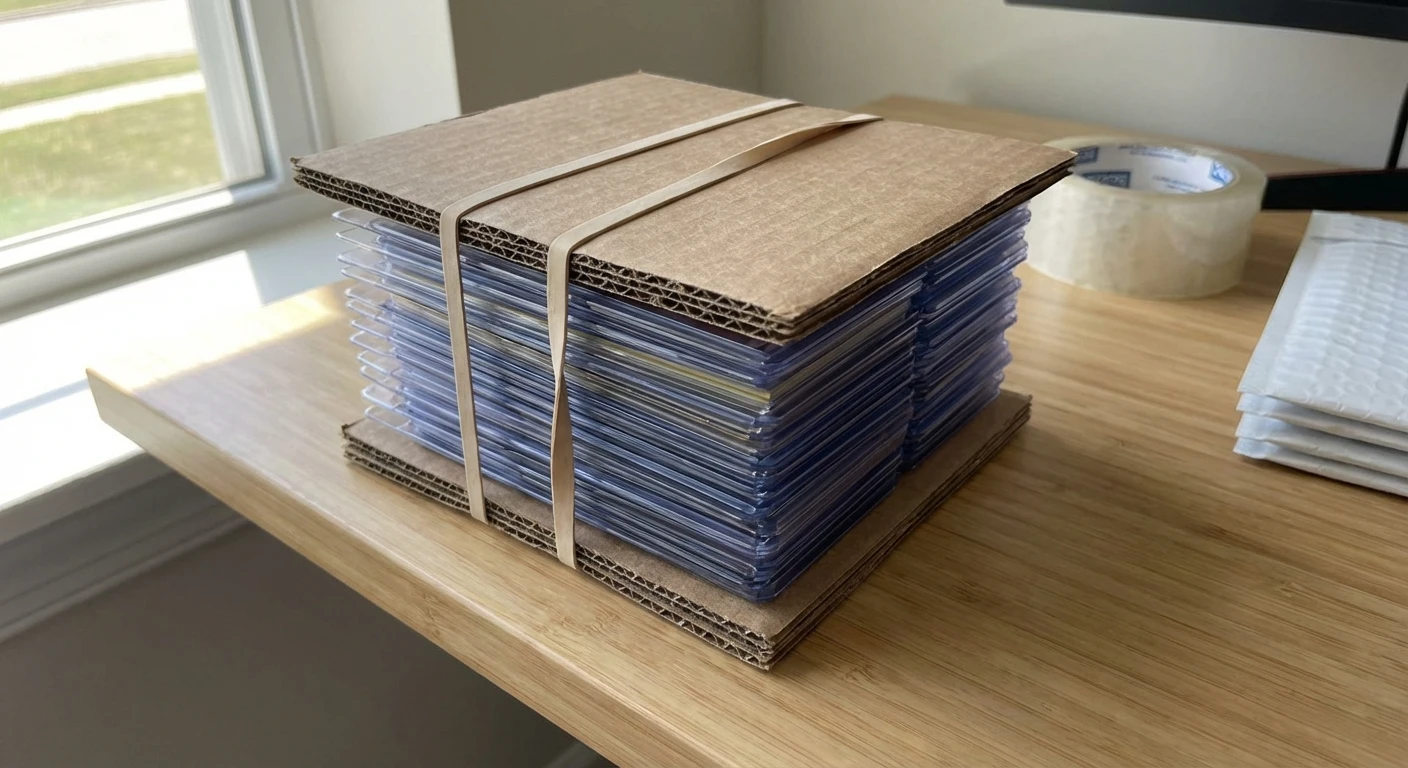
The Sandwich Stack
Assembly Instructions
- Cut two pieces of thick cardboard slightly larger than the Card Savers (approximately 4" x 6"). Use corrugated cardboard, not thin cereal-box cardboard.
- Stack your Card Savers neatly between the two cardboard pieces, all facing the same direction.
- Secure the sandwich with rubber bands (2–3, placed around the stack) or painter's tape. Never use regular tape directly on Card Savers—the adhesive can transfer to the holders and potentially the cards.
- The stack should be snug with no room for cards to shift. If you have fewer cards, add blank Card Savers or cardboard spacers to fill the gap.
Step 4: Boxing and Padding
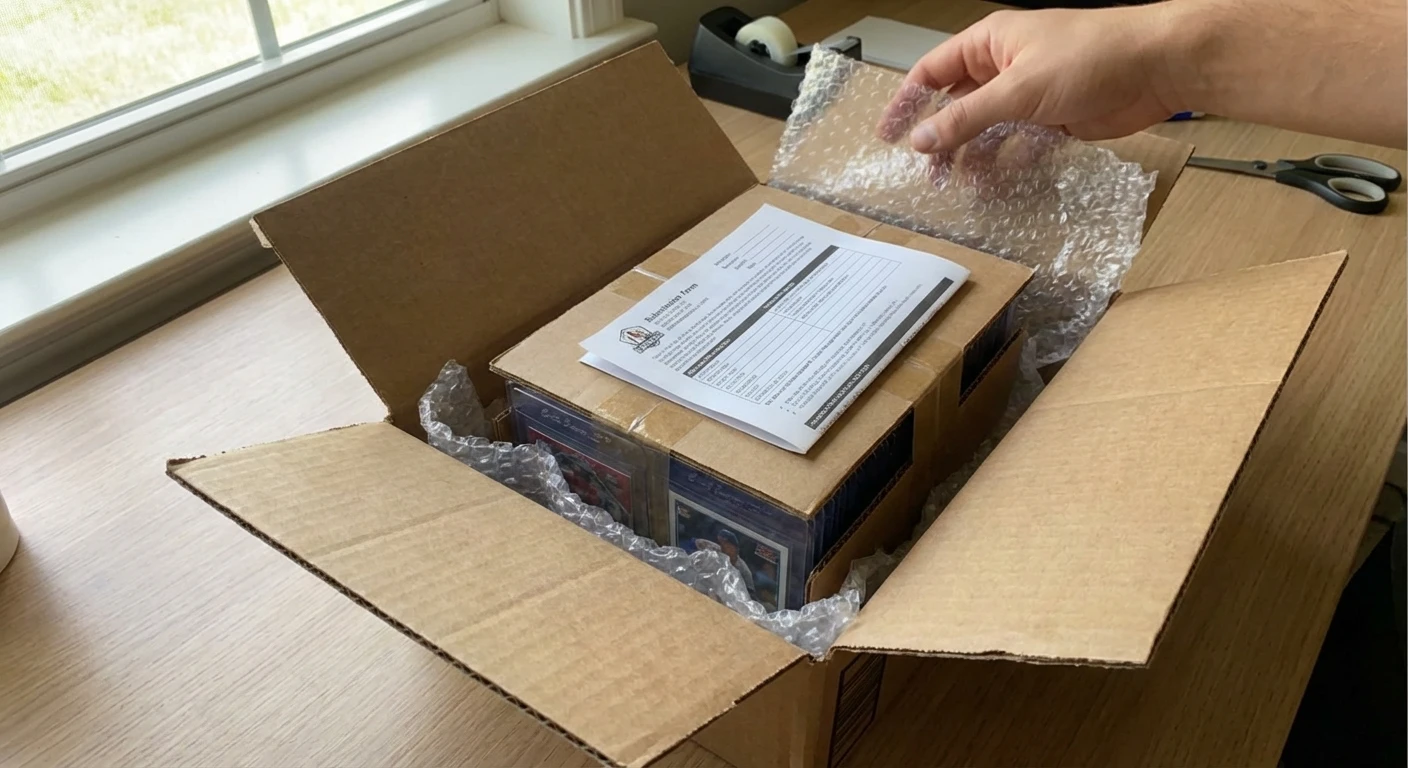
- Wrap the cardboard sandwich in bubble wrap. Use at least 2–3 layers of small-bubble wrap around the entire sandwich.
- Place in a small, sturdy shipping box. The box should be just large enough to hold the wrapped sandwich with 1–2 inches of padding on all sides. Never use bubble mailers—they don't provide enough rigid protection.
- Fill any empty space with crumpled newspaper, packing peanuts, or additional bubble wrap. The sandwich should not move when you shake the box.
- Include your submission form (printed, filled out completely) on top of the wrapped sandwich inside the box.
- Seal the box securely with packing tape on all seams. Use the "H" taping method (tape across the center seam and both side seams).
The Shake Test
Before sealing the box, pick it up and shake it gently. If you hear or feel anything moving, add more padding. The contents should be completely immobile inside the box. Any movement during shipping means potential damage.
Step 5: Shipping and Insurance
Shipping Method
Use USPS Priority Mail or UPS Ground with tracking. Priority Mail includes $50 of insurance by default. For high-value submissions, use USPS Registered Mail (most secure) or UPS with declared value insurance. FedEx is also acceptable. Never use USPS First Class for grading submissions—it doesn't include insurance and packages are handled less carefully.
Insurance
Always insure your package for the full declared value of the cards. If you're shipping $2,000 worth of cards, insure for $2,000. The cost of insurance is minimal compared to the potential loss. Keep your receipt and tracking number—you'll need them if you file a claim.
Signature Confirmation
Add signature confirmation for any submission worth more than $500. This provides proof of delivery and prevents "lost package" disputes. Most grading companies have secure receiving areas, but signature confirmation adds an extra layer of protection.
Company-Specific Requirements
| Requirement | PSA | BGS | SGC |
|---|---|---|---|
| Preferred Holder | Card Saver 1 | Card Saver 1 or top loader | Card Saver 1 |
| Penny Sleeve Required | Yes | Yes | Yes |
| Submission Form | Online + printed copy in box | Online + printed copy in box | Online + printed copy in box |
| Card Numbering | Number each Card Saver to match form | Number each Card Saver to match form | Number each Card Saver to match form |
| Ship To | Santa Ana, CA | Dallas, TX | Parsippany, NJ |
Always check the grading company's current submission guidelines before shipping. Requirements can change. Visit PSA's FAQ, BGS's submission page, or SGC's submission guide for the latest requirements.
Not sure which grading company is right for your cards? Our Grading Company Directory compares all major companies side-by-side, and our Grading Value Analytics can help you determine which company maximizes your card's resale value.
Common Packing Mistakes
Bubble mailers can be bent, crushed, or punctured during shipping. Always use a rigid box.
Cards slide around inside top loaders, causing surface scratches. Card Savers hold cards snugly and are required by most grading companies.
Tape adhesive can transfer to the card or holder, causing damage. Use rubber bands or painter's tape on the outside of the cardboard sandwich only.
The cardboard sandwich should not move at all inside the box. Fill every gap with bubble wrap or packing material. Do the shake test.
Without the form, the grading company doesn't know who sent the cards, what service tier you selected, or where to return them. This causes significant delays.
Packages get lost, damaged, or stolen. Insurance costs a few dollars and protects hundreds or thousands in card value. Always insure.
Frequently Asked Questions
How many cards can I ship in one box?
Most grading companies accept up to 200 cards per submission, but 10–50 cards is the most common range for individual collectors. For larger submissions, use a larger box with multiple cardboard sandwiches. Each sandwich should contain no more than 20–25 Card Savers to keep the stack manageable.
Can I use a flat rate USPS box?
Yes, USPS Priority Mail Flat Rate boxes are popular for grading submissions. The Small Flat Rate Box ($9.45) works well for 1–15 cards. The Medium Flat Rate Box ($16.10) handles larger submissions. Both include $50 of insurance and tracking.
What if I'm using a middleman/group submission service?
Many collectors use middleman services that aggregate cards from multiple collectors into bulk submissions for lower per-card rates. If using a middleman, follow their specific packing instructions. Most require cards in penny sleeves + Card Savers, shipped to the middleman's address. The middleman handles the final submission to the grading company.
Should I include a return shipping label?
No. Grading companies handle return shipping themselves and charge you for it as part of the submission fee or as a separate line item. Do not include a prepaid return label unless the company specifically requests it.
Pro Tips From Experienced Submitters
- Photograph every card before shipping. Take front and back photos of each card in its Card Saver. This documents the card's condition pre-shipment and is essential evidence if you need to file an insurance claim or dispute a grade.
- Write "FRAGILE" and "DO NOT BEND" on the outside of the box. While handlers aren't required to follow these labels, it doesn't hurt and may result in slightly more careful handling.
- Ship early in the week. Packages shipped Monday–Wednesday are less likely to sit in warehouses over weekends, reducing exposure to temperature extremes.
- Avoid shipping during extreme weather. Extreme heat can warp cards and damage surfaces. Extreme cold can make plastic holders brittle. Check the forecast for both your location and the destination city.
- Keep a spreadsheet. Track every card you submit: card name, estimated grade, submission date, tracking number, and final grade received. This data helps you improve your pre-grading accuracy over time.
Plan Your Submission
Use our AI tools to pre-grade your cards, calculate ROI, and make sure every card you submit is worth the cost before you pack and ship.
Sources & Further Reading
- Sleeves and Semi-Rigid Holders Guide — Card Capsule
- PSA Submission FAQ — PSA
- BGS Submission Services — Beckett
- SGC Submission Guide — SGC