Mile High Card Company: The Pursuit of Perfection
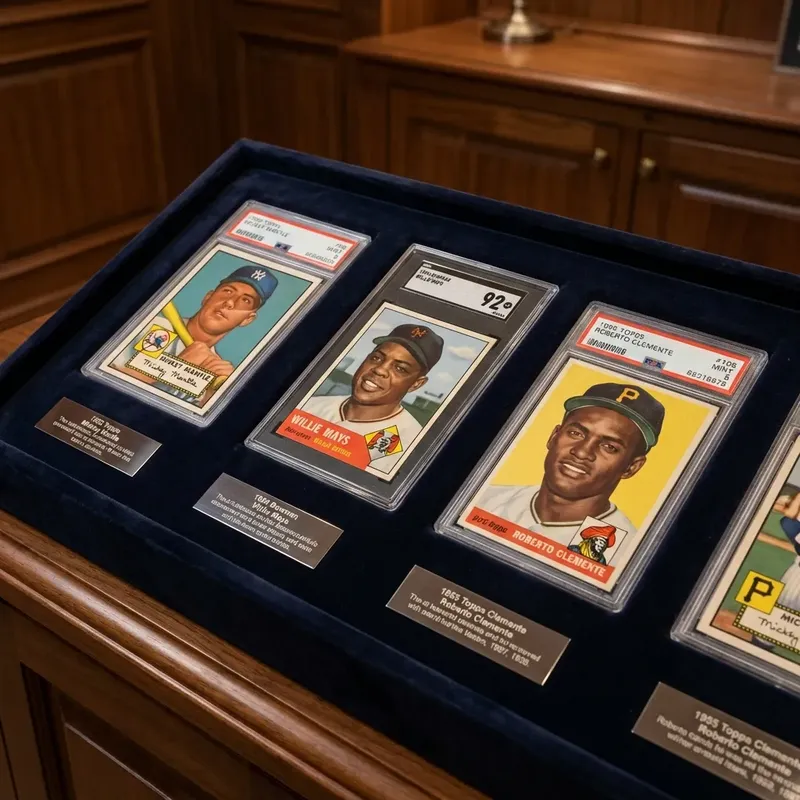
In the ecosystem of sports collectibles, some houses are known for volume, others for memorabilia. Mile High Card Company (MHCC) is known for one thing: Elite Quality. If you are a collector building the #1 PSA Registry set of 1968 Topps Baseball, Mile High is not just an auction house; it is your supplier, your rival, and your obsession.
Based in Castle Rock, Colorado, MHCC has built a brand that borders on cult status among "condition-sensitive" investors. While other venues sell thousands of PSA 7s and 8s, Mile High is the room where the PSA 10s live.
This guide breaks down why MHCC holds the world record for the most valuable sports card ever sold (at the time of sale) and how their "Elite" catalog strategy creates a feeding frenzy for top-tier assets.
The Vision: Brian Drent's Eye
Mile High was founded by Brian Drent in 1996. Drent, a former dealer, understood something early on that the market took decades to catch up to: The gap between a "9" and a "10" is not linear; it is exponential.
MHCC positioned itself as the venue for "investment grade" cards long before "alternative asset class" was a buzzword. Drent's personal reputation for being an incredibly strict grader (often harsher than the third-party services themselves) meant that when a card appeared in a Mile High auction, savvy buyers knew it wasn't a "weak" grade.
The MHCC "Moat": The Registry Engine
Why Set Builders Fear Missing an MHCC Auction
Registry demand (rank-#1 pursuit) → scarcity of Pop 1s → MHCC sources "uncirculated" finds → auction frenzy → record prices → more consignments — feeding right back into registry demand.
Mile High dominates the "low pop" vintage market. A "Pop 1" refers to a card where only one example exists at that specific grade. When MHCC lists a 1954 Topps common in PSA 10 (Pop 1), the price does not follow a price guide. It follows the ego of the two richest men fighting for the #1 Registry spot.
The Result? MHCC frequently sells $50 cards for $20,000. Not because the player is famous, but because the condition is unique.
The $12.6 Million Hammer: A Case Study
In August 2022, Mile High Card Company shocked the world.
Why it mattered: This sale validated SGC as a premier grading authority (previously, only PSA was thought capable of such a record). It proved that "eye appeal" triumphs over brand loyalty. The card was undeniably the finest known example, and MHCC's marketing of it was flawless.
Tactical Buyer's Guide: Surviving "Extra Innings"
Mile High's extended bidding system is notorious. They have a strict initial bid requirements.
1. The "Initial Bid" Rule
CRITICAL: You MUST place a bid on a lot before the auction enters extended bidding (usually 9 PM EST on closing night). If you have not bid on that specific lot during the regular session, you are locked out. You cannot "snipe" a lot you haven't been active on.
2. The "3-Phased" Close
MHCC often uses a tiered closing structure to prevent the auction from dragging until 4 AM.
Phase 1: Anybody can bid (if qualified).
Phase 2: 20 Minute Rule. Any bid resets the clock for THAT lot.
Phase 3: The "nuclear option." If the auction runs too long, MHCC reserves the right to declare a hard stop.
3. Buyer's Premium
Standard 20%. They offer a discount (usually 2-3%) for paying by check/wire within 10 days. Always take this discount. On a $10,000 win, that is $300 saved.
Seller's Strategy: The Break-Up Artist
MHCC is the world's best venue for breaking up high-grade sets.
Consignment Strategy: Set Breaking
Do not sell a complete 1986 Fleer Basketball set as one unit. The sum of the parts is greater than the whole.
✅ MHCC POWER MOVE
Consign the entire set. Let MHCC grade the raw cards (they get bulk rates). Then let them sell the PSA 10s and 9s as singles, and the 8s as small lots. This strategy routinely yields 40-60% higher ROI than selling the set intact.
❌ THE MISTAKE
Selling a "partial set" where you kept the stars and are selling the commons. MHCC buyers want the gems. If you cherry-pick the collection before consigning, you kill the appeal.
Critical Analysis
The Strength: Catalog photography. MHCC's scans are brutally honest. They don't hide print dots. If a card looks clean in their zoom view, it *is* clean.
The Weakness: Communication can be sparse during the consignment process compared to the "hand-holding" of Heritage. You send your cards in, and you hear back when the checks are ready. For some, this is efficient; for others, it's anxiety-inducing.
Final Verdict
Mile High Card Company is where the 1% of the hobby shops. If you are serious about investment-grade vintage, you need a paddle number here.