The Short Answer
- The Black Lotus Alpha PSA 10 sold for $1.25 million — the most expensive single collectible card ever sold.
- The Reserved List — Wizards' promise to never reprint certain cards — creates artificial permanent scarcity for ~500 cards.
- Dual Lands (Underground Sea, Tropical Island, etc.) are the most liquid high-value MTG collectibles due to continued tournament demand.
- Modern MTG set cards (e.g., Serialized and Booster Fun variants) have introduced a new collectible tier for non-vintage players.
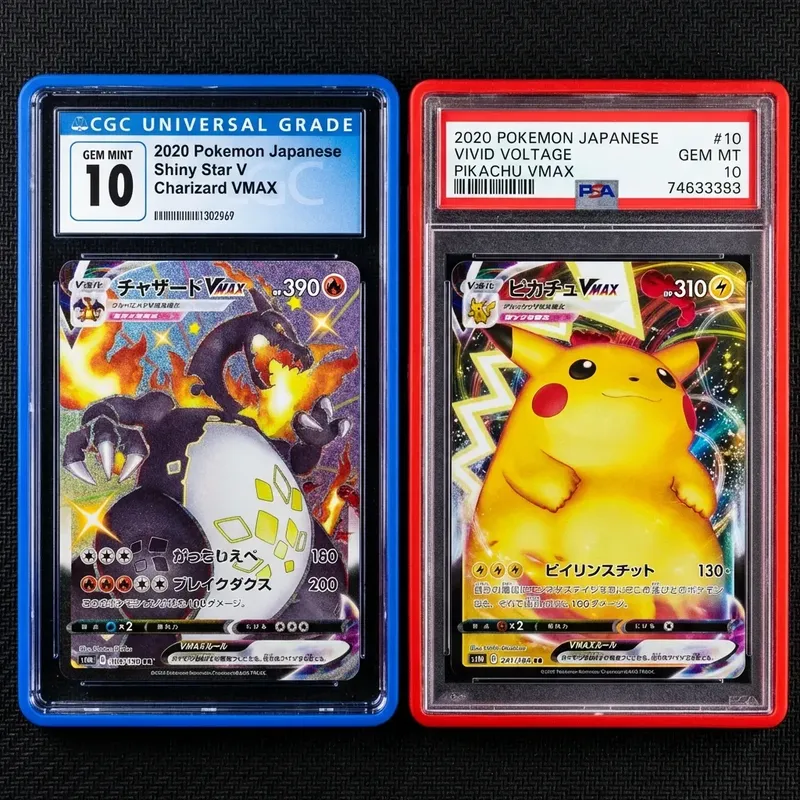
- MTG grading is dominated by PSA and CGC (Certified Guaranty Company) — CGC has strong TCG market share and is preferred by many MTG collectors.
Alpha & Beta Grails: The Power Nine
The nine most powerful cards from Magic's 1993 Alpha and Beta sets represent the pinnacle of TCG collecting. All are on the Reserved List. None will ever be reprinted:
- Black Lotus Alpha PSA 10 — Sold for $1.25M in 2023. CGC 10 examples have also sold for $800,000+. The pinnacle of the entire card collecting hobby beyond any sport.
- Ancestral Recall Alpha PSA 10 — $150,000-$300,000. The most powerful draw spell ever printed.
- Time Walk Alpha PSA 10 — $100,000-$200,000. Taking an extra turn as a 1-mana spell — never reprinted on the Reserved List.
- Mox Sapphire / Ruby / Pearl / Emerald / Jet Alpha PSA 10 — The five Mox artifacts. Each $50,000-$150,000 in PSA 10 depending on color demand. Mox Sapphire commands the highest premium.
- Time Vault / Timetwister Alpha PSA 10 — Rounding out the nine. Each $40,000-$80,000 PSA 10.
The Reserved List: Permanent Scarcity Engine
In 1996, Wizards of the Coast promised to never reprint approximately 500 cards — the Reserved List. This policy creates permanent artificial scarcity unlike anything in any other TCG. Key implications:
- Supply is fixed forever: The only Black Lotuses that will ever exist are the ones printed in 1993. Every copy that is damaged, lost, or destroyed reduces the supply permanently.
- Demand grows: As Magic celebrates its 30th+ anniversary, nostalgia and historical significance drive continued demand from collectors and players alike.
- Community reinforcement: The Reserved List has survived multiple attempts to abolish it. The community treats any hint of Reserved List violation as an existential threat — making the list even more credibly permanent.
The Reserved List is not just a policy — it is a collector promise backed by 30 years of precedent. It is the most reliable scarcity guarantee in the entire TCG collectible market.
Dual Lands: The Most Liquid MTG Collectibles
The ten Original Dual Lands (Underground Sea, Volcanic Island, Bayou, Tropical Island, Plateau, Scrubland, Badlands, Savannah, Taiga, Tundra) are on the Reserved List and see continuous tournament and Commander play. This dual driver — collectible + functional demand — makes them the most liquid high-value MTG cards:
- Underground Sea (Beta) PSA 10 — The most valuable Dual Land. At $6,000-$12,000 PSA 10, it has the deepest player and collector demand of any non-Power Nine Reserved List card.
- Tropical Island (Beta) PSA 9-10 — Used in Legacy Lands and Bant strategies. PSA 9 at $1,200-$1,800; PSA 10 at $3,000-$5,000.
- Volcanic Island (Beta) PSA 10 — Red-Blue control staple. Comparable to Tropical Island in value range.
Revised Edition (3rd printing) Dual Lands are also collectible and far more affordable: PSA 9 examples at $200-$600 depending on land. The best entry into Reserved List collecting for new collectors.
Modern MTG Collectibles: Serialized & Booster Fun
Wizards introduced two modern collectible innovations that have created a new tier of premium MTG cards:
- Serialized Cards — Introduced in The Brothers' War, these cards have a physical serial number (e.g., 0001/500) on the face. They are the MTG equivalent of a numbered sports parallel. Serialized Mishra's Bauble /500 PSA 10 is the most collectible serialized card.
- The List / Retro Frame — Old-bordered reprints of iconic cards in modern sets. Retro frame Force of Will from Double Masters 2022 at $150-$250 PSA 10 is the most collected retro frame variant.
- Halo Foils / Galaxy Foils — Unique foiling processes exclusive to specific sets (Unfinity Halo Foil, etc.). These are the closest MTG equivalent to Pokémon's Special Illustration Rares.
- Special Guest cards — Cross-IP inclusions like the Lord of the Rings: Tales of Middle-earth set (2023). The Serialized One Ring /1 sold for $2.64 million — more than any Dual Land. Cross-IP premium cards are the biggest growth area in modern MTG collecting.
Grading MTG Cards: PSA vs. CGC
MTG has unique grading considerations compared to sports cards:
- CGC is the preferred MTG grader for many collectors due to their TCG-specific expertise and subgrade (TCG Grade) system. CGC Pristine 10 and Perfect 10 are the premium designations. CGC 10 often commands comparable prices to PSA 10 for MTG cards.
- PSA dominates auction visibility — PWCC and major auction houses see stronger PSA lot performance. For high-value sales ($5,000+), PSA labeling still commands a premium.
- Alpha corner rounding: Alpha cards have rounded corners by design — do not mistake this for wear. Graders account for the rounded Alpha borders; corner assessment is based on edge integrity, not roundness.
- Played vs. Near Mint: The MTG player community uses cards as game pieces. Heavy play wear is expected on cards pre-2000. Near Mint Alpha cards are extremely rare — the PSA 10 population for most Alpha Power Nine is under 10 copies.
AI pre-grading at $0.19/card is particularly valuable for MTG — the PSA 10 hit rate on vintage MTG is very low, and a $79.99+ grading fee is a significant bet on a card that may grade PSA 7.
MTG Investment Framework 2026
- Reserved List = best long-term hold: Any Reserved List card in PSA/CGC 8+ is a multi-decade appreciation candidate. The supply is fixed; the player/collector base grows annually.
- Power Nine for wealth preservation: If you have $50,000+ to invest in the hobby, fractional Power Nine ownership platforms exist. These cards have consistently appreciated faster than equity indices over 10-year periods.
- Dual Lands for liquidity: The most liquid MTG investment at any price point. You can sell a PSA 9 Underground Sea faster than almost any other TCG card at its price range.
- Cross-IP premium sets: Lord of the Rings, Fallout, Doctor Who sets have non-MTG collector bases driving demand. The Serialized One Ring /1 at $2.64M proved cross-IP cards can reach record prices.
- Avoid Modern reprints: Any card not on the Reserved List is subject to reprinting. Commander precons and Masters sets have repeatedly crashed Modern card prices. Never invest in non-Reserved-List cards as a long-term play.
Frequently Asked Questions
What is the most expensive Magic: The Gathering card?
The Black Lotus Alpha PSA 10 at $1.25 million is the most valuable graded MTG card ever sold. The Serialized One Ring /1 from Lord of the Rings: Tales of Middle-earth sold for $2.64 million in 2023 — but as a unique serial number card, not a traditional print run. The Black Lotus remains the benchmark for the most iconic and consistently valuable MTG card.
What is the Reserved List?
The Reserved List is Wizards of the Coast's 1996 commitment to never reprint approximately 500 specific Magic cards in their original game-functional form. It includes all Power Nine, all Original Dual Lands, and hundreds of other cards from early sets. This policy creates permanent artificial scarcity and is the primary driver of vintage MTG card values.
Is CGC or PSA better for MTG cards?
Both are accepted, but the community is split. CGC has strong TCG-specific credibility and the subgrade system (edges, corners, surfaces, centering) provides more detailed condition information preferred by MTG collectors. PSA has better auction house presence. For sub-$5,000 cards, CGC is often preferred. For flagship sales ($10,000+), PSA labels typically command stronger auction results.
Are modern MTG sets worth collecting for investment?
Only specific items: Serialized cards (numbered /1 to /500), cross-IP special cards (One Ring, Halo Foils), and Booster Fun alt-art variants of iconic spells. Standard rare and mythic reprints are not investment-grade — they are subject to Masters set reprinting and Commander precon dilution that crashes prices.
Sources & Further Reading
- MTG Goldfish - Card Price History
- PWCC Marketplace - MTG Auction Records
- Wizards of the Coast - Reserved List Policy
Sarah Williams leads PreGradeCards educational content and collector onboarding. She has been a full-time collector and dealer for 12 years, specializing in modern sports cards and Pokémon TCG, and has written grading guides read by over 300,000 collectors.
With submission floors rising, pre-screening is no longer optional. Use our AI Pre-Grade Calculator to score a card's PSA 10 odds before you pay, and the Submission Planner to pick the right tier.