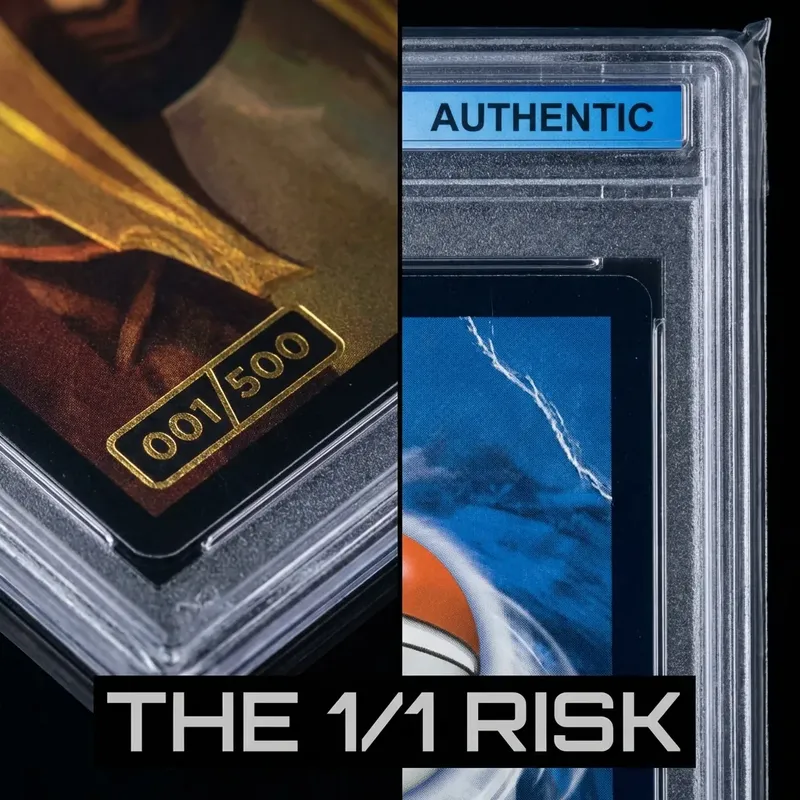
The "Gold Stamp" on serialized MTG cards is not just ink—it is a physical depression in the card stock. This manufacturing process creates a unique defect vector that affects 35% of all serialized cards: The Back Ridge.
Before you fill out that PSA submission form, you need to understand the economics of serialization. A random number (e.g., #384/500) relies on a high grade for value. A premium number (#001, #500, #069) relies on the number itself.
The "Back Ridge" Flaw
Critical Inspect Step
Flip your serialized card over. Look directly behind the gold stamp number under a raking light. Do you see a tiny bump or white stress mark?
That is an automatic PSA 8 or 9. The stamp pressed too hard during manufacturing.
Market Analysis: The Premium Numbers
Data from TCGPlayer and eBay sold listings confirms a massive hierarchy in value based solely on the digits stamped on the card.
Premium: 300% - 1000%+
The #001 is functionally a 1/1. It commands the highest price of any serial number.
Premium: 150% - 300%
The last card printed (e.g., #500/500) is the "bookend" of the set.
Premium: 50% - 200%
Culturally significant numbers. Buyers want them for the joke, not the condition.
Read the TCGPlayer Analysis →
The "Authentic" Strategy
If you have a #001/500 card, do not grade it numerically unless you are 100% certain it is a flawless 10.
Here is why: A #001 card in a PSA 7 slab looks "damaged" to a high-end collector. It implies the card was mishandled. However, a card in a PSA "Authentic" slab (Blue Label) has no grade attached. It simply verifies the card is real and protects it.
The Market Logic: With an Authentic slab, the buyer can imagine the card is "Mint." With a PSA 7 slab, the reality of the damage is staring them in the face.
Video: Determining Value
For a deeper look into how serial numbers affect pricing, watch this breakdown.
Final Verdict
Random Number? Grade it. You need a PSA 10 to make it special.
Premium Number? Authenticate it. The number is the grade.