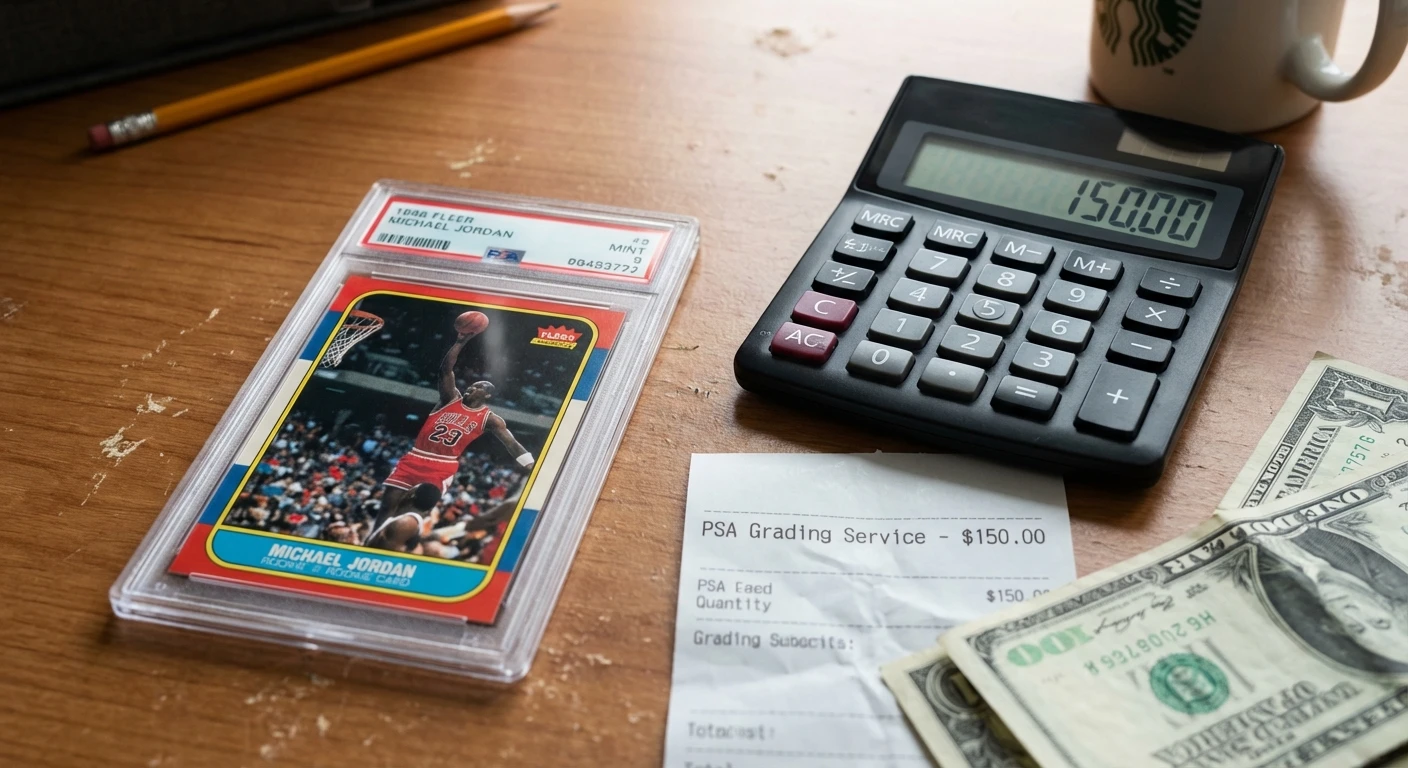
The Short Answer
- Higher grading cost + longer waits make already-slabbed cards more valuable.
- The graded-vs-raw premium widens when new supply is throttled.
- PSA 10s become "non-negotiable" currency as the cheap path to them closes.
- Buying graded can now be cheaper than grading raw on borderline cards.
The Market Mechanic
Card values reflect both the card and the cost to certify it. When PSA raises the cost floor to $79.99 and stretches turnaround, the "replacement cost" of producing a new slab rises. That pushes up the value of slabs that already exist — buyers no longer have a cheap, fast path to create their own.
The PSA 10 Premium Becomes Non-Negotiable
The PSA 10 was already the hobby's de facto currency. With the cheap route to one closed for ~4 months, the premium over raw and over lower grades firms up further. Sellers of existing PSA 10s gain pricing power; buyers who need a 10 now must pay market rather than gamble $80 and 50 business days on a raw submission.
Buy Graded vs. Grade Raw
On borderline cards, the calculus flips. If grading a raw copy costs $80 + shipping + a real chance of a non-gem, and a graded PSA 9 is available for not much more, buying the slab outright can be cheaper and risk-free. The pause makes "buy the slab, not the gamble" the rational move for many mid-value cards.
Frequently Asked Questions
Does the PSA pause raise prices on graded cards?
Should I buy graded or grade raw during the pause?
Why is the PSA 10 premium growing?
Sources & Further Reading
Emily Rodriguez analyzes grading cost, population, and pricing data across PSA, BGS, SGC, CGC, and TAG. She built the PreGradeCards ROI calculator and submission planner, and her market reports on grading backlog, turnaround times, and slab premiums are cited by collectors and dealers worldwide.
Create a free account and get 2 free credits — enough for 2 complete AI gradings with market pricing. No credit card required.
Get Your Free Credits →