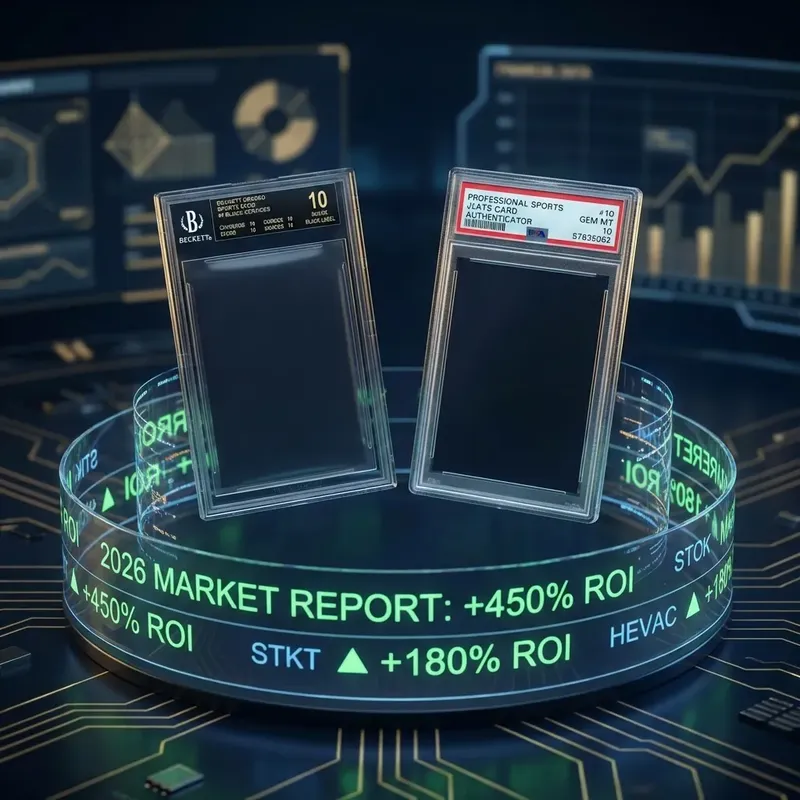
The Short Answer
- Professional grading is expensive due to labor, liability insurance, authentication expertise, and facility overhead
- PSA Regular costs $79.99 per card in 2026, with Value tiers paused
- Shipping, insurance, and supplies add 15-30% to the total cost
- Demand surges and backlogs allow graders to maintain premium pricing
- AI pre-grading at $0.19-0.47 per card reduces total grading costs by 40-60%
Short Answer
Card grading is expensive because professional graders must pay for skilled labor, liability insurance, authentication expertise, secure facilities, and shipping insurance. In 2026, PSA Regular costs $79.99 per card, BGS Standard is ~$60, and CGC is $15-25. Add shipping and insurance, and a single card can cost $100-150 to grade. The best way to reduce costs is to pre-grade cards with AI before paying professional fees, filtering out cards that will not achieve profitable grades.
Labor and Expertise
Professional graders employ trained specialists who examine cards under magnification, evaluate centering, detect surface defects, and assign consistent grades. Hiring and retaining these experts is expensive. Each card may be reviewed by multiple graders, especially for high-value submissions.
Graders also undergo ongoing training to maintain consistency across thousands of employees. This training cost is baked into the per-card fee.
Grading companies handle millions of dollars worth of cards daily. They must carry insurance for:
- Lost or damaged cards during shipping and handling
- Theft from secure facilities
- Errors in grading that affect card value
- Natural disasters or facility damage
Insurance premiums for high-value collectibles are substantial. These costs are passed to customers through per-card fees.
Authentication Costs
Authentication is one of the most expensive parts of grading. Companies employ specialists to detect counterfeits, reprints, trimmed cards, and alterations. They maintain databases of known fakes and use tools like UV light, microscopes, and weighing scales.
Authentication is a skill that takes years to develop, and graders with this expertise command high salaries. This is why authentication upcharges exist for cards with high forgery risk.
Facility and Overhead
Grading companies operate secure facilities with climate control, surveillance, and controlled access. PSA, BGS, and CGC process millions of cards per year, requiring large warehouses, sophisticated tracking systems, and customer service teams.
All of this overhead — rent, utilities, security, technology, and salaries — is divided across each card graded.
Market Demand and Backlogs
Demand for grading has exploded since 2020. PSA, BGS, and CGC regularly run backlogs, allowing them to keep prices high. When demand exceeds supply, companies can raise prices without losing customers.
PSA paused its lower-cost Value tiers in 2026, leaving $79.99 Regular as the cheapest PSA option. This reflects both demand and the company’s strategy to prioritize higher-value submissions.
How to Save Money on Grading
AI pre-grading is the single best way to reduce grading costs. At $0.19-0.47 per card, AI can screen your entire collection and identify which cards are worth professional submission.
Example savings:
- 100 cards submitted blindly to PSA: 100 × $79.99 = $7,999
- AI pre-screening 100 cards: 100 × $0.25 = $25
- AI flags 35 cards as low-grade; submit 65 to PSA: 65 × $79.99 = $5,199.35
- Total: $5,224.35 vs $7,999 — save $2,774.65
Additional savings tips:
- Batch submissions to spread fixed shipping costs.
- Choose the right tier — do not pay Express for cards you can wait on.
- Declare value accurately to avoid over-tiering.
- Buy supplies in bulk.
Use our PSA Cost Calculator and BGS Cost Calculator to plan submissions.
Frequently Asked Questions
Why is PSA grading so expensive?
PSA grading is expensive because of high demand, labor costs, authentication expertise, insurance, and facility overhead. With Value tiers paused, PSA Regular is $79.99 per card in 2026.
Why is BGS grading expensive?
BGS grading is expensive because it provides detailed subgrades and employs strict graders. The added labor of four subgrades and Black Label chasing increases cost compared to single-grade services.
How can I reduce card grading costs?
Use AI pre-grading to filter out low-grade cards before paying professional fees. Batch submissions, choose slower tiers, and buy supplies in bulk. This can reduce total grading costs by 40-60%.
Is card grading worth the cost?
Card grading is worth it when the expected sale price of the graded card is at least 3x the total cost and the card has a high chance of the target grade. For low-value cards, grading is usually not profitable.
Will grading prices go down in 2026?
Grading prices are unlikely to drop significantly in 2026 because demand remains high and PSA has paused its cheapest tiers. Competition from CGC and SGC may keep mid-tier prices stable.
Sources & Further Reading
The PreGradeCards Research Team combines machine-learning engineers, grading analysts, and collector-education specialists to produce accurate, data-driven guides on AI card grading, professional grading standards, and collecting strategy.
With submission floors rising, pre-screening is no longer optional. Use our AI Pre-Grade Calculator to score a card's PSA 10 odds before you pay, and the Submission Planner to pick the right tier.