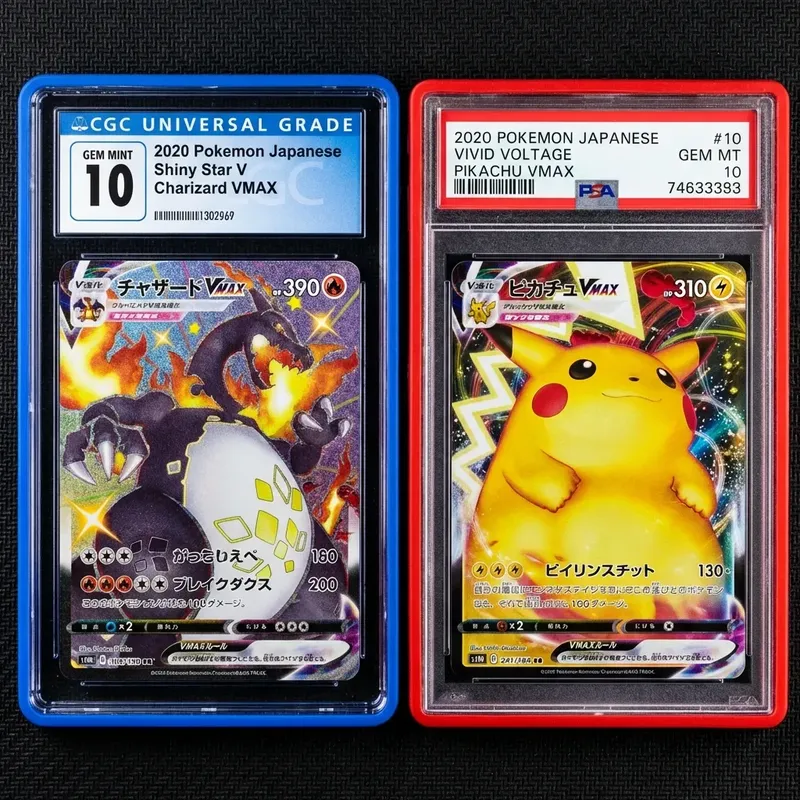
The Short Answer
- Yu-Gi-Oh cards use the same 1-10 grading scale as other TCGs through PSA, BGS, and CGC
- 1st Edition Legend of Blue-Eyes White Dragon (LOB) cards command the highest vintage premiums
- Tournament prize cards are the rarest Yu-Gi-Oh cards, with some valued at over $1 million
- Ghost Rare and Ultimate Rare foils are the most condition-sensitive modern Yu-Gi-Oh cards
- The Yu-Gi-Oh secondary market is player-driven — tournament meta shifts can spike card prices 500%+
- CGC is the most popular Yu-Gi-Oh grader due to competitive pricing and anime-friendly branding
Grading Yu-Gi-Oh Cards
Yu-Gi-Oh cards are graded by the same companies as Pokemon and Magic, but with some Yu-Gi-Oh-specific considerations:
| Company | Market Share (YGO) | Price | Notes |
|---|---|---|---|
| CGC | ~45% | $25-35 | Most popular for YGO due to price and speed |
| PSA | ~35% | $79.99 | Highest resale for vintage 1st Edition |
| BGS | ~15% | $65 | Preferred for high-end with subgrades |
| SGC | ~5% | $45 | Growing due to fast turnaround |
Unique Yu-Gi-Oh grading factors:
- OCG vs TCG: Japanese (OCG) cards often have different rarity structures. Some OCG exclusives are highly sought after by TCG collectors.
- Edition matters enormously: 1st Edition cards from early sets (LOB, MRD, MRL) are worth 5-20x more than unlimited printings.
- Player market sensitivity: Unlike Pokemon or Magic, Yu-Gi-Oh prices are heavily influenced by competitive play. A banned card can drop 80% overnight.
Most Valuable Vintage Yu-Gi-Oh Cards
These are the crown jewels of Yu-Gi-Oh collecting:
| Card | Set | Raw NM | PSA 9 | PSA 10 |
|---|---|---|---|---|
| Blue-Eyes White Dragon | LOB 1st Ed | $3,000 | $8,000 | $25,000+ |
| Dark Magician | LOB 1st Ed | $1,500 | $4,000 | $12,000+ |
| Exodia the Forbidden One | LOB 1st Ed | $800 | $2,000 | $6,000+ |
| Red-Eyes Black Dragon | LOB 1st Ed | $600 | $1,500 | $4,000+ |
| Jinzo | PSV 1st Ed | $400 | $1,000 | $3,000+ |
What to look for: The 1st Edition stamp is on the lower-left of the card art box. Unlimited printings have no stamp and are worth significantly less. Cards from LOB (Legend of Blue-Eyes White Dragon), MRD (Metal Raiders), and MRL (Magic Ruler) are the most collected early sets.
Tournament Prize Cards
The rarest Yu-Gi-Oh cards in existence are tournament prize cards, never sold in stores:
- World Championship cards: Given to top 3 finishers. Only 3-6 copies exist per card. Values: $50,000 to $1,000,000+ depending on the card.
- Shonen Jump Championship cards: Awarded at SJCs in the mid-2000s. Extremely limited print runs. PSA 10s command massive premiums.
- YCS Prize Cards: More recent but still limited. Top finishers receive ultra-rare versions of popular cards.
- World Championship 2006 cards: The "Shonen Jump" Dark Magician Girl and Blue-Eyes White Dragon are among the most iconic prize cards.
Grading tournament cards: PSA is the preferred grader for tournament cards due to authentication requirements. Many tournament cards were played or transported without sleeves, so even PSA 8 copies are highly valuable.
Modern Rarities: Ghost, Ultimate, Starlight
Modern Yu-Gi-Oh has developed its own ultra-rare categories that command grading premiums:
- Ghost Rare: See-through holographic cards with 3D depth. Extremely condition-sensitive. PSA 10 Ghost Rares sell for 5-15x raw NM.
- Ultimate Rare: Gold-foil title and embossed art. Popular with collectors for visual appeal. PSA 10 premiums are 3-5x raw.
- Starlight Rare: The rarest modern Yu-Gi-Oh rarity. One per case. Cards like Starlight Rare Ash Blossom sell for $1,000+ raw and $5,000+ PSA 10.
- Quarter Century Secret Rare: 25th Anniversary exclusive rarity with unique foil pattern. Low print runs create scarcity.
Modern grading strategy: Only grade chase cards from the current competitive meta (Ash Blossom, Infinite Impermanence, Nibiru) if they are Ghost, Ultimate, or Starlight Rare. Standard Secret Rares rarely justify grading unless they are tournament staples in high demand.
Grading Costs & ROI
Yu-Gi-Oh card grading costs are similar to other TCGs:
| Service | Price | Best Use Case |
|---|---|---|
| CGC Bulk | $25 | Modern bulk submissions |
| CGC Standard | $35 | Mid-tier vintage and modern |
| SGC Standard | $45 | Vintage with fast turnaround |
| BGS Standard | $65 | High-end with subgrades |
| PSA Regular | $79.99 | Vintage 1st Edition for max value |
ROI rule: Only grade Yu-Gi-Oh cards worth $75+ raw. The grading fee plus shipping ($30-50 total) must be recovered through the graded premium. For tournament prize cards, grading is almost always worth it regardless of condition due to extreme scarcity.
Frequently Asked Questions
Is it worth grading Yu-Gi-Oh cards?
What is the most expensive Yu-Gi-Oh card?
What does 1st Edition mean on Yu-Gi-Oh cards?
What is a Ghost Rare Yu-Gi-Oh card?
Should I grade tournament prize Yu-Gi-Oh cards?
Sources & Further Reading
Sarah Williams leads PreGradeCards educational content and collector onboarding. She has been a full-time collector and dealer for 12 years, specializing in modern sports cards and Pokémon TCG, and has written grading guides read by over 300,000 collectors.
Create a free account and get 2 free credits — enough for 2 complete AI gradings with market pricing. No credit card required.
Get Your Free Credits →