Baseball Card Identification & AI Grading
Baseball cards are the foundation of the sports card hobby. From the T206 Honus Wagner tobacco cards of the early 1900s to the 1952 Topps Mickey Mantle and modern Bowman 1st prospects, baseball cards have produced the most valuable sports cards in history. PreGradeCards AI identifies year, set, manufacturer, player, and condition to predict PSA, BGS, and SGC grades before you spend professional fees.
Grade Cards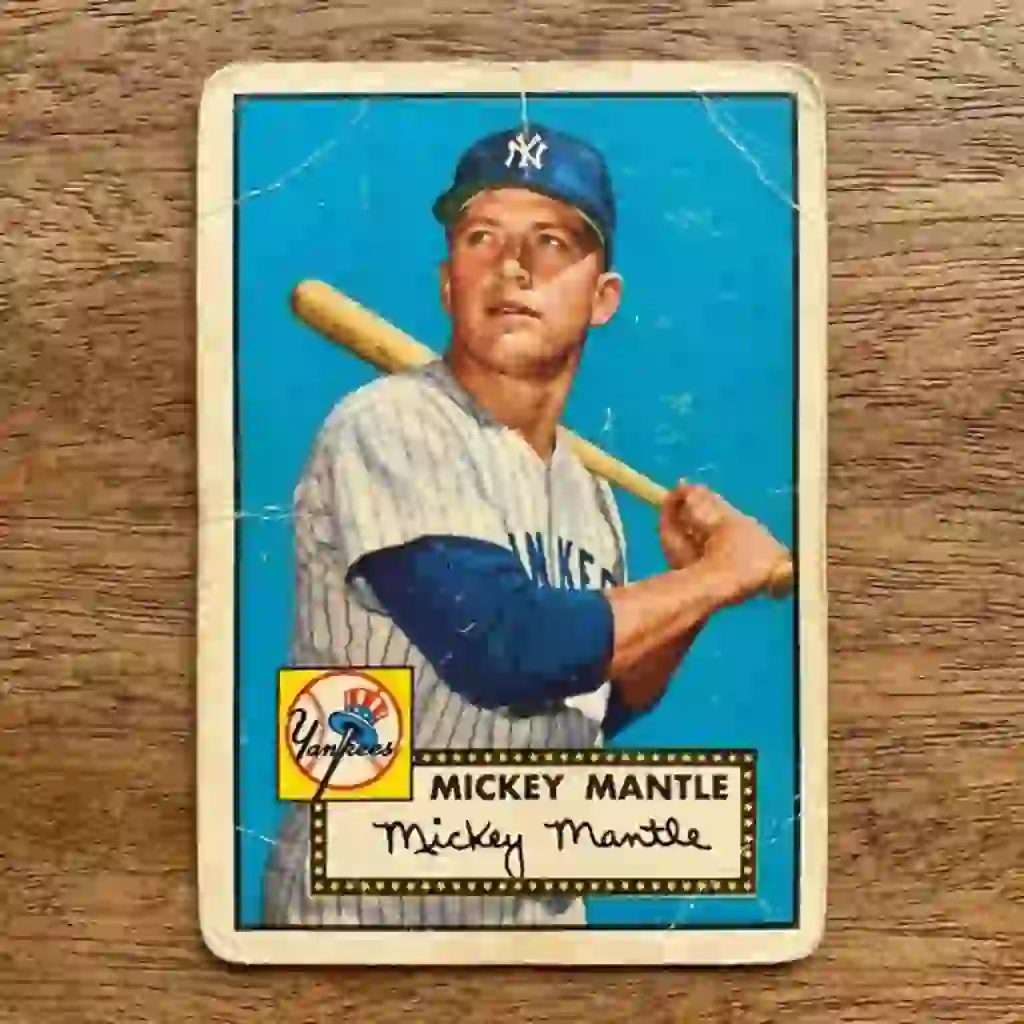
Key Takeaways
- AI pre-grading costs about $0.19 per card, while PSA Regular is $79.99 per card. Pre-screening is the smart first step.
- Only 8.88% of cards submitted to PSA earn Gem Mint 10. AI filtering helps you avoid paying full grading fees for low-grade results.
- PreGradeCards AI matches PSA grades within one point 89% of the time on internal benchmarks of 10,000 cards.
- Professional graders evaluate four criteria: corners, edges, surface, and centering.
- Not every card is worth grading. Focus on chase cards, premium foils, rare variants, and iconic staples.
History & Market Context
Baseball cards began as tobacco inserts in the late 1800s and became a standalone product in the early 1900s. The T206 set is the most famous tobacco issue, featuring Wagner, Ty Cobb, and Christy Mathewson. The modern hobby began with Bowman and Topps in the 1950s, with the 1952 Topps Mickey Mantle becoming the most iconic post-war card. The 1980s and 1990s overproduction created the "junk wax" era, while modern products use numbered parallels, autographs, and memorabilia to create scarcity.
Baseball cards remain the highest-value sports card category. A 1909 T206 Wagner sold for over $6 million, and a 1952 Topps Mickey Mantle PSA 9 sold for $5.2 million. Modern Bowman 1st prospect cards can spike from a few dollars to hundreds or thousands when a player makes their MLB debut. The market is driven by Hall of Fame players, rookie cards, and condition.
In 2026, the grading market for Baseball Card Identification & AI Grading remains active. Collectors are submitting vintage staples, modern chase cards, and premium foil variants. The key to success is condition. A card that looks mint to the naked eye may have micro-surface defects, off-centering, or corner wear that drops it from PSA 10 to PSA 9 or lower. AI pre-grading catches these issues before you pay for a professional slab.
T206 Wagner
Pre-war tobacco grail card.
1952 Topps Mantle
Most iconic post-war card.
Bowman 1st
Prospect rookie cards.
Topps Chrome
Refractor and rookie cards.
Vintage Stars
Mantle, Mays, Clemente, Aaron.
Hall of Fame
Legendary player cards.
Artists, Sets & Design
Baseball cards originally used photographs and simple lithographic designs. Topps introduced painted portraits in the 1950s and 1960s, with artists like Gerry Dvorak and Bob Laughlin. Modern cards use high-resolution photography, action shots, and a variety of foil and die-cut treatments.
Understanding the design history of Baseball Card Identification & AI Grading helps collectors identify valuable variants and avoid counterfeits. Card backs, copyright lines, foil patterns, and border treatments all provide authentication clues. PreGradeCards AI is trained on these visual markers to identify cards accurately from a single photo.
What PreGradeCards AI Identifies
Upload a photo and PreGradeCards AI will analyze the card for the same four pillars professional graders use:
- Year, set, and manufacturer
- Player name and team
- Base, parallel, refractor, and autograph
- Card number and card back design
- Surface, corner, edge, and centering flaws
The AI also estimates a predicted grade range and flags the specific areas most likely to lower your grade. This lets you decide whether to submit, sell raw, or hold the card before spending $79.99 or more on professional grading.
Grading Deep Dive
Condition factors specific to Baseball Card Identification & AI Grading cards:
- Vintage cards often have poor centering and soft corners
- Chrome cards are prone to surface scratches
- Bowman 1st cards are frequently handled by young collectors
- Tobacco cards may have staining and creases
- Modern parallels can have print lines
Professional graders use magnification and controlled lighting to find these defects. PreGradeCards AI replicates that process digitally, giving you a professional-grade pre-screen at a fraction of the cost. The AI highlights centering ratios, corner wear, edge chipping, and surface issues so you can make informed submission decisions.
Grading Demand by Era
Grading demand varies by era based on scarcity, collector nostalgia, and player interest. Cards from the earliest print runs and the most popular modern sets see the strongest submission volume.
Why AI Pre-Grading Saves Money on Baseball Card Identification & AI Grading
Professional grading is expensive, and not every card will earn a premium grade. PSA Regular costs $79.99 per card. If you submit ten cards and only three earn PSA 10, you have wasted $559.93 on the seven lower grades. AI pre-grading at $0.19 per card lets you test your entire collection first.
The AI filters out the 60-70% of raw cards that are unlikely to earn PSA 10, letting you submit only the strongest candidates. This reduces total grading costs by 40-60% and improves the average grade of your submissions. For collectors and dealers who grade dozens or hundreds of cards per year, the savings can reach thousands of dollars.
AI pre-grading is especially valuable for Baseball Card Identification & AI Grading because of the variety of card types, foil treatments, and print eras. A card from one era may have different condition vulnerabilities than a card from another. The AI accounts for these differences and gives you a targeted pre-screening report.
Frequently Asked Questions
How does AI pre-grading work for baseball cards?
The AI scans the card, identifies the year, set, player, and manufacturer, then evaluates corners, edges, surface, and centering for a predicted grade.
What baseball cards are worth grading?
Vintage Hall of Famers, 1952 Topps, Bowman 1st prospects, Topps Chrome rookies, and T206 cards are the best candidates.
Is AI pre-grading accurate for baseball?
PreGradeCards AI matches PSA, BGS, and SGC grades within one point on 89% of tested cards.
How much does baseball card grading cost?
PSA Regular is $79.99 per card. SGC starts at $15. AI pre-grading is about $0.19 per card.
What is the biggest grade killer for baseball cards?
Corner and edge wear on vintage cards, and surface scratches on Chrome and modern cards are the most common issues.