The Short Answer
- PSA graded 1.78 million TCG cards in June 2026 — Pokémon is the dominant category.
- PSA Value tiers paused — minimum submission fee is now $79.99 (Regular tier).
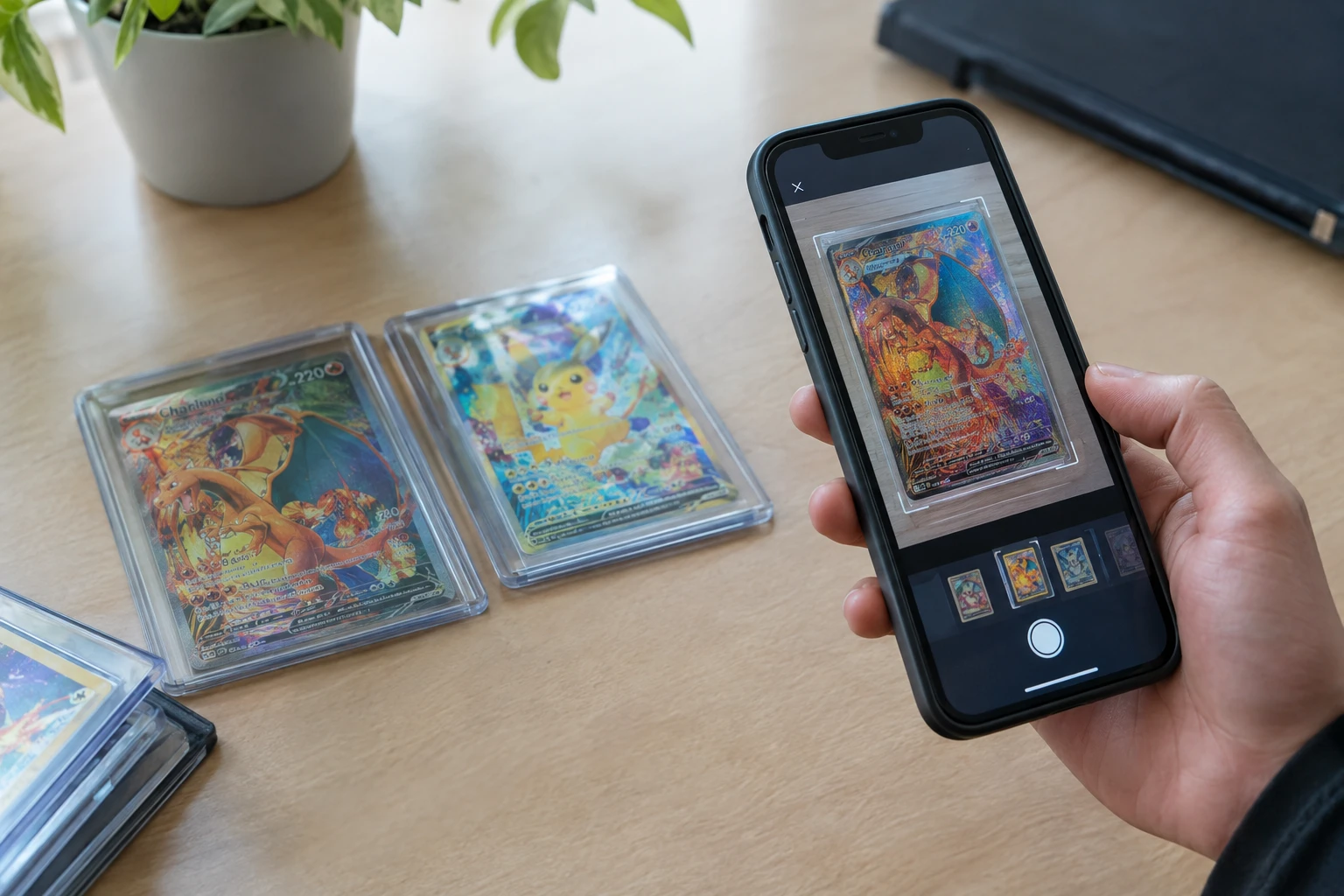
- AI centering tools catch off-center Pokémon prints before you waste a submission.
- Alt art surfaces are prone to haze and handling marks — AI surface detection catches these early.
- Free credits on PreGradeCards let you grade your first Pokémon batch at no cost.
The Pokémon Grading Market in 2026
Pokémon cards are the engine of the modern card grading industry. According to GemRate data published by Sports Illustrated Collectibles, PSA graded 2.50 million cards in June 2026 — and Pokémon, One Piece, and Magic: The Gathering TCG cards accounted for 71% of that volume. Year over year, TCG grading volume is up 95% at PSA.
That extraordinary demand is exactly why PSA hit a 14 million-card backlog and paused their four Value tiers effective June 2, 2026. For Pokémon collectors, the practical impact is severe: the cheapest available PSA submission tier is now Regular at $79.99 per card with a 50-business-day turnaround.
Send 50 Pokémon cards to PSA today and you're committing $3,995 in fees and waiting over two months to find out which grades you received. If a third of those cards grade PSA 8 instead of PSA 10, you've potentially paid $1,330 in fees for grades that don't justify the cost. AI pre-grading exists to prevent exactly this scenario.
The 2026 Pokémon set calendar is adding fuel to collector demand. Mega Evolution — Pitch Black released July 17, 2026 featuring Mega Darkrai ex, Mega Zeraora ex, and a new wave of full-art cards. The 30th Celebration expansion launches September 16 with Futuristic Rare cards and 30 unique Pikachu inserts — the kind of limited-run insert set that historically produces the highest-value PSA 10 slabs.
Why AI Grading Is Essential for Pokémon Cards
Pokémon cards have specific manufacturing characteristics that make AI pre-grading especially valuable compared to other TCGs:
Factory Centering Is Inconsistent
Modern Pokémon card print runs are notorious for centering variance. The same set print run can produce cards ranging from perfect 50/50 centering to 70/30 or worse. This isn't visible to the naked eye in a sleeve — but PSA's centering standards are precise, and a card that looks great in hand can still fail to reach PSA 10 due to borderline centering. AI centering analysis measures this ratio in pixels and tells you exactly where your card sits relative to PSA's 60/40 threshold.
Holo Surfaces Are Fragile
Holographic Pokémon cards (especially Base Set, Base Set 2, and Jungle/Fossil-era holos) have a foil surface that scuffs and shows wear marks far more readily than non-holo cards. Even cards that have been stored in sleeves since opening can show micro-scratches from normal handling. AI surface detection picks up these marks before you commit to a $79.99 fee.
Booster Pack Print Lines Are Common
Print lines — thin parallel scratches on the card surface caused by printing roller issues — are endemic in Pokémon card production. They're nearly invisible without the right light angle but will prevent a PSA 10 grade. PreGradeCards AI surface analysis catches print lines and flags them in its condition report so you know before submitting.
The Pop Report Reality
Only 8.88% of all PSA submissions receive a PSA 10 grade. For modern Pokémon holos and alt arts, that percentage can be even lower on challenging print runs. AI pre-grading lets you filter to the top-tier candidates before investing in fees.
Charizard Cards: Centering and Surface Issues to Know
No Pokémon card is discussed more in grading communities than Charizard. The Base Set Charizard holo is arguably the most graded card in hobby history, and its modern variants — from 151 to Obsidian Flames to Prismatic Evolutions — generate enormous grading volume. Each era has its specific grading challenges:
Base Set Charizard (1999)
The holy grail. PSA 10 Base Set Charizards have sold for $420,000 at auction. The key grading factors on vintage Base Set Charizard are: holo surface scratching (extremely common even on unplayed copies), corner fraying (cardstock from 1999 is soft by modern standards), and print lines (factory issues from the Wizards of the Coast print run). AI surface analysis is not as reliable for vintage cardstock as it is for modern cards — for a $400,000+ card, use AI as a first screen but have a professional human evaluator confirm before submitting.
151 Charizard ex (2023)
The 151 set's Charizard ex was one of the most-submitted modern cards in 2023–2024. The full-art version suffers from centering issues and surface scratches from card-to-card contact within booster packs. AI centering analysis reliably catches the off-center pulls that represent roughly 40% of 151 Charizard ex cards pulled from packs.
Obsidian Flames Charizard ex (2023)
The black-frame Charizard from Obsidian Flames became an instant collector's item. The teratype card frame is susceptible to edge chipping. AI edge detection checks all four edges for factory chips before submission.
Prismatic Evolutions Charizard ex
The 2025 Prismatic Evolutions set produced some of the most valuable modern Pokémon chase cards. Charizard ex cards from this set have unique foil finishes that require proper lighting for accurate AI surface analysis. Use diffuse natural light when photographing for the most accurate result.
Pikachu Cards: What Kills PSA 10 Grades
Pikachu is the most-printed Pokémon character in history, but certain Pikachu cards are among the most valuable in existence. The 1998 Pokémon Illustrator Pikachu sold for $5.275 million in 2021. The 2016 Pokémon Illustrator Pikachu graded PSA 10 sold for $900,000. In 2026, the 30th Celebration set introduces 30 unique Pikachu insert cards that are expected to generate significant grading demand.
30th Celebration Pikachu Inserts (September 2026)
The 30th Celebration set's Pikachu inserts are printed on a unique foil stock not seen in standard Pokémon sets. Early collector reports from prerelease previews suggest centering variance is a concern. AI centering analysis will be essential for these cards immediately after set release — high PSA 10 pop numbers for these inserts will be the difference between high value slabs and diminishing returns.
Full-Art Pikachu VMax (Crown Zenith)
Crown Zenith's Pikachu VMax full-art is a consistently high-value PSA 10 target. The card's full-art border makes centering issues more visually apparent than most cards — but AI can still catch borderline centering that the eye misses. Surface haze from humidity exposure is the other common failure mode.
Pikachu V-Union Cards
The V-Union Pikachu cards are an unusual case: they're designed to be played as four connected cards. For grading purposes, each is assessed individually. AI tools handle these as standard cards — the artwork extends to the edges on some, which makes edge condition especially important to check.
Alt Art and Special Illustration Rare Grading: The AI Advantage
Special Illustration Rares (SIRs) and alt art cards are the modern Pokémon collector's primary grading target. These cards — introduced in the Sword & Shield era and expanding dramatically in the Scarlet & Violet sets — feature full-bleed artwork that extends to the card edges with no standard white border.
This design change has significant grading implications:
Edge Condition Is Paramount
Without a white border to absorb edge chips, any edge damage on an alt art card is immediately visible against the card's artwork. A tiny chip on a standard Pokémon card might drop it from PSA 10 to PSA 9. The same chip on an alt art card creates a stark contrast against the full-bleed art and may drop it to PSA 8. AI edge detection is especially valuable on alt art cards because it catches micro-chips at the edge that standard visual inspection misses.
Surface Handling Marks
Alt art cards come directly into contact with other cards in booster packs. The full-bleed surfaces pick up micro-scratches from card-to-card friction during pack opening and sorting. PreGradeCards AI surface analysis flags these marks — especially in the darker areas of the card art where they're most visible under grading loupe.
High-Value SIR Targets in 2026
The highest-value PSA 10 alt art targets in the 2026 market include: Charizard ex SIR from Obsidian Flames, Iron Valiant ex SIR from Paradox Rift, Miraidon ex SIR from Scarlet & Violet base, and the incoming Mega Evolution — Pitch Black SIRs. PSA 10 multipliers on these cards can run 10–40x the raw price, making AI pre-screening ROI extraordinarily positive.
Mega Evolution — Pitch Black: 2026 Chase Cards to Pre-Grade
Mega Evolution — Pitch Black (released July 17, 2026) is the most-anticipated Pokémon set of the year. The set brings Mega Evolution mechanics back to the TCG and introduces several cards expected to drive grading volume into Q3 and Q4 2026:
- Mega Darkrai ex — the marquee card of the set. Full-art and special illustration variants expected.
- Mega Zeraora ex — electric typing with anticipated alt art variant.
- Mega Garchomp ex — popular nostalgia card with modern treatment.
- Pitch Black special illustrations — dark-themed full-art energies and trainer cards.
For collectors planning to grade pulls from Mega Evolution — Pitch Black, the AI pre-grading workflow is critical. The set release creates an immediate submission rush; PSA will see a surge in Mega Evolution submissions in July–August 2026. With Value tiers paused, every submission goes in at $79.99. Pre-grade your entire pull list with AI before deciding which cards are worth the fee.
How to AI-Grade Your Pokémon Cards: Full Workflow
Here is the complete workflow for AI pre-grading a Pokémon card collection before a PSA or CGC submission:
- Sort your pull list. Identify all cards you're considering for grading and organize by value tier — $100+ raw cards get individual AI scans; lower value cards can be batch screened.
- Set up your scanning environment. Use a light gray or black background, diffuse natural or softbox light. Photograph from directly above with no shadows. High resolution matters most for surface and corner analysis.
- Upload front and back to PreGradeCards. Front analysis handles centering and primary surface. Back analysis catches scratches and print lines that often show more clearly on card backs.
- Read the full condition report. Don't just look at the grade number — read every condition flag. A PSA 9 prediction with a note about "borderline centering" means the card could easily grade PSA 8 on a strict evaluator. A PSA 10 prediction with no flags is a high-confidence submission.
- Apply the submission filter. AI 9.5–10: submit. AI 8.5–9: consider value carefully. AI 8 or below: sell raw, trade, or hold.
- Use the batch ROI calculator. PreGradeCards shows expected PSA 10 value and PSA 9 value for your card. Run the math: if your AI-predicted PSA 10 would sell for $300 and fee is $79.99, your expected return is strong. If PSA 10 would sell for $100, the math barely works even on a confident AI 10.
PSA Submission Checklist for Pokémon Collectors in 2026
Before finalizing any Pokémon submission in 2026, run through this checklist:
- ☑ AI grade confirmed 9–10 on PreGradeCards before submission.
- ☑ Value tier availability checked — PSA Value tiers paused as of July 2026; budget $79.99 minimum per card.
- ☑ PSA 10 population checked — high pop counts on common cards suppress PSA 10 values.
- ☑ Card sealed in penny sleeve + semi-rigid holder before placing in submission box.
- ☑ Shipping insured for full card value — USPS Priority Mail with declared value or UPS.
- ☑ PSA submission created online before shipping — PSA requires a submission form; walk-in boxes are not accepted without a registered submission.
- ☑ ROI math confirmed positive — PSA 10 expected sale price minus $79.99 fee minus shipping minus platform fees leaves profit.
The 2026 Pokémon grading market rewards preparation. With PSA at $79.99 minimum and CGC running 5+ months on bulk, every submission decision should be backed by AI pre-grading data. PreGradeCards free credits let you start that process today at no cost.
Frequently Asked Questions
Can AI accurately grade Pokémon cards?
How do I check my Charizard card grade with AI?
What Pokémon cards are worth grading in 2026?
Why did PSA pause Value tier submissions?
How much does it cost to AI grade a Pokémon card?
What is a Special Illustration Rare in Pokémon?
Sources & Further Reading
- GemRate June 2026 — SI Collectibles Record Grading Month
- PSA Pauses Value Tiers — Sports Collectors Digest
- CGC Grading 2026 — CardGrade.io
Create a free account and get 1 free credit — enough for 1 complete AI grading with market pricing. No credit card required.
Sign Up Free →