The Short Answer
- PokémonXP and the 2026 World Championships take place in San Francisco on August 28, 2026, creating the largest international Pokémon TCG buyer gathering of the year.
- PokémonXP is a new festival format that combines competitive play, hands-on activities, and exclusive Pokémon Center pop-ups alongside the World Championships.
- AI pre-grading lets you verify condition before traveling, turning raw cards into trusted, shareable inventory for trade nights and vendor tables.
- Best inventory to bring includes Mega Evolution—Pitch Black chase cards, 30th Celebration previews, and high-end vintage slabs.
- QR-verifiable AI reports from PreGradeCards help buyers trust condition instantly, which is critical for high-value trades at a major event.
PokémonXP and Worlds 2026 Overview
The Pokémon World Championships return to the United States in 2026 with a new format. The event will be held in San Francisco, California, on August 28, 2026, and for the first time it will be paired with PokémonXP, a new festival-style experience designed for fans, collectors, and players. The Moscone Center will host the competitive championships, while PokémonXP brings hands-on activities, exclusive merchandise, and Pokémon Center pop-ups to the broader fan base.
Pokémon.com describes the combined event as a multi-day celebration that will attract the best competitive players from around the world across the Pokémon TCG, video games, and other formats. The World Championships are the culminating event of the Play! Pokémon season, and the 2026 edition will be the first held in San Francisco since the city hosted Worlds in 2016. That earlier event is remembered for its strong collector scene, and the 2026 return is expected to be even larger given the growth of the TCG and the broader collecting market.
For card collectors, the event is more than a spectator experience. Major Pokémon events create concentrated demand for graded and raw cards, especially the cards that are relevant to the current competitive and collecting metas. With Mega Evolution—Pitch Black releasing six weeks before Worlds and the 30th Celebration expansion launching three weeks after, the August 28 weekend sits at the exact intersection of two major product cycles. Collectors who prepare inventory ahead of the event can take advantage of that timing.
Registration for the multi-day interest list opened earlier in 2026, and single-day pass interest lists were open through June 18. Selected registrants received the opportunity to purchase passes in mid-July. For those who cannot attend the competitive halls, PokémonXP activities and the surrounding collector community will still provide plenty of trading opportunities.
Daily Schedule and Key Events
Pokémon.com has published a daily schedule for both PokémonXP and the World Championships. The schedule includes competition, side events, fan experiences, and exclusive retail activations. While exact times may shift, the core structure is clear:
- Competition days: The World Championships feature TCG, video game, and Pokkén Tournament DX competitions. Finals are typically held on the final day and draw the largest crowds.
- PokémonXP activities: These include photo opportunities, interactive exhibits, and meet-and-greet sessions. The festival format is designed to be accessible to fans who are not competing.
- Exclusive Pokémon Center pop-up: The pop-up shop will carry event-exclusive merchandise, including potential promotional cards and limited apparel. Lines are expected to be long, and some items may sell out quickly.
- Trade nights and community meetups: Unofficial but well-organized trade nights typically happen at nearby hotels, bars, and hobby shops after the official event closes each day.
For sellers, the most valuable hours are usually the evenings, when international attendees have finished watching competition and are looking to buy or trade. The area around the Moscone Center, including hotels on Market Street and in the SoMa district, becomes a mobile collector marketplace. Sellers with AI-verified inventory can move cards quickly because buyers are tired, excited, and willing to pay a premium for cards they can trust without sending to PSA themselves.
Plan to arrive at least one day before the event starts. Thursday, August 27, is typically when early-bird collectors begin meeting, and hotel lobbies turn into informal trading floors. Having your inventory pre-graded and priced before you arrive lets you participate immediately rather than spending the first day organizing cards.
Why Pre-Grade Before the Event
High-value trading at a major event has a trust problem. When a buyer is considering a $500 raw card from a stranger in a hotel lobby, they have no way to verify condition without a loupe, good lighting, and grading experience. That uncertainty leads to lower offers or no sale. AI pre-grading solves this problem by creating a third-party condition report that both parties can see on a phone screen.
PreGradeCards generates a public shareable URL for every scanned card. The report shows a predicted PSA grade, centering measurements, corner and edge flags, and surface anomaly detection. A seller can show that URL to a buyer in seconds, and the buyer can verify that the card was analyzed by an independent AI system rather than by the seller’s optimistic eye. This transparency is especially valuable at an event where lighting is uneven and time is limited.
Pre-grading also helps sellers decide what to bring. With PSA Value tiers paused, the $79.99 fee makes it expensive to grade every card after the event. AI screening lets you identify which cards are worth submitting, which should be sold raw at the event, and which should be held for a later market cycle. That decision is best made before you pack your suitcase, not while standing in a hotel hallway.
Finally, pre-grading protects you as a seller. If a buyer later claims a card was misrepresented, you have a timestamped AI report that documents the condition at the time of sale. That documentation is useful for payment disputes, insurance claims, and reputation management in online communities.
Best Cards to Bring and Grade
The inventory that performs best at a major Pokémon event is the inventory that matches what attendees are actively thinking about. In August 2026, that means three categories:
1. Mega Evolution—Pitch Black Chase Cards
With the physical release only six weeks before Worlds, the set will still be in its price-discovery phase. Attendees will want the marquee cards: Mega Darkrai ex, Mega Zeraora ex, and their Illustration Rare and Special Illustration Rare variants. Prerelease promos from July 4–12, including Mega Slowbro ex and Mega Delphox ex, will also be in demand because their supply is constrained by event participation.
2. 30th Celebration Previews and Early Packs
Although 30th Celebration officially launches September 16, pre-release allocations and promotional previews may be available at Worlds. The Futuristic Rare Mew and Mewtwo ex cards, Pikachu inserts, and anniversary-stamped reprints will be top conversation topics. Even if you do not have the cards in hand, having AI reports ready for cards you expect to pull can help you pre-sell or trade reservations.
3. High-End Vintage and Graded Slabs
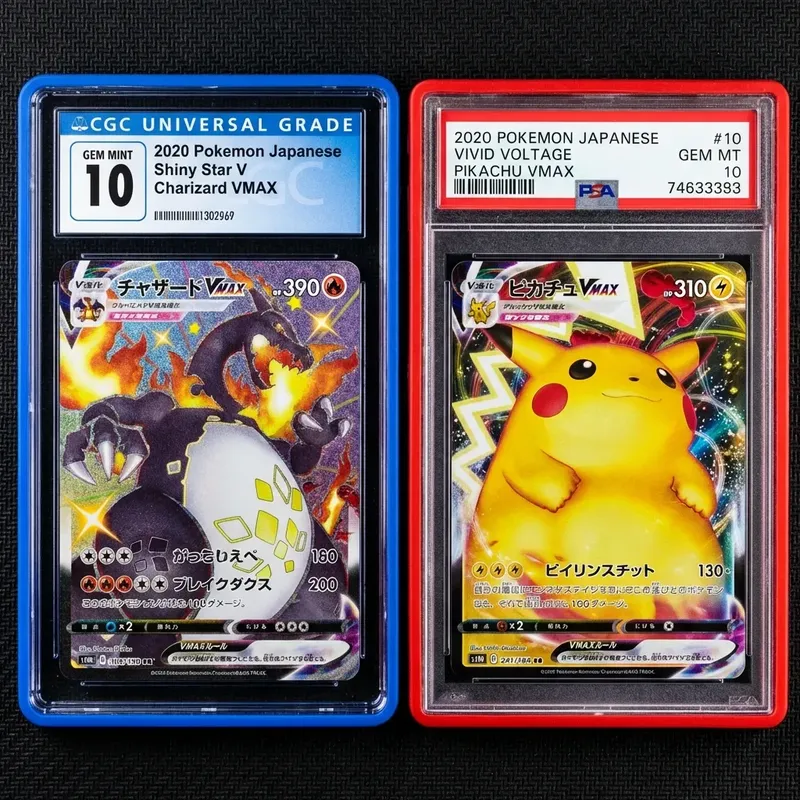
Worlds attracts international buyers with serious budgets. Vintage Base Set Charizard, Shadowless holos, and trophy cards always draw interest at major events. PSA 10 slabs, especially low-population items, can command cash offers above market because buyers want to take the card home immediately rather than waiting for an auction to close. If you have AI-verified vintage cards, bring the condition reports as supporting documentation even if the cards are already in slabs.
4. Competitive Playables
Do not underestimate demand for competitive cards. Players who flew in for the tournament may need last-minute deck upgrades, and some will pay a premium for high-quality copies of cards used in top decks. AI condition reports are less relevant here, but they still help when a player is choosing between two near-identical cards and wants the better one.
Where to Trade in San Francisco
San Francisco offers a range of venues for collectors looking to trade outside the official event halls. The following locations and strategies have worked well at past large TCG events in the city:
- Moscone Center vendor hall: The official event will have vendors selling cards, accessories, and merchandise. These booths are the safest place to buy and sell because they are supervised and well-lit. However, booth fees are high, and prices reflect that overhead.
- Nearby hotels: Hotels within walking distance of Moscone, especially those with large lobbies or bars, become informal trading hubs after hours. The Marriott Marquis, Hyatt Regency, and Hotel Nikko are common gathering spots.
- Japantown: The Japantown corridor on Post Street has shops that cater to Japanese TCG and anime collectors. These stores are a good source for Japanese-exclusive cards and often host side events during major Pokémon weekends.
- Cards and Comics Central: A long-standing hobby shop on Polk Street with weekly trade nights and a strong local collector base. It is a reliable place to meet buyers who are not attending the official event.
- Online coordination: Discord servers, Facebook groups, and Reddit communities typically organize meetups around major events. Post your inventory with PreGradeCards report links in advance so buyers can arrange trades before they arrive.
When trading outside official venues, safety is the top priority. Meet in public spaces, bring a friend, and do not carry more inventory than you are willing to lose. Use a backpack with a padded card case rather than a loose binder, and keep your most valuable cards in a separate, concealed pouch.
AI Pre-Grade Workflow for Event Preparation
Preparing inventory for PokémonXP and Worlds is a project that should start at least two weeks before the event. Here is the recommended workflow:
- Inventory audit. List every card you plan to bring, including estimated raw value, current condition, and whether you want to sell, trade, or hold it.
- Photograph each card. Use a neutral background and diffuse light. For best results, photograph front and back separately before the card goes into a sleeve.
- Upload to PreGradeCards. Each card receives an AI grade prediction and a public shareable URL. Save the URL in your inventory spreadsheet.
- Sort by strategy. Mark cards as “sell at Worlds” for AI 9.5+ high-value cards, “submit to PSA” for AI 9.7+ cards you want to slab, and “hold” for cards with uncertain value.
- Generate listing drafts. Use the PreGradeCards eBay listing generator to create titles and descriptions for online listings you can activate during the event if local buyers do not materialize.
- Print or save QR codes. Create a simple document with card images, AI grades, and QR links. Buyers can scan the QR code to see the full report, which builds trust and speeds up negotiations.
- Pack carefully. Use penny sleeves, semi-rigid Card Saver 1 holders, and a padded case. Bring a portable light box and a microfiber cloth for last-minute inspection.
This workflow turns a chaotic weekend of trading into a structured sales process. You will know exactly what each card is worth, what condition the AI detected, and what your minimum acceptable price is.
Selling Strategy at PokémonXP and Worlds
Selling at a major event is different from selling online. The buyer is in front of you, the competition is nearby, and emotions run high. The best strategy is to price confidently, present professionally, and be ready to close quickly.
Price with AI-Grade Tiers
Organize your inventory by AI grade prediction. Cards with AI 9.7+ predictions can be priced near PSA 10 market value minus a small discount for the unslabbed condition. Cards with AI 9.0–9.5 should be priced between raw and PSA 9 values. Cards with AI 8.5 or below should be sold as raw condition cards at raw market prices. Having clear tiers prevents you from making emotional decisions under pressure.
Use Shareable Reports as Social Proof
Show the PreGradeCards report URL or QR code to every serious buyer. Explain that the AI analyzed centering, corners, edges, and surface, and that the report is timestamped and independent. Buyers who understand the value of this information will often pay more for the transparency.
Be Willing to Trade Down
At a major event, cash is not the only currency. Players may offer trade credit, sealed product, or cards you need for your own collection. If a trade helps you complete a set or acquire inventory with better upside, it can be more valuable than a cash sale. Use the AI reports on both sides of the trade to ensure the values are fair.
Close Before You Leave
The last day of the event is often the best day for deals because attendees want to spend remaining cash and avoid traveling with cards. Be prepared to offer small discounts on the final day, but do not panic-sell. Hold your best cards for the next market cycle if you cannot get a fair price.
Shipping and Security for High-Value Cards
Traveling with valuable cards requires planning. If you are flying into San Francisco, follow these security practices:
- Carry cards in your personal item, not checked luggage. A backpack or small briefcase that stays with you at all times is safer than a checked bag that can be lost or delayed.
- Split inventory between two bags. If one bag is lost or stolen, you do not lose your entire collection.
- Insure your collection. A collectible insurance policy or a travel rider on your homeowner’s policy can cover cards while in transit. Document each card with photos and the PreGradeCards AI report before you leave.
- Use nondescript packaging. A plain padded case attracts less attention than a branded Pokémon case. Avoid logos that advertise valuable contents.
- Hotel safe for overnight storage. Use the in-room safe for your highest-value cards, or rent a hotel safe deposit box if the room safe is too small.
- Ship slabs home if you sell them. If you sell a high-value graded card at the event, consider shipping it to the buyer with full insurance rather than handing it over in a hotel lobby. Services like USPS Registered Mail or UPS with declared value provide tracking and coverage.
For cards sold at the event, accept payment methods that are secure and verifiable. Mobile payment apps, bank transfers, and cash are common. Avoid checks from buyers you do not know. If a trade involves a very high-value card, consider completing the transaction at a local bank or police station safe-exchange zone.
After the Event: What to Submit to PSA
When the event ends, you will have a clearer picture of which cards sold well and which cards are better suited for grading. The cards you did not sell should be re-evaluated for PSA submission.
Apply the following filter:
- AI 9.7+ and high market value: Submit to PSA Regular immediately. These are your best remaining candidates.
- AI 9.0–9.5 and strong demand signals: Submit selectively if the PSA 10 premium is at least 3x the raw price.
- Cards with no event interest: Sell raw online or hold for a future set. Do not force a $79.99 submission on a card the market ignored.
- Personal collection cards: Grade only if you want them protected in slabs. The financial return may not justify the fee for low-value cards.
Timing matters. Cards submitted in late August may return around the 30th Celebration launch in mid-September. That creates a double marketing opportunity: you can list the slabs as the 30th Celebration hype drives fresh Pokémon search traffic, while the slabs themselves are from the immediately preceding set cycle. Alternatively, hold the slabs until the holiday quarter, when buyer activity peaks.
PreGradeCards batch tools can help you organize the post-event submission. Export the AI reports for all unsold cards, sort by predicted grade, and create a PSA submission list in minutes. The result is a clean, data-driven approach to grading rather than an emotional reaction to the event’s highs and lows.
Frequently Asked Questions
When and where is the 2026 Pokémon World Championships?
What is PokémonXP?
How do I register for PokémonXP and Worlds?
What cards should I bring to trade at Worlds?
Why should I AI pre-grade cards before a Pokémon event?
Where can I trade Pokémon cards in San Francisco during Worlds?
How do I protect valuable cards while traveling?
Sources & Further Reading
- Pokémon.com: PokémonXP and Worlds Daily Schedule
- Pokémon.com: Register for PokémonXP and Worlds Interest List
- Moscone Center: Pokémon World Championships 2026
- VPEsports: How to Get to the 2026 Pokémon World Championships
Sarah Williams leads PreGradeCards educational content and collector onboarding. She has been a full-time collector and dealer for 12 years, specializing in modern sports cards and Pokémon TCG, and has written grading guides read by over 300,000 collectors.
Create a free account and get 1 free credit — enough for 1 complete AI grading with market pricing. No credit card required.
Sign Up Free →