The Short Answer
- The 2026 FIFA World Cup Final is July 19, 2026, at MetLife Stadium, and demand for soccer cards historically peaks during the knockout rounds.
- Panini Prizm FIFA 2026 released on May 22, 2026, the largest World Cup card release ever with 48 nations and host-nation-specific parallels.
- Messi, Lamine Yamal, and Erling Haaland are the headline grading targets, but dark-horse nations and breakout rookies often deliver the highest percentage returns.
- Sell into pre-final hype; prices for active tournament performers usually cool within 72 hours of the final whistle.
- Pre-grade every raw soccer card with PreGradeCards AI before paying PSA fees, because World Cup Prizm cards are heavily condition-sensitive and PSA 10 premiums are massive.
Tournament Context and Card Release Timing
The 2026 FIFA World Cup is the first 48-team edition of the tournament and the first hosted jointly by the United States, Canada, and Mexico. The final takes place on July 19, 2026, at MetLife Stadium in East Rutherford, New Jersey. For soccer card collectors, the timing is ideal because the main modern trading card release — Panini Prizm FIFA World Cup 2026 — hit shelves on May 22, 2026, giving the market two months of price discovery before the final.
This is the largest World Cup card release Panini has ever produced. The checklist covers all 48 qualified nations, including host-nation-specific parallels for the United States, Canada, and Mexico to commemorate the 30-year legacy of World Cup Prizm cards. The set also introduces Color Blast and Manga inserts to the FIFA World Cup product line for the first time. These inserts have historically commanded four-figure premiums in basketball and football Prizm releases, and their appearance in soccer gives collectors a new high-risk, high-reward chase category.
The convergence of a historic tournament, a record card release, and a final held in the largest U.S. media market means that liquidity and attention will peak in mid-July. Collectors who understand how World Cup card prices behave during and after the tournament can capture better entry and exit prices than those who simply buy what they see trending on social media.
World Cup Card Market History and What It Teaches Us
World Cup Prizm cards follow a four-year value cycle. Demand rises during qualification, spikes through the group stage, reaches a crescendo during the knockout rounds, and then cools rapidly after the final. Historical data from 2014, 2018, and 2022 shows that cards of active players often move 30–50% during the tournament, with the biggest gains concentrated in players who exceed expectations.
The 2022 Qatar World Cup is the most recent reference point. Lionel Messi’s Prizm base cards and parallels surged as Argentina advanced, and the gains persisted because Messi won the tournament and solidified his legacy. Kylian Mbappé cards also performed well, though some of his early-tournament gains retraced after the final because collectors had priced in a France victory. The lesson is that legacy-defining outcomes sustain prices, while runner-up or early-exit narratives rarely do.
For 2026, the U.S. host market adds a unique variable. American collectors who are new to soccer cards will enter the market during the tournament, often buying based on highlights rather than population data. This creates demand spikes for players who score viral goals or produce memorable moments. Smart sellers can capitalize on that influx, while smart buyers should wait for the inevitable post-tournament correction to acquire long-term targets at lower prices.
Headline Grading Targets: Messi, Yamal, and Haaland
The three most discussed players entering the 2026 World Cup are Lionel Messi, Lamine Yamal, and Erling Haaland. Each carries a different investment profile and grading strategy.
Lionel Messi
Messi is playing his final World Cup and is the sentimental favorite. His Prizm cards already trade at premiums, so the upside from a deep Argentina run is limited relative to current prices. The better grading opportunities lie in low-numbered parallels, Color Blast inserts, and autograph cards if available. These are scarce enough that a tournament moment can drive a step-function price increase. For base cards, the pre-tournament price likely already reflects most of the narrative. Sell into the knockout-stage hype if you hold; do not chase at peak prices unless you are collecting for personal enjoyment.
Lamine Yamal
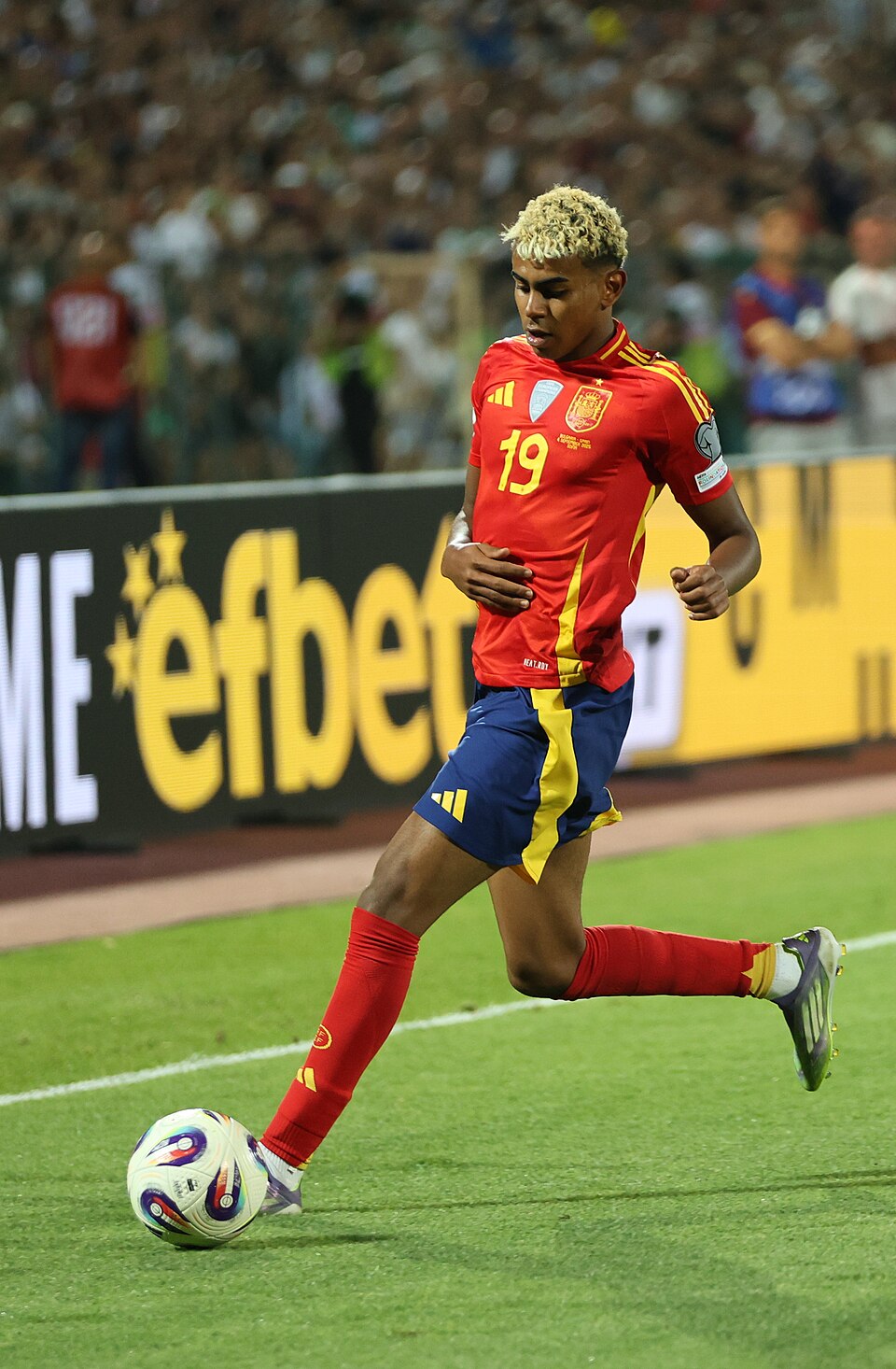
Yamal enters the tournament as one of the most exciting young attackers in the world. His youth gives him a longer value horizon than Messi: even if Spain does not win, Yamal will remain a hobby centerpiece for the next decade. Rookie cards and first World Cup Prizm cards are the priority. Look for base rookies, Silver Prizm parallels, and any Manga or Color Blast inserts. Because his cards have not yet reached the pricing plateau of established superstars, a breakout tournament performance can produce larger percentage gains.
Erling Haaland
Haaland’s Norway did not qualify for the 2022 World Cup, so the 2026 Prizm set represents his first World Cup card in a Norway kit. That novelty factor drives demand regardless of Norway’s tournament success. Haaland collectors are also global, which means liquidity is deeper than for most players. The risk is that Norway could exit early, removing the weekly price catalysts. If that happens, prices typically dip 15–25% within days, creating a buying opportunity for patient collectors.
Other Established Stars
Jude Bellingham, Kylian Mbappé, Vinícius Júnior, and Rodri round out the elite tier. Each has enough collector base to sustain demand, but their cards are also heavily printed and widely held. For grading purposes, focus on parallels and inserts rather than base cards unless you are buying at post-tournament lows.
Dark-Horse Nations and Breakout Rookies
The highest percentage returns in World Cup card investing usually come from players and nations that the mainstream market underestimates. The 2026 tournament’s expanded 48-team format increases the number of potential breakout stories, especially from nations making rare appearances.
United States Men’s National Team
The U.S. hosts provide built-in market support. Christian Pulisic and Gio Reyna have established collector bases, but the real upside lies in young players who announce themselves on home soil. A U.S. player who scores a knockout-stage goal can see his Prizm Silver parallel double in 24 hours. Pre-grade these cards before the tournament starts so you can sell immediately after a highlight if the AI confirms PSA 10 potential.
Mexico and Canada
Both host nations receive emotional buying support from North American collectors. Mexico’s Hugo Sánchez legacy and Canada’s Alphonso Davies create established demand, but emerging players from these squads can surprise the market. Host-nation parallels add another layer of scarcity, and those parallels should be the first cards pre-graded for submission.
African and Asian Breakout Candidates
Past World Cups have shown that players from Africa and Asia can produce the biggest percentage spikes because their cards start from lower price bases. Victor Osimhen, Mohamed Salah, Son Heung-min, and Takefusa Kubo are known quantities, but lesser-known players who score decisive goals can see 3x–5x moves in a week. The challenge is identifying them before the tournament, which requires watching qualifiers, club form, and squad announcements rather than following social media trends.
Rookie Cards and First Caps
The 2026 Prizm set is many players’ first World Cup card. A strong tournament from a first-timer creates both immediate hype and a long-term collecting milestone. Base rookies are printed in high volume, so prioritize Silver Prizm, numbered parallels, and inserts for grading. A PSA 10 base rookie of a breakout player can still appreciate, but the margin of safety is thinner than with low-population parallels.
Prizm Condition and Grading Concerns
Panini Prizm cards are among the most condition-sensitive products in the modern hobby. The chromium stock, foil edges, and reflective surfaces make every grade-dependent flaw more visible than on paper cards. Before submitting any World Cup Prizm card to PSA, run it through a rigorous condition checklist.
Surface Dimples and Print Lines
Prizm cards are notorious for roller marks and dimples caused by the manufacturing process. These defects can be invisible in a toploader but obvious under raking light. Surface flaws are the leading reason Prizm cards miss PSA 10. AI surface detection highlights dimples, scratches, and holo inconsistencies before you pay a grading fee.
Edge Chipping
The foil edges of Prizm cards chip easily, especially on cards pulled from heavily searched retail packs. Even a tiny chip on any edge will cap the grade at PSA 9. Edge detection should be standard for every raw card purchase.
Centering Variance
Prizm print runs are massive, and centering quality varies significantly. PSA allows 60/40 left/right for Gem Mint 10, but the market prefers 55/45 or better on high-value cards. Because Prizm borders are thin, off-center cards are visually obvious. Always measure both sides with AI centering analysis.
Autograph and Patch Cards
Prizm FIFA includes autograph and memorabilia cards. Autographs should be evaluated for signature consistency and surface indentation. Patch cards should be checked for fraying around the relic window and corner wear from the thicker card stock. These premium cards carry higher grading fees and longer turnaround times, so pre-grading is even more important.
Pre-Grading During the Tournament
The speed of the tournament makes pre-grading a competitive advantage. If you pull or buy a raw World Cup Prizm card on a Saturday and submit it to PSA the following Monday, you may receive it back in late September or October. By then, the tournament is long over and prices have settled. Pre-grading lets you decide whether to submit immediately, sell raw into the hype, or hold for a long-term bet.
Use this tournament workflow:
- Pre-grade your inventory before the tournament starts. Know which cards are PSA 10 candidates and which should be sold raw if the player has a hot game.
- Re-scan any cards you acquire during the event. Tournament-week prices move fast, and sellers may not photograph flaws clearly.
- Upload to PreGradeCards Complete Card Grading for front-and-back analysis. The AI report includes predicted PSA grade, sub-grades, and a shareable URL.
- Tag high-confidence candidates for immediate PSA submission. Cards predicted 9.7+ with clean surfaces are your submission priority.
- List borderline cards during the hype window. A card predicted PSA 9 can still sell for more raw during a knockout-stage goal than it will as a PSA 9 slab weeks later.
For collectors running breaks or group orders, the batch-grading tool handles up to 20 cards at once and exports a CSV with shareable links. This is ideal for processing World Cup Prizm boxes where most of the value is concentrated in a few parallels and inserts.
Buy and Sell Timing Around the Final
The World Cup Final on July 19 creates a predictable price pattern. In the two weeks before the final, emotional buying pushes prices higher for players on teams still in contention. This is usually the best time to sell, not buy. If Argentina, Spain, France, or another favorite reaches the final, their players’ cards will be priced for victory. A loss in the final can trigger a 20–40% correction within a week.
The ideal sell window for active tournament cards is the moment a team clinches a semifinal or final berth. Prices peak because collectors imagine the championship narrative. Once the final is played, only the winner sustains a premium. Runners-up, semifinalists, and eliminated stars usually see their cards drift back toward pre-tournament levels.
The best buying window is typically two to four weeks after the final. By then, tournament hype has faded, inventory has been listed, and prices have settled. Long-term collectors can acquire PSA-ready raw cards of young stars at discounts relative to the knockout-stage peaks. The exception is the tournament’s true breakout star; if a player becomes a global phenomenon, post-tournament prices may not dip significantly.
For sealed wax, the cycle is slightly different. Hobby boxes of Panini Prizm FIFA 2026 often rise during the tournament because collectors want immediate access to cards. After the tournament, sealed box prices can decline as supply catches up. If you are holding sealed product, consider selling during the group stage or knockout rounds rather than after the final.
PSA Submission and Crossover Strategy
PSA grading is the default liquidity choice for soccer cards because PSA 10 slabs consistently command the highest resale premiums. However, with the Value tier paused and the $79.99 Regular tier as the entry point, every submission must be justified by expected value. Use the following framework for World Cup Prizm cards:
- AI 9.7+ base rookies of stars: Submit to PSA. The PSA 10 premium on a Yamal or Haaland base rookie can exceed the fee many times over.
- AI 9.7+ parallels and inserts: Submit immediately. Numbered parallels and Color Blast / Manga inserts have smaller populations and higher multipliers.
- AI 9.0–9.5 base cards: Sell raw into tournament hype or hold for a cheaper bulk submission if PSA reopens Value tiers.
- Autograph and memorabilia cards: Submit only if both the card and the signature/patch condition score well. Premium cards carry higher fees and longer turnarounds.
- Crossover candidates: If you find BGS 9.5 or SGC 10 slabs priced below equivalent PSA 10 raw value, use PreGradeCards AI to evaluate the card before cracking. Crossover grading can unlock value but is risky without a condition second opinion.
Always document your cards before shipping. Tournament-era purchases often happen quickly, and disputes over condition are common. A PreGradeCards timestamped condition report with a shareable URL gives you evidence of the card’s state at the time of acquisition or sale.
Frequently Asked Questions
When is the 2026 FIFA World Cup Final?
When was Panini Prizm FIFA World Cup 2026 released?
Which soccer cards should I grade for the 2026 World Cup?
When should I sell World Cup soccer cards?
Are Panini Prizm soccer cards hard to grade PSA 10?
Should I buy or sell sealed World Cup Prizm boxes during the tournament?
Sources & Further Reading
- Yardbarker: 2026 FIFA World Cup Soccer Cards Investment Guide
- Athlon Sports: July 2026 Sports Card Market Report
- Panini America: Prizm FIFA World Cup 2026 Product Information
Emily Rodriguez analyzes grading cost, population, and pricing data across PSA, BGS, SGC, CGC, and TAG. She built the PreGradeCards ROI calculator and submission planner, and her market reports on grading backlog, turnaround times, and slab premiums are cited by collectors and dealers worldwide.
Create a free account and get 2.5 free credits — enough for 2.5 complete AI gradings with market pricing. No credit card required.
Sign Up Free →