The Short Answer
- CGC Economy costs $15-$18/card, making it price-competitive with SGC Standard and far cheaper than PSA Regular ($79.99).
- CGC is the only major grading company independent of Collectors Holdings — an important factor for collectors concerned about the PSA/SGC/BGS monopoly.
- CGC has gained significant TCG market share (Pokemon, MTG, Yu-Gi-Oh!) with CGC 10 Pristine increasingly respected by TCG collectors.
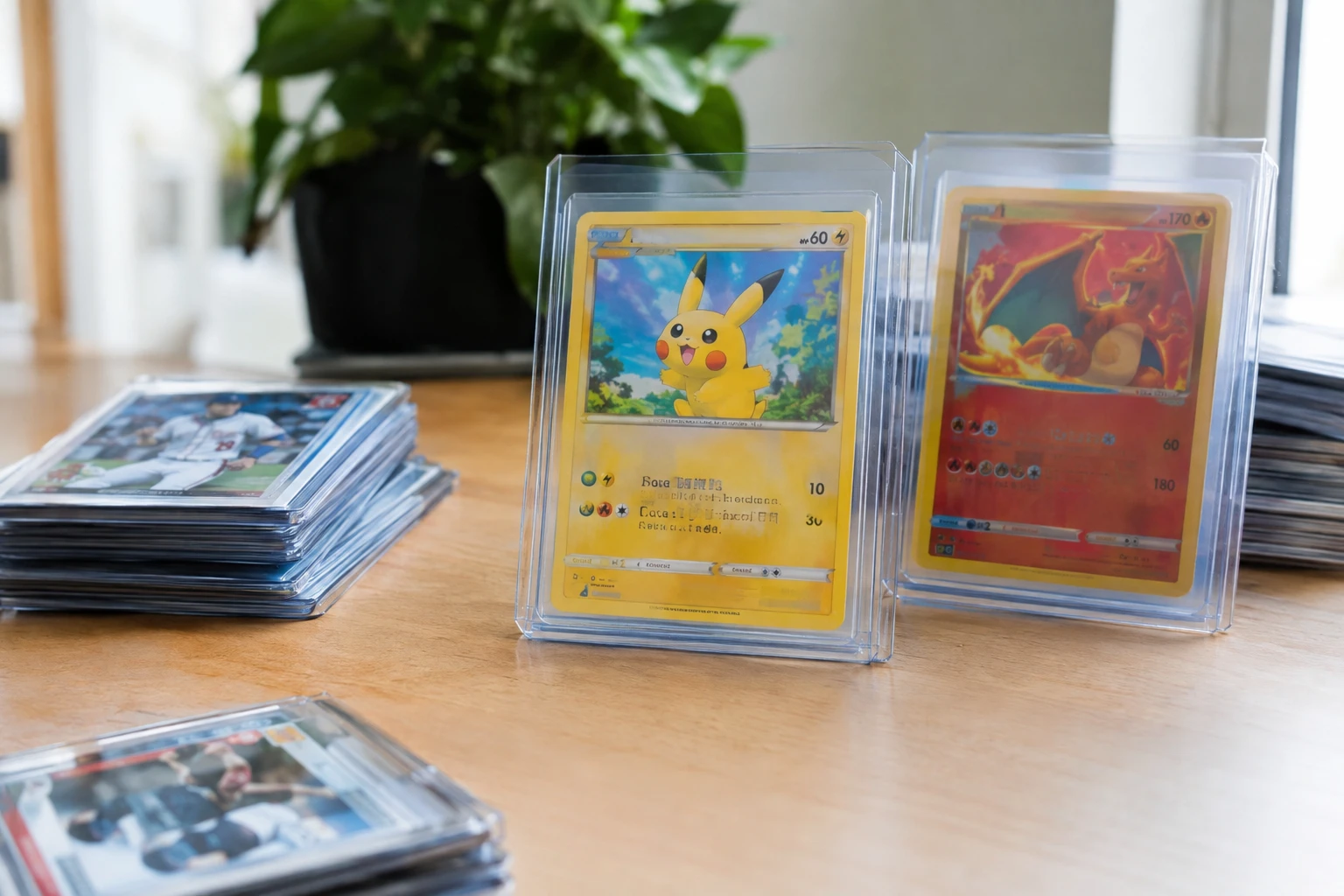
- CGC slabs are crystal clear and widely considered the most visually appealing holders in the industry.
- CGC offers optional sub-grades for $10 extra, giving collectors granular condition data that PSA and SGC do not provide on the label.
- CGC turnaround in 2026 ranges from 80-120 days (Economy) to same-day (Walk-Through), with Bulk tier running 100+ days due to PSA pause spillover.
- CGC 10 Pristine resale values are approaching PSA 10 on many TCG cards, narrowing the historical premium gap.
Why CGC Matters in 2026: The Independent Alternative
The card grading landscape in 2026 is dominated by one corporation: Collectors Holdings owns PSA, SGC, and BGS — roughly 80% of the market. CGC (Certified Guaranty Company) is the only major grading company that remains independent. This independence has become a significant competitive advantage as collectors grow increasingly concerned about the Collectors monopoly and the antitrust lawsuit challenging it.
CGC's position in the market has strengthened dramatically in 2026 for several converging reasons:
- PSA Value tier pause: When PSA paused all four Value tiers on June 2, 2026, collectors earning $25-$65 per card grading were left without an affordable PSA option. CGC Economy at $15-$18/card became the natural alternative — along with SGC Standard at $15/card.
- TCG market shift: Across 2024-2026, the Pokemon and TCG grading market shifted significantly toward CGC. CGC's per-card economics at volume are the best in the industry for TCG, and CGC 10 Pristine is increasingly respected by TCG collectors.
- Independence from Collectors: With PSA, SGC, and BGS all under the same corporate umbrella, collectors who want to support market competition are choosing CGC as the only independent alternative.
- Slab quality: CGC's holders are widely considered the most crystal-clear and visually appealing in the industry. The sleek black-and-blue design shows off cards beautifully, which matters for both display and resale photos.
- Sub-grades option: CGC offers optional sub-grades (centering, corners, edges, surface) for $10 extra — a feature that neither PSA nor SGC provides on the label. This gives collectors granular condition data that is valued by serious collectors.
CGC was founded in 2000 and is headquartered in Sarasota, Florida. The company originally focused on comic book grading (CGC Comics) before expanding to cards. CGC Cards now grades Pokemon, Magic: The Gathering, Yu-Gi-Oh!, sports cards, and other TCGs. The company is part of the Certified Guaranty family, which also includes NGC (Numismatic Guaranty Corporation) for coins and PMG (Paper Money Guaranty) for banknotes — all independent of Collectors Holdings.
CGC Pricing and Service Tiers (September 2026)
CGC offers a range of service tiers from budget-friendly Economy to premium Walk-Through. Here is the complete pricing structure as of September 2026:
| Service Tier | Price/Card | Max Value | Advertised Turnaround | Min. Cards |
|---|---|---|---|---|
| Bulk | $15 | $1,000 | ~120 days | 25 |
| Economy | $18 | $1,000 | ~80-100 days | 5 |
| Standard | $30 | $2,500 | ~50 days | None |
| Express | $80 | $5,000 | ~15 days | None |
| Walk-Through | $250 | $10,000 | ~5 days | None |
| Walk-Through Plus | $500+ | $25,000+ | Same day | None |
Key features of CGC pricing:
- No membership fee: Like SGC, CGC does not require an annual membership. You pay only the per-card fee plus return shipping.
- Bulk tier requires 25 cards minimum: The $15 Bulk tier is the cheapest CGC option but requires a minimum of 25 cards per submission. This is designed for dealers and high-volume collectors.
- Economy tier requires 5 cards minimum: The $18 Economy tier requires at least 5 cards, making it accessible for most collectors.
- Sub-grades are optional: Add $10 per card for sub-grades (centering, corners, edges, surface) printed on the label. This is available on all tiers.
- No upcharges on modern cards: CGC does not upcharge for cards that grade higher than expected, similar to SGC's modern card policy.
Compared to PSA's current floor of $79.99/card (Regular tier, Value tiers paused), CGC Economy at $18/card is less than one-quarter the price. Even CGC Standard at $30/card is less than half of PSA Regular. For budget-conscious collectors, CGC is the most affordable path to a graded slab from a major, independent grading company.
CGC Turnaround Times in 2026: What to Expect
CGC's turnaround times have been affected by the PSA Value tier pause spillover, which redirected significant volume to CGC. Here is what collectors are experiencing in September 2026:
| Tier | Advertised | Real-World (Sept 2026) | Status |
|---|---|---|---|
| Bulk | 120 days | 100-150+ calendar days | Slowed by spillover |
| Economy | 80-100 days | 80-120+ calendar days | Slowed by spillover |
| Standard | ~50 days | 40-60 calendar days | Generally meeting estimates |
| Express | ~15 days | 10-20 business days | Meeting estimates |
| Walk-Through | ~5 days | 3-7 business days | Meeting estimates |
The Bulk and Economy tiers have seen the most significant slowdown due to the PSA pause spillover. Real-world reports show Bulk orders running 100-150+ calendar days, with some orders sitting in "Received" status for 100+ days before entering the grading queue. One documented case: CGC Order #CAR1393271132 — 25 cards delivered and logged April 23, 2026, still in "Received" status after 100+ calendar days (73+ business days).
The Standard, Express, and Walk-Through tiers are generally meeting their advertised turnaround times. If you need cards back in a reasonable timeframe, CGC Standard at $30/card with ~50-day turnaround is a good middle ground — faster than SGC Standard (60-80+ days) and cheaper than PSA Regular ($79.99, 40-50 business days).
Turnaround Strategy
If you need cards back in under 60 days, use CGC Standard ($30/card, ~50 days) or CGC Express ($80/card, ~15 days). Avoid Bulk and Economy if you have a time-sensitive sale or event. For maximum speed, CGC Walk-Through at $250/card delivers in ~5 days — competitive with SGC Turbo ($150, 2-3 days) and faster than PSA Super Express ($150, 5 days) at a higher price.
CGC Grading Standards and Scale
CGC grades cards on a 1-10 scale with half-points (8.5, 9.5, etc.), similar to BGS. This is different from PSA and SGC, which use whole-number grades only (with SGC having the special 10 Pristine tier). The half-grade system gives CGC more granularity in the middle range, which can be meaningful for cards that fall between whole-number grades.
CGC Grade Scale
- CGC 10 Pristine: Virtually flawless. The highest CGC grade, requiring exceptional centering, pristine corners, edges, and surface. Comparable to BGS 10 Black Label in difficulty.
- CGC 10 Gem Mint: Near-flawless with only the most minor imperfections visible under magnification. The standard "10" grade.
- CGC 9.5 Mint: Nearly perfect with minor imperfections. Equivalent to SGC 9.5 or BGS 9.5.
- CGC 9 Mint: Very strong condition with slight flaws. Equivalent to PSA 9.
- CGC 8.5 Near Mint+:strong> Minor wear may be visible. Between PSA 8 and PSA 9.
- CGC 8 Near Mint: Minor wear visible. Equivalent to PSA 8.
- CGC 7 and below: Increasing levels of wear, surface issues, and structural defects.
CGC Grading Criteria
CGC evaluates cards on the same four pillars as all major graders:
- Centering: CGC requires approximately 55/45 front centering for a CGC 10 Gem Mint and 50/50 or better for CGC 10 Pristine. Back centering is more forgiving at 75/25 for Gem Mint.
- Corners: Sharp, well-defined corners with no whitening, fraying, or dinging. CGC is strict on corner wear, especially for 10 grades.
- Edges: Clean edges with no chipping, silvering, or rough cuts. CGC examines edges under magnification.
- Surface: Clean surface with no scratches, print lines, dents, stains, or clouding. CGC is particularly strict on surface for foil/holo cards.
Collectors generally report that CGC's grading standards are consistent and on par with PSA and BGS. Some collectors find CGC slightly stricter on surface issues, particularly on modern foil cards where print lines and micro-scratches are common. CGC's imaging technology provides high-resolution scans that allow graders to detect surface flaws that might be missed by the naked eye.
CGC's TCG Market Dominance: Pokemon, MTG, Yu-Gi-Oh!
CGC has carved out a dominant position in the TCG grading market across 2024-2026. For Pokemon, MTG, and Yu-Gi-Oh! cards, CGC is now the preferred grader for value-conscious collectors, and CGC 10 Pristine is increasingly respected for resale value.
Pokemon Card Grading with CGC
The Pokemon grading market has shifted significantly toward CGC. While PSA 10 still commands the highest resale premium on iconic vintage Pokemon cards (Base Set Charizard, Blastoise, etc.), CGC 10 Pristine is approaching PSA 10 values on many modern Pokemon cards. The economics are compelling: CGC Economy at $18/card vs PSA Regular at $79.99/card means you can grade 4+ Pokemon cards at CGC for the price of one at PSA.
For modern Pokemon cards (Scarlet & Violet, Paldean Fates, etc.) where the PSA 10 premium over PSA 9 is relatively modest (20-50% vs 200-300% on vintage), CGC is often the better ROI choice. A CGC 10 Pristine on a modern Pokemon card may sell for 80-90% of the PSA 10 value — and at less than one-quarter the grading cost, the net profit is significantly higher.
MTG Card Grading with CGC
For Magic: The Gathering, CGC is a strong choice for modern cards. Vintage MTG (Alpha, Beta, Arabian Nights) still favors PSA for maximum resale, but CGC is gaining ground. CGC's sub-grades option is particularly valued by MTG collectors who want to understand exactly where their card gains or loses points.
Yu-Gi-Oh! Card Grading with CGC
CGC has become a popular choice for Yu-Gi-Oh! grading, especially for modern sets. Vintage Yu-Gi-Oh! 1st Editions (Legend of Blue-Eyes White Dragon, Metal Raiders) still command higher prices in PSA slabs, but CGC is a cost-effective alternative for modern Yu-Gi-Oh! cards where the grading premium is smaller.
Other TCGs at CGC
CGC also grades One Piece, Lorcana, Dragon Ball Super, Flesh and Blood, Digimon, and other TCGs. For these growing TCG markets, CGC is often the default choice due to its competitive pricing and respected brand. The CGC slab's crystal-clear design is particularly appreciated for TCG cards with full-art or alternate-art treatments, where visual presentation matters.
CGC vs PSA: Head-to-Head Comparison
Here is how CGC compares to PSA across the factors that matter most to collectors in September 2026:
| Feature | CGC | PSA |
|---|---|---|
| Cheapest tier | $15 (Bulk, 25 min) | $79.99 (Regular) |
| Economy tier | $18 (5 min) | Value tiers paused |
| Membership | Not required | $99/year |
| Sub-grades | Optional (+$10) | No |
| Half-grades | Yes (8.5, 9.5, etc.) | No (whole numbers only) |
| Resale premium | Growing (80-90% of PSA on TCG) | Highest |
| Best for | TCG, budget grading | Modern sports, max resale |
| Ownership | Independent | Collectors Holdings |
| Slab clarity | Crystal clear (best) | Standard clear |
When to choose CGC over PSA:
- You are grading TCG cards (Pokemon, MTG, Yu-Gi-Oh!, One Piece, Lorcana, etc.)
- Your card is worth under $200 and PSA's $79.99 fee eats the margin
- You want sub-grades on the label
- You want to support an independent grading company
- You are grading for personal collection and want the clearest slab
- You need half-grades (a card that is between PSA 8 and PSA 9 might get CGC 8.5)
When to choose PSA over CGC:
- You are grading modern sports cards for maximum resale value
- You want the largest buyer pool and fastest resale velocity
- You participate in PSA set registry
- Your card is a universally recognized key card (Mantle, Jordan, Gretzky rookie)
- The PSA 10 premium (2-5x PSA 9) justifies the higher fee
CGC vs SGC: Which to Choose in 2026
CGC and SGC are the two main alternatives to PSA, and they serve different segments of the market. Here is how to decide between them:
Choose CGC For:
- TCG cards (Pokemon, MTG, Yu-Gi-Oh!, etc.)
- Cards where you want sub-grades
- Bulk submissions (25+ cards at $15 each)
- Independence from Collectors Holdings
- Crystal-clear slab presentation
- Half-grade precision (8.5, 9.5)
Choose SGC For:
- Vintage and pre-war sports cards
- Cards under $1,500 at $15/card (no 25-card minimum)
- The tuxedo slab aesthetic
- Fastest expedited turnaround (2-3 days at $150)
- SGC 10 Pristine gold label chase
- Crossover arbitrage candidates
The key differentiator is card type: CGC for TCG, SGC for vintage sports. Both are priced similarly at the entry level ($15-$18/card), but CGC requires a 5-card minimum for Economy and 25-card minimum for Bulk, while SGC has no minimum. For single-card submissions, SGC is more convenient. For bulk submissions, CGC's 25-card Bulk tier at $15/card is slightly cheaper when you have enough cards.
Independence is another factor. CGC is the only major grader not owned by Collectors Holdings. If you are concerned about the antitrust situation and want to support market competition, CGC is the clear choice. SGC, while a respected brand, is now a subsidiary of the same company that owns PSA and BGS.
CGC 10 Pristine: The Ultimate Grade Explained
CGC 10 Pristine is CGC's highest grade, reserved for cards that are virtually flawless. It is comparable to BGS 10 Black Label (quad 10s) and SGC 10 Pristine in terms of difficulty and prestige. A CGC 10 Pristine slab commands a significant premium over a CGC 10 Gem Mint slab and can approach or exceed PSA 10 values on many cards.
Requirements for CGC 10 Pristine
- Centering: Approximately 50/50 or better on the front, 60/40 or better on the back. Significantly stricter than CGC 10 Gem Mint (55/45 front).
- Corners: All four corners must be razor-sharp with no visible wear under 10x magnification.
- Edges: Clean, smooth edges with no chipping, silvering, or roughness.
- Surface: Completely flawless surface with no scratches, print lines, dents, stains, or clouding — even under magnification.
The odds of achieving CGC 10 Pristine are very low — estimated at 1-3% of submissions that would otherwise grade CGC 10 Gem Mint. The strict centering requirement is the most common disqualifier, as most pack-fresh cards have at least 55/45 centering rather than true 50/50.
For collectors who believe their card is truly flawless, CGC 10 Pristine offers a high-risk, high-reward play. The premium over CGC 10 Gem Mint can be 50-200% depending on the card, and on TCG cards, CGC 10 Pristine can approach or match PSA 10 values — making the $18 CGC Economy fee far more profitable than the $79.99 PSA Regular fee.
AI pre-grading can help assess whether your card has Pristine-level centering and condition before you choose between CGC and PSA. If AI predicts 50/50 centering with flawless corners, edges, and surface, CGC 10 Pristine is worth pursuing.
CGC Sub-Grades: Granular Condition Data on the Label
One of CGC's unique advantages is the optional sub-grades feature. For an additional $10 per card, CGC prints four individual sub-scores on the label:
- Centering: A score from 1-10 reflecting the card's border alignment.
- Corners: A score from 1-10 reflecting corner sharpness and condition.
- Edges: A score from 1-10 reflecting edge condition.
- Surface: A score from 1-10 reflecting surface cleanliness.
The overall grade is typically the average of the four sub-grades, though CGC may adjust based on the severity of the lowest sub-grade. A card with sub-grades of 10, 10, 10, 9.5 would receive an overall grade of 9.5 — the lowest sub-grade caps the overall grade.
Why Sub-Grades Matter
- Transparency: Sub-grades tell you exactly where the card lost points, helping you understand the grade and identify potential crossover opportunities.
- Resale confidence: Buyers can see exactly what they are getting, which can increase confidence and willingness to pay — especially on high-value cards.
- Crossover analysis: If a card has sub-grades of 9.5, 10, 10, 10, the only thing preventing a 10 is centering. If you crack the slab and send it to PSA (which is slightly more forgiving on centering for some card types), you might get a PSA 10.
- Collection management: Sub-grades help you identify which cards in your collection are closest to a 10 upgrade and which have surface issues that cannot be improved.
At $10 extra per card, sub-grades are worth it for cards valued above $100 where the transparency adds resale value. For bulk submissions of low-value cards, the $10 premium is not worth it — the card's value does not justify the additional cost.
Best Card Types for CGC Grading
Based on CGC's pricing, grading standards, and resale market dynamics, here are the card types that are best suited for CGC grading in 2026:
Excellent CGC Candidates
- Modern Pokemon cards (Scarlet & Violet, Obsidian Flames, etc.)
- MTG modern sets (after 2010)
- Yu-Gi-Oh! modern sets
- One Piece TCG cards
- Lorcana cards (Enchanted rares)
- Dragon Ball Super cards
- Flesh and Blood Cold Foils
- Digimon TCG cards
- Bulk submissions of any TCG (25+ cards)
- Cards where you want sub-grades
Poor CGC Candidates
- Vintage pre-war sports cards (use SGC)
- 1950s-1960s sports cards (use SGC or PSA)
- Modern chrome sports for resale (use PSA)
- Iconic key cards for max resale (use PSA)
- Single vintage card submissions (SGC has no minimum)
- Cards you need back in under 80 days at Economy pricing
The general rule: CGC for TCG, SGC for vintage sports, PSA for modern sports and maximum resale. This simple framework will guide you to the right grader for the vast majority of cards. The exception is when you want sub-grades on a sports card — CGC is the only major grader that offers sub-grades on the label (BGS offers them as standard, but BGS tiers have been paused in 2026).
How to Submit Cards to CGC
The CGC submission process is similar to SGC and PSA. Here is a quick overview:
- Create a free CGC account at cgccards.com. No membership fee required.
- Select your service tier based on card value and desired turnaround time. Remember: Bulk requires 25 cards minimum, Economy requires 5 cards minimum.
- Enter card details for each card: year, set, player/character, card number, and declared value.
- Choose optional services such as sub-grades (+$10/card) if desired.
- Select return shipping method and add insurance for the full declared value.
- Review and pay — print two copies of the submission invoice.
- Prepare cards in penny sleeves and Card Saver I semi-rigid holders (same as SGC and PSA requirements).
- Package securely in bubble wrap (2-3 layers) inside a sturdy corrugated box. Include one invoice copy inside, tape the other outside.
- Ship to CGC at the address provided in your confirmation email. Use tracked, insured shipping with signature confirmation.
- Track your order through your CGC online account. Status stages: Received, Scheduled for Grading, In Grading, Encapsulation, Shipped.
The packaging and shipping process is identical for CGC, PSA, SGC, and BGS — all require Card Saver I semi-rigid holders, bubble wrap, and sturdy boxes. If you have already submitted to one grader, the process is the same for CGC.
Use our AI Card Grading tool to get CGC, PSA, BGS, and SGC grade predictions before you submit. Compare expected resale values and ROI for each grader. Get 50 free credits on signup — enough to pre-screen an entire CGC Economy submission at no cost.
Frequently Asked Questions
Is CGC cheaper than PSA?
Is CGC independent from Collectors/PSA?
Does CGC grade Pokemon cards?
What is CGC 10 Pristine?
Does CGC offer sub-grades?
How long does CGC grading take?
Should I choose CGC or SGC?
Can I submit sports cards to CGC?
Sources & Further Reading
- CGC Official Website — Services & Pricing
- AgentGrail — PSA vs BGS vs SGC vs CGC 2026
- CardSense AI — Best Grading Company by Card Type
- What The Slab — Card Grading 2026 Complete Playbook
- Kens Cool Cards — SGC and CGC Grading Delays
- PreGradeCards — Turnaround Tracker
The PreGradeCards Research Team combines machine-learning engineers, grading analysts, and collector-education specialists to produce accurate, data-driven guides on AI card grading, professional grading standards, and collecting strategy.
Create a free account and get 1 free credit — enough for 1 complete AI grading with market pricing. No credit card required.
Sign Up Free →