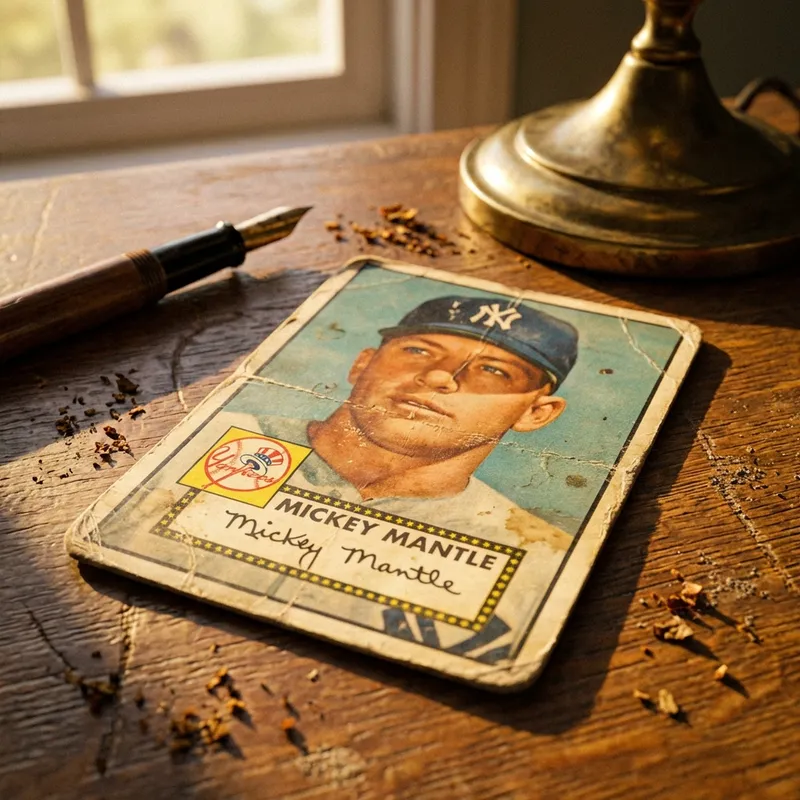
The Short Answer
- Rarity inverts the grading math. For truly scarce cards — T206 legends, pre-war keys, iconic rookies — a PSA 1–4 can outsell a strong raw copy because authentication and encapsulation are the value.
- For common cards, damage is disqualifying. A $30 raw card with a crease is a $10 card; spending $60+ to slab it loses money in every scenario.
- Authentication is half the product on high-value damaged cards. For famous vintage, the slab's real deliverable is "it's real" — the number matters less than the guarantee.
- 'Authentic Altered' is a real lane — trimmed, recolored, or restored cards can still be slabbed under qualifiers, and disclosure preserved value beats undisclosed damage.
- Damage type matters more than damage amount. A clean crease on a scarce card hurts; surface loss, ink, and trimming hurt differently — and graders price each differently.
- Run the math before the feelings. Compare graded-at-that-grade comps (not the gem-mint price you wish for) against fees before deciding.
The Math That Decides Everything
Grading a damaged card is worth it when — and only when — the card's price in its expected graded condition exceeds the raw price plus all-in fees. The formula is simple; the mistake is emotional:
- Expected graded price: what this card sells for at PSA 3, 4, or whatever your damage realistically earns — not the PSA 10 price. This is where most "damaged card" submissions fail before they start.
- All-in fees: grading tier + shipping both ways + insurance. With the grading cost calculator, a realistic entry point is $60–90 per card on open tiers.
- Raw price: what the card sells for today, unslabbed, in its actual condition. Damaged raw copies of valuable cards still sell — the question is whether slabbing adds more than the fee.
A PSA 3 copy of a card whose PSA 3 comps run $400 and whose raw-damaged price is $150? Grade it — the slab adds $250. A PSA 6 copy of a card worth $80 in a 6 and $40 raw? The math is upside-down before it starts.
When Rarity Flips the Answer
There's a threshold in card value — roughly the point where a card is scarce enough that collectors accept any grade just to own it — where low-grade slabs outsell problem-free raw copies. Famous examples: a T206 Honus Wagner or '52 Topps Mantle in PSA 1 sells for life-changing money; the same cards' raw copies in damaged condition trade on faith and negotiation. The slab converts "trust me" into a number.
Where this effect is real:
- Pre-war and golden-age icons — T206, Goudey stars, '48 Leaf, '52 Topps high numbers: the surviving population is small enough that graded-pop scarcity trumps grade.
- Iconic rookie cards — the Mantles, Jordans, Gretzkys, Charizards of the world: demand is deep enough that collectors fill the grade ladder from 1 to 10, and even the bottom rung prices above a raw copy of uncertain authenticity.
- Low-pop oddities — error cards, short prints, test issues where surviving examples number in the dozens.
Where it isn't: junk-wax commons, modern base, and mid-value cards where thousands of clean copies exist. A damaged copy of a plentiful card isn't a scarce collectible — it's the discounted bin.
Grading as Authentication: The Hidden Value
On expensive vintage, the slab's primary product often isn't the grade — it's the guarantee of genuineness. Counterfeits and reprints plague every high-value card; a damaged genuine T206 in an authentic slab beats a suspicious raw copy every time. This is why "grade 1" sales on famous cards carry real prices: buyers aren't paying for the 1, they're paying for verified real.
The authentication lane also solves the trust problem in person-to-person sales — a slabbed damaged card sells online with no inspection trip, no disputes about condition language, no "it's worse than described" returns. For sellers of vintage collections, slabbing the key damaged cards is often worth the fee purely as transaction infrastructure.
This logic extends downward carefully. Authentication value scales with how often a card is faked and how much buyers worry about it — famous, counterfeited cards justify the lane; cards nobody bothers faking don't. The counterfeiting map is roughly: the higher a card's clean-grade price, the stronger the case for authenticating its damaged copies, because the incentive to fake it scales exactly the same way.
Damage Types, Ranked by How Hard They Hit
Graders don't treat all damage equally, and neither does the market:
- Creases (moderate hit): the single most common flaw. A light crease caps most cards at 5–6; heavy or multiple creases push toward 1–3. On scarce vintage, creased copies still slab and sell — the market prices them as "eye-appeal vs. technical grade."
- Corner wear/rounding (mild hit): expected on vintage; worn corners alone rarely drop a card below mid-grades and are nearly forgiven on pre-war issues.
- Surface loss, paper lift, stains (severe): paper damage reads as irrecoverable — stained or paper-lifted cards drop hard because the eye-appeal argument dies.
- Trimming, recoloring, restoration (category change): no longer "damage" — it's alteration. These cards get no numerical grade; they get Authentic Altered or are rejected. Undisclosed alterations are the worst outcome: rejected submission, wasted fee.
- Wax/gum staining on vintage (era-adjusted): pack-fresh staining is partially forgiven on era stock because collectors know the factory shipped it that way.
- Writing/rubber band damage (severe for modern): pen marks and band creases on modern cards read as pure damage with none of the vintage forgiveness.
The Authentic Altered Lane
PSA and SGC will slab cards that can't receive a numerical grade under designations like Authentic Altered — trimmed edges, recolored surfaces, restored damage acknowledged rather than hidden. This lane exists because authenticity still has value even when the grade can't.
When it makes sense: a genuinely scarce card (1933 Goudey Ruth-class, T206 rare backs, key rookies) with disclosed alteration — the Authentic Altered slab gives it a legitimate, sellable identity. When it doesn't: anything common, where an "authentic but trimmed" label is just an expensive way to announce the card was damaged.
The key discipline is disclosure. Submitting an altered card hoping for a number is how sellers end up on hobby blocklists; submitting it for the altered designation is how honest sellers extract legitimate value.
When to Never Submit a Damaged Card
- When raw-with-disclosure sells for nearly as much. Cards under roughly $100–150 in their expected grade rarely recover fees from a damaged condition.
- When the damage is undiscloseable-positive. If you're grading specifically to hide a flaw behind "it got a number," graders will find it, and your slab will say why.
- Modern cards with structural damage. Creases on 2020s chrome aren't vintage character — they're a 4, and a modern 4 sells for raw price minus the fee you paid to learn it.
- Water/mold damage. Beyond grading — encapsulation doesn't fix degradation, and some contamination can be a health issue in storage anyway.
- Sentimental cards where the slab changes nothing. Grading dad's creased childhood card for display is a valid personal choice — just know it's a purchase, not an investment.
The Non-Resale Reasons: Display, Protection, and Documentation
Not every damaged-card decision is about resale. The slab delivers three things that have value even when the grade adds none:
- Physical protection. A sonically-sealed, inert holder stops further degradation — for a card with family history, that's the actual product. A creased childhood card in a PSA 4 holder is archival storage you can display without a glove protocol.
- Documentation for insurance. A graded slab is third-party proof the card existed, was real, and was in a specific condition on a specific date — evidence that turns a "trust me, it was a Mantle" insurance claim into a cert number an adjuster can look up. For damaged-but-valuable pieces, this alone can justify the fee.
- Estate clarity. Heirs can read "PSA 3" and price the card instantly instead of arguing about condition grades they don't understand. Slabs are executors' friends.
The honest accounting: these are consumption reasons, not investment ones — you're buying a service, like framing a poster. Buy it knowingly and it's money well spent. The failure mode is only pretending it's an investment.
Three Worked Scenarios
Scenario 1 — 1986 Fleer Michael Jordan, heavy corner wear, light crease. Realistic grade: PSA 3–4. Raw damaged copies move slowly around $1,500–2,500 depending on eye appeal; PSA 3 comps run meaningfully higher because buyers trust the authentication on the hobby's most-faked card. Verdict: grade it. Even at the bottom of the scale, the slab's authenticity premium covers the fee several times over.
Scenario 2 — 2023 flagship base rookie, crease from a binder. Realistic grade: PSA 4–5. Raw damaged: a dollar-bin card. Graded 5: sells at or below raw-mint price, minus your $60+ fee. Verdict: never. Modern plentiful supply means a damaged copy has no scarcity story — the market simply buys the clean copy next to yours.
Scenario 3 — 1933 Goudey with a trimmed edge you suspect. A numerical grade is off the table, but the card still carries real value as Authentic Altered. Submitted honestly for that designation, the slab legitimizes a card that otherwise raises suspicion in every listing photo. Verdict: grade it as authentic — the slab converts a liability into a documented, sellable object.
The pattern across all three: scarcity and authenticity determine whether the slab adds value, and damage only sets which rung of the ladder you land on.
The TCG Exception: Damaged Charizards Still Pay
Trading card games bend the damaged-grading math in a way sports cards don't. Demand for iconic TCG cards — first-edition holo Charizard, Pikachu Illustrator-adjacent chase, early MTG Power Nine — is deep enough that collectors buy every rung of the grade ladder. A PSA 3 Base Set Charizard doesn't compete with the PSA 8; it serves the buyer who can't reach the 8 but wants the verified card.
Where damaged TCG grading pays:
- WotC-era holos of fan-favorite Pokémon — Base, Jungle, Fossil, Team Rocket holos of Charizard/Blastoise/Venusaur/Umbreon-class Pokémon hold value down to the lowest grades.
- Alpha/Beta and early MTG — Power Nine and iconic Reserved List cards slab at any condition; a heavily played Black Lotus in an authentic slab still trades for thousands.
- Chase cards in modern TCGs — serialized or manga-rare cards in Lorcana, One Piece, and similar where low-pop scarcity mimics the vintage dynamic.
And where it fails identically to sports: bulk-era commons, modern holo prints with thousands of clean copies, and anything where the expected grade's comp doesn't clear fees. The TCG exception exists because of demand depth, not because TCG cards grade damage differently — the grader counts the same creases either way.
The Decision Framework
Before submitting any damaged card, run four checks:
- Is it scarce? Genuinely rare → damaged grading often pays. Plentiful → almost never.
- What grade will it actually get? Estimate honestly — an AI pre-grade scans the card objectively and will tell you whether your "lightly played" is really an 8 or really a 3, which changes the comp you should be pricing.
- What does THAT grade sell for? Price the expected grade, not the dream grade. The submission planner runs this math against real comps.
- Would authentication alone justify it? On famous vintage, "verified real" is often the entire product — if yes, the slab earns its fee even at the bottom of the scale.
The answer to "should I grade a damaged card" is almost never about the damage. It's about the card underneath it — and whether the number on the slab adds more than it costs to get it.
One last honest note: if you take only one thing from this guide, take the comp-check discipline. Every failed damaged-card submission in hobby history shares the same origin — someone priced the card at the grade they wanted instead of the grade the crease guaranteed. Price the actual grade, add the real fees, and the card tells you the answer itself.
Frequently Asked Questions
Is it worth grading a damaged card?
Only when the card is scarce or famous enough that graded examples at low grades still sell above the raw price plus fees. T206 legends, iconic rookies, and rare vintage qualify; common or modern damaged cards almost never do.
What's the lowest PSA grade worth getting?
There's no universal floor — on rare vintage, even PSA 1 slabs command real money because authentication is the product. On plentiful cards, grades below ~8 usually sell for less than the grading fee.
Will PSA grade a card with a crease?
Yes — creases reduce the grade but don't disqualify a card. A creased card typically caps around PSA 4–6 depending on severity; heavily creased cards grade 1–3. Altered cards (trimmed, recolored) can't get numerical grades but can be slabbed Authentic Altered.
Can a damaged card be graded as authentic?
Cards with alterations like trimming or recoloring can receive 'Authentic Altered' or equivalent qualifier slabs — authenticated but not numerically graded. This preserves legitimate value for rare cards where authenticity matters more than condition.
How much does it cost to grade a damaged card?
The same as any card — grading tiers charge by declared value, not condition (though some graders offer lower declared-value tiers for damaged items). Expect the same ~$20–80+ per card on open tiers; the fee doesn't care that the card is damaged, which is exactly why the math usually fails.
Should I disclose damage when selling raw instead?
Always — full disclosure with clear photos is how honest raw sales work, and buyers price damage accurately when they can see it. Undisclosed damage creates disputes, returns, and reputation damage that costs more than any grading fee.
Sources & Further Reading
Dr. Andrew K. founded PreGradeCards in 2023 after building computer-vision systems for medical imaging and industrial defect detection. He holds a Ph.D. in machine learning, has published peer-reviewed work on convolutional neural networks for surface analysis, and oversees the grading model pipeline that has analyzed over 1.2 million cards.
With submission floors rising, pre-screening is no longer optional. Use our AI Pre-Grade Calculator to score a card's PSA 10 odds before you pay, and the Submission Planner to pick the right tier.