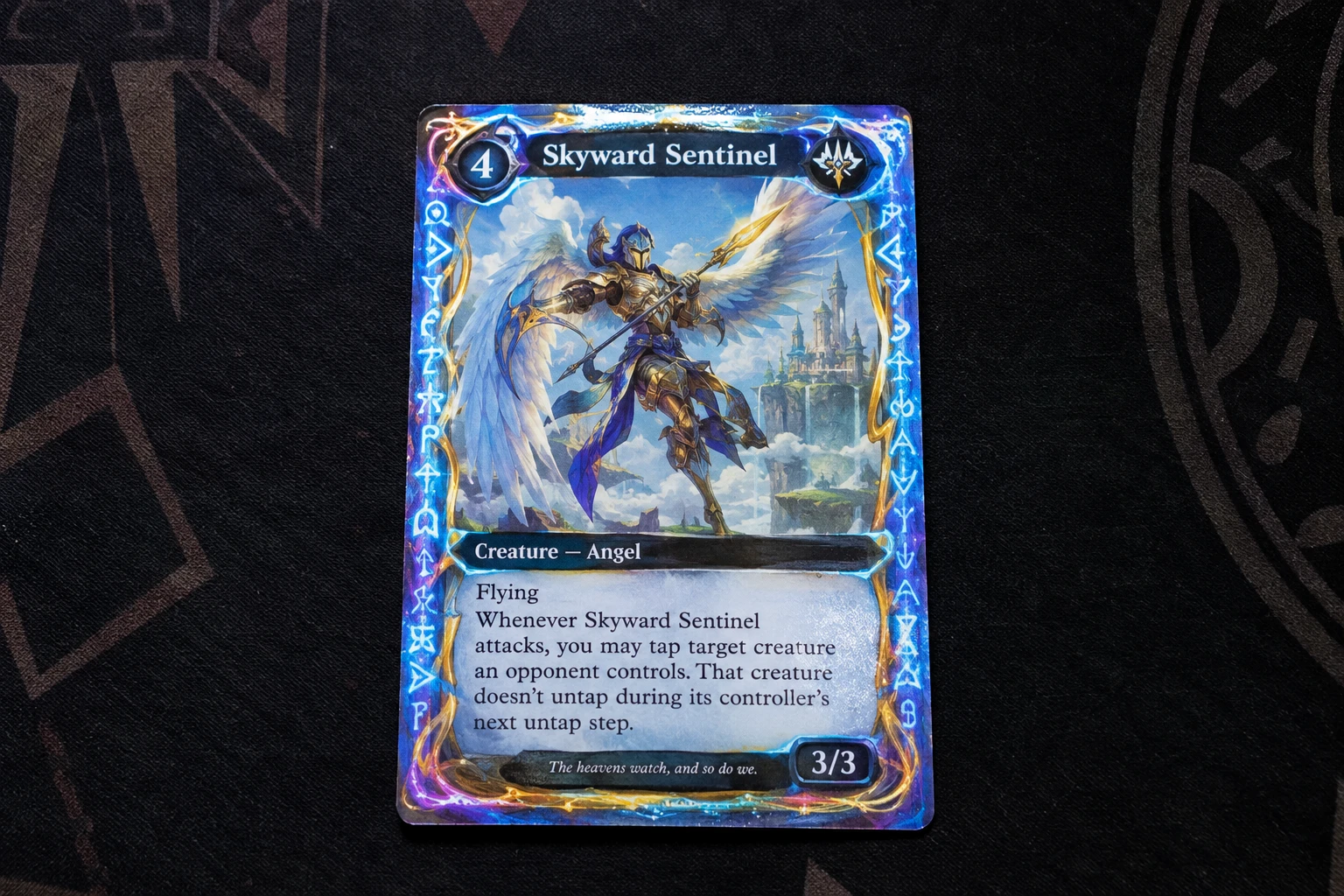
The Short Answer
- Riftbound's alt-arts and secret rares carry the graded premiums; commons and uncommons almost never pay the fee.
- The card stock is thinner than Pokemon — edge and corner damage is the most common grade-killer on pack-fresh pulls.
- Centering varies noticeably by printing wave; measure every card before assuming pack-fresh means 10-ready.
- Young-market pop reports are small, so early PSA 10s can carry outsized premiums — and outsized risk if pop counts balloon.
- Pre-grading is especially valuable here because graded premiums are volatile and unproven.
Why grading Riftbound is different from Pokemon or MTG
Riftbound: League of Legends TCG launched globally in late 2025 and immediately produced a real chase-card market — alt-art legends and secret rares pulling $200–900 raw within months of release. That created the obvious question every new TCG asks: is grading worth it?
Three things make Riftbound different from grading Pokemon. First, the card stock is thinner — closer to Magic than Pokemon's beefier stock — so edge whitening and corner wear happen faster and show more visibly against Riftbound's dark art borders. Second, centering varies by printing wave more than mature games; early waves shipped with noticeably looser centering tolerance, and pack-fresh doesn't mean 10-ready. Third, the market is young — population reports are small, which means early graded copies can command outsized premiums that compress fast as more cards hit the slab population.
2 free credits — check centering, corners, edges, surface in seconds.
Which Riftbound cards are actually worth grading
The graded premium is concentrated at the top of the rarity ladder. What clears the fee:
- Alt-art legends and secret rares — the chase tier, where a PSA 10 can double or triple a $200–900 raw price. This is where grading pays.
- Numbered/serialized promos — limited print runs mean even a 9 holds value.
- Championship/organized-play promos — low distribution, collector demand, thin pop reports.
- First-wave base alt-arts — if early printing differences become collectible, first-wave copies may carry a premium later.
What doesn't: standard foils, uncommons, commons, and bulk rares. A $5 raw card graded a 10 is still a $30 fee for a card the market values around $45 — the math never closes.
The pack-fresh defects that kill Riftbound grades
Inspect before you assume. The defects showing up most often on fresh pulls:
- Edge whitening — the thin stock shows white along cut edges, especially the top edge where pack separation stresses the card.
- Corner softness — Riftbound corners are more prone to the microscopic fraying that costs a 10 even on untouched cards.
- Off-center printing — first-wave runs shipped looser centering than Pokemon's modern standard; a card 60/40 on the front won't see a 10.
- Print lines — the foil layer picks up production lines visible under raking light, invisible at arm's length.
- Roller marks — faint surface indentations from pack machinery, common on early waves.
On a $300 alt-art, a grade that comes back 9 instead of 10 can be a $400 difference — the single most expensive reason to pre-grade before submitting.
The young-market premium — and its risk
Riftbound's graded population is measured in the hundreds per card, not the tens of thousands like Pokemon grails. That cuts both ways:
- Upside: a PSA 10 in a tiny pop report can sell for multiples of the raw price because there's almost nothing to compare it to.
- Risk: when submissions flood in and the pop report grows 5×, that same premium compresses. A card you paid $25 to grade that was $400 graded at pop-40 might be $150 graded at pop-400.
The hedge is the same one that works in mature markets: grade only the cards that are genuinely 10-candidates. The pop-report volatility hurts mid-grade submissions most — a 9 in a growing pop report loses value fast, while a true 10 stays scarce because most submissions don't earn it.
Which grading company for Riftbound
The same market logic as Pokemon applies, with a young-game twist:
- PSA — still the resale leader on popular cards; the red flip is what eBay buyers search. For max resale on a 10-candidate, it's the default.
- CGC — lower fees and faster turnaround matter more on a volatile market; if the premium could compress before a 3-month PSA turnaround finishes, CGC's speed is real value.
- TAG — the 1000-point report suits a tech-savvy Riot playerbase, and the defect map helps you learn what a clean Riftbound card actually looks like.
For investment-intent alt-arts, PSA is still where the premium lives. For personal collection or fast flips, CGC's cheaper fee is the smarter play.
Why pre-grading matters more on a young game
In a mature market you can look up ten thousand PSA 10 comps. In Riftbound, you're grading into uncertainty: the premium is unproven, the pop report is thin, and the card stock hides defects better than Pokemon's. That makes the cheap pre-grade the highest-leverage step in the pipeline.
An AI pre-grader scores the four criteria — centering, corners, edges, surface — on the same standards PSA uses, in ~30 seconds, for free or a quarter per card. On a young game it's the difference between submitting a 10-candidate into a thin pop report and wasting a fee on a card that was never going to clear the bar.
Runs in your browser — no download. 2 free credits on signup.
Riftbound vs the other new TCGs of 2025–2026
Riftbound isn't the only new game fighting for grading attention — the last eighteen months brought a wave of licensed TCGs: Gundam Card Game, Star Wars: Unlimited, Lorcana's continued expansion, Sorcery: Contested Realm, and Grand Archive among them. What separates Riftbound is the franchise weight behind it. League of Legends has a built-in playerbase of hundreds of millions who grew up with these champions, which gives the chase cards a demand floor that games built on newer IP don't have.
Compared to the other 2025–2026 launches, Riftbound's graded market developed faster than most — alt-arts hitting graded premiums within months rather than the year or two it took games like Lorcana. That's partly the IP strength and partly Riot's organized-play structure driving competitive demand for the chase cards beyond pure collecting. For graders, it means the market is real enough to grade into, but young enough that pop-report volatility is the defining risk.
The lesson from the other new-TCG launches: the games that sustained graded markets are the ones where the chase tier stayed scarce and the playerbase kept growing — Lorcana and One Piece proved it. Games that printed the chase tier into the ground (several 2023–2024 launches) saw graded premiums collapse within a year. Riftbound's long-term graded value will depend on whether Riot manages the chase-card supply the way Bandai did for One Piece — which, given its organized-play strategy, looks promising but unproven.
The bottom line
Riftbound is a real graded-card market — the chase alt-arts justify fees in a way most new TCGs never manage. But the thin stock, inconsistent early centering, and volatile young pop reports mean the margin for a bad submission is smaller than it looks. Pre-grade every candidate, submit only the true 10s, and let the pop report work in your favor.
Frequently Asked Questions
0
1
2
3
4
5
6
7
8
9
Sources & Further Reading
Emily Rodriguez analyzes grading cost, population, and pricing data across PSA, BGS, SGC, CGC, and TAG. She built the PreGradeCards ROI calculator and submission planner, and her market reports on grading backlog, turnaround times, and slab premiums are cited by collectors and dealers worldwide.
Create a free account and get 2 free credits — enough for 2 complete AI gradings with market pricing. No credit card required.
Get Your Free Credits →