The Short Answer
- Sealed grading certifies the product is factory-sealed and untouched — authentication is the main value.
- Vintage and discontinued sealed product carries the biggest graded premiums (15–40%).
- Modern sealed boxes rarely clear the fee — the premium only pays on scarcity or chase content.
- PSA and CGC both grade sealed product; the holder choice is about buyer preference.
- The grade is about the box/pack's condition plus seal integrity — not the cards inside.
What sealed product grading actually is
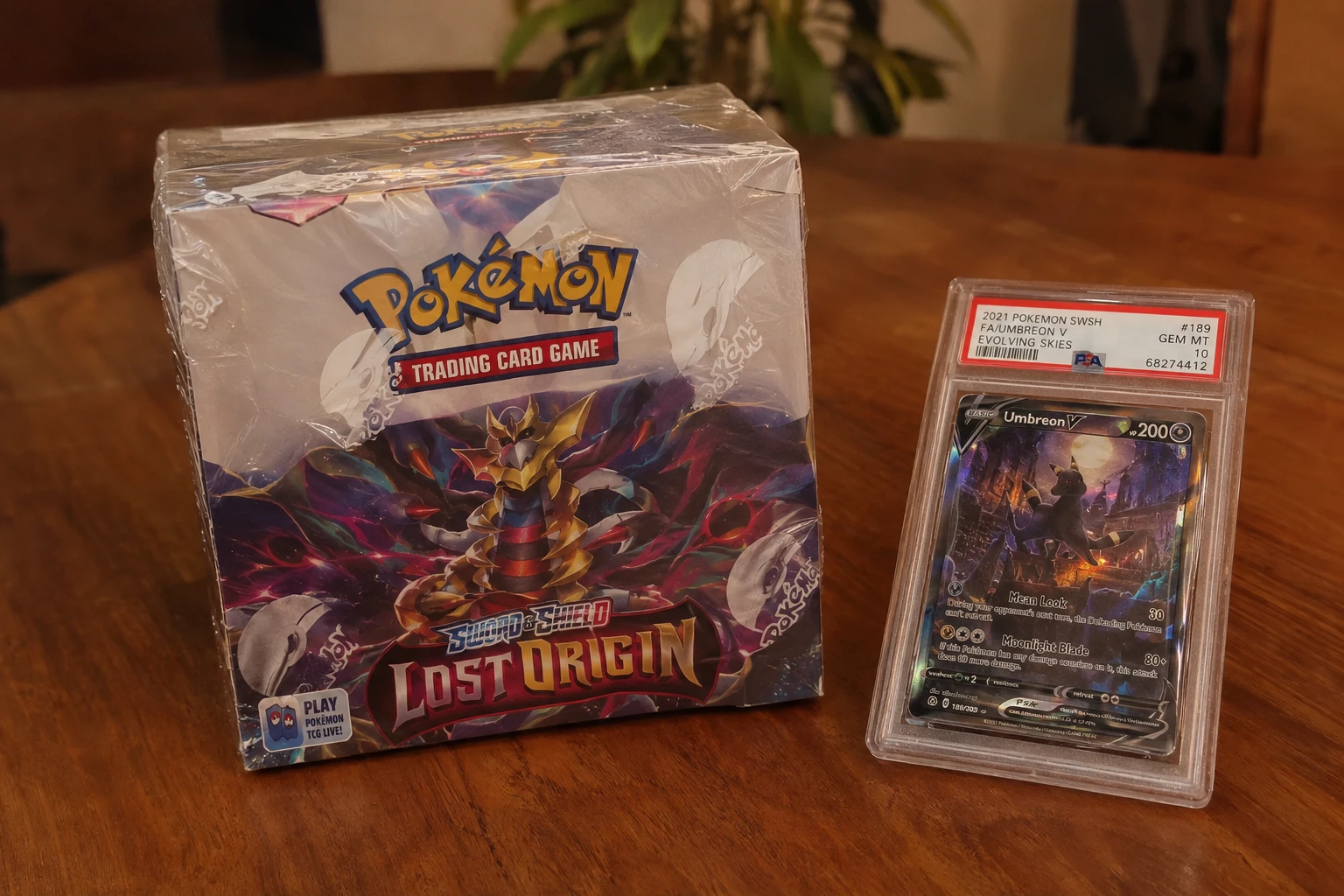
Sealed grading is exactly what it sounds like: PSA, CGC and the other services encapsulate unopened product — booster boxes, individual packs, tins, blaster boxes, cases — and grade the condition of the packaging plus the integrity of the factory seal. The product gets a holder, a grade (usually on a 1–10 scale like cards), and an authentication that the seal is original and untouched.
What it isn't: a grade of the cards inside. A graded booster box says nothing about whether the chase card in it would grade a 9 or a 10 — it certifies that the box is factory-sealed, authentic, and in a stated condition. The value is entirely in the seal guarantee: a graded seal proves the contents were never searched, weighed, resealed or tampered with.
Know what the product inside is worth before grading the box.
How sealed grading works
The process mirrors card grading with a sealed twist:
- Authentication. The service verifies the factory seal is original — checking shrink-wrap pattern, seal seams, box flaps and any tampering evidence. This is the primary value: most sealed products have a counterfeit or reseal problem the authentication solves.
- Condition assessment. The box or pack's condition is graded — corners, edges, shrink-wrap integrity, denting, seal completeness. A box with a crushed corner or a torn wrap gets a lower grade.
- Encapsulation. The product goes into a rigid holder sized for the format — box slabs for booster boxes, pack slabs for individual packs — with a label stating the product, set, grade and certification number.
Services differ on what they'll grade: PSA and CGC both handle booster boxes and packs, but format eligibility varies by product. Check each service's accepted formats before submitting — a product they don't slab is a wasted fee.
When sealed grading actually pays
The honest answer: only on products where the seal guarantee is the value. The cases that clear the math:
- Vintage sealed product — Pokemon Base/Fossil/Jungle era, vintage sports wax. The seal guarantee is everything on a 25-year-old box where reseals are common; the graded premium is the confidence premium.
- Discontinued/chase sets — sealed boxes of sets no longer in print with known chase content. The scarcity plus the untouched-seal guarantee compounds the value.
- High-value modern boxes — premium sealed product (Pokemon SPC/UPC-tier, high-end sports hobby boxes) where the contents' value justifies proving the seal.
- Collection display — a graded sealed box in a display case, where the holder is the point.
Skip: modern retail blasters, mass-produced tins, and any sealed product where the contents are worth less than the fee. A $40 blaster graded a 9 is still a $40 blaster with $30 of fees attached.
The premium math on sealed product
The graded-seal premium is real but uneven:
- Vintage Pokemon sealed: graded base-set era boxes sell for 15–40% over raw sealed — the authentication is the value because reseals are a real market problem.
- Chase modern sets: premiums of 10–25% on boxes with known valuable contents.
- Modern mid-tier: often a loss — the fee plus holder exceeds the premium on products whose contents aren't worth guaranteeing.
The formula is the same as card grading: the graded premium has to exceed the ~$30–50 all-in cost (sealed grading often costs more than card grading due to holder size and shipping weight). Where sealed grading differs from card grading is that the premium is almost entirely authentication — the condition of the box matters less than the fact that the seal is certified untouched. That means a mint-seal box and a slightly-dinged-seal box can have similar premiums if both authenticate, unlike cards where the grade is the whole value.
Vintage vs modern sealed: two different plays
Vintage sealed is where the strongest case is. A 1999 Pokemon booster box is worth thousands raw precisely because the seal is the question — resealed vintage product is common enough that an ungraded box carries a skepticism discount. A graded authentic seal removes that doubt and the premium reflects it. On vintage product, the grade of the box matters less than the fact that PSA certified the seal genuine.
Modern sealed is the opposite math. A 2026 Pokemon booster box sealed at retail has almost no reseal problem — the seal is the factory seal and everyone knows it. Grading it adds a holder and a grade but almost no authentication value, so the premium is thin or nonexistent. The cases that pay on modern sealed are the high-end products where the contents justify the guarantee — not the standard retail box.
The collector question that decides it: is the seal's authenticity in doubt? If yes (vintage, discontinued, high-value), grading pays. If no (modern retail), it usually doesn't.
A related consideration is holding versus grading: on modern sealed product, many collectors choose to keep the box sealed but ungraded, because a raw sealed box is still a sealed box — the value isn't in the holder. Grading a modern sealed box is only worth it if the specific product's contents are valuable enough that the authentication adds real price, which on modern retail it usually doesn't.
The reseal problem that makes authentication worth paying for
To understand why sealed grading exists at all, you have to understand the reseal problem. A sealed product is only valuable if the contents are genuinely untouched — and resealing vintage product is an old, well-practiced fraud. A dishonest seller opens a vintage booster box, removes the valuable packs or searches them (older packs can sometimes be weighed to find the holo packs), reseals the box, and sells it as untouched. The buyer pays sealed prices for a box that's already been mined.
On vintage Pokemon and sports wax this is common enough that an ungraded sealed box carries a skepticism discount — buyers price in the possibility that the seal isn't original. That's the market inefficiency sealed grading exploits: a certified-authentic seal removes the doubt, and the premium is literally the value of that removed doubt. On a $5,000 vintage box, 15–40% is the buyer paying to know it's real.
This is also why the box's physical condition matters less than on a card: the buyer isn't paying for a pretty box, they're paying for proof nobody opened it. A slightly-scuffed box with a certified seal is worth more than a pristine box with an unverified one.
The bottom line
Sealed grading is a niche within a niche — and it's the only grading play where the product's condition matters less than its authenticity. It pays on vintage and chase sealed product where the seal guarantee removes a real market doubt; it doesn't pay on modern retail where the seal was never in question. Before you ship a box, ask whether the buyer's doubt is what's priced — if it is, the graded seal earns its premium.
Know the contents' value before grading the seal.
Frequently Asked Questions
0
1
2
3
4
5
6
7
8
9
10
11
Sources & Further Reading
Emily Rodriguez analyzes grading cost, population, and pricing data across PSA, BGS, SGC, CGC, and TAG. She built the PreGradeCards ROI calculator and submission planner, and her market reports on grading backlog, turnaround times, and slab premiums are cited by collectors and dealers worldwide.
Create a free account and get 2 free credits — enough for 2 complete AI gradings with market pricing. No credit card required.
Get Your Free Credits →