The Short Answer
- The base Refractor is the entry-level grading target -- 3-5x PSA 10 premium over base Chrome.
- Green Refractor /99 is the mid-tier target -- 5-8x premium, accessible raw cost.
- Gold Refractor /50 is the premium target -- 8-15x premium, strong ROI.
- Orange /25 and Red /5 are high-end targets -- 15-40x premium.
- Superfractor 1/1 is the ultimate target -- 50x+ premium, always grade.
- Chrome surface scratches are the #1 grading barrier for all refractor parallels.
- PSA is the preferred grader for F1 refractors -- highest resale premium globally.
F1 Refractor Parallel Structure
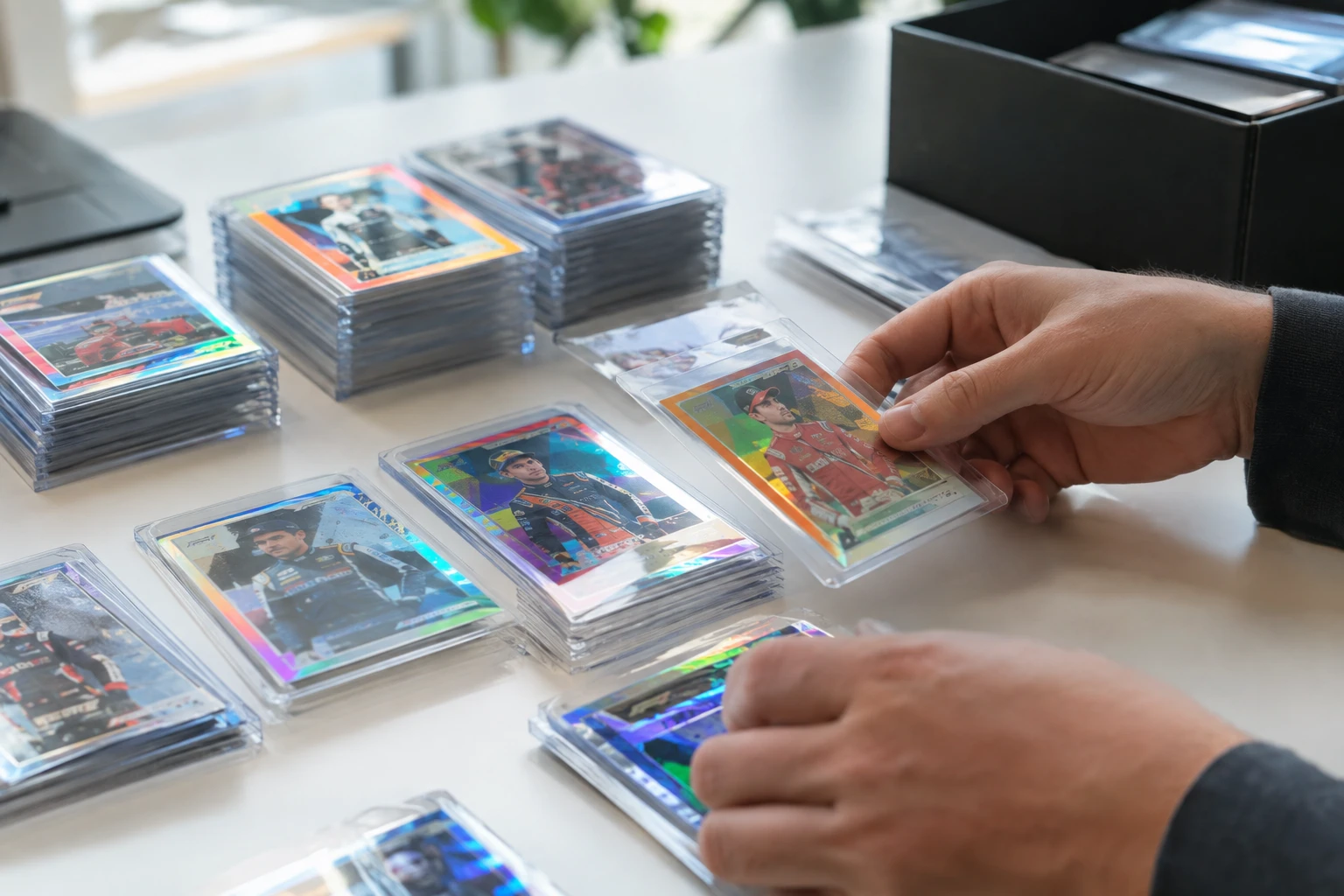
Topps Chrome F1 refractor parallels create a clear value hierarchy. Each parallel has a different print run, creating scarcity tiers that reward grading. The structure is consistent across Topps Chrome products (F1, baseball, basketball), making it easy for collectors to understand the value tiers.
| Parallel | Print Run | Pack Ratio | PSA 10 Premium |
|---|---|---|---|
| Base Chrome | Unlimited | 1:1 | 2-3x |
| Refractor | ~1:3 | 1:3 | 3-5x |
| Green Refractor | /99 | ~1:12 | 5-8x |
| Gold Refractor | /50 | ~1:24 | 8-15x |
| Orange Refractor | /25 | ~1:48 | 15-25x |
| Red Refractor | /5 | ~1:240 | 25-40x |
| Superfractor | 1/1 | 1:case | 50x+ |
Base Refractor: Entry Level
The base Refractor is the entry-level grading target for F1 Chrome. With a pack ratio of approximately 1:3, the Refractor is the most common refractor parallel. For star drivers, the Refractor PSA 10 premium is 3-5x over the base Chrome.
For a top driver like Verstappen, the base Refractor PSA 10 sells for $1,000-$2,500, compared to $800-$2,500 for the base Chrome. The Refractor premium is moderate but consistent. For mid-tier drivers like Leclerc, the Refractor PSA 10 sells for $400-$1,000.
The base Refractor is a good grading target for collectors who want to grade F1 cards but cannot afford the numbered parallels. The raw cost is $50-$200 for star drivers, and the PSA 10 premium justifies the grading fee.
Green /99 and Gold /50
Green Refractor /99 and Gold Refractor /50 are the mid-to-premium grading targets. These parallels are numbered, creating scarcity that drives higher PSA 10 premiums.
Green Refractor /99
With 99 copies, the Green Refractor is moderately scarce. For Verstappen, a Green Refractor /99 PSA 10 sells for $2,000-$5,000. The raw cost is $200-$500, making the ROI attractive for clean copies. The Green Refractor is the sweet spot for grading ROI -- the numbered scarcity creates demand, but the raw cost is still accessible.
Gold Refractor /50
With only 50 copies, the Gold Refractor is scarce. For Verstappen, a Gold Refractor /50 PSA 10 sells for $5,000-$10,000. The raw cost is $500-$1,500, and the PSA 10 premium (8-15x base) justifies the grading fee. Always grade Gold Refractors of star drivers -- the scarcity and PSA 10 premium make it a strong ROI target.
Orange /25 and Red /5
Orange Refractor /25 and Red Refractor /5 are the high-end grading targets. These parallels are extremely scarce and command enormous PSA 10 premiums.
Orange Refractor /25
With only 25 copies, the Orange Refractor is very scarce. For Verstappen, an Orange Refractor /25 PSA 10 sells for $8,000-$15,000. The raw cost is $1,000-$3,000. Always grade Orange Refractors of star drivers.
Red Refractor /5
With only 5 copies, the Red Refractor is extremely scarce. For Verstappen, a Red Refractor /5 PSA 10 sells for $15,000-$30,000. The raw cost is $3,000-$8,000. Always grade Red Refractors -- the scarcity and PSA 10 premium make it a no-brainer. Use PSA Express ($149) or Walk-Through ($599).
Superfractor 1/1
The Superfractor is the holy grail of the Topps Chrome F1 set -- only one copy exists. For a star driver like Verstappen, a Superfractor 1/1 PSA 10 could sell for $50,000-$100,000+. The Superfractor is always worth grading, regardless of condition -- even a PSA 5 Superfractor 1/1 of a star driver commands a significant premium.
Use PSA Walk-Through ($599) with declared value insurance for any Superfractor. The authentication and protection are worth the premium fee. Superfractors are the ultimate F1 card collectible -- a 1/1 Chrome card of a World Championship driver.
Driver Tier Impact on Values
The driver tier has a massive impact on refractor values. Here is the value comparison across driver tiers:
| Driver Tier | Refractor PSA 10 | Green /99 PSA 10 | Gold /50 PSA 10 |
|---|---|---|---|
| Tier 1 (Verstappen, Hamilton) | $1,000-$2,500 | $2,000-$5,000 | $5,000-$10,000 |
| Tier 2 (Leclerc, Norris) | $400-$1,000 | $800-$2,000 | $2,000-$4,000 |
| Tier 3 (Russell, Sainz) | $200-$500 | $400-$800 | $1,000-$2,000 |
| Tier 4 (Piastri, others) | $100-$300 | $200-$500 | $500-$1,000 |
Values estimated from eBay sold listings and F1 card market data, 2026.
Refractor Condition Guide
F1 refractor parallels have the same Chrome surface challenges as all Topps Chrome products. The refractor finish is even more reflective than base Chrome, making surface defects more visible under grading lights.
- Surface scratches: The #1 grading barrier. The refractor finish shows every scratch. Inspect under angled LED light at 45 degrees.
- Print lines: Manufacturing defects visible under angled light. More common on refractors than base Chrome.
- Centering: Topps Chrome F1 centering is generally moderate. Measure borders for 55/45 front minimum.
- Corner whitening: Refractor corners can show whitening from packaging. Check under 10x magnification.
- Edge chipping: The refractor coating can chip on edges, especially on numbered parallels that are handled more.
Pre-Screening Protocol
- Surface check under angled LED light -- look for scratches, print lines
- Centering measurement -- 55/45 front minimum for PSA 10
- Corner check under 10x magnification -- look for whitening
- Edge check -- look for chipping on refractor coating
- AI pre-grading ($0.19/card) -- only submit cards predicted PSA 10
ROI by Parallel and Driver
Here is the ROI analysis for F1 refractor parallels, using Verstappen as the example:
| Parallel | Raw | PSA 10 | Gem Rate | Exp. Profit | ROI |
|---|---|---|---|---|---|
| Base Chrome | $200 | $1,200 | 75% | $640 | 320% |
| Refractor | $100 | $1,800 | 70% | $1,170 | 585% |
| Green /99 | $300 | $3,500 | 65% | $2,100 | 700% |
| Gold /50 | $800 | $7,000 | 60% | $3,800 | 475% |
| Orange /25 | $1,500 | $12,000 | 55% | $5,800 | 387% |
Expected profit = (Gem Rate x PSA 10) + ((1-Gem Rate) x PSA 9) - Raw - $79.99. Values for Verstappen. Actual values vary by driver tier.
Submission Strategy
For F1 refractor parallels, PSA is the preferred grader. The global F1 collector base recognizes PSA as the standard. Here is the submission strategy by parallel:
- Base Chrome and Refractor ($200-$2,500 PSA 10): PSA Regular ($79.99, 70-80 days).
- Green /99 ($800-$5,000 PSA 10): PSA Regular ($79.99) for $800-$2,000. PSA Express ($149) for $2,000+.
- Gold /50 ($2,000-$10,000 PSA 10): PSA Express ($149, 20-30 days).
- Orange /25 ($5,000-$15,000 PSA 10): PSA Express ($149) or Walk-Through ($599) for $10,000+.
- Red /5 and Superfractor 1/1 ($15,000+): PSA Walk-Through ($599) with declared value insurance.
Timing
Submit F1 refractors 2-3 months before major races (Monaco, British Grand Prix, season finale) when fan interest peaks. PSA Regular's 70-80 day turnaround means April submissions return in July -- around the British Grand Prix.
Frequently Asked Questions
What is the best F1 refractor parallel to grade?
What is a Superfractor F1 card?
How much is a Verstappen Gold Refractor PSA 10 worth?
Should I grade base Chrome F1 cards?
What are the main grading issues for F1 refractors?
Should I use PSA or CGC for F1 refractors?
How do driver tiers affect F1 refractor values?
When should I submit F1 refractors for grading?
Sources & Further Reading
- PreGradeCards -- F1 Card Grading Guide
- SportsCardsPro -- Topps Chrome F1 Prices
- CardGrade -- Card Grading Trends April 2026
The PreGradeCards Research Team combines machine-learning engineers, grading analysts, and collector-education specialists to produce accurate, data-driven guides on AI card grading, professional grading standards, and collecting strategy.
Create a free account and get 1 free credit — enough for 1 complete AI grading with market pricing. No credit card required.
Sign Up Free →