Palworld Card Game Identification & AI Grading
The Palworld OFFICIAL CARD GAME is Bushiroad's TCG adaptation of Pocketpair's monster-collecting phenomenon — launched worldwide in July 2026 with Dawn of Palpagos, which sold 3.5 million packs out of the gate. With beloved Pals, character cards, and a deep parallel ladder topped by the single-per-set SSS chase, it's a breakout new collector market. PreGradeCards AI identifies Pal, set, rarity, and condition to predict PSA, BGS, and CGC grades.
Grade Cards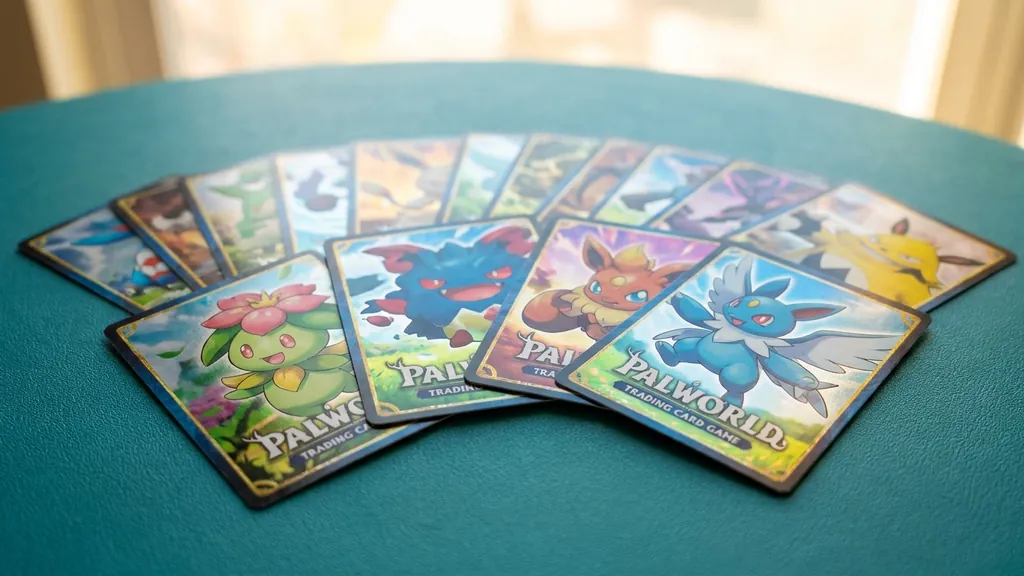
Key Takeaways
- AI pre-grading costs about $0.19 per card, while PSA Regular is $79.99 per card. Pre-screening is the smart first step.
- Only 8.88% of cards submitted to PSA earn Gem Mint 10. AI filtering helps you avoid paying full grading fees for low-grade results.
- PreGradeCards AI matches PSA grades within one point 89% of the time on internal benchmarks of 10,000 cards.
- Professional graders evaluate four criteria: corners, edges, surface, and centering.
- Not every card is worth grading. Focus on the SSS chase, SSP/OSR/SP parallels, and first-set foils.
History & Market Context
Palworld exploded as a video game in 2024, selling tens of millions of copies with its "Pokémon with guns" monster-collecting formula. Bushiroad's Palworld OFFICIAL CARD GAME brought the franchise to cardboard with a simultaneous worldwide launch on July 30, 2026 — the Dawn of Palpagos booster plus two trial decks — and reported 3.5 million packs sold almost immediately.
Dawn of Palpagos contains 100 base cards (Common, Uncommon, Rare, and Double Rare) plus 61 parallel versions across SR, OSR, SP, and SSP treatments — and exactly one SSS card, the set's ultimate chase. Cards are split across four colors (Red, Blue, Green, Purple) and feature both Pals like Jormuntide Ignis and Suzaku and human characters like Zoe and Lily.
As a brand-new game with a massive franchise behind it, Palworld's graded population starts at zero. Early submitters grading first-set chase cards now are taking the same ground-floor position that rewarded early Lorcana and Riftbound graders — low populations on cards from a game with proven demand.
Pals
50+ Pal cards — Jormuntide Ignis, Suzaku, and more.
Characters
Zoe, Lily, and the human cast of Palpagos.
SSS & SSP
One-per-set chase card and top parallel treatments.
Dawn of Palpagos
The July 2026 launch booster — first-print premium.
Follow-Up Sets
Eternal Ascent, Legends Awaken, and beyond.
Artists, Sets & Design
Palworld cards feature all-original illustrations drawn specifically for the TCG — not video game screenshots — in Bushiroad's clean modern frame. The four card colors map to playstyle factions, and the parallel treatments (SR, OSR, SP, SSP) layer alternate art and premium foiling on the game's most popular Pals.
Understanding the design history of the Palworld card game helps collectors identify valuable variants and avoid counterfeits. Card backs, copyright lines, foil patterns, and border treatments all provide authentication clues. PreGradeCards AI is trained on these visual markers to identify cards accurately from a single photo.
What PreGradeCards AI Identifies
Upload a photo and PreGradeCards AI will analyze the card for the same four pillars professional graders use:
- Pal or character name and card color
- Set symbol and card number
- C, U, R, RR, and SSS base rarities
- SR, OSR, SP, and SSP parallel treatments
- Surface, corner, edge, and centering flaws
The AI also estimates a predicted grade range and flags the specific areas most likely to lower your grade. This lets you decide whether to submit, sell raw, or hold the card before spending $79.99 or more on professional grading.
Grading Deep Dive
Condition factors specific to Palworld cards:
- SSP and OSR premium foils scratch on contact — sleeve immediately
- The SSS chase card is one-per-set — any defect costs real money
- Dark parallel borders expose edge whitening under magnification
- Launch-window cards see heavy handling — check for fingerprint sheen
- Trial deck cards take more play wear than booster pulls
Professional graders use magnification and controlled lighting to find these defects. PreGradeCards AI replicates that process digitally, giving you a professional-grade pre-screen at a fraction of the cost. The AI highlights centering ratios, corner wear, edge chipping, and surface issues so you can make informed submission decisions.
Grading Demand by Era
Grading demand varies by era based on scarcity, collector nostalgia, and player interest. Cards from the earliest print runs and the most popular modern sets see the strongest submission volume.
Why AI Pre-Grading Saves Money on Palworld Cards
Professional grading is expensive, and not every card will earn a premium grade. PSA Regular costs $79.99 per card. If you submit ten cards and only three earn PSA 10, you have wasted $559.93 on the seven lower grades. AI pre-grading at $0.19 per card lets you test your entire collection first.
The AI filters out the 60-70% of raw cards that are unlikely to earn PSA 10, letting you submit only the strongest candidates. This reduces total grading costs by 40-60% and improves the average grade of your submissions. For collectors and dealers who grade dozens or hundreds of cards per year, the savings can reach thousands of dollars.
AI pre-grading is especially valuable for the Palworld card game because of the deep parallel ladder — the same card exists in base, SR, OSR, SP, and SSP versions with very different values. The AI accounts for these differences and gives you a targeted pre-screening report.
Frequently Asked Questions
How does AI pre-grading work for Palworld cards?
The AI scans the card, identifies the Pal or character, set, and rarity, then evaluates corners, edges, surface, and centering for a predicted grade.
What Palworld cards are worth grading?
The single-per-set SSS chase card, SSP and OSR parallels, first-set Dawn of Palpagos foils, and popular Pals like Jormuntide Ignis are the best candidates.
Is AI pre-grading accurate for Palworld cards?
PreGradeCards AI matches PSA and CGC grades within one point on 89% of tested cards.
How much does Palworld card grading cost?
PSA Regular is $79.99 per card. CGC starts at $15. AI pre-grading is about $0.19 per card.
What is the biggest grade killer for Palworld cards?
Foil surface scratches on parallel cards and edge whitening on dark card borders are the most common issues.