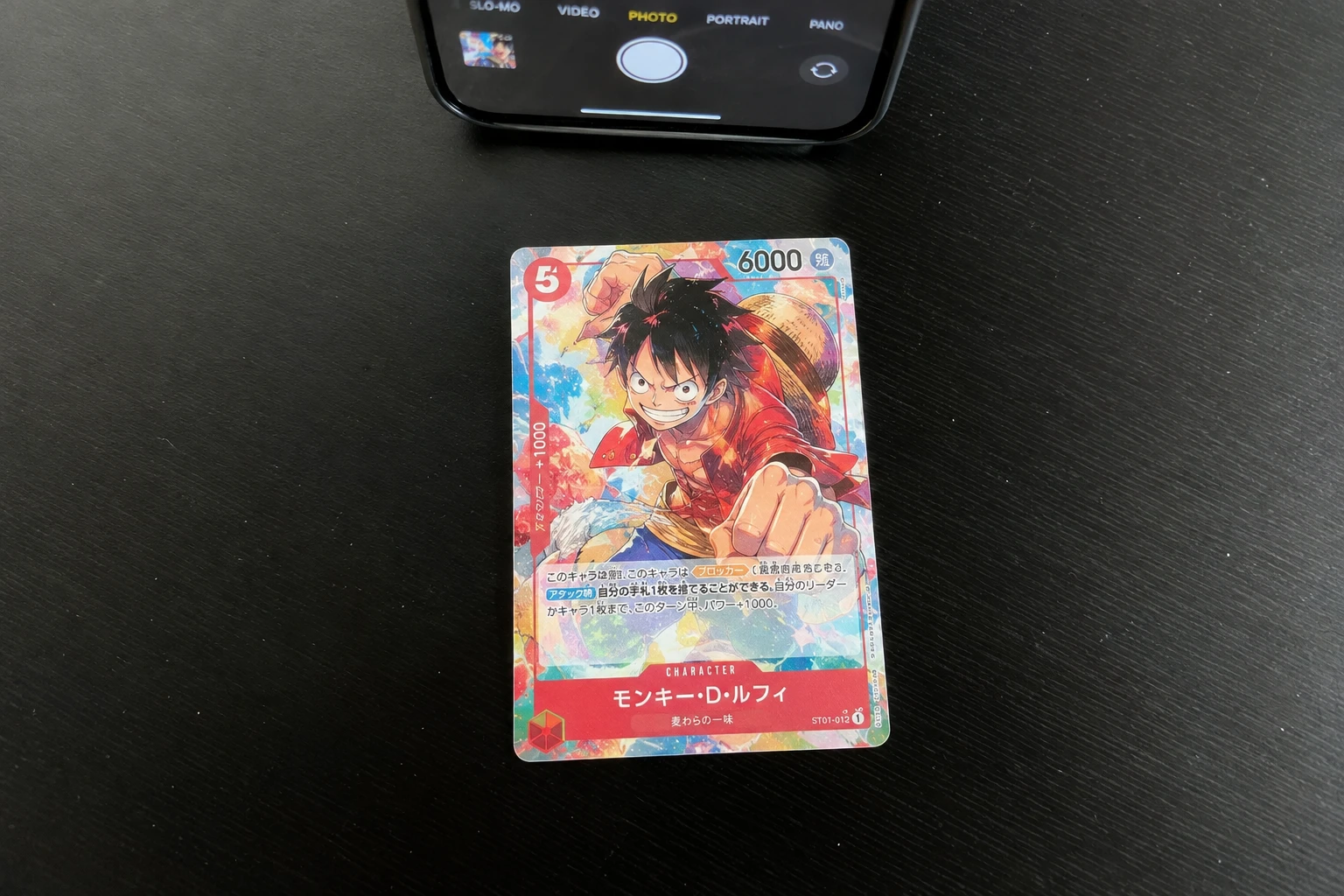
The Short Answer
- Alt-art and secret rare Digimon cards carry the graded premiums; base foils don't clear the fee.
- Bandai stock is thin — edge whitening is the most common pack-fresh defect.
- The franchise collector base (Digimon fans, not just TCG players) gives demand a floor.
- Fan-favorite Digimon (Omnimon, WarGreymon, Beelzemon) drive the chase tier.
- Pre-grade before submitting — the franchise market rewards genuine 10s.
The Digimon Card Game market in 2026
Bandai's Digimon Card Game relaunched globally in 2020 and has grown into a real TCG market — a genuine playerbase, organized play, and a chase-card economy built on the Digimon franchise's 25-year nostalgia. The graded tier is the alt-art and secret rare cards of the fan-favorite Digimon — Omnimon, WarGreymon, Beelzemon, Imperialdramon and the other characters the franchise's audience grew up with — pulling $60–800 raw on the popular sets.
What makes Digimon different from a pure-play TCG is the buyer composition: a meaningful share of the market is franchise collectors who buy the characters, not the game. A Digimon fan who never plays the card game will still buy a graded Omnimon alt-art the way they buy figures and plush — which gives the chase cards a demand floor that purely game-driven markets don't have. That's a stabilizing force on the graded premium.
2 free credits — check the grade before the fee.
Card quality: Bandai's thin stock
Digimon prints on Bandai's standard thin stock — the same lighter board used for One Piece, Gundam and Dragon Ball Super. The grading consequences:
- Edge whitening is the top defect. The thin board exposes white along cut edges, especially the pack-separation edge.
- Print quality is generally high. Bandai's modern production runs clean; print lines exist but are less common than on Pokemon's early waves.
- Centering is usually tight. Modern Bandai presses run good centering, though individual cards drift.
- Corners are softer than Pokemon. The lighter stock means corner fraying is easier to introduce with handling.
The upshot mirrors the other Bandai games: a cleanly-pulled and sleeved Digimon card grades well, but the edge and corner issues that cost a 10 are invisible at arm's length. Inspect under good light before assuming pack-fresh is 10-ready.
Where Digimon differs from its Bandai siblings is artwork placement: the alt-arts often use busy, colorful illustrations that can visually hide the edge whitening and corner wear that would be obvious on a plainer card. That makes the visual inspection even more important on Digimon specifically — the same defect that's easy to spot on a plain border hides in a vibrant Omnimon illustration until you hold it to the light.
There's also a structural thing about the Digimon market that affects grading: because the franchise collector base overlaps with figure/plush collectors who don't necessarily play the game, the cards that get graded are often handled by people who bought them for the character rather than for competition. That means the cards circulating in the grading pool have seen more casual handling than a pure-play TCG's cards — which is exactly why the pre-grade step matters on Digimon more than on most games.
Which Digimon cards are actually worth grading
Grade the chase; skip the bulk:
- Alt-art cards — the alternate-artwork variants of popular Digimon; the flagship chase where the premiums live.
- Secret rares — the top rarity tier, thin print runs, collector demand.
- Fan-favorite Digimon in any premium form — the characters drive the market; an alt-art of a beloved Digimon outsells an equivalent of a less-popular one.
- Event/championship promos — organized-play cards with limited distribution.
- Early-set chases — the first releases of now-popular Digimon, which carry first-wave premium.
Skip: standard foils, uncommons and commons, and anything where raw is under ~$40. The Digimon graded market concentrates on the alt-art tier; a clean 10 on a bulk card is a fee loss.
The pack-fresh defects to inspect
- Edge whitening — the #1 issue on Bandai stock; check all four edges under bright light, especially the top edge.
- Top-edge chipping — the pack-separation edge takes the stress on the pull.
- Corner fraying — microscopic, but it's the 9-vs-10 difference.
- Surface roller marks — faint production indentations visible under raking light.
- Centering drift — usually tight, verify on individual cards.
- Foil scratches — the parallel-foil surface picks up hairlines from card-on-card contact.
The check is the same one used on One Piece and Gundam: pull, sleeve immediately, inspect under bright light with the card tilted to catch surface defects, then run an AI pre-grade to catch the edge issues the eye misses.
Grading company choice for Digimon
- PSA — resale leader on TCG cards; the default for investment-intent alt-arts.
- CGC — lower fees, faster turnaround; smart for mid-value cards and fast flips.
- TAG — the defect report suits a franchise-collector base that wants transparency.
Pre-grade first either way — on a franchise-driven market the difference between a 9 and a 10 on a popular alt-art is real money, and the pre-grade tells you which it is.
How Digimon built a graded market on nostalgia
The Digimon Card Game's path to a graded market is different from most TCGs because the franchise predates the game by two decades. Digimon launched as a virtual pet in 1997 and grew into an anime, manga and toy empire — the card game that relaunched in 2020 arrived with a built-in audience of adults who grew up with the franchise. That's the collector base that buys the cards: not just TCG players, but the fans who've collected Digimon for 25 years.
That nostalgia floor is what makes Digimon's graded market steadier than a pure-play TCG. The demand for a graded Omnimon alt-art isn't only competitive players who need the card — it's the fan who wants the character, the collector who wants the art, and the TCG player who wants the game piece. Three demand sources on the same card is why the premiums hold.
The game's set structure reinforces it: Bandai keeps the chase tier scarce, releases popular characters on the alt-arts the market wants, and maintains organized play that keeps the game itself healthy. For graders, it means the premiums are real on the right cards — and the franchise floor means they don't evaporate the way a pure speculation market does.
The bottom line
Digimon has a real graded market — the alt-arts and secret rares of the fan-favorite Digimon justify fees, and the franchise collector base gives the premiums a steadier floor than pure-play TCGs have. The thin Bandai stock means the cards that fail a 10 do it on edges and corners you can't see at arm's length — pre-grade every candidate, submit only the true 10s, and let the franchise demand do the rest.
2 free credits, browser-based, no download.
Frequently Asked Questions
0
1
2
3
4
5
6
7
8
9
10
11
Sources & Further Reading
Emily Rodriguez analyzes grading cost, population, and pricing data across PSA, BGS, SGC, CGC, and TAG. She built the PreGradeCards ROI calculator and submission planner, and her market reports on grading backlog, turnaround times, and slab premiums are cited by collectors and dealers worldwide.
Create a free account and get 2 free credits — enough for 2 complete AI gradings with market pricing. No credit card required.
Get Your Free Credits →