The Short Answer
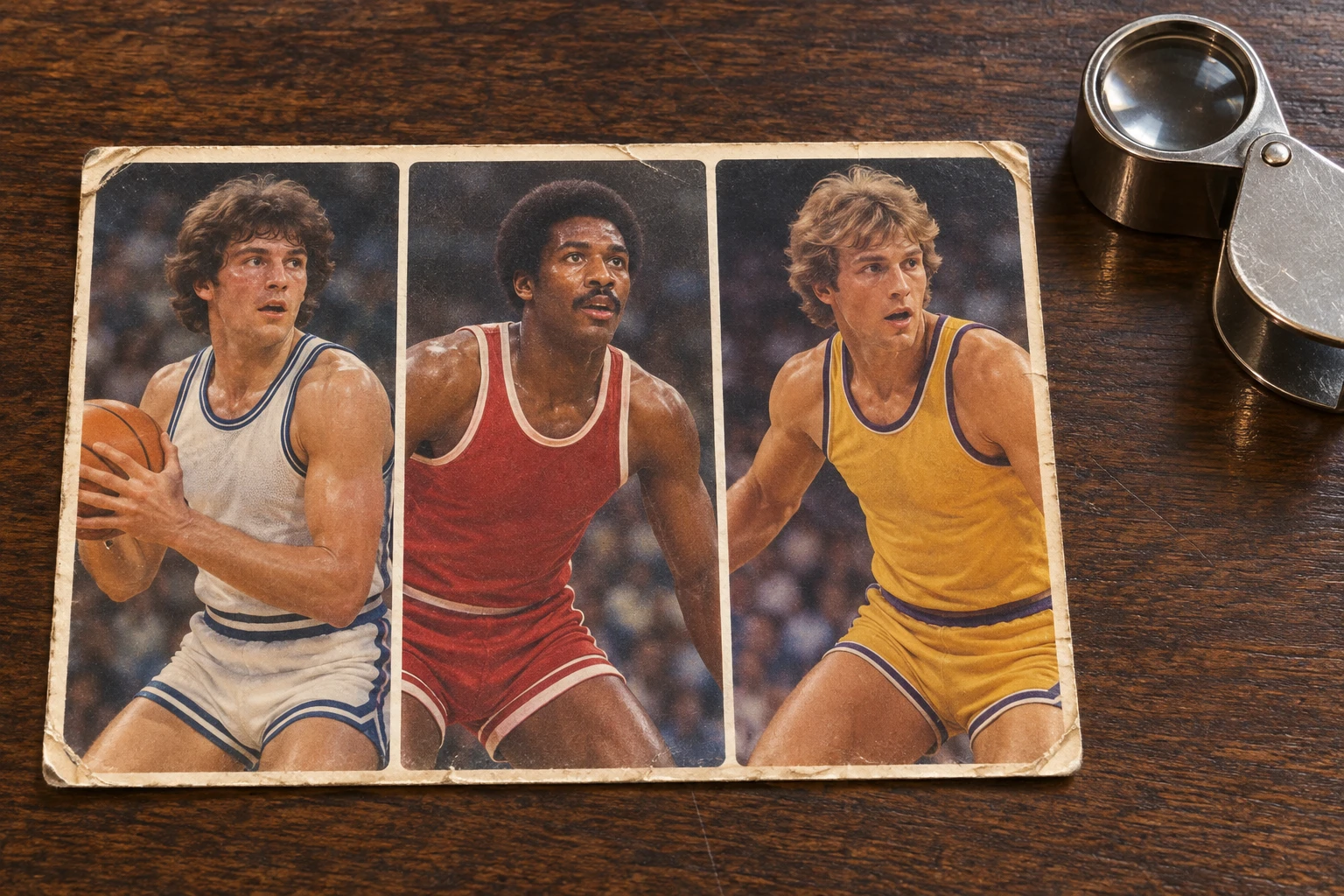
- Magic's rookie is the 1980-81 Topps #139 three-panel shared with Larry Bird and Julius Erving.
- Intact strips ask $250 to $375 raw; separated panels ask $100 to $250 and are not the same card.
- Graded panels run about $1,450 for a PSA 5 and $3,200 for a PSA 8; a PSA 10 last asked $32,000.
- The 1981-82 Topps #21 is the affordable solo Magic card at $17 to $25 raw.
- Perforation creases are the main grading risk on the panel and the usual reason a clean strip grades a 5.
- Certified autographs at $140 to $350 are the most liquid Magic cards in the market.
Why Magic Johnson's rookie card is shared with two other legends
Magic Johnson does not have a solo rookie card in the 1980-81 Topps set. He shares card #139 with Larry Bird and Julius Erving on a three-panel strip, and that single fact defines his entire market: the card is a Magic rookie, a Bird rookie and an Erving rookie at the same time, priced by whichever of the three is hottest.
The panel trades in three states. Intact strips ask $250 to $375, separated panels ask $100 to $250, and graded examples start around $1,450 for a PSA 5 and climb past $3,200 for an 8. A PSA 10 exists in single digits and last asked $32,000.
There is a cheaper route. The 1981-82 Topps #21 is Magic's first solo Topps card, it is 45 years old, and raw copies ask $17 to $25. It is not a rookie, and no serious dealer will call it one, but it is the card most collectors actually buy when they want a vintage Magic on a budget.
The 2026 angle is the same as the rest of this series: Topps is back in basketball, Chrome arrives in December, and attention is flowing to the same company's 1980s sets. The basketball card index shows where Magic sits against the other legends in the run.
Grading a three-panel strip is not like grading a normal card. The grader looks at three centering axes, three sets of corners and the perforations between them, and a single crease on the Erving panel can pull the whole strip down. That is why a PSA 5 panel can look perfectly presentable in a photo: the grade reflects the worst panel, not the Magic portrait a buyer is staring at.
| Card | Raw | PSA 9 | PSA 10 | Tier |
|---|---|---|---|---|
| 1980-81 Topps #139 panel (raw) | $100–$375 | ~$1,450 (PSA 5) | ~$3,200 (PSA 8) | Blue chip |
| 1981-82 Topps #21 (solo) | $17–$25 | ~$60 | ~$100 | Entry |
| Certified autograph | $140–$350 | — | — | Core |
| Signed 1980-81 panel | $249–$500 | — | — | Core |
| 1980-81 panel PSA 10 | — | — | $32,000 ask | Grail |
Graded columns are typical asks, not sales. Separated panels are worth less than intact strips and are frequently sold as though they were the same card.
1. 1980-81 Topps #139 — the three-panel rookie
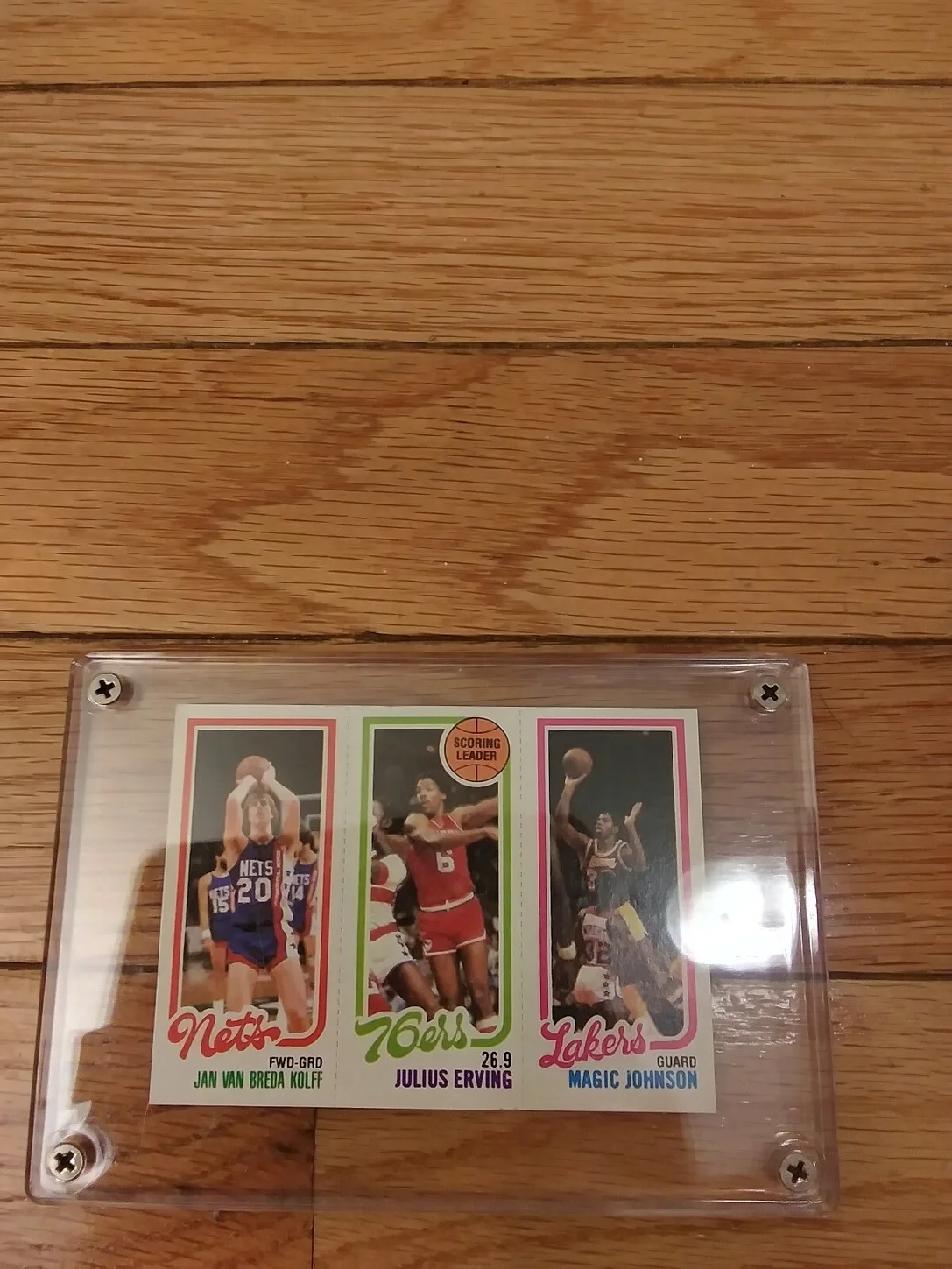
The panel carries three cards on one strip: #34 Larry Bird, #174 Julius Erving and #139 Magic Johnson. Topps printed the set this way, so the "card" is the strip, and a separated panel is a fragment of it.
Intact strips ask $250 to $375 raw. Separated panels ask $100 to $250, and the gap is entirely about completeness: collectors pay for the strip, not the fragment, even though Magic's portrait is identical either way.
Check recent eBay sold prices for the 1980-81 Topps #139 panel →
2. 1981-82 Topps #21 — the solo card
The 1981-82 Topps #21 is Magic's first solo Topps card. It is not a rookie, it is not scarce, and it is the card most collectors can actually afford: $17 to $25 raw, with PSA 9s near $100.
It works because it is old enough to feel vintage and cheap enough to buy without a spreadsheet. A centred copy with sharp corners is a genuinely good-looking card, and it survives the comparison with the panel better than most second-year cards do.
Check recent eBay sold prices for the 1981-82 Topps #21 →
3. Graded 1980-81 panel — PSA 5 to PSA 8
Grading the panel is where the money actually sits. A PSA 5 asks about $1,450 and a PSA 8 about $3,200, and both numbers are driven by the same problem: the strip is easy to crease, hard to centre and almost impossible to find with four sharp corners.
The grading math is unforgiving. A raw strip at $300 plus a $30 submission can return a 5 and lose money against the $1,450 ask only if you ignore the $300 cost. Buy the grade you want unless you are confident in the corners.
Check recent eBay sold prices for graded Magic panels →
4. Certified autographs — the liquid Magic card
A certified Magic autograph is the easiest Magic card to buy and sell. Licensed on-card autos ask $140 to $350, and the 1989-90 Fleer and Hoops signed cards sit at the bottom of that range while modern Panini autos sit at the top.
The risk is the same as every autograph market: unlicensed in-person signatures with a generic COA. A $65 signed card without a PSA/DNA or BAS slab is a souvenir.
Check recent eBay sold prices for certified Magic autographs →
- 1980 Topps Magic Johnson Rookie RC PSA 6 MC EX-MT John Long Ron Boone Basketball — $36.99 on eBay →
- Topps 1979-80 Magic Johnson Rookie All Star Card #237-18-88 — $29.99 on eBay →
- Magic Johnson Solo Rookie Card RC 1981 Topps Basketball #21 PSA 7 NM Near Mint — $99.99 on eBay →
- *Magic Johnson Rookie 1980-81 Topps Basketball #18 Long/Boone HGA 9 Mint — $199.99 on eBay →
Ad · Listings shown are from eBay. We may earn a commission when you buy through these eBay links. Prices and availability are set by eBay sellers and change often.
5. Signed 1980-81 panel — the shortcut with a catch
Signed panels ask $249 to $500 depending on the authenticator and whether Bird and Erving also signed. A panel signed by all three is a different, much more expensive card, and listings blur the difference constantly.
The catch is that a signature on a vintage panel does not make the card more gradeable; it makes it a signed card. PSA/DNA authenticates the ink, and the panel itself is usually graded "authentic" rather than numerically.
Check recent eBay sold prices for signed Magic panels →
6. PSA 10 panel — the $32,000 grail
A PSA 10 panel is the rarest card in this article. The population is in single digits because the strip is large, perforated and printed on stock that does not survive forty-five years without a flaw.
The last ask was $32,000, and that is the honest state of the market: an ask, not a sale. At this level you are buying a specific object from a specific seller, and the price is whatever the two of you agree.
Check recent eBay sold prices for the PSA 10 panel →
How to buy a Magic Johnson rookie without paying for the wrong panel
Decide first whether you want the intact strip or a separated panel. The strip is the card; the separated panel is a budget version and should be priced accordingly. Most overpays in this market come from buying a separated panel at intact-strip money.
Second, decide whether you want raw or graded. The raw strip is a $250 to $375 card with real condition risk; the graded 5 at $1,450 is the safer buy if you want one example and no exposure to a bad submission.
Third, compare it with the other two players on the panel. Bird's guide and Magic's guide quote the same card, and the panel price moves with whichever of the three is hottest. The Jordan value guide is the reference for what the top of this era looks like.
Regional demand is real and exploitable. Lakers collectors on the West Coast pay more for the Magic panel, Celtics collectors in New England pay more for the Bird panel, and the same strip can sell for 20% to 30% more depending on where it is listed. If you are selling, list nationally and let the bidders fight; if you are buying, look for listings in the wrong region.
Timing matters less here than in the rookie class, but it is not irrelevant. The 1980-81 panel is a forty-five-year-old card with a stable supply, so a Chrome release in December does not change its fundamentals. What moves it is a headline sale — a PSA 10 crossing the block, or a new registry set chasing completion — and those are unpredictable. Buy the panel because you want the card, not because a product cycle is about to lift it.
If you cannot decide between the panel and the solo card, buy both. The panel is the rookie and the long-term hold; the 1981-82 #21 is the card you can handle, display and trade without worrying about a perforated strip. Together they cost less than a mid-grade Kareem rookie and they cover both the collector and the investor in the same purchase.
- Confirm intact strip versus separated panel in the title and the photos.
- Inspect the perforations for tears and the centre panel for creases.
- Check centering on all three panels, because the strip is graded as one card.
- For graded copies, compare the cert number and the label against the PSA database.
- Compare the ask against all three players' recent sales, since the panel trades on combined demand.
A pre-grade will not authenticate the strip, but it will score centering and corners, which is most of what a grader sees. Try the AI pre-grade before submitting, and check current pricing.
Run a free AI pre-grade on your card →
Watch and learn
An SGC-graded 1980-81 Magic Johnson rookie panel, shown up close with the Bird and Erving panels intact. Good reference for centering and perforation condition.
Video: Topps 1980-81 SGC Graded Magic Johnson Rookie / Julius Erving / Larry Bird — Binky's Sports Cards on YouTube


Ad · Listings shown are from eBay. We may earn a commission when you buy through these eBay links. Prices and availability are set by eBay sellers and change often.
Frequently Asked Questions
Is the 1980-81 Topps #139 Magic Johnson's rookie card?
What is a Magic Johnson rookie card worth in 2026?
Should I buy an intact panel or a separated one?
Is the 1981-82 Topps #21 a rookie card?
How hard is it to grade a 1980-81 Topps panel?
Are signed Magic rookie panels worth buying?
Why is the Magic panel cheaper than a Jordan rookie?
What is the best entry card for a Magic Johnson collection?
Do Topps Chrome releases affect vintage Magic prices?
Can a separated Magic panel still be graded?
How do I store a 1980-81 Topps panel?
Sources & Further Reading
- eBay sold listings — 1980-81 Topps Magic Johnson 139 rookie
- Basketball-Reference — Magic Johnson career stats
- PSA CardFacts — population reports
- CardLadder — basketball market data
- Topps — 2026-27 Flagship Basketball
- PSA — 1980-81 Topps Basketball set registry
Marcus Chen has evaluated over 50,000 sports cards and TCG cards across PSA, BGS, SGC, and CGC standards. Before joining PreGradeCards, he worked as a submission specialist for a major grading company and trained collectors and dealers on condition assessment.
Create a free account and get 1,5 free credits. No credit card required.
Get Your Free Credits →