The Short Answer
- Vintage Shadowless and 1st Edition Base Set cards carry the highest premiums.
- Holo cards must have clean surfaces with no scratches or holo bleed for PSA 10.
- Japanese and Chinese Pokémon cards have different centering standards and values than English cards.
- Modern Pokémon cards require near-perfect centering for PSA 10.
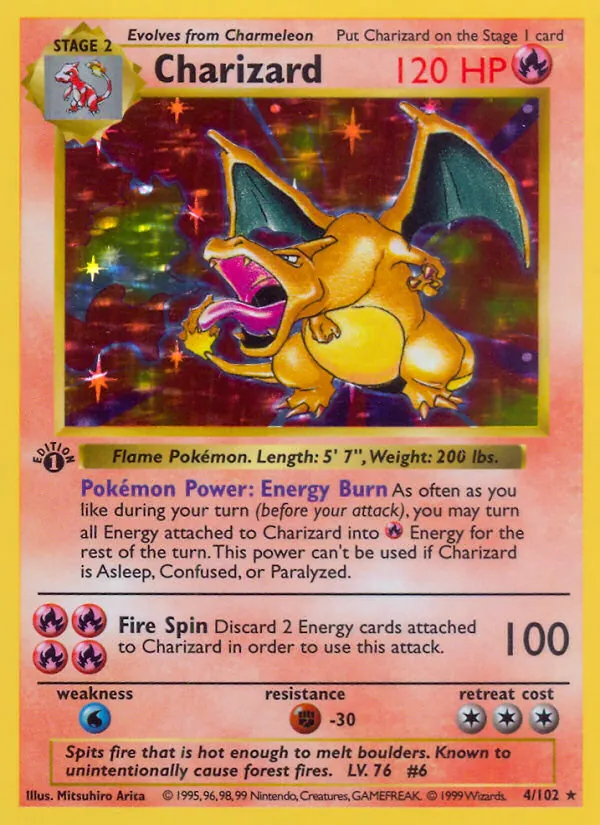
- The 1999 Base Set Charizard is the most iconic Pokémon card, with PSA 10 copies worth six figures.
- AI pre-screening is ideal for detecting holo scratches, print lines, and centering issues.
Pokémon Card Grading Market in 2026
Pokémon card grading is the largest and most liquid TCG grading market. PSA has graded millions of Pokémon cards, and the market spans vintage Base Set cards from 1999 to modern special sets like Scarlet & Violet, Paldean Fates, and Prismatic Evolutions. The market is driven by nostalgia, scarcity, and the global popularity of the Pokémon franchise.
PSA graded approximately 1.5 million Pokémon cards in 2025. The most submitted sets were modern special sets, followed by vintage Base Set and Jungle cards. The 1999 Base Set Charizard remains the most iconic card, with PSA 10 copies trading for $100,000-$300,000 depending on market conditions. The modern market is driven by chase cards like alt arts, special illustration rares, and secret rares.
The Pokémon market is unique because it has both a strong adult collector base and a strong player base. Players grade cards they use in decks, while collectors grade cards for investment and display. This dual demand creates deep liquidity for the most popular cards. The market is also highly international, with Japanese and English cards being the most valuable.
Vintage Base Set, Shadowless, and 1st Edition Pokémon Cards
The 1999 Pokémon Base Set is the most important vintage TCG set. It contains 102 cards, including the iconic Charizard, Blastoise, and Venusaur. The Base Set was printed in three main variants: 1st Edition, Shadowless, and Unlimited. 1st Edition cards have a 1st Edition stamp on the left side and are the most valuable. Shadowless cards have no shadow box around the artwork and were printed before the Unlimited version. Unlimited cards have the shadow box and are the most common.
Shadowless cards are particularly important because they represent the earliest print run of the Base Set. The print quality was different, and the cards are rarer than Unlimited cards. Shadowless Base Set Charizard is the second-most valuable Pokémon card after the 1st Edition Charizard. The population of PSA 10 Shadowless Charizards is extremely low, making the card a true trophy piece.
Vintage Pokémon cards are graded with era-appropriate standards. The 1999 Base Set was printed on thin card stock with inconsistent centering. A PSA 8 Base Set Charizard is considered a strong grade, while PSA 9 and 10 are difficult to achieve. The most common vintage issues are holo scratches, corner whitening, edge wear, and print spots. Wax stains from packs are also common on cards from the early sets.
Most Valuable Pokémon Cards to Grade
The value of a graded Pokémon card depends on the card, the set, the rarity, and the grade. The table below shows the most important Pokémon cards to grade, with estimated 2026 market ranges. These ranges fluctuate based on market trends and new set releases.
| Card | Set | PSA 10 Range | PSA 9 Range | Premium |
|---|---|---|---|---|
| Charizard 1st Edition | 1999 Base Set | $100,000 - $300,000 | $20,000 - $50,000 | ~5x |
| Charizard Shadowless | 1999 Base Set | $50,000 - $150,000 | $10,000 - $25,000 | ~5x |
| Blastoise 1st Edition | 1999 Base Set | $8,000 - $20,000 | $2,000 - $5,000 | ~4x |
| Venusaur 1st Edition | 1999 Base Set | $5,000 - $12,000 | $1,500 - $3,500 | ~3x |
| Charizard EX | 2014 Flashfire | $3,000 - $8,000 | $600 - $1,500 | ~5x |
| Umbreon VMAX Alt Art | 2021 Evolving Skies | $2,000 - $5,000 | $400 - $1,000 | ~5x |
The Base Set Charizard is the grail of Pokémon card collecting. PSA 10 copies are rare and trade for six figures. The modern alt art cards are the next tier of valuable cards, with the Umbreon VMAX Alt Art from Evolving Skies being the most iconic modern chase card. The premium for PSA 10 over PSA 9 is consistently high because the PSA 10 population is relatively low compared to demand.
PSA, CGC, and BGS Pokémon Grading Standards
Pokémon cards are graded by PSA, CGC, and BGS. PSA is the dominant brand for Pokémon card resale and has the deepest liquidity. CGC is the second-most popular brand and is known for strict centering and detailed labels. BGS is less common for Pokémon but is used for high-value cards because of sub-grades.
PSA 10 for Pokémon requires 55/45 front centering, 75/25 back centering, and no visible flaws under 10x magnification. The standard is the same as other TCGs, but Pokémon cards have unique challenges. The holo surface is sensitive to scratches. The 1st Edition stamp can have print defects. The shadowless cards are graded more leniently for centering because the print quality was inconsistent. The back centering is often more forgiving than the front centering.
The resale premium order for Pokémon is generally: PSA 10 > BGS 10 Black Label > CGC 10 > BGS 9.5 > PSA 9 > CGC 9.5 > raw. PSA 10 is the gold standard, especially for vintage cards. CGC is popular with collectors who want strict standards and detailed labels. BGS 10 Black Label is rare and commands a premium over PSA 10 when it appears.
Centering and Corners on Pokémon Cards
Centering is the most common reason Pokémon cards miss PSA 10. Vintage Base Set cards are notoriously off-center, and many cards that look centered are actually 60/40 or worse. Modern Pokémon cards have better quality control but still have centering issues, especially on special sets and print runs with high demand.
Pokémon cards have yellow borders, which makes centering easy to check visually. The border should be equal on all sides for a perfect card. For PSA 10, the larger border should not exceed 55% of the total border width. The back centering is allowed to be 75/25, but tighter is better. The 1st Edition stamp on the left side of vintage cards can make the left border appear larger, but the measurement is based on the image area, not the stamp.
Corners are also a major issue. Pokémon cards are often played with and stored in boxes, which causes corner damage. Even unplayed cards can have soft corners from factory handling. The bottom corners are most commonly damaged because they are the corners collectors handle first. A tiny touch of whitening on a corner can drop a card from PSA 10 to PSA 9. The holo layer on the front can also lift at the corners, creating visible damage.
Pokémon Centering Tip
The yellow border on Pokémon cards is your best friend for centering checks. Use a centering tool or digital caliper to measure the yellow border on all four sides. If the left border is noticeably wider than the right border, the card is likely a PSA 9 or lower. The 55/45 standard is strict, and many cards that look centered fail.
Holo, Reverse Holo, and Special Foil Cards
Holo Pokémon cards are the most valuable and the most difficult to grade. The holo surface is a reflective foil layer that shows every scratch and print defect. A single holo scratch can drop a card from PSA 10 to PSA 9. Holo bleed, where the holo pattern extends into the non-holo areas, is a known factory defect that can lower the grade or be noted on the label.
Reverse holo cards are also common grade losers. The entire card surface is holo, which makes scratches and clouding more visible. Reverse holo cards from the early 2000s are particularly prone to surface clouding, which appears as a hazy or foggy look under light. Clouding is a surface defect that can prevent PSA 10.
Modern special foil cards, including alt arts, special illustration rares, and full arts, have complex textures and embossing. These cards are beautiful but condition-sensitive. The texture can be damaged by handling, and the raised surfaces can show wear. The AI is trained to distinguish between the intended texture and actual damage. This is especially important for cards like the Umbreon VMAX Alt Art and the Charizard VMAX from Champions Path.
AI pre-screening is ideal for Pokémon holo cards because the surface defects are often invisible under normal room lighting. The AI can analyze the holo surface under consistent lighting and at multiple angles, then flag scratches and print defects that the human eye misses.
Modern Pokémon Sets and Grading Trends
Modern Pokémon sets are produced at a much higher volume than vintage sets. The Scarlet & Violet era introduced special illustration rares, hyper rares, and new foil patterns. The most valuable modern sets include Evolving Skies, Crown Zenith, Paldean Fates, Prismatic Evolutions, and the 151 set. These sets have chase cards that can be worth thousands of dollars in PSA 10.
The modern Pokémon market is driven by set hype, pull rates, and social media. A new set with a popular chase card can see hundreds of thousands of submissions in the first month. This creates a temporary oversupply of PSA 9 cards, which can suppress prices. PSA 10 cards remain valuable because the gem rate is low. The best strategy is to submit the best raw cards quickly and sell PSA 10 copies before the market saturates.
Modern Pokémon cards have better print quality than vintage cards, but centering remains a common issue. The English print quality is generally lower than the Japanese print quality, which is why Japanese cards often have higher gem rates. Collectors who want the best condition cards often prefer Japanese versions for modern sets.
Pokémon Language Variants
Pokémon cards are printed in many languages, including English, Japanese, Chinese, Korean, French, German, Italian, Spanish, and Portuguese. The most valuable languages are English and Japanese. English cards have the largest market, while Japanese cards often have better print quality and are considered the original version.
Japanese Pokémon cards are graded more strictly than English cards in practice because they often have tighter centering and smaller borders. A Japanese card with perfect centering is more impressive than an English card with the same ratio. Japanese cards are also often more valuable than English cards for the same card, especially for modern sets. The 1996 Japanese Base Set Charizard is the original Charizard and trades at a premium over the English version.
Chinese, Korean, and other language cards are collected but have lower liquidity. They are generally worth less than English and Japanese cards. The AI can recognize all these language variants and adjust the grading prediction accordingly. When deciding whether to grade a foreign language card, consider the market size and the value in the target grade.
ROI and Investment Outlook for Graded Pokémon Cards
Pokémon card grading has strong investment characteristics because of the global popularity of the franchise and the high PSA 10 premiums. The best investments are vintage chase cards in high grades and modern chase cards before the market saturates. The 1999 Base Set Charizard is the blue-chip Pokémon card, and high-grade copies have appreciated dramatically over the past decade.
Modern Pokémon investing is more speculative. New sets are released frequently, and the chase cards can spike and fall quickly. The best strategy is to focus on cards with strong cultural appeal, like Charizard, Pikachu, and Eevee evolutions. These cards have consistent demand regardless of competitive play. Alt art cards with beautiful artwork also tend to hold value better than generic full arts.
AI pre-screening improves Pokémon ROI by helping collectors submit only the best cards. Because the PSA 10 premium is so high, the difference between a gem and a non-gem is often the entire profit margin. A collector who submits 100 raw Umbreon VMAX Alt Arts without pre-screening might get 30 PSA 10s. With AI pre-screening, the same collector might identify 45 strong candidates and sell the rest raw, improving returns significantly.
What to Submit for Pokémon Card Grading
Use this checklist to decide which Pokémon cards are worth grading in 2026.
- Submit: Vintage 1st Edition and Shadowless cards from Base Set, Jungle, Fossil, and Team Rocket.
- Submit: Holo cards of popular Pokémon like Charizard, Pikachu, Eevee, and Mewtwo.
- Submit: Modern chase cards including alt arts, special illustration rares, and secret rares.
- Submit: Japanese cards with strong condition and low populations.
- Do not submit: Common cards or bulk cards, even in good condition.
- Do not submit: Cards with visible holo scratches, print lines, corner whitening, or poor centering.
- Pre-screen first: Use AI or a magnifier to check holo surface and centering before paying grading fees.
The Pokémon market is seasonal around new set releases and major Pokémon events. Prices often spike when a new set is released and then stabilize as supply increases. The best time to sell graded cards is during the hype window, while the best time to buy raw cards is during the lull between sets.
Frequently Asked Questions
What is the most valuable Pokémon card to grade?
Are Japanese Pokémon cards harder to grade?
What causes holo scratches on Pokémon cards?
Can AI identify Pokémon card sets and rarities?
How much does it cost to grade a Pokémon card?
What is the PSA 10 premium for Pokémon cards?
Sources & Further Reading
The PreGradeCards Research Team combines machine-learning engineers, grading analysts, and collector-education specialists to produce accurate, data-driven guides on AI card grading, professional grading standards, and collecting strategy.
With submission floors rising, pre-screening is no longer optional. Use our AI Pre-Grade Calculator to score a card's PSA 10 odds before you pay, and the Submission Planner to pick the right tier.