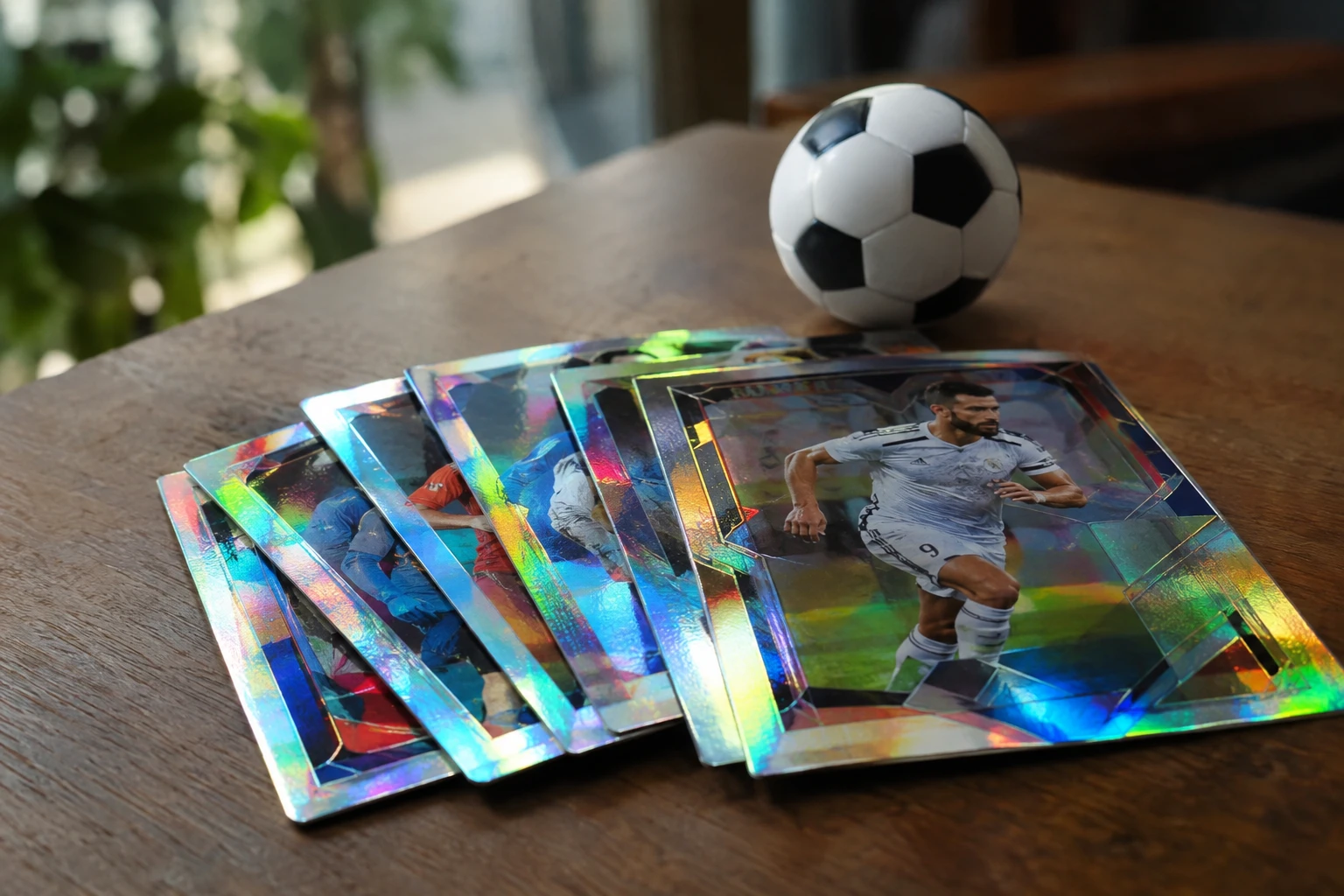
The Short Answer
- 500-card base set, 48 nations — the biggest World Cup Prizm checklist ever, released June 26, 2026 in Hobby, Choice, Mega, and Blaster formats.
- New host-country parallels debuted: Aguila (#/70, Mexico), Maple Leaf (#/86, Canada), Old Glory (#/94, USA) — all three are grading candidates on star names.
- Color Blast makes its World Cup debut alongside new Manga and Alter Ego inserts — the case-hit SSPs are the set's premium grading targets.
- Chase names: Lamine Yamal, Messi, Haaland, Mbappé, Bellingham, Wirtz — plus legend autos (Pelé, Maradona, Beckenbauer) and multi-player Quad Signatures.
- Prizm grading traps are chrome-specific: centering variance, print lines on silver/holo stock, and edge chipping — pre-grade before submitting; pack-fresh Prizm still fails PSA 10 roughly 60-75% of the time.
- Post-World-Cup timing matters: the tournament is over — prices on breakout performers already peaked; grade for keeps/PC or cards still rising (champion-nation stars), not fading hype.
The Product: Biggest World Cup Prizm Ever
2026 Panini Prizm FIFA World Cup Soccer hit June 26, 2026 — timed to the first 48-team World Cup, hosted across the US, Canada, and Mexico. The specs:
| Format | Configuration | Key Contents |
|---|---|---|
| Hobby | 12 packs × 12 cards | 1 auto, 5 #d Prizms, 4 Silvers, 3 more Prizms, 12 inserts |
| Choice | 1 pack × 8 cards | 1 auto, 2 #d Prizms, 3 other Prizms, 1 Silver + 1 Silver insert |
| Hobby Mega | 6 packs × 7 cards | 1 #d Prizm, 6 Prizms, 1 Silver, 5 inserts |
| Blaster / DSG Mega | 6 packs × 4 cards | 6 Prizm parallels, 3 inserts |
The checklist runs 500 base cards spanning all 48 qualified nations — including first-time Prizm World Cup appearances for debut qualifiers — plus legend content spanning Pelé, Maradona, and Franz Beckenbauer. Signature products include single autos, Quad Signatures (multi-player autos), Signature Moments, and new-for-2026 National Heroes and 1994 Team USA Signatures sets.
Insert lineup: National Landmarks (returning fan favorite), Scorers Club, New Era, Connections, Aces, Phenomenon (25 top footballers of the tournament), Global Reach, Trophy Hunting, Screamers — plus the super-rare tier covered next.
The Parallels Actually Worth Grading
Prizm's parallel rainbow is huge; grading economics mean only the scarce tiers justify fees. The new-for-2026 host-nation parallels lead the list:
- Aguila (#/70) — Mexico host parallel. Scarce enough to grade on any star name; a Yamal or Messi Aguila is a set centerpiece.
- Maple Leaf (#/86) — Canada host parallel.
- Old Glory (#/94) — USA host parallel; the patriotic angle gives it extra US-market demand.
- Choice exclusives — Choice Red (#/85), Choice Blue (#/38), Plum Blossom (#/8) — the /8 is an obvious grade-anything-chase.
- Silver Prizms — 4+ per hobby box means they're common; grade only the biggest names and only if gem-quality.
- Standard numbered rainbow — the usual /99–/1 ladder; /25 and below of star names grade, common players don't justify fees below /49.
The rule: numbered under /100 = grade candidate on star names; under /25 = grade candidate on almost any name; numbered /8 or lower = grade regardless of condition outcome. An 8 on a /8 card still sells; the slab is authentication and protection for a scarce object.
The SSP Tier: Color Blast, Manga, Alter Ego, National Pride
The case-hit and super-short-print tier is where the real grading money is:
- Color Blast — the iconic SSP insert makes its FIFA World Cup debut in 2026. Basketball and football Color Blast sales established the premium precedent; a soccer Color Blast of a top name is the single best grading candidate in the product. Color Blast Duals also appear.
- Manga — new anime-styled SSP; manga inserts have performed strongly across Panini's football products and land squarely in the 'grade on pull' tier.
- Alter Ego — another new-for-2026 limited insert.
- National Pride — the returning super-rare insert.
- Prizmania — limited insert chase.
SSPs are the exception to the pre-grade rule: the scarcity is the value, not the condition premium. Still inspect for obvious issues (surface print lines are common on these cards), but a Color Blast goes to grading in essentially any condition.
The Names That Actually Pay Grading Fees
Not every star's card returns the grading fee. The tiers:
Tier 1 — grade the good stuff without hesitation: Lamine Yamal (the generational-talent premium is real and his base/parallel prices lead the product), Lionel Messi (legacy demand, possibly his final World Cup product), Erling Haaland, Kylian Mbappé, Jude Bellingham. Their numbered parallels and SSPs are the product's grading core.
Tier 2 — grade the scarce versions only: Florian Wirtz, Alphonso Davies, Vinícius Júnior, Pedri — strong names, but grade only /99-and-under or SSP copies.
Tier 3 — the legend lane: Pelé, Maradona, Beckenbauer autographs — grade for authentication and protection; legend-auto grading is about preserving the auto's legitimacy premium, not chasing gem rates.
Watch: breakout-nation stars — players whose tournament performance outran their card prices. Post-World Cup is when those cards re-rate, and the ones that won still carry momentum while the eliminated favorites cool. Also watch debut-nation stars — cards from first-time World Cup nations carry a first-appearance premium collectors pay for in year five, not month five.
Prizm Chrome Grading Traps (Read Before Submitting)
Prizm chromium stock is one of the tougher grading substrates in the hobby. The four recurring killers:
- Centering. Prizm's border design makes off-center cuts obvious — and PSA 10 wants ~55/45 or better front. Prizm centering variance is notorious even in pack-fresh condition; a visibly tilted card is a guaranteed 9 at best.
- Surface print lines. Roller lines across the chrome face are the #1 silent killer — invisible face-on, glaring under grader light. Tilt the card under a single light source; any line that catches is a surface deduction.
- Edge chipping. Chrome edges chip at the cut points — check all four edges at 45° for the little white flecks where the chrome layer fractured. Dark-bordered parallels show it worst.
- Corner wear on holo stock. Silver and holo Prizms whiten at corners with minimal handling — inspect all four corners under magnification before assuming pack-fresh means mint.
The practical filter: run every Prizm candidate through an AI pre-grade before submitting. Chrome stock is exactly where AI's measurement advantage matters — centering ratios to the millimeter, surface-scan flagging print lines, edge analysis that catches chips the eye misses. On a $25–60 grading fee, knowing the card is a 9 before you pay is the difference between strategy and donation.
The Grading ROI Math on World Cup Cards
Concrete example — say you're holding a Lamine Yamal Old Glory #/94 selling raw around $150–250:
- PSA 10 outcome: star-name numbered parallels in 10 typically command 2–3x raw — $350–600 range. Grading fee ~$60 + shipping: net gain real.
- PSA 9 outcome: usually sells at a modest premium to raw or near-raw — after the $60+ all-in grading cost, roughly breakeven or a small loss.
- PSA 8 or below: you paid ~$60 to learn the card is worth less slabbed than raw.
So the submission math collapses to one question: is this specific card a 10? That's what makes pre-grading non-negotiable on chrome — the set's gem rates make blind submission a coin flip at best, and a losing flip on the majority of submissions. Grade the measured candidates; sell the rest raw or hold them.
One World Cup-specific caution: post-tournament prices on non-champion stars already peaked and are re-rating down. The ROI math above assumes current market prices — if you grade a fading name, both the raw and the 10 keep sliding during the 40–80 day turnaround. Grade rising assets or keepers, not cooling hype.
Raw vs Grade vs Hold: The Decision Grid
| Your Card | The Play |
|---|---|
| SSP (Color Blast, Manga, Alter Ego, National Pride) | Grade — any condition. SSP slabs are authentication + protection for scarce objects. |
| Star numbered parallel (/99–/8) | Pre-grade first — submit the 10 candidates, sell the rest raw while parallel demand holds. |
| Star Silver or base | Only if visibly flawless AND a top-3 name — otherwise sell raw. |
| Legend auto | Grade for authentication; the slab preserves the auto premium regardless of final grade. |
| Common-player parallels | Sell raw or hold — fees exceed the label premium on non-star names below /25. |
| Breakout/champion-nation star | Act fast — momentum re-rates fade; grade now or sell raw into the hype, don't hold for later. |
The World Cup Timing Clock — Why Your Grading Deadline Is Sooner Than You Think
World Cup cards have a demand curve unlike anything else in the hobby: they peak during the tournament, not after. With the 2026 World Cup running June 11 – July 19 across the US, Mexico, and Canada, the math works against mail-in grading:
- The pricing peak is the knockout rounds. Historically, player-card prices for deep-run teams spike hardest in the quarter/semi-final window — a breakout star's card can 3-5x between the group stage and the final, then deflate within weeks of the trophy lift. A submission mailed in July arrives back in September to a market that already forgot.
- Express tiers exist for exactly this. PSA Express (~5 business days) and CGC's faster tiers are the only mail-in options that can plausibly return slabs before the final — and they cost $75-150/card, which only works on cards whose post-grade value clearly clears the fee.
- On-site and regional graders are the cheat code. Show submissions during the tournament weeks — and fast regional services like KSA in Canada — return slabs in timeframes the majors can't match at any price.
- The pre-tournament play: grade your likely stars before June 11, not during. Cards slabbed in May ride the entire tournament curve; cards submitted in June miss most of it.
- Post-tournament, the window inverts. After July, demand cools and express fees stop making sense — that's when standard tiers and slower services return to the math for long-term holds.
Translation: the 'should I grade my Prizm World Cup hits' question has a hard deadline attached. The answer that matters isn't 'which company' — it's 'back before the knockout rounds or not at all.'
Handling and Storing Chrome Cards Before Grading
Prizm is chromium stock — the same surface that makes it beautiful makes it a grading-hazard magnet. The interval between ripping the pack and shipping the card is where most Prizm grades are actually lost:
- Sleeve immediately, from the top down. Chrome surfaces show fingerprint oils as surface flaws under a grader's light. Slide the card into a penny sleeve holding it by the edges — one thumbprint across a holo costs a point.
- Semi-rigids, not toploaders, for submission. PSA, BGS, and CGC all want cards in semi-rigid holders for grading submissions. Toploaders are fine for storage but can scratch chrome on insertion if the card isn't already sleeved — and some submission forms get rejected for wrong holders.
- Watch for 'chrome bow.' Chromium stock naturally bows — a slight curve is normal and graders tolerate it, but a badly bowed card reads as damaged. Store flat in a team bag, not upright where humidity exaggerates the curl.
- Surface-check under angled light before submitting. Run your eye — or better, an AI pre-grade — across every Prizm before it ships. Chrome hides print lines and roller marks that are invisible face-on and fatal at the grading table.
- Humidity is the silent killer. Chrome + moisture = surface waviness and edge silvering. If you're holding Prizm WC cards through summer for a fall submission, a climate-stable storage spot matters more than it does for paper stock.
The Verdict
The 2026 Prizm World Cup product is the deepest soccer checklist Panini has ever shipped — and like every Prizm product, the difference between profit and donation is measured in centering ratios and print lines, not pull rates. Grade the SSPs, grade the star parallels that measure out at 10, sell the rest into the market that still wants raw chrome.
And the meta-rule for this specific set: the World Cup is over. The tournament-window premium already happened — grade and sell what's still rising, hold the generational names, and don't submit cooling assets into a 60-day turnaround hoping the hype outlives the queue.
Frequently Asked Questions
0
1
2
3
4
5
6
Sources & Further Reading
- GoGTS — 2026 Panini Prizm FIFA World Cup Checklist
- Beckett — 2026 Panini Prizm FIFA World Cup Card Checklist & Box Info
- Ludex — Prizm World Cup Checklist, Inserts & Box Breakdown
- Breakninja — Full 2026 Prizm World Cup Checklist
- PreGradeCards — Prizm Card Grading Guide
JT Thompson has focused on vintage sports cards (pre-1980) for more than 20 years. He is a regular contributor to vintage collector forums, has consulted on authentication issues for high-value pre-war cards, and teaches collectors how to spot trimming, recoloring, and restoration on classic cardboard.
Create a free account and get 1 free credit — enough for 1 complete AI grading with market pricing. No credit card required.
Sign Up Free →