The Short Answer
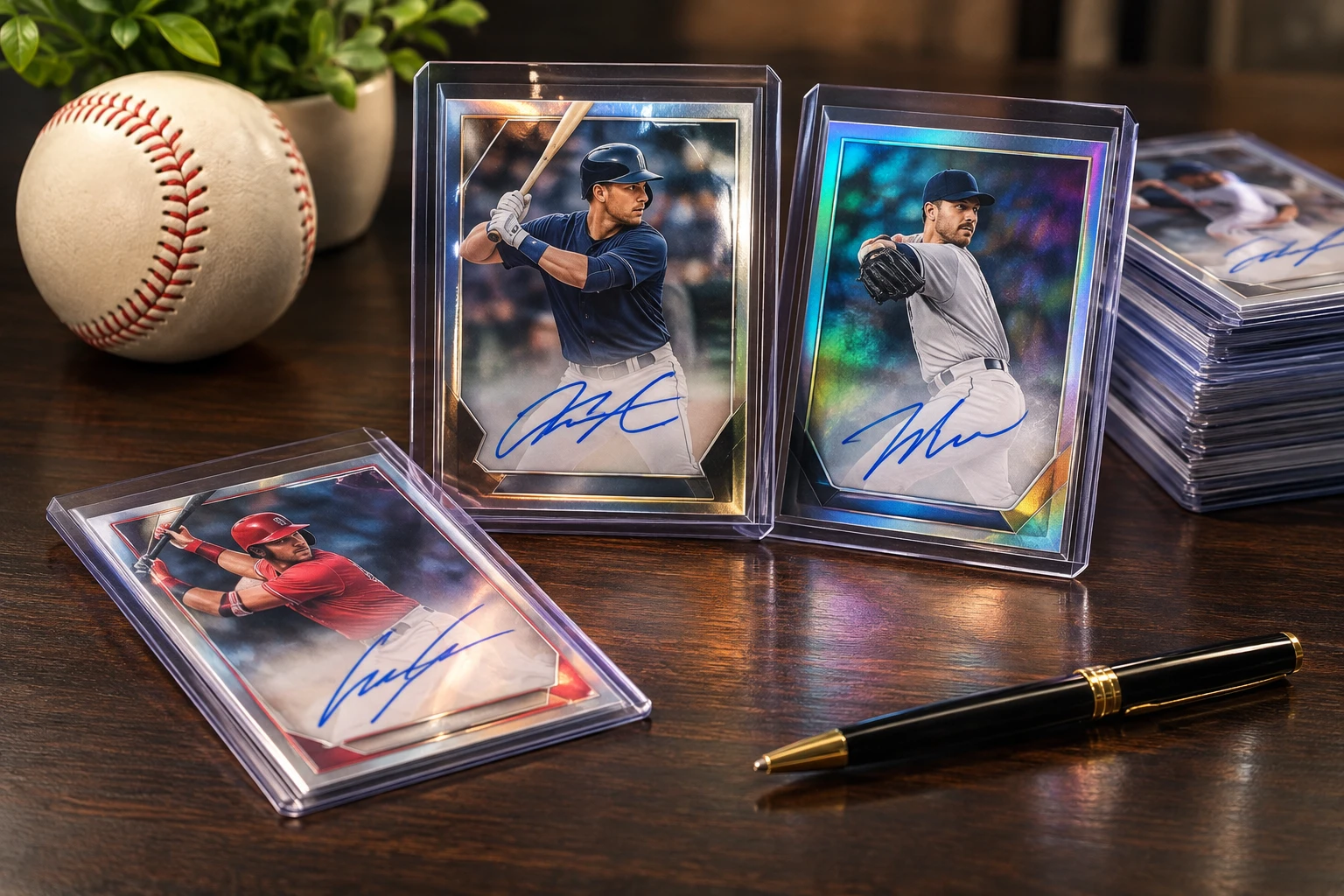
- Tier One is an autograph and relic product, so the grading shortlist comes from the hit list, not from a base rookie.
- Topps does not publish a full Tier One print run; read the numbering scheme on each subset and treat run lengths as reported.
- On-card autos of players with deep sold-comp history are the only reliable grading targets in the product.
- Relic cards and sticker autos almost never clear the fee plus shipping plus a realistic 9 risk.
- A 10 needs to be worth roughly twice the raw price before a paid submission makes sense.
- Declaring low to dodge an upcharge costs more in insurance exposure than it saves in tier fees.
2026 Topps Tier One checklist: the short answer
The 2026 Topps Tier One checklist decides two separate things: whether a box is worth opening, and whether any single card in it is worth grading. Tier One is an autograph and relic product, so the usual advice to grade the best base rookie has nowhere to land. Topps released it on 24 June 2026.
Prices move weekly, so this guide sticks to what does not: which subsets carry a grade premium, which hits lose money the moment they go into a holder, and where declared-value rules cost more than the fee.
The short version: grade on-card autographs of players with a deep sold-comp history, grade the shortest parallels of those players, and leave most relics and sticker autos raw. A submission costs a fixed amount per card plus shipping both ways, and the resale spread has to be wider than that cost.
Where Topps publishes nothing, this guide says so and sends you to the checklist instead of inventing a number.
Release date and box configuration
Topps released 2026 Topps Tier One Baseball on 24 June 2026. The product is built around memorabilia and signatures rather than a base set with hits sprinkled through it. The base cards exist mostly as a platform for numbered parallels, and the box value sits in the hit slots.
That shape changes one default. In a flagship or Chrome product the lazy shortlist is the best base rookie. Here there is no such default, because the base checklist is not why the box costs what it costs. The shortlist comes from the hit list.
Pack count and hits per box move between configurations, and Tier One box structure has changed more than once. Confirm the current configuration on the product page. The table lists the fields that change a grading decision, with unpublished ones marked as reported.
| Field | What to confirm | Why it changes the grade decision |
|---|---|---|
| Release date | 24 June 2026 | Sets the comp window; a five-month-old card is a pre-population bet. |
| Box type | Hobby configuration (reported) | Determines how many hits compete for one submission budget. |
| Autographs per box | Product page (reported) | On-card versus sticker decides which subset is gradeable at all. |
| Relics per box | Product page (reported) | Relic-only cards are usually a leave-raw decision. |
| Numbered parallels | Checklist, subset by subset | Run length is the main driver of any graded premium. |
| Base set size | Checklist | Base cards rarely justify a fee in this product. |
| Box price | Live product and retail pages | Sets the break-even threshold for the whole box. |
Methodology: configuration fields were checked against the Topps product page and checklist on 2026-11-14. Values marked reported are not published in a stable form and should be re-read on the checklist before you rely on them.
How the checklist is structured
A Tier One checklist reads differently from a flagship checklist. Instead of one large base list with a few inserts, you get a small number of autograph subsets, a relic program and a base set that mostly exists to carry parallels. Sort the checklist into four buckets before you open anything.
- Base and base parallels. The bulk of the numbering. A grading target only when the player is a genuine chase and the parallel is short printed.
- Autograph subsets. The reason the product exists. Split these by on-card versus sticker, because that single detail sets both the grade ceiling and the resale spread.
- Relic and dual-relic cards. Swatches without a signature. These are the cards most often graded out of habit and sold at a loss.
- Combo cards. Auto-relic and dual-auto cards where condition risk and declared value are both highest, and where a 9 does the most damage.
Record the card-number prefix for each subset: the prefix, not the player name, is how you find the correct comp and avoid pricing a base parallel against an autograph. Mark which parallels are numbered, because an unnumbered parallel and a short-printed parallel of the same player are two different grading decisions.
Print runs and odds: what is actually published
Topps does not publish a total print run for Tier One, and it does not publish card-level pack odds the way it does for flagship. What the checklist does show is the numbering on each parallel, which is the closest thing to a print run you can measure.
Treat every run length below as reported until you have read it on the checklist for that subset. Numbering varies inside one product, so a short run in one autograph set says nothing about the set beside it.
| Tier (reported) | Grading implication | Usual action |
|---|---|---|
| Unnumbered auto | Supply is broad; a 10 rarely separates the card from the pack. | Grade only elite rookie on-card autos. |
| Reported /199-299 | Scarcity starts to matter, but comps are still deep. | Grade the better-conditioned examples. |
| Reported /99-149 | The widest gap between raw and 10 pricing in the product. | Primary grading target. |
| Reported /25-49 | Fewer buyers, higher per-card value, thin comps. | Grade if the surface is clean; otherwise raw. |
| Reported /10 | Price is carried by the number, not the holder. | Grading optional. |
| One of one | Unique; a grade adds authentication but little premium. | Grade for protection, not for spread. |
Premium is not linear in scarcity. Moving from unnumbered to /99 changes the buyer pool; moving from /25 to /10 changes the price without changing how many buyers exist. Grading pays in the middle of the ladder, where scarcity is real and comps are still thick enough to measure it.
The chase autos that justify a submission
Every Tier One checklist has a small group of autographs that carry the box. Rather than memorise names that change every cycle, screen for the three traits that make those names matter.
- On-card signature. No sticker and no cut window. On-card autos grade better because there is no second surface to scratch, lift or catch a corner, and buyers pay a format premium independently of the grade.
- Deep sold-comp history. Dozens of sold listings, not three. Thin comps make a graded premium impossible to measure, and an unmeasurable premium is not a premium you can sell into.
- Existence in a short-printed parallel. The base auto is the entry ticket. The numbered parallel of the same player is the card that actually benefits from a high grade.
Rookie on-card autos of established prospects usually top the list, followed by retired stars whose autographs are short printed. Veteran autos with a broad unnumbered print run are the weakest grading candidates, even though they look the most collectible on the box render.
A hard pull is not automatically worth grading. Scarcity controls supply; grade premium controls how much demand you capture. You need both, and a hard pull with no graded demand is a slow sale.
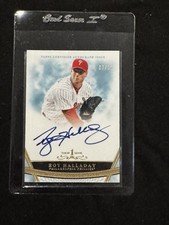
- 2011 Topps Tier One Baseball Roy Halladay Top Tier Autograph /99 — $799.99 on eBay →
- Topps Tier One Baseball 2026 Luis Robert Jr. 1/1 NY METS — $250.00 on eBay →
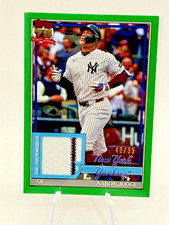
- 2026 Topps Series One Baseball Aaron Judge 1991 Relic #91R-AJ Green /99 — $24.50 on eBay →
- Jose Bautista - 2016 Topps Series One Baseball #96 Toronto Blue Jays — $2.99 on eBay →
Ad · Listings shown are from eBay. We may earn a commission when you buy through these eBay links. Prices and availability are set by eBay sellers and change often.
Which cards to grade, and which to leave raw
Run a three-question screen on every hit. If any answer is no, leave the card raw and spend the fee elsewhere.
- Would a 10 sell for at least twice the raw price? Below roughly 2x, the fee, the shipping both ways and the chance of a 9 do not clear.
- Does the card have a realistic path to a 10? Check centering first, then corners, then surface. On-card autos on dark stock show scratches and print lines, and those are the defects that turn a 10 into a 9.
- Is the graded card liquid at the graded price? Read sold listings, not active listings; a graded card with no sold history is a hypothesis.
Cards that pass all three, in rough priority order: short-printed on-card rookie autos, short-printed on-card autos of retired stars, and the shortest parallel of a chase player's base card. Cards that almost never pass: unnumbered relics, sticker autos of mid-tier veterans, plain base cards, and anything whose only recent sale is a seller's own asking price.
For a personal collection the screen does not apply. Grade what you want in a holder, just do not describe the decision as financial.
Grade premium by card type
Grade premium is not one number. It is a set of multiples that differ by card type and compress as population grows. The scoring below is a decision framework, not a price table: it ranks how reliably each card type rewards a 10, based on comp depth, condition risk and supply. Confirm any multiple against sold comps.
| Card type | Grade ceiling risk | Priority | Reason |
|---|---|---|---|
| On-card rookie auto | Centering, surface on dark stock | 5 | Deep comps and the widest 10 spread. |
| Short-printed veteran auto | Corners from heavier stock | 4 | Scarce, but thin comps can cap the spread. |
| Numbered base parallel | Corners, edges | 4 | Run length carries the premium, not the player alone. |
| Sticker auto | Sticker edge lift, surface | 2 | A format discount applies before the grade does. |
| Relic or dual relic | Thick stock, window edges | 1 | The fee usually exceeds the spread. |
| Base or insert | Centering | 1 | Supply overwhelms any achievable premium. |
Two structural notes. Premium compresses as population grows, so the first graded examples of a short-printed auto capture the widest spread. Premium is also asymmetric: a 9 in an auto set often sells near raw, while a 9 in a base set can sell under raw plus fees.
Declared-value and upcharge traps
Declared value is the number you write on the submission form. On a modern autograph product it is the most common source of avoidable cost, and three traps account for most of it.
Under-declaring to dodge an upcharge. When a card is worth more than the tier's declared-value limit, the grader can upcharge on return. You pay the difference anyway, and you lose insurance on the gap between what you wrote and what the card was worth in transit.
Declaring the box price instead of the card price. One box can hold a modest hit or an outlier. Declared value attaches to the individual card, never to the average of the box, and averaging is how people end up under-insured on the one card that mattered.
Forgetting that grading changes the return-trip value. A card shipped at a modest declared value and returned as a 10 may be worth several times more than the form says, and return insurance is priced on the submission value. Keep a per-card sheet with raw value, grade expectation and post-grade value.
None of this argues against grading. It argues for planning the submission as a batch with a declared-value total, instead of a pile of cards with one number scribbled on the form.
Sell raw or graded: the box-EV waterfall
Run the break-even before the box, not after. Grading converts a raw card into a graded card at a fixed cost, so the decision is arithmetic: does the graded sale net more than the raw sale plus the cost of getting there? The waterfall models where a hit's resale value goes per 100 dollars gross, using planning assumptions rather than live prices.
| Line | Per 100 dollars gross | Assumption |
|---|---|---|
| Gross resale | 100.00 | Sold comp after a 10, before costs. |
| Marketplace fee | -13.25 | Typical card-category final value fee. |
| Shipping and supplies | -4.50 | Tracked parcel, sleeve, toploader and box share. |
| Grading fee | -12.00 | One card across a mid-tier service, amortised. |
| Net to seller | 70.25 | Methodology: planning model, not a price quote. |
A card that gains 40 percent in graded value can still net less than the raw sale once those three lines are subtracted. Sell raw when the premium is under about 2x, when the card is a relic, or when comps are thin. Grade on-card autos and short-printed parallels with deep comps and a realistic path to a 10.
For the fee side of the calculation, use our grading ROI calculator and the current grading prices. To sanity-check a card before it goes into a submission at all, run the photo check in our AI pre-grade. For the parallel vocabulary behind these subsets, see the Topps Chrome grading guide and the Chrome versus Prizm comparison.


Ad · Listings shown are from eBay. We may earn a commission when you buy through these eBay links. Prices and availability are set by eBay sellers and change often.
Frequently Asked Questions
What is in the 2026 Topps Tier One checklist?
When did 2026 Topps Tier One Baseball release?
Are 2026 Topps Tier One print runs published?
Should I grade every autograph from a Tier One box?
Are sticker autographs worth grading in Tier One?
How much does grading add to a Tier One autograph?
What declared value should I use for a Tier One auto?
Is it better to sell Tier One hits raw or graded?
Does a 1/1 Tier One card need grading?
Sources & Further Reading
- Topps, 2026 Tier One Baseball product page and checklist
- Beckett, 2026 Topps Tier One Baseball checklist and set info
- BaseballCardPedia, Topps Tier One set archive
- HobbyMonitor, 2026 Topps Tier One box and odds data
- Cardsmiths, 2026 Topps Tier One checklist reference
- eBay, sold listings for Topps Tier One autographs
- TCDB, Topps Tier One checklist index
The PreGradeCards Research Team combines machine-learning engineers, grading analysts, and collector-education specialists to produce accurate, data-driven guides on AI card grading, professional grading standards, and collecting strategy.
Create a free account and get 2 free credits. No credit card required.
Get Your Free Credits →