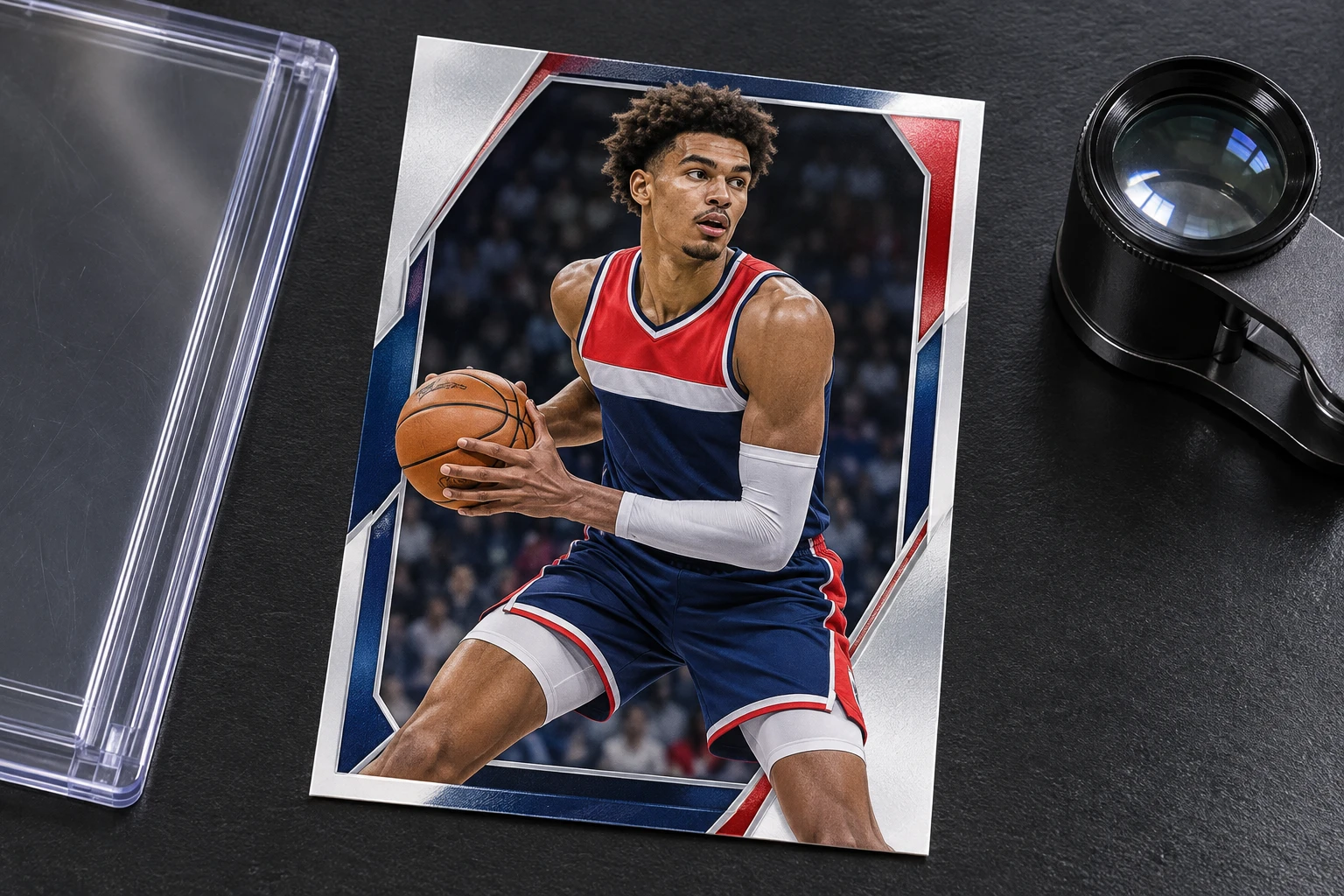
The Short Answer
- Dybantsa's Flagship #256 base asks $4 to $8 raw and about $120 in a PSA 10.
- The Blue Sparkle /150 at $65 to $160 is the first card in the ladder where supply matters.
- The New Applicants auto at $350 to $699 is the cheapest licensed Dybantsa signature.
- The Real One Orange /25 at about $1,500 is the top of the flagship market.
- Chrome arrives in December 2026, which makes November the cheapest window for flagship cards.
- He is averaging 15.0 points and 6.1 rebounds in nine games — ordinary numbers that keep the base card cheap.
Why Dybantsa cards are still cheap in November 2026
AJ Dybantsa went first overall to the Washington Wizards in June, and by mid-November he was averaging 15.0 points, 6.1 rebounds and 2.3 assists across nine games at 33.9 minutes a night. Those are ordinary rookie numbers on a bad team, and the card market has priced them accordingly: his 2026-27 Topps Flagship #256 asks $4 to $8 raw.
That is the whole thesis of this guide. The No. 1 pick in a class that arrived with enormous attention is available for the price of a coffee because flagship base cards are printed by the million and because Topps Chrome — the product that usually creates the first real price spike — does not release until December 2026.
The parallels are where the money already is. A Blue Sparkle /150 asks $65 to $160, a New Applicants autograph asks $350 to $699 and the Real One rookie patch climbs past $1,000 for low-numbered versions. The gap between a $6 base card and a $700 autograph is not a mistake; it is the difference between a card printed in six figures and a card numbered to 150.
This guide ranks six Dybantsa cards by what they cost and what they are for, from the base rookie you can buy ten of to the patch card you will only see a few times a year. The basketball card index shows where he sits against the rest of the class.
Context matters for a No. 1 pick on a rebuilding team. Washington is giving Dybantsa 33.9 minutes a night, which is the highest usage environment a rookie can ask for, and the Wizards are not competing for a play-in spot. That combination produces counting stats and losses, and card markets have historically rewarded the stats while ignoring the record. If he keeps the minutes, the base card will keep finding buyers.
| Card | Raw | PSA 9 | PSA 10 | Tier |
|---|---|---|---|---|
| 2026-27 Topps #256 base | $4–$8 | ~$25 | ~$120 | Entry |
| 2026-27 Topps Blue Sparkle /150 | $65–$160 | ~$200 | — | Core |
| 2026-27 Topps New Applicants auto | $350–$699 | — | — | Core |
| 2026-27 Topps Level Up auto | ~$1,200 | — | — | Grail |
| Real One rookie patch /50 | ~$700 | — | — | Core |
| Real One Orange /25 | ~$1,500 | — | — | Grail |
Graded columns are typical asks where a market exists. Autographs and patches are not numerically graded in most sales.
1. 2026-27 Topps Flagship #256 — the base rookie
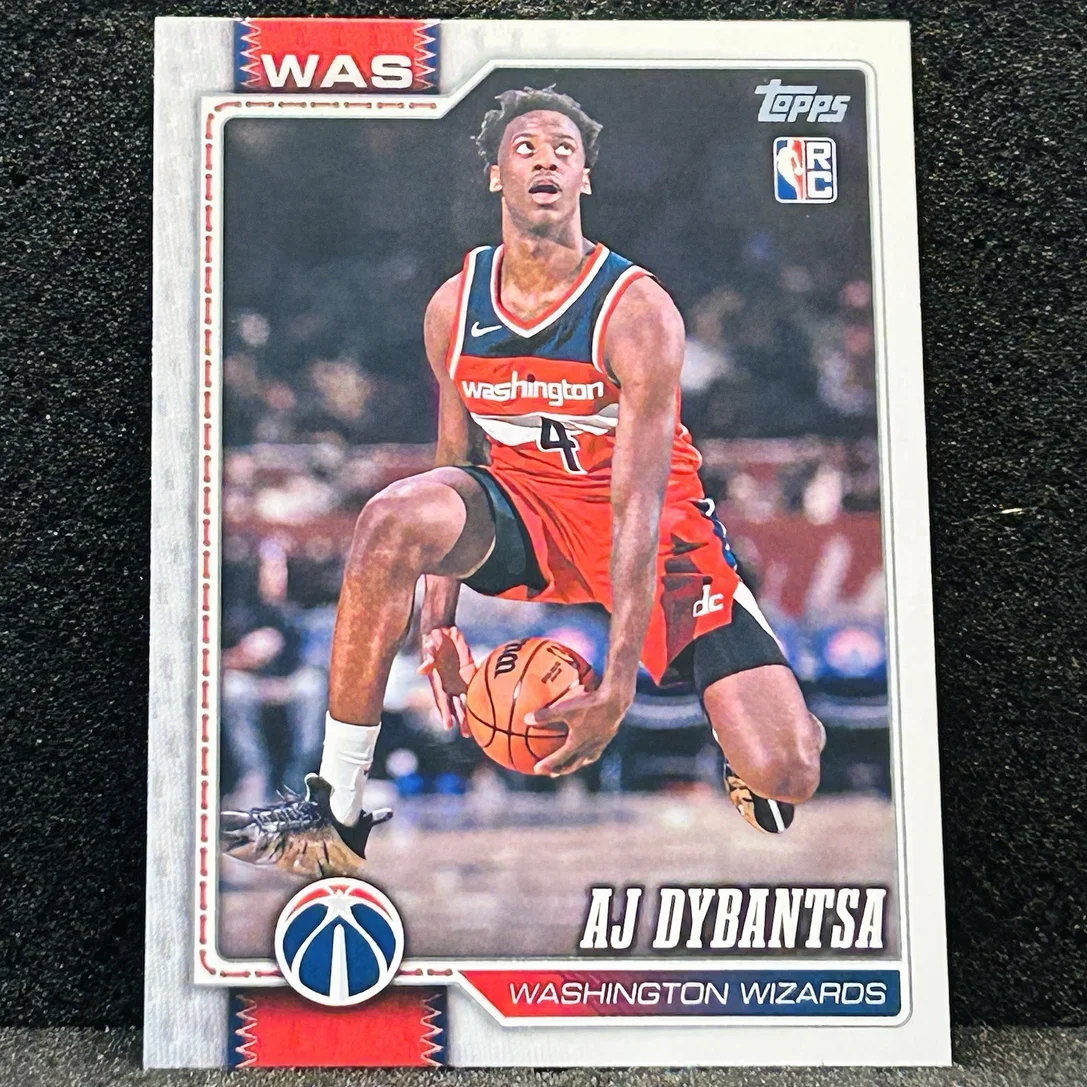
Card #256 is Dybantsa's first licensed NBA rookie card, and it sits near the back of a 300-card base set with 45 rookies. The design is the same template Topps used for Flagship baseball and football, which is why the card looks familiar even though it is a month old.
It asks $4 to $8 raw. That is the correct price for a card printed in enormous quantity, and it is also the reason the base card is the best cheap entry into the class: you can buy ten for the price of one blaster and pick the two best-centred copies.
Check recent eBay sold prices for the Flagship #256 base →
2. 2026-27 Topps Blue Sparkle /150 — the numbered parallel
The Blue Sparkle parallel is numbered to 150 and asks $65 to $160. It is the first card in this ladder where supply actually matters: 150 copies exist, most are still in sealed product, and the ones that surface are being held by collectors who pulled them.
Numbered parallels are also where grading becomes sensible. A /150 card at $120 raw can support a $30 submission if it comes back a 9 or 10, whereas the base card cannot. Check the serial number in the listing photo before you bid.
Check recent eBay sold prices for the Blue Sparkle /150 →
3. 2026-27 Topps New Applicants autograph — the first real auto
The New Applicants autograph is the cheapest licensed Dybantsa signature, and it asks $350 to $699 depending on whether it is the base version or a foil parallel. It is an on-card or sticker auto in a flagship product, which is the entry point most collectors use.
The card is not scarce in the way a /25 patch is, but it is scarce against demand for the No. 1 pick. If you want one Dybantsa autograph and no more, this is the one that trades most often.
Check recent eBay sold prices for the New Applicants auto →
4. 2026-27 Topps Level Up Signatures — the premium auto
Level Up Signatures is the premium autograph insert in 2026-27 Flagship, and the Dybantsa version asks around $1,200. It is a smaller insert set than New Applicants, and the design is built for display rather than set-building.
At four figures the market is thin and the price is whatever the last two bidders decided. Treat any listing as a negotiation and check for completed sales before you make an offer.
Check recent eBay sold prices for the Level Up auto →
- Mint Condition Basketball Cards — $5,000.00 on eBay →
- basketball cards — $69.72 on eBay →
- basketball cards — $350.00 on eBay →
- basketball cards — $120.00 on eBay →
Ad · Listings shown are from eBay. We may earn a commission when you buy through these eBay links. Prices and availability are set by eBay sellers and change often.
5. Real One rookie patch /50 — the memorabilia card
The Real One patch is the memorabilia card in the flagship product, and the Gold /50 version asks around $700 while the Orange /25 asks $1,500. The patch is a player-worn swatch, which is the only reason a non-autograph card reaches four figures.
The risk is patch quality. A one-colour swatch and a multi-colour patch with stitching are the same card on paper and different cards in the market, and sellers do not always photograph the patch clearly.
Check recent eBay sold prices for the Real One patch →
6. Real One Orange /25 — the grail
The Orange /25 is the card at the top of this ladder. It is a 25-copy memorabilia card of the No. 1 pick, and it is the version collectors mean when they say they want "the Dybantsa patch".
None of these prices are stable yet. The product is three weeks old, the class has not played half a season, and Chrome arrives in December with a completely different print run. If you buy at the top, buy it because you want the card.
Check recent eBay sold prices for the Orange /25 patch →
How to buy Dybantsa cards before Chrome changes the market
The calendar is the strategy. Topps Chrome Basketball releases in December 2026, and Chrome rookies historically carry a premium over flagship because of the chromium stock and the refractor parallel. That means the next four weeks are the cheapest window for flagship Dybantsa cards.
Buy the base rookie in volume if you want to grade, buy one numbered parallel if you want a card with a story, and buy the autograph only if you plan to hold through the Chrome release. Do not pay four figures for a Level Up auto in November and expect to flip it in December; the supply of new Dybantsa cards is about to increase.
Compare with the previous class before you commit. The Duncan guide shows what a Hall of Fame career does to a rookie card that started cheap, and the Flagg guide shows what a No. 1 pick looks like one year in.
Read a base-card stack the way a grader does. Sort by centering first, then hold each card under a lamp at an angle and look for print lines across the dark areas of the jersey. Flagship stock is usually clean, but the cutting is inconsistent, and a 70/30 copy is not worth a submission at any price. Ten cards at $6 is a $60 experiment; two submissions is $60 more, and the whole exercise only makes sense if at least two of the ten are genuinely centred.
Selling into the Chrome release is a timing decision, not a price decision. If you plan to flip base cards, list them in the ten days before Chrome drops, when buyers are still paying flagship prices and before the new supply arrives. After Chrome, the flagship base card competes with a chromium card of the same player, and the base card usually loses that comparison. Set the price from completed sales, not from the highest ask on the page.
- Confirm the card is #256 and that the parallel is numbered, not the unnumbered foil.
- Check centering on the base card before buying a stack; flagship stock is usually clean but centering varies.
- For autos, verify on-card versus sticker and check the certification.
- For patches, ask for a close photo of the swatch and the serial.
- Compare the ask against Chrome-release pricing before buying at the top of the range.
Dybantsa's base rookie is cheap enough to experiment with. Run a photo through the AI pre-grade before submitting, and check current pricing so the math includes the fee.
Run a free AI pre-grade on your card →
Watch and learn
A top-five rookie rundown for 2026-27 Topps Flagship Basketball, including where Dybantsa ranks against the rest of the class in the first month.
Video: 2026-27 Topps Flagship Basketball: Top 5 Rookie Cards — SandmanCards on YouTube


Ad · Listings shown are from eBay. We may earn a commission when you buy through these eBay links. Prices and availability are set by eBay sellers and change often.
Frequently Asked Questions
Is the 2026-27 Topps #256 AJ Dybantsa's rookie card?
What is an AJ Dybantsa rookie card worth in 2026?
Should I grade the base Dybantsa rookie?
Why is the base card so cheap for a No. 1 pick?
When does Topps Chrome Basketball release?
Are Dybantsa autographs a better buy than the base card?
What is the Real One patch card?
How is Dybantsa playing in 2026-27?
Does team matter for card value?
Which Dybantsa parallel should I buy first?
How many base Dybantsa cards should I buy?
Does the Wizards record affect Dybantsa card prices?
Sources & Further Reading
- eBay sold listings — 2026 Topps AJ Dybantsa 256 rookie
- Basketball-Reference — AJ Dybantsa stats
- PSA CardFacts — population reports
- CardLadder — basketball market data
- Topps — 2026-27 Flagship Basketball
- NBA.com — 2026 NBA Draft order
Create a free account and get 3 free credits. No credit card required.
Get Your Free Credits →