The Short Answer
- Panini Prizm is the most submitted and valuable modern basketball card brand.
- Chrome and silver Prizm cards show surface defects under any angle.
- Centering is often the biggest barrier to PSA 10 on modern basketball cards.
- Rookie cards of star players carry the highest grading ROI.
- Vintage basketball cards from the 1980s and 1990s are graded with era-appropriate standards.
- AI pre-screening can identify surface print lines, corner whitening, and centering issues.
Basketball Card Grading Market in 2026
Basketball card grading is one of the highest-premium markets in sports cards. The global popularity of the NBA, the star-driven nature of the league, and the collectibility of Panini Prizm have created a market where PSA 10 rookies of star players can trade for 5-20x their PSA 9 counterparts. The market is driven by superstars like LeBron James, Stephen Curry, Kevin Durant, Luka Doncic, and Victor Wembanyama, and by the next generation of rookies who enter the league every year.
PSA graded approximately 2.8 million basketball cards in 2025. Panini Prizm, Select, and Mosaic accounted for the majority of submissions. The NBA rookie class is the most important annual event for the basketball card market, with the Panini Prizm rookie cards of top picks driving the highest grading volume and the highest prices. The market is also highly influenced by on-court performance, with playoff runs and MVP awards causing significant price spikes.
One of the defining features of the basketball card market is the extreme PSA 10 premium. A PSA 10 Prizm rookie of a star player can be worth 10x or more than a PSA 9. This is because the PSA 10 population is relatively low compared to the demand, and because Panini Prizm cards are notoriously difficult to keep in gem condition. The high premium makes pre-screening extremely valuable for basketball collectors.
Top Basketball Card Brands to Grade
Panini has held the exclusive NBA license since 2009, and its products dominate the basketball card market. Topps is returning to the basketball card market in 2026, which will create new grading opportunities, but Panini Prizm remains the established king. The following table ranks the most important modern basketball card brands for grading.
| Brand / Set | Target Cards | PSA 10 Hit Rate | Grading Priority |
|---|---|---|---|
| Panini Prizm | Star rookies, silver prizms, color parallels | ~35% | Highest |
| Panini Select | Die-cut parallels, star cards | ~32% | High |
| Panini Mosaic | Rookie variations, genesis, stained glass | ~38% | Medium-High |
| Panini Flawless | High-end autos, patches, 1/1 | ~30% | Highest for high-end |
| Panini Donruss | Rated Rookies, base rookies | ~42% | Medium |
| Panini Hoops | Base rookies, tribute cards | ~45% | Low-Medium |
Panini Prizm is the flagship brand for basketball card grading. The Silver Prizm is the most iconic parallel and carries the highest premium among non-numbered cards. Select is the second-most important brand, with the die-cut design and multiple levels making it popular with collectors. Mosaic is visually distinctive but trades below Prizm and Select. Flawless is the ultra-high-end brand with on-card autographs and precious gemstones, and the cards are worth grading regardless of condition because of the base value.
Most Valuable Basketball Cards to Grade
The basketball card market is defined by superstars. The table below shows the most important modern basketball rookie cards to grade, with estimated 2026 market ranges. These ranges are based on recent auction results, population data, and current player performance. They are highly volatile and change based on injuries, trades, and playoff success.
| Card | Set | PSA 10 Range | PSA 9 Range | Premium |
|---|---|---|---|---|
| LeBron James Prizm #288 | 2012-13 Panini Prizm | $2,000 - $5,000 | $400 - $900 | ~5x |
| Stephen Curry Prizm #272 | 2012-13 Panini Prizm | $1,500 - $4,000 | $300 - $700 | ~5x |
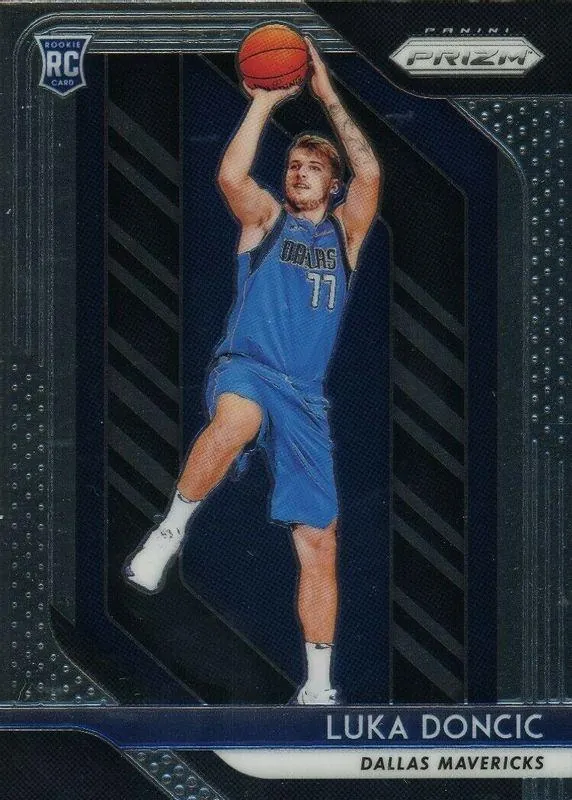
| Luka Doncic Prizm #280 | 2018-19 Panini Prizm | $1,000 - $2,500 | $200 - $500 | ~5x |
| Ja Morant Prizm #249 | 2019-20 Panini Prizm | $400 - $1,000 | $80 - $200 | ~5x |
| Anthony Edwards Prizm #252 | 2020-21 Panini Prizm | $500 - $1,200 | $100 - $250 | ~5x |
| Victor Wembanyama Prizm #255 | 2023-24 Panini Prizm | $800 - $2,000 | $150 - $400 | ~5x |
The 2012-13 Panini Prizm set is the most important modern basketball card set because it contains the first Prizm cards of LeBron James, Stephen Curry, and Kevin Durant. These cards are the modern equivalents of the 1986 Fleer Jordan rookie. The 2018-19 Luka Doncic Prizm is the most important recent rookie card, and the 2023-24 Victor Wembanyama Prizm is the current speculative target. The PSA 10 premium is consistently around 5x for these cards, with higher premiums for low-population parallels.
PSA, BGS, SGC, and CGC Basketball Grading Standards
All major grading companies evaluate basketball cards on the same four criteria: centering, corners, edges, and surface. PSA is the dominant brand for basketball card resale. BGS is popular for its sub-grades and the 9.5 designation. SGC has gained market share with lower pricing and fast turnaround. CGC is known for strict centering and is a budget option for collectors who want tight standards.
PSA 10 for basketball requires 55/45 front centering, 75/25 back centering, and no visible flaws under 10x magnification. The standard is the same as other sports, but basketball cards have unique challenges. Panini Prizm cards have chrome surfaces that show every defect. The cards are often poorly centered. The silver Prizm parallel has a reflective finish that makes surface issues highly visible. The die-cut edges on Select are prone to chipping.
The resale premium order for basketball cards is generally: PSA 10 > BGS 10 Black Label > BGS 9.5 > SGC 10 > PSA 9 > CGC 9.5 > raw. BGS 9.5 is sometimes considered equivalent to PSA 10 for basketball, but the market usually prices BGS 9.5 below PSA 10. BGS 10 Black Label is the only grade that consistently commands a premium over PSA 10, and it is extremely rare. For most collectors, PSA is the safest choice for basketball cards.
Centering and Corners on Basketball Cards
Centering is the biggest reason basketball cards miss PSA 10. Panini has historically struggled with centering on Prizm, Select, and Mosaic. The cards are printed in massive volumes, and the cutting process produces significant variance. A card that looks centered under normal lighting may fail the 55/45 standard when measured. The issue is particularly bad on the 2012-13 Prizm set, which is the most important modern set but has notoriously inconsistent centering.
Corners are the second-most common deduction. Panini cards often leave the factory with slightly soft corners, and the cards are handled aggressively during pack-out. A tiny touch of whitening on a corner can drop a modern card from PSA 10 to PSA 9. The bottom corners are most commonly damaged because they are the corners collectors handle first when removing cards from sleeves. The cards with black borders, like some Select parallels, show corner wear very easily.
Basketball-Specific Grading Tip
Panini Prizm cards often have a silver border that reflects light. This can create a visual illusion that makes the card look centered when it is not. Always measure the borders with a centering tool or caliper. Do not rely on visual inspection alone. The Prizm logo at the bottom can also make the bottom border appear larger than it is.
Edge wear is also a problem on basketball cards. Panini Select has die-cut edges that are prone to chipping. The thick stock on Contenders and Flawless makes edges susceptible to damage. Always inspect the entire perimeter of the card before submitting, especially for high-value cards.
Surface Defects on Basketball Cards
Surface defects are the most common reason a basketball card misses PSA 10 after centering and corners. Panini Prizm cards have a chrome surface that is highly reflective and unforgiving. Print lines, holo scratches, and surface residue are often invisible under normal lighting but become obvious under a bright LED or at an angle. The most common issue is factory print lines, which appear as thin vertical or horizontal lines on the chrome surface.
Print lines are particularly common on Prizm silver cards and Select holo parallels. They are most visible on the jersey area and the background. A single print line crossing the player face is usually fatal to PSA 10. Print lines on the border are less damaging but still typically result in PSA 9. Two or more print lines usually result in PSA 8 or lower.
Holo scratches are caused by handling and storage. They appear as fine hairline scratches on the reflective surface. Surface residue from fingers or storage can sometimes be removed with a microfiber cloth, but scratches and print lines are permanent. AI pre-screening is especially useful for basketball cards because the surface defects are difficult to see under normal lighting. The AI can analyze the card at multiple angles and flag issues that would be missed by the human eye.
Centering is the most common issue, followed by corners and surface. This is the same pattern as football cards because Panini produces both sports with similar chrome technology. The lesson is the same: pre-screen before submitting, especially for expensive cards like LeBron, Curry, and Wembanyama.
Parallels and Numbered Basketball Cards
Parallels are essential to the basketball card market. Panini Prizm has a deep parallel structure including Silver, Red, Blue, Purple, Green, Gold /10, Black 1/1, and Mojo. Select has Concourse, Premier, and Field Levels, each with their own parallel colors. Mosaic has Genesis, Stained Glass, and other popular inserts. The numbered parallels are almost always worth grading if the player is a star, because the PSA 10 premium is magnified by scarcity.
Silver Prizm is the most important non-numbered parallel. It is the standard chase card for every star rookie and often trades for 2-3x the base Prizm price. Gold /10 and Black 1/1 are the true short prints and can be worth hundreds or thousands of times the base card price for star players. The 2018-19 Panini Prizm Gold /10 Luka Doncic is one of the most valuable modern basketball cards, trading for six figures when graded.
Autograph cards are also important in basketball. Panini Prizm has sticker autographs, while Flawless and National Treasures have on-card autographs. The signature quality is evaluated along with the card condition. On-card autographs are preferred and command higher prices. Sticker autos can have bubbling or peeling issues that lower the grade.
Vintage Basketball Card Grading
Vintage basketball cards are much smaller than baseball or football vintage, but they include some of the most iconic cards in the hobby. The 1986 Fleer Michael Jordan rookie is the most important basketball card of all time. PSA 10 copies have traded for over $700,000, and PSA 9 copies are consistently in the $20,000-$40,000 range. The 1986 Fleer set is also the rookie set for Charles Barkley, Hakeem Olajuwon, Karl Malone, and other Hall of Famers.
Vintage basketball cards are graded with era-appropriate standards. The 1986 Fleer set is notorious for poor centering and chipping on the red and blue borders. A PSA 8 Jordan rookie is considered a strong grade because the set is so difficult in high grade. The 1980-81 Topps Larry Bird / Magic Johnson rookie is another important vintage card, and it is graded more leniently because the three-panel design is unique and the cards were often separated by collectors.
Other important vintage basketball sets include the 1969 Topps, 1970 Topps, and 1971 Topps sets, which include the rookie cards of Lew Alcindor, Pete Maravich, and Julius Erving. These cards are rare in high grade and command strong prices. The 1996-97 Topps Chrome Kobe Bryant rookie is the most important card from the 1990s chrome era and is a bridge between vintage and modern basketball cards.
ROI and Investment Outlook for Graded Basketball Cards
Basketball card grading has strong investment characteristics because of the global popularity of the NBA and the high PSA 10 premiums. The best investments are rookie cards of generational players purchased before they peak. The 2012-13 Panini Prizm LeBron James was under $100 raw after the set released and reached $5,000+ PSA 10 at peak. The 2018-19 Luka Doncic Prizm was a few hundred dollars raw and reached $3,000+ PSA 10 at peak. The 2023-24 Victor Wembanyama Prizm is the current speculative target.
However, not every basketball rookie is a good investment. The majority of lottery picks fail to become stars, and their rookie cards lose value over time. The key is to focus on players with elite skills, strong marketability, and good situations. Players who win MVP awards, lead their teams to championships, or become global brands have the strongest card markets. International players with large fan bases, like Luka Doncic and Victor Wembanyama, often have stronger global demand than American players of similar ability.
AI pre-screening improves basketball ROI by helping collectors submit only the best candidates. Because the PSA 10 premium is so high, even a small improvement in submission accuracy has a large financial impact. A collector who submits 100 raw Wembanyama Prizm rookies without pre-screening might get 30 PSA 10s. With AI pre-screening, the same collector might identify 45 strong candidates and sell the rest raw, improving returns significantly.
What to Submit for Basketball Card Grading
Use this checklist to decide which basketball cards are worth grading in 2026.
- Submit: Rookie cards of star players from Panini Prizm, Select, and Mosaic.
- Submit: Silver Prizm and numbered parallels of star players and rookies.
- Submit: Vintage rookie cards of Hall of Famers from Fleer, Topps, and Topps Chrome.
- Submit: On-card autographs from Flawless, National Treasures, and Immaculate Collection.
- Do not submit: Base cards of common players, even in good condition.
- Do not submit: Cards with visible print lines, corner whitening, or poor centering.
- Pre-screen first: Use AI or a magnifier to check surface and centering before paying grading fees.
The basketball card market is seasonal. It peaks during the NBA season, especially around the playoffs and the NBA Finals. The market is softest in the summer. Rookie cards of players who win MVP awards or lead their teams to the NBA Finals can spike dramatically. Timing is less important than condition, but it can add 10-20% to sale prices.
Frequently Asked Questions
What is the best basketball card brand to grade?
Why do so many Panini Prizm basketball cards get PSA 9?
Are vintage basketball cards worth grading?
Can AI help pick basketball cards to grade?
How much does it cost to grade a basketball card?
What is the PSA 10 premium for basketball rookies?
Sources & Further Reading
- PSA Basketball Population Reports
- SportsCardsPro Basketball Price Guide
- Panini America
- Beckett Grading
The PreGradeCards Research Team combines machine-learning engineers, grading analysts, and collector-education specialists to produce accurate, data-driven guides on AI card grading, professional grading standards, and collecting strategy.
With submission floors rising, pre-screening is no longer optional. Use our AI Pre-Grade Calculator to score a card's PSA 10 odds before you pay, and the Submission Planner to pick the right tier.