The Short Answer
- Boxing's market is vintage-anchored — Ali, Tyson, and pre-war cards carry the value
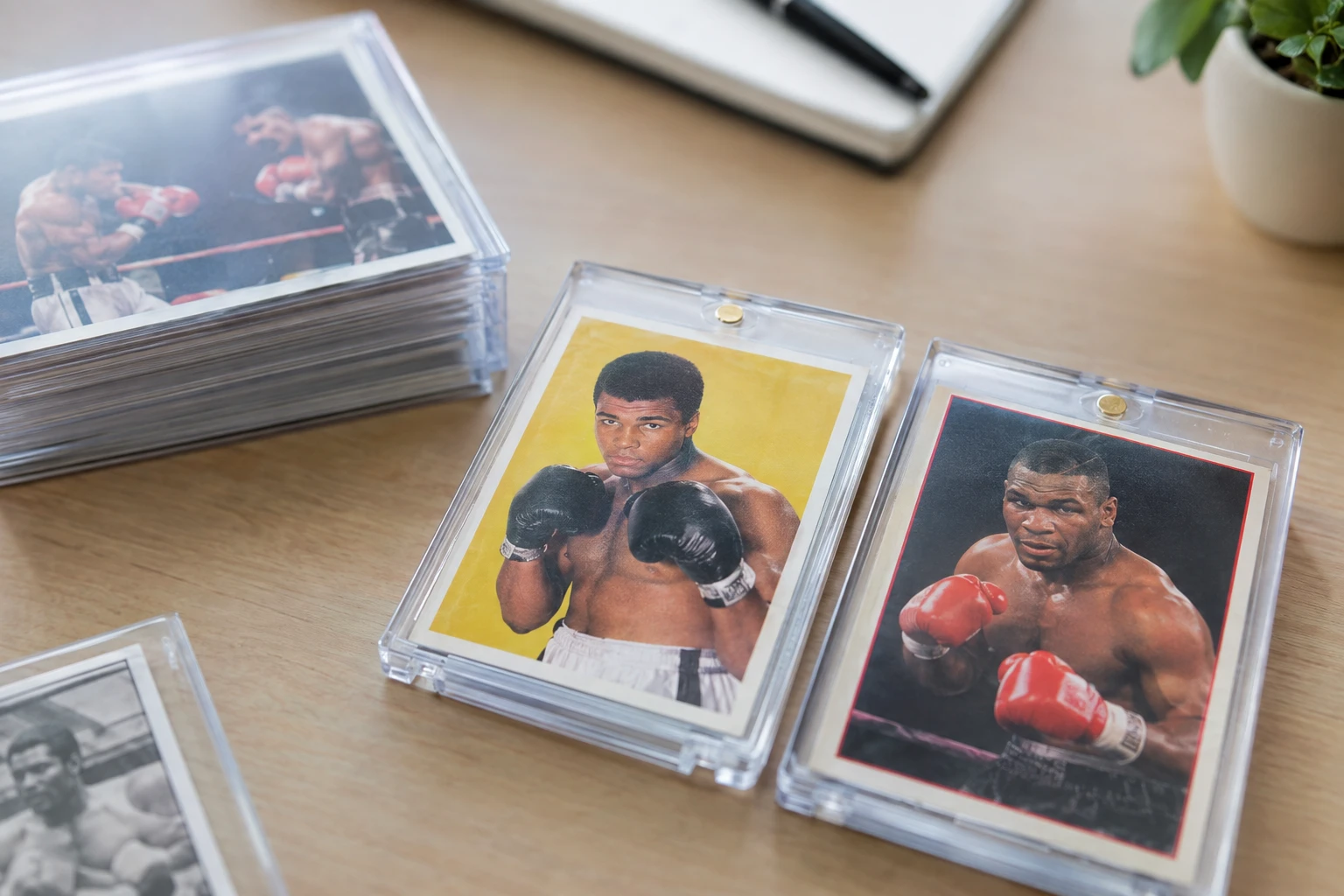
- Muhammad Ali's true rookie (1960 Hemmets Journal, Sweden) PSA 10 comps ~$100,000+
- Mike Tyson's 1986 Panini Supersport rookie runs ~$5,000-15,000+ PSA 10
- International printings dominate boxing — European and Latin American issues are often the true rookies
- Vintage boxing pops are tiny — even mid grades on key cards hold real value
- Modern boxing cards (Panini-era, Topps) rarely justify fees unless big-name autos
Boxing: The Niche Where Pop Is Everything
Boxing cards are a vintage collector's market — no modern boom, no refractor rainbow, just scarce international printings of the sport's legends. The PSA pops on key boxing cards run in the dozens to low hundreds, not thousands — and that changes grading math completely.
When a card's entire PSA 10 population is 20 copies, a clean raw find is a real asset. This guide maps the boxing landscape — Ali, Tyson, the pre-war era, and what grading actually pays.
How Boxing's Market Works
- Vintage-anchored: the value sits in 1900s-1980s printings, not modern releases
- International: boxing's key cards are Swedish (Hemmets), Italian (Panini Supersport), UK, Cuban, and Latin American issues — the 'rookie' is often a foreign sticker-card, not a US release
- Thin pops: fewer graded copies than mainstream sports — a PSA 10 on a key vintage boxing card is often pop <20
- Set-builder demand: collectors chase complete sets (Hemmets, Panini boxing) — common players in high grade still sell
Ali — The Anchor
| Card | Year | Est. Value (PSA 8-10) | Notes |
|---|---|---|---|
| Hemmets Journal Cassius Clay | 1960 (Sweden) | ~$50,000-100,000+ (PSA 10) | True rookie — 'Cassius Clay' pre-name-change |
| Panini Cassius Clay | 1965-66 (Italy) | ~$5,000-20,000 | Early iconic |
| Topps Ali (various) | 1960s-70s | ~$500-10,000 | Later issues, lower pops |
The Hemmets rookie is boxing's 1952 Mantle — a Swedish hand-cut magazine card that defines the market. Raw copies surface in Europe; if you find a clean one, it's a five-figure grading candidate.
Authentication matters: Hemmets cards were cut from magazine sheets — centering and cut edges vary wildly by nature. PSA grades them on their own curve; a 'well-cut' Hemmets is itself the premium.
Tyson and the Modern Vintage
- 1986 Panini Supersport Tyson (Italy): the accepted rookie — PSA 10 ~$5,000-15,000+, raw ~$300-800. Pop is low; clean copies grade well.
- 1986 Panini (UK/Spanish variants): regional variants of the Tyson rookie — verify which print.
- 1990s Tyson/Holyfield/Lewis issues: niche — check specific comps; premiums are selective.
- Modern era (Panini boxing, Topps boxing): thin demand — big-name autos only.
Tyson is the modern entry point — recognizable, liquid, and a real PSA 10 premium. But the sticker-stock Panini issue has its own defect profile (adhesion surface, rough cut edges).
Pre-War and Tobacco-Era Boxing
- T218/T219 Mecca/Tolstoi boxing tobacco: Jack Johnson, Jack Dempsey era — PSA pops in the tens; mid grades are the norm and still valuable
- 1920s-30s strip/exhibit cards: W513, W551 issues — type collectors and boxing specialists overlap
- The grading standard is different: pre-war cards grade on vintage tolerance — a PSA 5 on a T218 Dempsey is a strong card; don't apply modern expectations
See vintage vs modern standards — pre-war boxing is where that logic is most extreme.
Screening Vintage Boxing Cards
- Hand-cut/magazine issues: Hemmets-type cards were cut from sheets — evaluate cut quality against comps; clean edges command premiums within the issue's own standard
- Stocks: international card stocks vary — thin, glossy, or cardboard-matte; defect profiles differ per issue
- Print quality: many vintage boxing issues had rough printing — registration problems and soft focus are era-normal, not defects per se, but extreme cases hurt
- Damage profile: creases, toning, and paper loss are common — check backs for paper thinning (tape removal)
AI pre-grading screens condition from photos — especially useful for verifying a raw international pickup is actually clean before paying to grade it.
ROI Summary
Grade: Ali rookies/early issues, Tyson Panini rookies, pre-war key names — thin pops mean mid grades still pay; the downside cushion is real.
Screen: 1970s-90s boxing stars (Holmes, Hagler, Leonard, Duran) — check comps; premiums exist but are selective.
Skip: modern bulk boxing, generic prints — no market.
Check populations at our pop tool — boxing's low pop counts mean every graded copy matters; the data drives the decision.
Frequently Asked Questions
What is the most valuable boxing card?
Is the 1986 Panini Tyson a good grading candidate?
Do boxing cards grade well?
Is there a market for graded modern boxing cards?
Where do valuable boxing cards come from?
Sources & Further Reading
- PSA Population Report
- Cardboard Connection — Boxing Cards
- PreGradeCards Population Tool
- Heritage Auctions — Boxing Cards

The PreGradeCards Research Team combines machine-learning engineers, grading analysts, and collector-education specialists to produce accurate, data-driven guides on AI card grading, professional grading standards, and collecting strategy.
With submission floors rising, pre-screening is no longer optional. Use our AI Pre-Grade Calculator to score a card's PSA 10 odds before you pay, and the Submission Planner to pick the right tier.