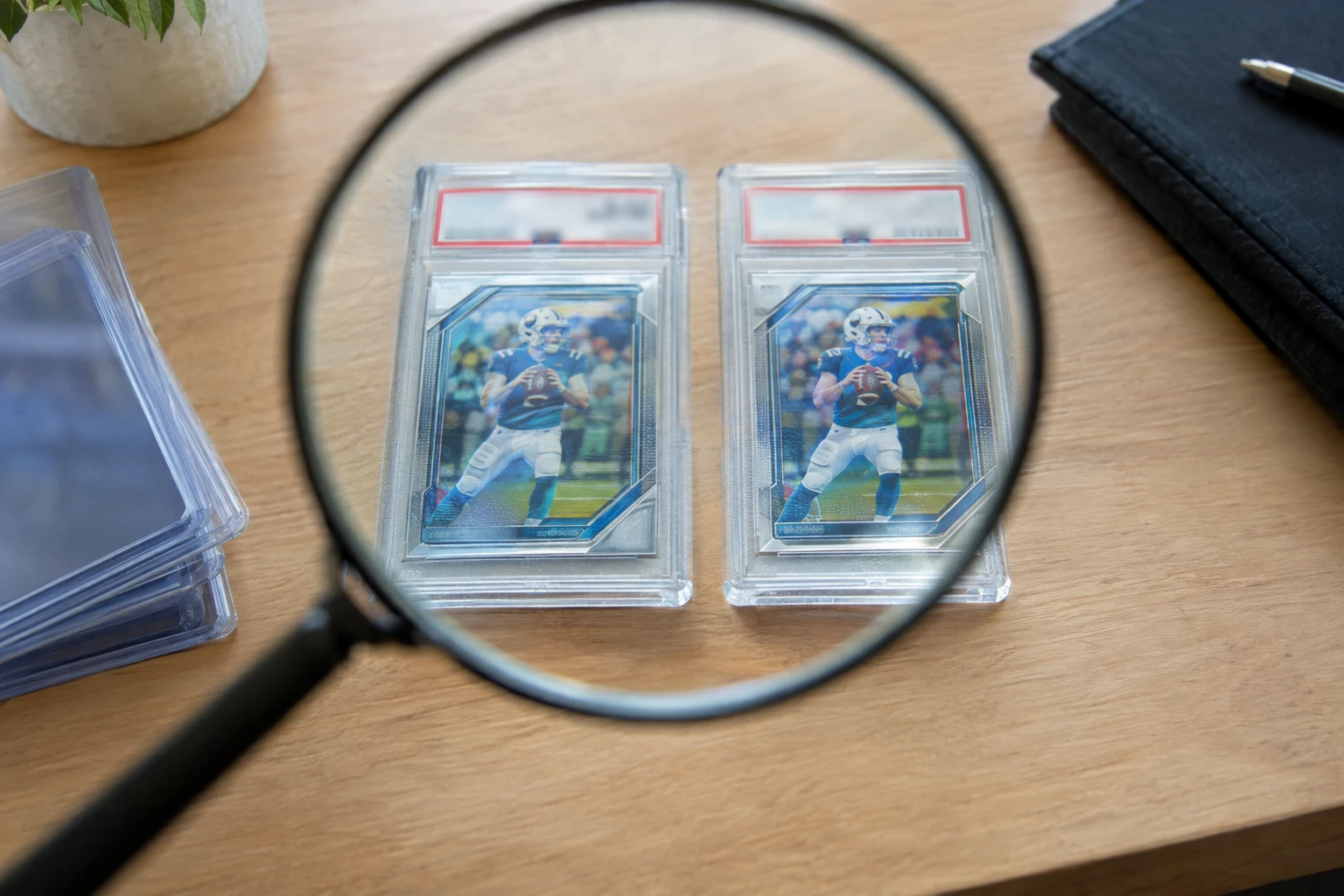
The Short Answer
- Always verify the PSA cert number at psacard.com/cert — fake slabs reuse real cert numbers or fake ones
- Physical tells: label font weight, hologram placement, slab plastic clarity, and weld quality
- The cert verification page shows the card's actual grade and description — mismatches mean fake
- Reused cert numbers on different cards are the most common fake-slab trick
- Seller red flags: prices below market, stock photos only, new accounts, shipped from regions known for fakes
- Buy from established sellers; expensive cards warrant in-hand inspection or eBay Authenticity Guarantee
The Fake Slab Problem Is Real
Counterfeit graded slabs have moved from a niche scam to a serious market problem — fake PSA holders are produced at scale, sold on eBay, AliExpress, and at card shows, and increasingly target mid-value cards where nobody expects fraud.
The defense is a two-minute verification routine that catches the overwhelming majority of fakes. This guide gives you the complete checklist: cert verification, label forensics, slab physicals, and the seller-screening shortcuts that do most of the work.
Step 1: Verify the Cert Number
Every genuine PSA slab carries a certification number on the label. Verification is free at psacard.com/cert:
- Enter the cert number from the label.
- PSA returns the card description, grade, and grade date for that cert.
- Compare all three fields to the slab in front of you.
What you catch:
- Cert doesn't exist → fake slab.
- Cert exists but describes a different card → reused cert number on a fake — the most common trick.
- Cert describes the right card but wrong grade → label swap or fake.
- Cert shows a grade date after the seller claimed to grade it → worth a question.
The eBay listing shortcut: before bidding, ask the seller for the cert number and verify it. A legitimate seller hands it over; a scammer goes quiet or makes excuses.
Note: cert verification catches cloned holders, not a genuine PSA slab containing a swapped fake card — that requires the physical checks below.
Label Forensics
PSA labels have precise printing. Counterfeits consistently fail on:
- Font weight and kerning: compare letterforms against a known-genuine label photo — fakes use subtly wrong fonts, spacing, or blurry small print.
- Holographic elements: modern PSA labels include holographic lighthouse/beacon security features — check color shift and placement against a reference photo.
- Print sharpness: genuine labels print crisp at small sizes; fakes show slight blur or dot-matrix texture under magnification.
- Label paper and lamination: wrong gloss level, visible edges, or paper texture differences.
- Barcode quality: the cert barcode should scan and match the printed number.
Reference trick: pull up a sold-listing photo of the same card in a genuine slab (eBay sold comps, PWCC archives) and compare label details directly.
Physical Slab Tells
Genuine PSA slabs are ultrasonically welded optical-grade plastic:
- Weld seam: the sonic weld along the slab edge is consistent and clean — fakes often have visible glue lines, gaps, or uneven seams you can feel with a fingernail.
- Plastic clarity: genuine slabs are crystal-clear; counterfeits often show a faint haze, color cast, or lower-grade plastic.
- Rigidity: fake slabs flex more and feel lighter or hollower.
- Label window fit: the label should sit precisely in its recess — sloppy centering of the label itself is a tell.
- Sound: a genuine slab has a distinctive solid feel; hollow-feeling or rattling holders are suspect.
Check the Card Inside
A real slab can hold a fake or swapped card — verify the card itself:
- Does it match the grade? A card labeled PSA 9 with obvious creases or worn corners visible through the slab is wrong — graders don't miss that.
- Card details: print pattern, holo pattern, card stock color visible at the edge — compare against a reference copy.
- Size: a card visibly small in the holder may have been trimmed and re-slabbed.
- Our slab ID tool photographs a slab and identifies it — a quick consistency check on what's actually inside.
The Seller Screen (Catches Most Fakes Before Inspection)
Most fake-slab sales fail a basic seller screen:
- Price far below market — the #1 tell. A PSA 10 at 40% of comps is fake until proven otherwise.
- New or thin account — low feedback count, recent registration, generic name.
- Stock or blurry photos — legitimate sellers show the actual slab; fakers reuse manufacturer images.
- No returns — real dealers stand behind slabs.
- Ships from regions associated with counterfeits — check the ship-from location, not just the seller's claimed location.
- Cert number "available on request" — legitimate listings just print it.
Structural protection: eBay's Authenticity Guarantee routes eligible $250+ card sales through PSA-verified inspection — the single best buyer protection for expensive cards. See our Authenticity Guarantee guide.
If You Bought a Fake
- Document everything — listing, photos, messages, cert verification result.
- Open a dispute on the platform (eBay Money Back Guarantee covers fakes; PayPal goods-and-services disputes similarly).
- Report the listing — eBay removes counterfeit listings on report.
- Credit card chargeback as fallback if platform resolution fails.
- Don't resell it — knowingly passing a fake slab is fraud.
Frequently Asked Questions
How do I verify a PSA slab is real?
Can fake PSA slabs pass cert verification?
What are the most common fake slab signs?
Does eBay protect against fake graded cards?
What should I do if I bought a fake slab?
Sources & Further Reading
- PSA Cert Verification
- eBay Authenticity Guarantee
- PSA — About Counterfeits
- PreGradeCards Slab ID Tool
The PreGradeCards Research Team combines machine-learning engineers, grading analysts, and collector-education specialists to produce accurate, data-driven guides on AI card grading, professional grading standards, and collecting strategy.
With submission floors rising, pre-screening is no longer optional. Use our AI Pre-Grade Calculator to score a card's PSA 10 odds before you pay, and the Submission Planner to pick the right tier.