The Short Answer
- Pressing uses heat and pressure to flatten dents, bends, and minor creases before grading
- Light pressing occupies a gray zone — aggressive pressing, recoloring, and trimming are detectable alterations
- PSA, BGS, and CGC all flag detected alteration — the card comes back 'Authentic Altered' or rejected
- Detection methods: UV light reveals recoloring, magnified surface shows pressed fiber texture, measurement catches trimming
- Pressed cards can legitimately grade higher — but 'altered' labeling tanks value below the original grade
- Buying raw cards? Assume the seller pressed it if it looks too clean — price the risk in
The Practice Everyone Argues About
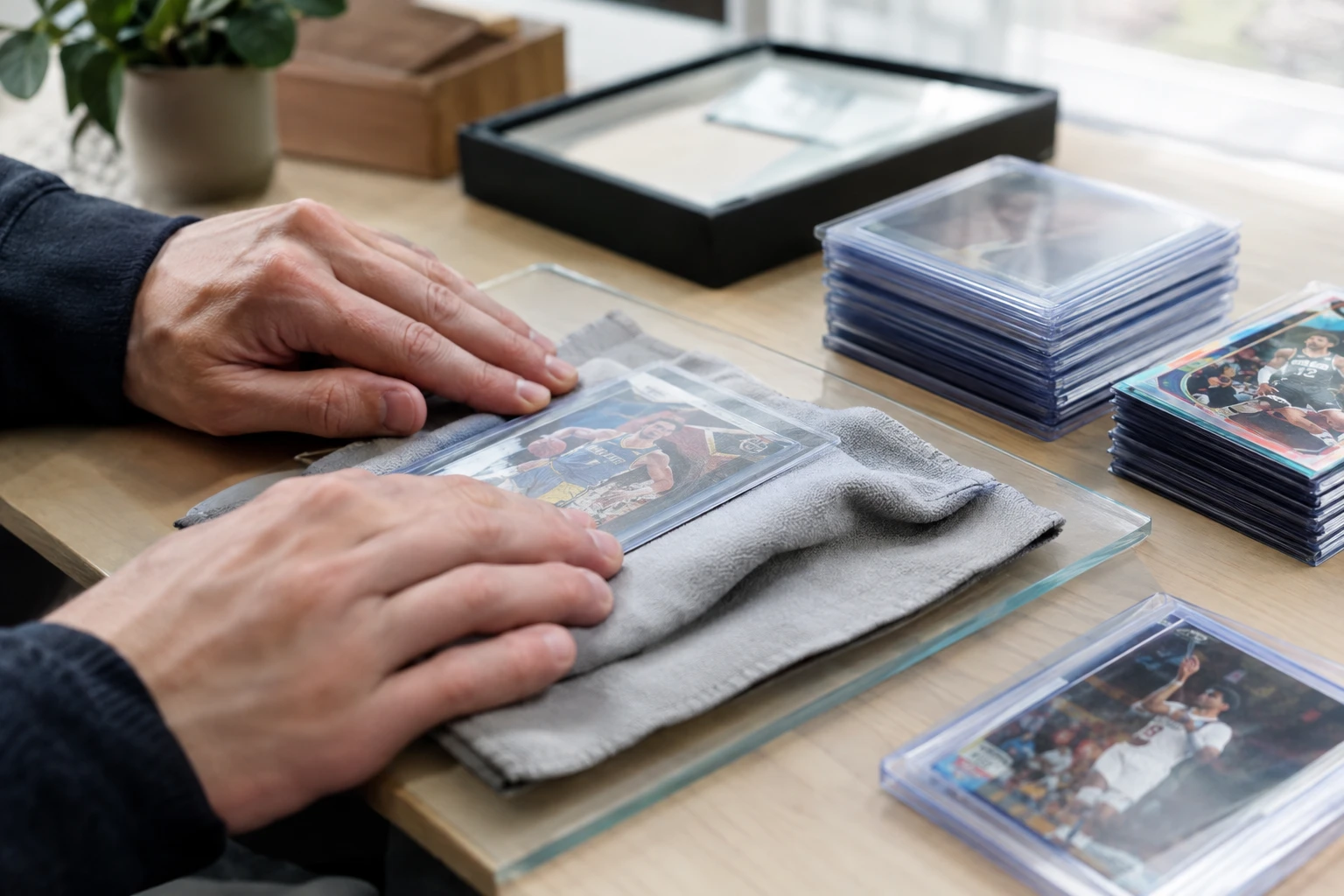
Card pressing is the practice of using pressure (and sometimes heat or humidity) to flatten dents, bends, ripples, and surface imperfections in a trading card — improving its apparent condition and hopefully its grade.
It sits at the center of the hobby's biggest ethical fight. To defenders, it's restoration equivalent to pressing a comic book — disclosed, accepted, value-preserving. To critics, it's undisclosed alteration that falsifies a grade. And to grading companies, aggressive pressing is simply alteration — detected, labeled, and economically punished.
This guide covers what pressing actually is, where graders draw the line, how detection works, and what it means whether you're a submitter or a buyer.
What Card Pressing Actually Is
Pressing applies controlled pressure to a card to reshape it — flattening a corner ding, smoothing a surface dent, easing a light bend. Techniques range from mild to aggressive:
- Cold pressing: card between clean surfaces under weight — the mildest form, mainly removing minor waviness.
- Heat pressing: warm press or iron through protective sheets — reshapes deeper dents and bends.
- Humidity + press: light moisture softens fibers before pressing — deeper restoration territory.
- Chemical/surface work: cleaning, glossing agents, recoloring — firmly into alteration, often detectable.
Related but distinct practices: trimming (cutting edges to remove wear — always alteration), recoloring (adding pigment to cover whitening — always alteration), rebacking (adding material — always alteration). These are unambiguously fraudulent when undeclared. Pressing alone is the gray zone.
The Alteration Spectrum
| Practice | Industry View | Detection Risk |
|---|---|---|
| Flat storage pressing (gentle flattening) | Generally accepted as prep | Low |
| Heat-press removing dents/bends | Gray zone — context-dependent | Moderate (surface texture evidence) |
| Humidity reshaping | Borderline | Moderate |
| Cleaning with agents / glossing | Alteration | High (surface analysis) |
| Recoloring edges/corners | Clear alteration | High (UV + magnification) |
| Trimming | Clear alteration / fraud | Very high (dimension measurement) |
| Rebacking / rebuilt corners | Fraud | Very high |
The practical line the industry enforces: removing a defect mechanically (pressing) occupies gray space; adding, removing, or changing material (trimming, recoloring, inking, rebacking) is fraud. Grader tolerance ends where material changes begin.
Where the Graders Stand
PSA: detects alteration and returns cards labeled "Authentic" or "Authentic Altered" — the latter being a value-killing label on most cards. PSA has invested in detection (light analysis, measurement, surface inspection) as pressing has grown more sophisticated.
BGS, CGC, SGC: parallel policies — detected alteration means a non-graded or altered-flagged return. CGC in particular has leaned into restoration-detection language across its collectibles lines.
The risk asymmetry for submitters: pressing a $200 card to chase a 10 doesn't just risk the fee — an "Authentic Altered" label often makes the card worth less than the raw unpressed version, because the label is permanent and publicly signals the card was worked on.
How Alteration Is Detected
Grading companies and vigilant buyers use a layered toolkit:
- Dimensional measurement: trimmed cards measure under spec — even fractions of a millimeter show on calibrated gauges.
- UV/black light: recoloring, glue, and many treatments fluoresce differently than original card stock and ink.
- Magnified surface inspection: pressed fibers compress differently than original; recolored areas show pigment differences under 10-30x.
- Edge examination: cut edges vs original factory edges differ microscopically; recolored edges show inconsistent ink layer structure.
- Flex and feel: experienced graders detect pressed stock by feel — reflattened fibers lose spring.
- Comparative reference: known-good copies of the same card set the baseline.
Where AI fits: high-resolution imaging analysis is increasingly good at flagging surface anomalies consistent with pressing — AI pre-grading reads surface texture across the card at a scale visual inspection can't match.
The Ethics Debate
The pro-pressing argument: pressing is reversible-leaning, disclosed among serious sellers, and improves aesthetics without adding material — closer to ironing a shirt than counterfeiting. Comic book pressing has been accepted practice (and CGC's comic arm even offers pressing services) for years.
The anti-pressing argument: an undisclosed pressed card misrepresents the card's natural state to the grading company and the eventual buyer — functionally condition fraud when the grade is monetized. Sophisticated pressing essentially manufactures gems.
Where the market is landing: the pragmatic consensus is disclosure. Pressing that's disclosed and detectable is increasingly tolerated as "conservation"; undeclared work caught by graders gets punished with labels that hurt more than honesty would have.
Our position: submit cards as they are. The risk asymmetry — an "altered" label can be worse than the defect you were fixing — makes undisclosed restoration a bad bet, and AI screening exists precisely so you don't need to manufacture condition.
Buying Raw Cards in the Pressing Era
Pressed cards are common in the raw market — assume condition that seems "too good" may have been worked on:
- Examine under raking light: pressed surfaces show a subtly different texture/sheen than untouched stock.
- Check flex: a card that's been pressed often feels flat and stiff rather than naturally springy.
- UV test if it's expensive: a $15 blacklight is cheap insurance on a $500 raw purchase.
- Compare to known-good copies: side-by-side with a certified copy reveals surface discrepancies fast.
- Buy the seller, not just the card: established sellers with return policies absorb the risk.
Already-slabbed is safer: a graded card has passed professional alteration screening — one of the underappreciated reasons vintage buyers prefer slabs even at mid grades.
Frequently Asked Questions
Is pressing a trading card illegal or against grading rules?
Can PSA detect a pressed card?
Does pressing a card increase its grade?
Is card pressing the same as trimming?
Should I press a card before grading it?
Sources & Further Reading
The PreGradeCards Research Team combines machine-learning engineers, grading analysts, and collector-education specialists to produce accurate, data-driven guides on AI card grading, professional grading standards, and collecting strategy.
With submission floors rising, pre-screening is no longer optional. Use our AI Pre-Grade Calculator to score a card's PSA 10 odds before you pay, and the Submission Planner to pick the right tier.