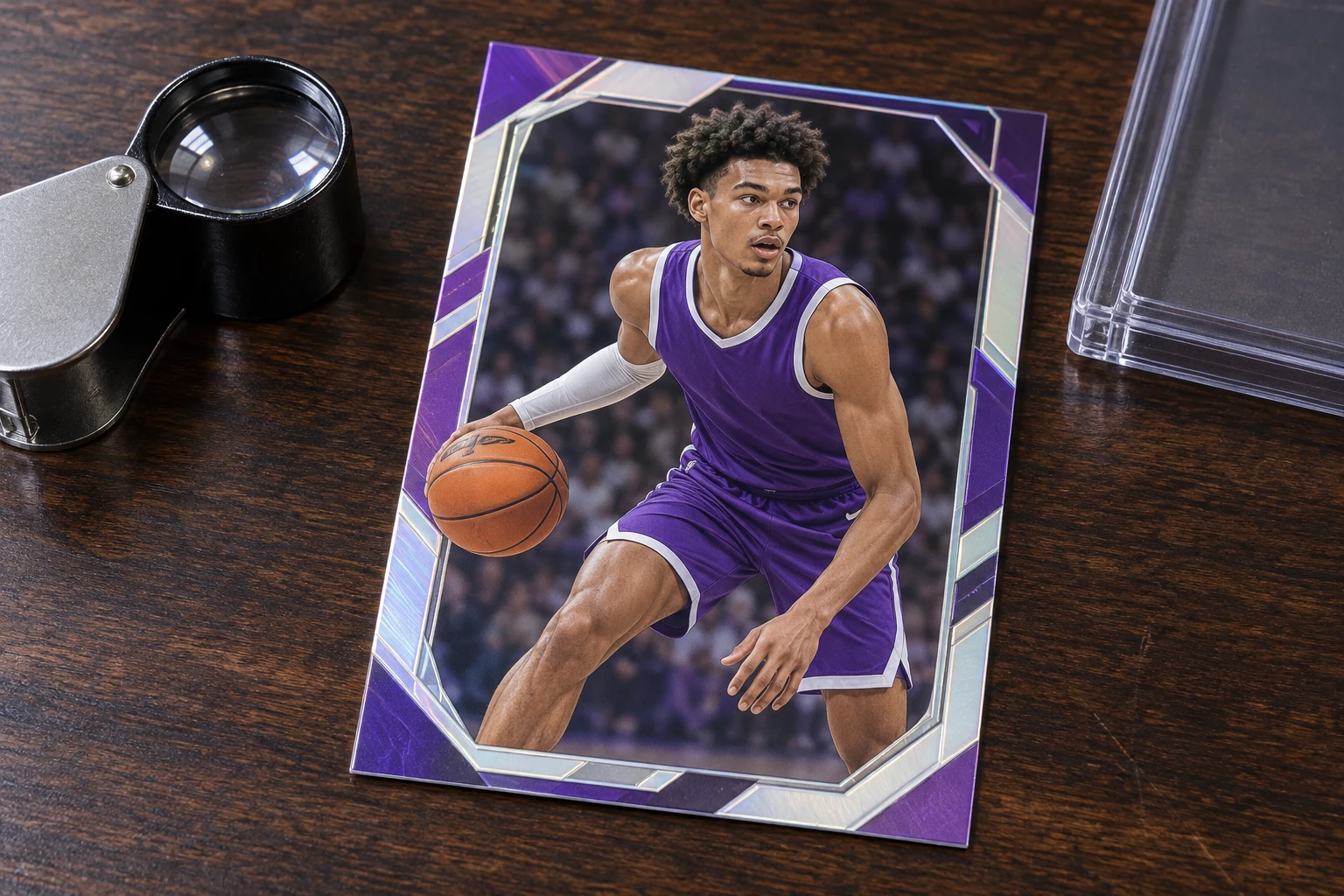
The Short Answer
- Peterson's Flagship #257 base asks $2 to $4 raw; the PSA 10 is about $60.
- The Blue /150 asks $150 to $200 and is the first card with real scarcity.
- The 81BR-2 on-card auto asks $325 to $400 and is the flagship signature.
- Bowman U autos at $125 to $350 are the cheapest certified Peterson signatures but will never be NBA rookies.
- He is averaging 16.3 points on 40.6% shooting — the slow start is why the base card is cheap.
- Wait for Chrome in December before paying four figures for any Peterson card.
Why Darryn Peterson is the cheapest No. 2 pick in years
Darryn Peterson went second overall to the Utah Jazz and has started slowly by the standards of a top pick: 16.3 points, 4.0 rebounds and 3.9 assists in 12 games, but on 40.6% shooting and 35.7% from three. The market noticed. His 2026-27 Topps Flagship #257 asks $2 to $4 raw, which is less than a pack.
That is what a slow start looks like in card prices. The base card is cheap because flagship base cards are cheap, and the slow start removed the premium a hot rookie would carry. For a patient buyer, that combination is the point: you are paying bulk-card prices for a 19-year-old who was the second-best player in his class four months ago.
The numbered and autographed cards tell a different story. The Blue /150 asks $150 to $200, the 81BR-2 autograph asks $325 to $400 and a single Bowman Chrome U auto sold with an ask near $350. Scarcity is still priced; only the base card is not.
The plan here is simple: buy the base if you want a cheap position on the class, buy one numbered parallel if you want a card that can hold value, and wait for Chrome in December before paying for an autograph. The basketball card index tracks the whole class.
Utah is asking Peterson to run real offense as a 19-year-old: 30.9 minutes, 3.9 assists and a free-throw rate that suggests he is getting to the rim even when the jumper is not falling. That is a development plan, not a finished product, and it is the reason his card prices look like a mid-first-round pick rather than the No. 2 selection.
| Card | Raw | PSA 9 | PSA 10 | Tier |
|---|---|---|---|---|
| 2026-27 Topps #257 base | $2–$4 | ~$12 | ~$60 | Entry |
| 2026-27 Topps Blue /150 | $150–$200 | — | — | Core |
| 2026-27 Topps 81BR-2 auto | $325–$400 | — | — | Core |
| Bowman Chrome U prospect auto | $125–$350 | — | — | Core |
| 2026-27 Topps Real One patch | ~$50 | — | — | Entry |
| Bowman U Now PSA 10 | ~$90 | None | ~$90 | Budget |
The graded column reflects the few PSA 10 sales that exist. Most Peterson cards are too new for a meaningful census.
1. 2026-27 Topps Flagship #257 — the base rookie
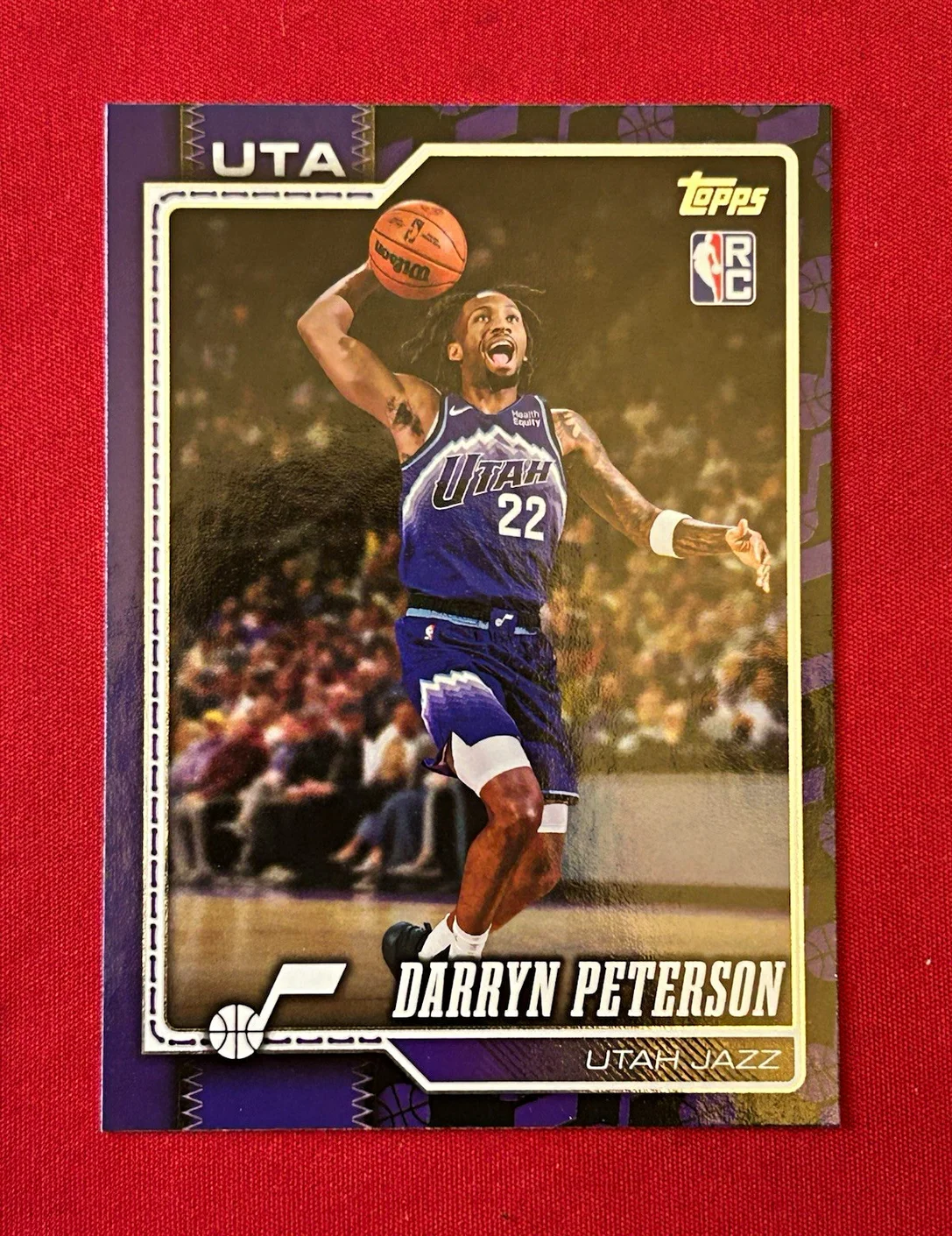
Card #257 follows Dybantsa in the rookie block of the 300-card base set. It is a clean flagship card with the Jazz purple and a portrait that reads well at small size, and it costs $2 to $4 raw.
At that price the card is a position on the class rather than a bet on the player. Ten copies cost $30, which is less than a blaster, and if Peterson's shooting improves the base card is the first thing that moves.
Check recent eBay sold prices for the Flagship #257 base →
The figure is the Logo Border SSP parallel of #257, not the plain base. Same player, scarcer card.
2. 2026-27 Topps Blue /150 — the numbered parallel
The Blue parallel is numbered to 150 and asks $150 to $200. That is a big multiple over a $3 base card, and it is the clearest sign that the market is pricing scarcity rather than performance.
Only a handful of copies have surfaced, so the price is thin and volatile. If Peterson strings together a few 25-point games, this is the card that moves first; if he keeps shooting 40%, it is also the card that stalls.
Check recent eBay sold prices for the Blue /150 →
3. 2026-27 Topps 81BR-2 autograph — the flagship auto
The 81BR-2 is the flagship on-card autograph, and it asks $325 to $400. It is the card collectors mean when they say they want "a Peterson auto", and the supply is small enough that listings disappear quickly.
Autograph prices for a slow-starting rookie are the most volatile part of this market. A 30-point game can add $100 to the ask overnight; a 4-for-15 shooting night can take it away.
Check recent eBay sold prices for the 81BR-2 auto →
4. Bowman Chrome U prospect auto — the college card
Bowman Chrome U autographs are college cards, not NBA cards, and they trade in a different market: $125 to $350 depending on the parallel and the serial. They are the cheapest way to own a certified Peterson signature.
The downside is permanence. A Bowman U card will never be an NBA rookie card, and as Topps releases more NBA autographs the college card's premium erodes. Buy it as a signature, not as an investment.
Check recent eBay sold prices for the Bowman U auto →
- Mint Condition Basketball Cards — $5,000.00 on eBay →
- basketball cards — $69.72 on eBay →
- basketball cards — $350.00 on eBay →
- basketball cards — $120.00 on eBay →
Ad · Listings shown are from eBay. We may earn a commission when you buy through these eBay links. Prices and availability are set by eBay sellers and change often.
5. Real One rookie patch — the memorabilia entry
The Real One patch is the cheapest memorabilia card in the flagship product, asking around $50. It is a player-worn swatch with no autograph, and it exists to give set builders a Peterson relic without the four-figure price of the low-numbered versions.
Patch quality drives the price more than the serial. A plain swatch sits at the bottom of the range; a multi-colour patch with stitching can double it.
Check recent eBay sold prices for the Real One patch →
6. Bowman U Now PSA 10 — the budget slab
The Bowman U Now card is a print-to-demand college card, and a PSA 10 asks around $90. It is the cheapest graded Peterson card on the market and the easiest way to own a slab without paying NBA-card money.
It is also the least scarce thing in this guide. Print-to-demand cards have large populations, and a PSA 10 is not a rarity — it is a presentation.
Check recent eBay sold prices for the Bowman U Now PSA 10 →
Why a slow start is the right time to buy Peterson
Card markets overreact to the first month. A rookie who scores 25 a night for two weeks sees his base card double; a rookie who shoots 40% for a month sees his base card fall to bulk prices. Neither outcome is a forecast, and the second one is where the value sits if you like the player.
Peterson's profile is not a bust profile. He is playing 30.9 minutes a night as a 19-year-old, taking on a real offensive role, and his free-throw rate and assist numbers are fine for a rookie guard. The shooting is the question, and shooting is the skill that most often improves.
Set a budget and a trigger. If you want the base card, buy ten now at $3 and another ten if the price stays under $2 in December. If you want the auto, wait for Chrome and let the new supply settle. The Duncan guide is the reminder that a slow first month says nothing about a career.
Buying on a slow start only works if you separate process from results. Peterson is taking roughly the same number of shots a game as the other top picks and making fewer of them; his assist and rebounding numbers are in line with the class. If the shooting regresses toward his college level, the base card re-rates without anything else changing, which is the cheapest kind of upside to buy.
When to sell a Peterson card is a different question. The base card is too cheap to bother selling; the autograph at $325 to $400 is the one with a decision attached. If he has a 30-point game in a nationally televised window, that is the liquidity event — not a good month of shooting in a quiet arena. Set a target price before the game, not after it.
The other thing to watch is the free-throw line. Peterson is getting to the stripe at a rate that suggests his scoring is not as dependent on a hot jumper as the 40.6% field-goal number implies, and free throws are the most stable part of a young guard's efficiency. If the whistle keeps coming, the shooting correction becomes a matter of time rather than a leap of faith, and the base card is priced for the leap of faith.
One practical note on the base stack: buy in lots where the seller shows the backs. The 2026-27 flagship back is where print defects and off-centre cuts are easiest to spot, and a lot photo that only shows the fronts is a lot that contains the copies the seller did not want. Two dollars a card is cheap, but a stack of nine losers and one candidate is not.
- Confirm the card is #257 in the base set.
- Check the serial on numbered parallels and reject unnumbered "Blue" foils.
- For autos, prefer on-card signatures and clear photos of the ink.
- Grade the base card only if centering is better than 60/40.
- Wait for Chrome pricing before buying an autograph at the top of the range.
Peterson's base card is a $3 experiment. Run it through the AI pre-grade first, and check current pricing before you submit a stack.
Run a free AI pre-grade on your card →
Watch and learn
A first-month recap of the 2026-27 Topps Flagship rookies, including how Peterson's slow start compares with the rest of the class.
Video: Topps Flagship Basketball 2026-27 is HERE!!! — Top Pops Cards on YouTube


Ad · Listings shown are from eBay. We may earn a commission when you buy through these eBay links. Prices and availability are set by eBay sellers and change often.
Frequently Asked Questions
What is a Darryn Peterson rookie card worth in 2026?
Why is Peterson's base card so cheap?
Is Peterson a buy at these prices?
Should I grade the base Peterson rookie?
What is the Blue /150 parallel?
How is Peterson playing in 2026-27?
Are Bowman U Peterson autographs worth buying?
When should I buy a Peterson autograph?
Does the Jazz market help card values?
Is Peterson's 40.6% shooting a red flag?
Should I buy Peterson or Boozer cards?
What is the best Peterson card under $50?
Sources & Further Reading
- eBay sold listings — 2026 Topps Darryn Peterson 257 rookie
- Basketball-Reference — Darryn Peterson stats
- PSA CardFacts — population reports
- CardLadder — basketball market data
- Topps — 2026-27 Flagship Basketball
- NBA.com — 2026 NBA Draft order
Create a free account and get 2 free credits. No credit card required.
Get Your Free Credits →