The Short Answer
- Graded slabs are NOT airtight or UV-proof — light and humidity still degrade cards inside
- UV exposure fades labels, card inks, and can yellow slabs over years of direct light
- Store slabs vertically, cool (60-75°F), dry (40-55% RH), and dark for maximum preservation
- Slab scratches are cosmetic but hurt resale presentation — bags and cases prevent them
- For display: UV-filtering frames/cases, indirect light, and away from windows and vents
- Fire/water events are the real risk at collection scale — safes and insurance matter above ~$10k
Your Slab Is Protection, Not Immunity
A PSA, BGS, CGC, or SGC slab protects a card from handling damage — fingerprints, corner dings, edge wear from rummaging. It does not make the card invincible. UV light still fades the card and label inside, humidity still reaches the paper through the slab's seams, and a scratched-up holder quietly shaves resale appeal.
This guide covers what actually damages graded cards over years, how to store them for preservation, display options that don't cook your collection, and when the threat is a disaster event rather than slow decay.
What Actually Damages a Slabbed Card
UV light. The big one. Sunlight and fluorescent/LED UV output fades printed inks and yellows paper over months to years — inside the slab. PSA and other labels themselves fade and yellow with prolonged sun exposure. A card displayed on a sunny shelf can visibly degrade within a couple of years.
Heat. Attics, car trunks, and windowsills push slabs past comfortable temperatures; sustained heat accelerates paper aging and can warp some holder plastics. PSA/CGC slabs have warped in extreme heat.
Humidity. Slabs are sonically sealed, not hermetically sealed — moisture vapor migrates through the weld over time. Sustained high humidity (above ~65% RH) promotes cockling, foxing, and mold risk inside the holder.
Scratches and impacts. Cosmetic, but real money: a heavily scuffed slab photographs poorly and buyers mentally discount it, even though the card inside is untouched.
Water and fire. Low probability, catastrophic severity — a slab survives a splash but not a flood or a fire.
Storage Best Practices
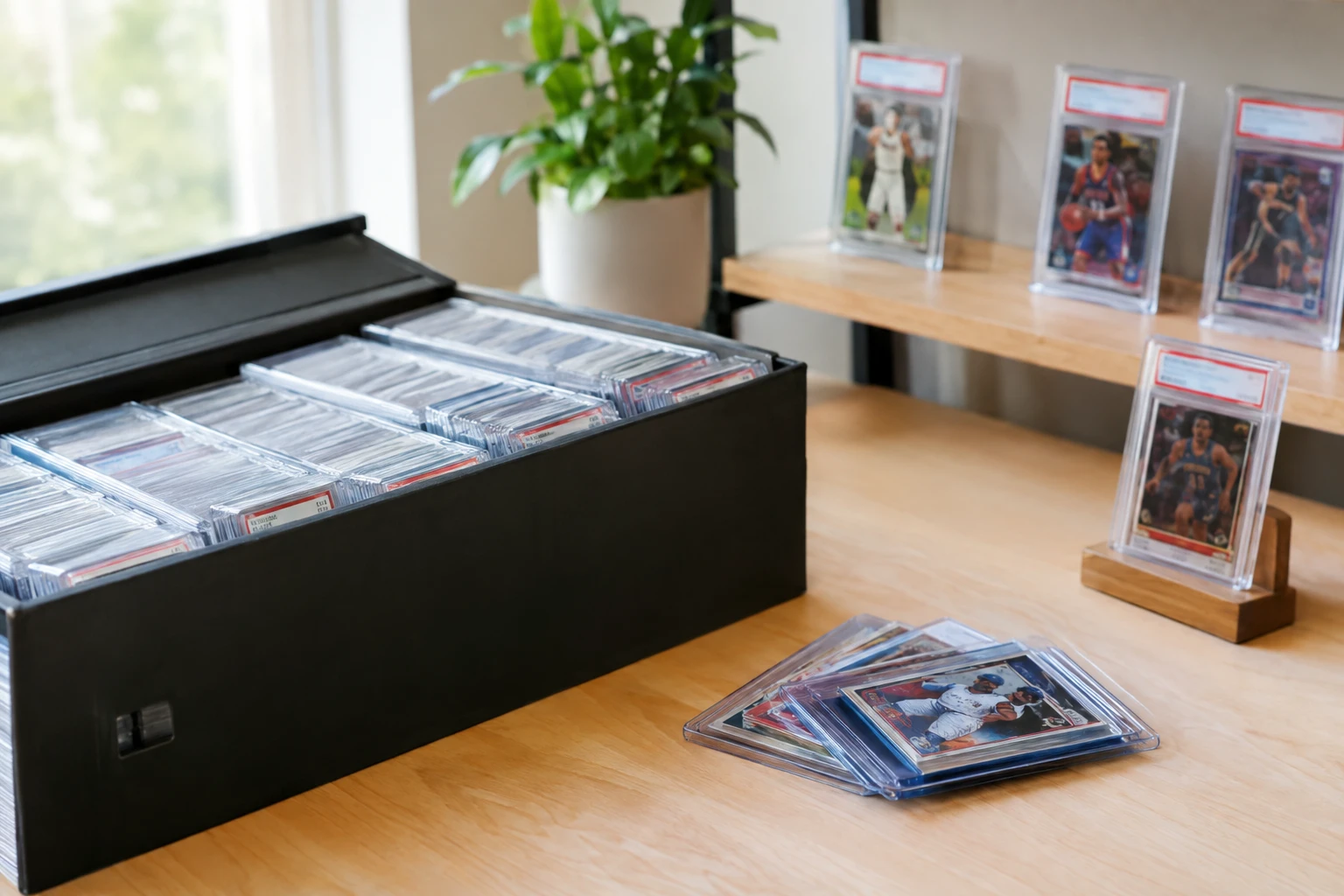
Vertical, not stacked. Store slabs upright like books — graded-card storage boxes from BCW, Cardboard Gold, or similar are sized for PSA/CGC slabs. Horizontal stacking puts sustained pressure on lower slabs and risks holder stress cracks at corners.
Environment:
- Temperature: 60-75°F, stable. Avoid attics, garages, and basements prone to swings.
- Humidity: 40-55% relative humidity. In humid climates, a closet dehumidifier or silica packs in the storage box (recharged periodically) work.
- Light: darkness is free protection — a closed box in a closet beats any display.
Organization: label box contents (a card list taped inside the lid saves digging), and keep a photo inventory — it doubles as insurance documentation. If you graded through us, your grading history already maintains per-card records and images.
Displaying Without Degrading
Display is a compromise — you can't show a card and fully shield it from light. Minimize the trade:
- UV-filtering display cases/frames: acrylic with UV inhibitors (look for 98%+ UV blocking claims) for wall-mounted slabs.
- Indirect lighting only: LED lighting with low UV output is acceptable; never direct sunlight, never picture lights with unshielded bulbs aimed at slabs.
- Rotate displays: cards on permanent display degrade faster than rotated ones — treat your display shelf like a museum's, cycling pieces back to dark storage periodically.
- Wall placement: away from windows, heating vents, fireplaces, and exterior walls that run hot/cold.
Slab stands and easels work for desk display — choose weighted bases so slabs can't tip and take a corner impact.
Preventing Slab Scratches
Slab-on-slab contact during storage and transport is the main scratch source:
- Slab bags/sleeves: fitted poly bags (~$0.10-0.25 each) — cheapest insurance against scratches and label scuffs.
- Slab bumpers: silicone or rubber bumper guards wrap the slab edge — popular for trade/show carry and valuable cards.
- Team-bag the box: for travel, bagged slabs in a fitted box eliminate rub.
- Shipping a slab: bubble wrap + snug box; never a bare slab in a padded mailer where it can flex.
Scratched slab? Minor scuffs polish out with plastic polish used carefully on the clear face only. Deep scratches warrant a reholder — PSA reholder runs ~$10-15/card plus shipping; consider it when the card value justifies presentation.
The Climate Rules in One Place
| Factor | Target | Danger Zone |
|---|---|---|
| Temperature | 60-75°F (stable) | Above 85°F or swinging daily |
| Humidity | 40-55% RH | Above 65% or below 30% sustained |
| Light | Dark or UV-filtered | Direct sun, unshielded windows |
| Orientation | Vertical in fitted box | Deep horizontal stacking |
| Location | Interior closet/room | Attic, garage, damp basement |
A cheap digital hygrometer in your storage room tells you whether you're inside the band — worth $10 for a collection worth thousands.
Fire, Water & Insurance
At some collection value, the math shifts from careful storage to genuine risk management:
- Fire safes: a rated safe (e.g., UL 1-hour+) holds slabs; note that rated safes get hot inside during a fire — plastic can deform. For a five-figure+ collection, safe + documentation is minimum.
- Flood: store off the floor — a raised shelf or second-story location removes the most common water event.
- Insurance: standard homeowner's policies cap collectibles low (often $1-2k) and may exclude grading-fee value. Scheduled collectibles coverage or a specialty insurer covers slabs at market value — our graded card insurance guide covers options.
- Documentation: photos of every slab front/back with cert numbers recorded offsite — the difference between a claim and a loss.
Frequently Asked Questions
Do graded card slabs protect against UV light?
What humidity is safe for graded cards?
Should graded cards be stored vertically or flat?
Do slab scratches affect the card's grade or value?
Can heat warp a graded card slab?
Sources & Further Reading
- PSA — Card Care Resources
- BCW Graded Card Storage
- Library of Congress — Paper Preservation
- PreGradeCards — Graded Card Insurance Guide
The PreGradeCards Research Team combines machine-learning engineers, grading analysts, and collector-education specialists to produce accurate, data-driven guides on AI card grading, professional grading standards, and collecting strategy.
With submission floors rising, pre-screening is no longer optional. Use our AI Pre-Grade Calculator to score a card's PSA 10 odds before you pay, and the Submission Planner to pick the right tier.