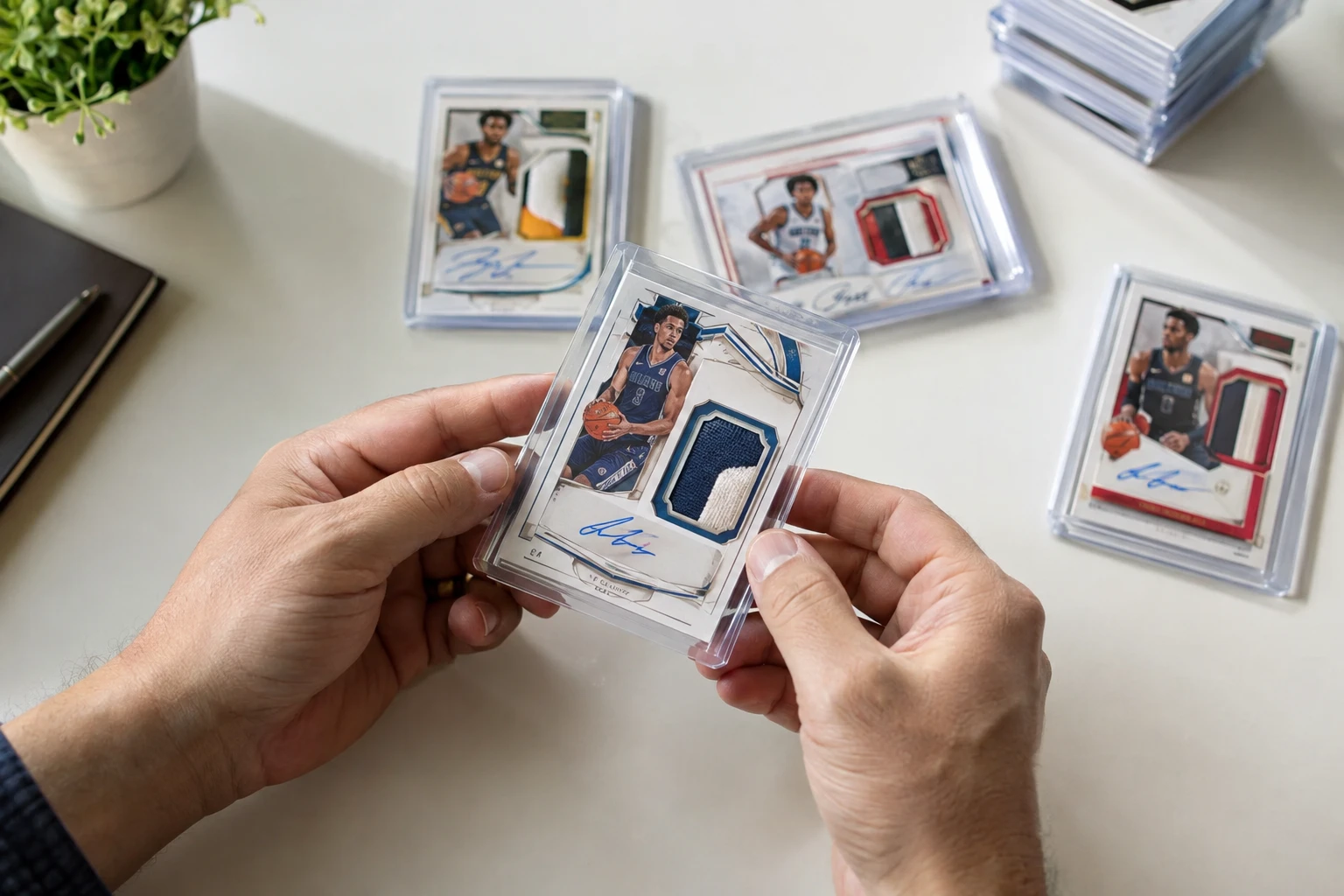
The Short Answer
- RPAs carry 5-20x premiums over base rookies — a flagship /99 RPA of a star rookie is a four-to-six-figure card graded
- Wembanyama 2023-24 Immaculate /99 PSA 10 sits at the modern ceiling in the low six figures
- Thick stock + patch windows = chronic edge wear and centering problems; PSA 10 hit rates are low
- PSA dominates NT/Immaculate resale — PSA 10 RPAs run 2-3x PSA 9 on top rookies
- On-card autos can smudge in-pack — check signature integrity before submitting
- Declare graded value honestly: six-figure RPAs need Premier/Premium-tier insurance
The High-End Tier Where Grading Actually Moves Money
National Treasures and Immaculate are the two pillars of high-end modern sports cards — the products where a single rookie patch auto can carry a box's entire value and a PSA 10 vs PSA 9 can mean a five-figure difference.
Wembanyama's 2023-24 Immaculate /99 RPA sits at the modern ceiling in low six figures at PSA 10. This guide covers how these thick-stock premium cards grade, what defects kill them, and when the fee is justified.
The Product Landscape
| Product | Config | Price Point | Signature |
|---|---|---|---|
| National Treasures | 1 pack × 8 cards; ~3 autos + 3 mem + base + hit | ~$4,000-4,650/box | RPA /99, Logoman 1/1, booklets |
| Immaculate | 6 cards; 1 base + 4 autos + 1 mem | ~$1,400-1,425/box | Acetate RPAs /99, Logo Patch Auto |
| Flawless | Ultra-premium | Higher than both | Apex tier — briefcases, diamonds |
| Topps Dynasty (MLB) | 1 card/box, /10 base | Premium | Encased patch autos |
| UD The Cup (NHL) | Premium hockey | Premium | Exquisite-style RPAs |
Premium over base rookies: a flagship /99 RPA prices at 8-20x the player's base Prizm/Chrome rookie (NT) or 5-18x (Immaculate). The graded premium stacks on top.
RPA Structure and Value Ladder
- Base RPA /99: the standard — on-card auto + game-used jersey patch
- /49, /25, /10, /5: ascending scarcity tiers, each step roughly doubling value on stars
- Logoman / Shield 1/1: the trophy — multi-million-dollar Mahomes/Luka/Wemby cards live here
- Booklets: fold-out dual patch/auto cards — graded rarely due to size, but premium
- Acetate (Immaculate): see-through stock — surface defects show differently than standard stock
Cross-sport equivalents: baseball runs Dynasty/Bowman Sterling, hockey runs The Cup — same grading logic applies. See our thick card guide for the general mechanics.
The Defect Profile — Why PSA 10s Are Rare
Premium doesn't mean well-manufactured. NT/Immaculate cards fail grading on predictable issues:
- Edge wear: 35-55pt+ stock rubs against pack/container edges — white nicks on edges are near-universal
- Patch-window edges: the die-cut window's edge is a scoring line; wear and fraying at the cut show as edge/corner defects
- Centering on the patch window: graders evaluate the patch's placement in the window AND the card's overall centering — a well-cut card with an off-center patch still gets dinged
- Auto smudging: on-card signatures can smudge in-pack or streak at factory — a smeared auto caps the grade
- Surface pressure marks: thick stock picks up pressure dents from packaging
- Acetate scratches (Immaculate): the clear stock scratches on contact — tilt-check
Result: PSA 10 hit rates on premium RPAs run low — which is exactly why the 9-10 spread is worth thousands.
What to Grade
Always grade (screened):
- RPA /99-or-better of any star or top-5 rookie — even BGS 9.5/PSA 9 floors hold value
- Logoman/Shield/1-1 anything — trophy cards; grading authenticates
- Acetate RPAs of name players
- Booklets — if they fit the grader's format limits (verify size acceptance)
Screen first:
- Memorabilia-only patch cards — premiums are thin unless the patch is exceptional (logos, laundry tags)
- Base and non-RPAs of mid players
Skip: filler autos of journeymen, base cards — fee vs. premium doesn't work.
The 9-vs-10 Spread Is the Whole Game
On premium RPAs, PSA 10s typically run 2-3x PSA 9 — and on trophy cards it's wider:
- Wemby Immaculate /99: six figures at PSA 10; a PSA 9 trades at a fraction
- 2025 NT Shedeur Sanders RPA /99: ~$18,500 at BGS 9.5; a PSA 10 carries a multiple
- The spread exists because supply at 10 is near-zero — collectors pay for the top-pop label
Strategy consequence: screen hard before submitting. A card destined for a 9 pays the fee but misses the premium — on a $4,650 box where the RPA carries the cost, that miss is expensive. AI pre-grading evaluates centering, edges, surface, and corners on thick stock from photos — a cheap sanity check before a five-figure submission decision.
Submission Notes for High-End Cards
- Declared value = graded value: a Wemby RPA comps six figures — Premium-tier lanes and insured shipping. Under-declaring a five-figure card to save a fee is a catastrophic trade; see the declared value guide.
- PSA owns the resale: BGS 9.5s carry value but PSA 10 premiums dominate; SGC/CGC are minor players at this tier.
- Document condition: photograph the card before shipping — pressure dents and edge nicks can be shipping damage; comps and insurance need proof.
- Consider grading turnaround: Premier/Premium lanes return faster — on a card whose player-news window matters (e.g., post-rookie-year hype), speed has value.
Frequently Asked Questions
Is it worth grading a National Treasures RPA?
Why do thick cards get worse grades?
What is the most valuable Immaculate card?
Should I grade an RPA at PSA or BGS?
How do patch windows affect grading?
Sources & Further Reading
- HobbyCardIndex — The RPA Market in 2026
- CardSense — National Treasures Guide
- CardSense — Immaculate Guide
- PSA Population Report
The PreGradeCards Research Team combines machine-learning engineers, grading analysts, and collector-education specialists to produce accurate, data-driven guides on AI card grading, professional grading standards, and collecting strategy.
With submission floors rising, pre-screening is no longer optional. Use our AI Pre-Grade Calculator to score a card's PSA 10 odds before you pay, and the Submission Planner to pick the right tier.