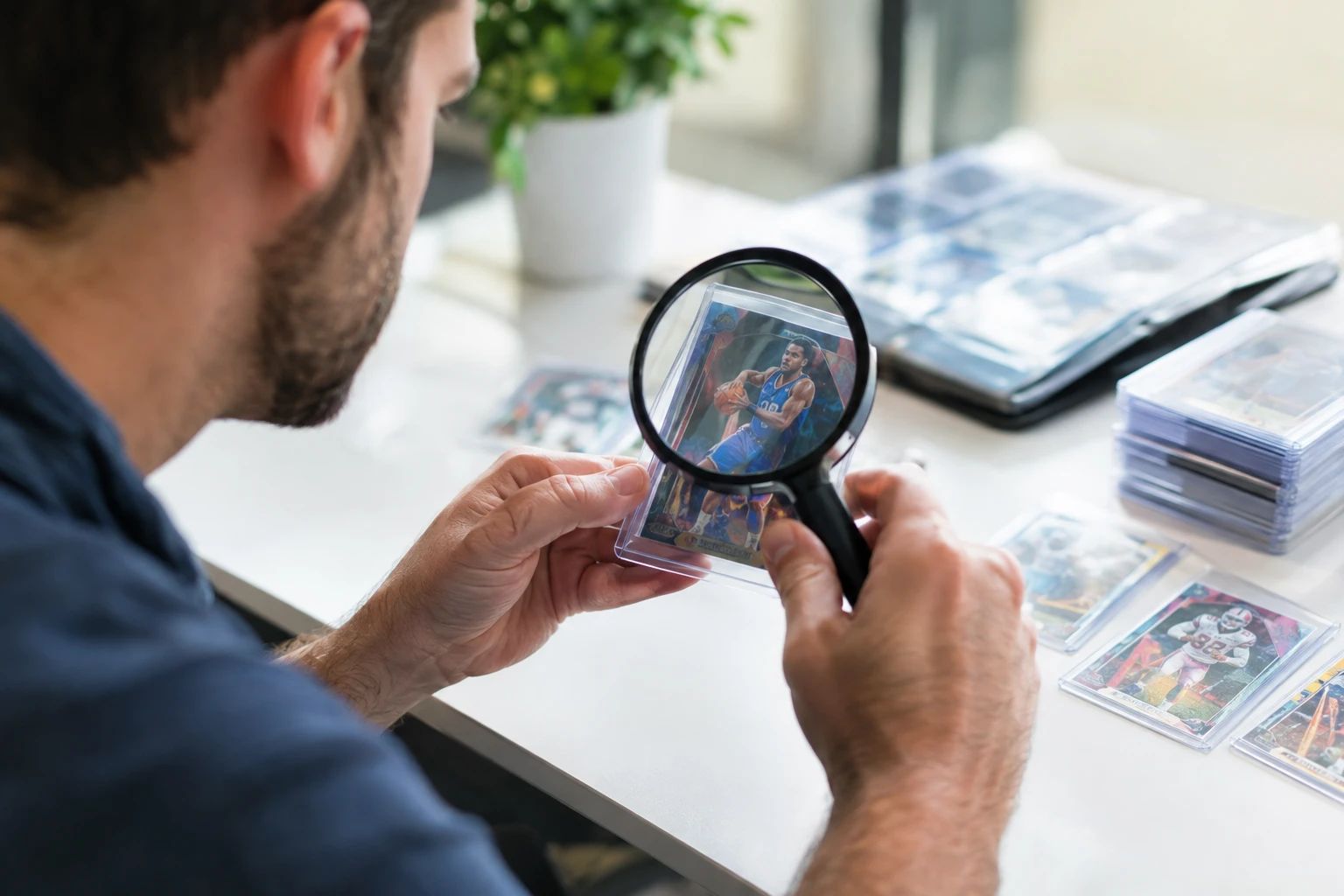
The Short Answer
- PSA's Value tier pause (June 2, 2026) pushed the minimum grading cost to $79.99/card, making pre-screening financially essential rather than optional.
- The industry graded a record 3.61 million cards in July 2026 — a 54% year-over-year increase — meaning more competition for grades and longer wait times.
- TCG cards now account for 71% of PSA's volume, fundamentally changing which cards are worth grading and how to prioritize submissions.
- AI pre-grading achieves 89% accuracy within ±1 grade point at $0.19/card, compared to $79.99 and 65 days for PSA — a 420x cost advantage for pre-screening.
- August 2026 has multiple market catalysts: new Chrome releases, MLB trade deadline fallout, LeBron's 76ers move, and Cooper Flagg rookie card demand.
The Perfect Storm: Four Forces Converging in August 2026
If you have been sitting on a collection of raw cards, wondering whether now is the time to start grading, the answer is more nuanced than a simple yes or no. But the case for pre-grading — evaluating your cards at home or with AI tools before paying for professional submission — has never been stronger than it is right now, in August 2026.
Four independent forces have converged to create a moment where pre-grading delivers more financial value than at any previous point in the hobby's history:
- PSA's Value tier pause pushed the minimum cost of a PSA submission from $24.99 to $79.99 per card — a 220% increase that makes blind submission financially dangerous.
- Record-breaking grading volume (3.61 million cards in July 2026 alone) means more competition for grades, longer wait times, and tighter population counts that affect resale value.
- TCG cards have overtaken sports cards as the dominant grading category, changing which cards are worth submitting and how to prioritize across Pokémon, Magic, Yu-Gi-Oh!, One Piece, and 15+ other games.
- AI pre-grading accuracy has reached 89% within one grade point of final PSA grades, making digital pre-screening reliable enough to base financial decisions on.
Each of these factors matters on its own. But together, they create a environment where pre-grading is not just a smart habit — it is the single highest-leverage move a collector can make before spending money on professional grading. Let us break down each force and explain exactly why August 2026 is the window.
The PSA Value Tier Pause Changed the Math for Everyone
On June 2, 2026, PSA made a decision that reshaped the economics of card grading overnight. The company paused all four of its lowest-cost service tiers — Value Bulk, Value, Value Plus, and Value Max — because its active backlog had climbed to roughly 10 million cards. A last-minute submission rush before the deadline pushed that number to 14 million by mid-June.
As of August 2026, the backlog has come down slightly — PSA's public tracker showed 11.85 million units on August 11 — but the Value tiers remain closed. PSA has said it will not reopen them until the queue falls to 5 million cards, a milestone it projects is still five to six months away. That puts the realistic reopening of cheap PSA grading somewhere in late 2026 or early 2027.
In the meantime, the cheapest way to get a card into a PSA slab is Regular service at $79.99 per card, with an estimated turnaround of 40 to 50 business days. That is a 220% jump from the old Value Bulk price of $24.99, and it changes the breakeven math on every single submission.
The Old Math vs. The New Math
Under the old Value Bulk tier, you could afford to submit a $40 raw card. If it came back a PSA 9 instead of a 10, you were out $25 in grading fees — annoying, but survivable. The "spray and pray" strategy of submitting 100 cards and hoping 30 gemmed was a legitimate approach because the downside of a miss was small.
At $79.99 per card, that same PSA 9 miss costs you 3.2x more. A single PSA 8 can wipe out the profit from several PSA 10s. The margin for error has not just narrowed — it has vanished. Here is the cost comparison:
| Scenario | Old (Value Bulk) | New (Regular) | Change |
|---|---|---|---|
| Cost per card | $24.99 | $79.99 | +220% |
| 50-card submission cost | $1,250 | $4,000 | +$2,750 |
| Cost of a PSA 8 miss | $25 | $80 | +$55 |
| Breakeven card value (raw) | ~$50 | ~$250 | 5x higher |
| Turnaround time | 95+ days | 40-50 days | Faster |
The turnaround is actually faster at Regular tier, which is a silver lining. But the cost increase means that pre-screening is no longer a "nice to have" optimization. It is a financial necessity. If you submit 50 cards blindly at $79.99 each and 20 of them come back PSA 8 or below, you have spent $1,600 on cards that will never recover their grading cost. Pre-grading those 20 cards for $0.19 each — a total of $9.50 — would have saved you $1,590.50.
Record Grading Volume: 3.61 Million Cards in July 2026
While PSA was dealing with its backlog, the rest of the industry was breaking records. According to GemRate's July 2026 report, the five major grading companies (PSA, CGC, Beckett, TAG, and SGC) slabbed a combined 3.61 million cards in July — the highest single-month total in the history of the hobby. That followed June's record of 3.5 million, which had itself crushed the previous record of 3.1 million set in April.
Year over year, grading volume is up 54%. A single recent day saw 107,073 cards graded across all major graders. eBay sports card sales crossed $1.36 billion in the first half of 2026 — the first time the marketplace has crossed $1 billion in a first half. The National Sports Collectors Convention in Rosemont drew over 100,000 attendees for the fourth consecutive year.
Here is the breakdown by grader for July 2026:
| Grader | July 2026 Volume | MoM Change | YoY Change |
|---|---|---|---|
| PSA | 2.49M | Flat | +49% |
| CGC | ~760K | +12% | +115% |
| Beckett | ~160K | +10% | +115% |
| TAG | ~55K | +6% | +40% |
| SGC | ~54K | +13% | -71% |
What does record volume mean for you as a collector? Three things:
First, population counts are rising fast. More graded copies means more supply on the secondary market, which can compress the premium between raw and graded prices — especially for modern cards. A PSA 10 that was one of 50 in the pop report last year might be one of 200 by the time your submission returns. Pre-grading helps you identify cards with low population counts that still command strong premiums.
Second, wait times at alternative graders are extending. As PSA's Value tier closure pushed volume to CGC and Beckett, their turnaround times stretched. CGC's standard service moved from 4-6 weeks to 8-10 weeks. Beckett's economy tier is now quoting 75+ business days. The window between pulling a card and getting it back in a slab is longer across the board, which means the market may shift before you can sell.
Third, the quality of the average submission is declining. As more casual collectors enter the market and submit cards, the overall grade distribution shifts. Industry data from CardGrade's State of Card Grading 2026 study shows that 16.1% of cards analyzed by their AI scored below PSA 8 — the breakeven threshold for most modern cards. That means roughly 1 in 6 cards being considered for grading would lose money if submitted. Pre-grading identifies those cards before you pay.
TCG Cards Have Overtaken Sports Cards — and It Changes Everything
Perhaps the most significant structural shift in the grading market is that trading card games have surpassed sports cards as the dominant category. In June 2026, TCG cards accounted for 71% of PSA's grading volume — 1.78 million out of 2.5 million cards. Pokémon alone represents roughly 90% of all TCG cards graded at PSA. PSA graded 1.5 million Pikachu cards in 2025, nearly matching the 1.6 million Michael Jordan cards graded over 35 years.
This is not a temporary blip. TCG grading volume at PSA is up 81% year over year, while sports card volume has been flat. Beckett's TCG submissions are up 159% year over year. CGC, which has always had strong TCG market share, saw TCG submissions grow 93% year over year.
For collectors, this shift has practical implications for pre-grading strategy:
| Card Type | Best Grader | Pre-Grade Priority | Key Risk |
|---|---|---|---|
| Pokémon (modern) | PSA or CGC | High — huge volume | Surface scratches on holo |
| Pokémon (vintage) | PSA | High — strong premium | Wax stains, edge wear |
| Magic: The Gathering | PSA or BGS | High for Reserved List | Edge whitening, centering |
| One Piece TCG | PSA or CGC | High — growing market | Alt art centering |
| Yu-Gi-Oh! | PSA or CGC | Medium — selective | Ghost foil surface issues |
| Sports (modern rookies) | PSA | High for stars only | Corner whitening on dark borders |
| Sports (vintage) | SGC or PSA | High — authentication value | Condition already known |
The TCG boom matters for pre-grading because TCG cards have different failure modes than sports cards. Pokémon cards are notorious for surface issues on holographic patterns — scratches and print lines that hide in the holo noise. Magic cards with dark borders show edge whitening dramatically. One Piece alternate art cards often have centering issues due to the larger art borders. Pre-grading with AI tools that analyze each of these specific risk factors is far more effective than a casual visual inspection.
It also matters because the volume is so high that population counts for modern TCG cards are exploding. A Pokémon card that has 500 PSA 10 copies today might have 2,000 by next year. The premium for a PSA 10 over raw compresses as supply increases. Pre-grading helps you identify cards with low populations and strong premiums — the ones worth submitting — while filtering out cards where the graded premium has already eroded.
Market Timing: Hot Cards and Fresh Releases in August 2026
August 2026 is an unusually active month for the card market, with multiple catalysts driving demand for specific cards. Pre-grading now means you can identify which of your cards align with current market heat and prioritize those submissions.
Sports Card Catalysts
The MLB trade deadline on July 31 created immediate market movement. Tarik Skubal's move to the Dodgers, Kevin Gausman to the Cubs, and Adley Rutschman to the Red Sox all shifted card values overnight. Rutschman's 2023 Topps Chrome rookie auto is up 12% since the trade announcement. Pete Crow-Armstrong's MVP-caliber season (7.5 bWAR, 26 HR, 30 SB) is driving demand for his refractors and image variations. Jac Caglianone is hitting .406 in August with multi-HR games, pushing his 2024 Bowman Draft autos back into the spotlight.
In basketball, LeBron James's signing with the Philadelphia 76ers on July 27 sent his 2003 Topps raw rookie up 11.4% overnight. Cooper Flagg rookie card demand remains white-hot ahead of the 2025-26 Topps Chrome Update Basketball release, which features Debut Patch Autograph redemptions. Cameron Boozer, Darryn Peterson, and Caleb Wilson are all seeing increased rookie card interest as the 2026 NBA Draft class gains attention.
In football, training camp quarterback battles in Cleveland (Deshaun Watson vs. Shedeur Sanders) and Minnesota (Kyler Murray vs. JJ McCarthy) are creating speculative demand. Caleb Williams and Jayden Daniels 2024 Prizm and Optic rookies remain prime grading candidates as their NFL careers develop.
TCG Catalysts
Pokémon's 30th anniversary celebrations are driving unprecedented demand. The Mega Evolution—Pitch Black set released July 17, and the 30th Celebration expansion launches September 16 with Futuristic rares and 30 Pikachu inserts. eBay users searched for Pokémon items more than 360 times per minute in 2025, and "Pokémon PSA 10" ranked among the top 10 most-searched collectibles terms on eBay across all categories.
One Piece TCG's OP-17 set had a global simultaneous release on August 26, creating demand for Treasure Rares and alternate art leaders. Lorcana's Attack of the Vine! set released July 24, bringing dual ink Enchanted cards that command significant graded premiums. MTG's July banned and restricted update (Force of Will, Time Warp, Candelabra banned in various formats) created immediate price movement on affected cards.
Why Timing Matters for Pre-Grading
Here is the key insight: when a player gets traded or a new set releases, the market moves fast. The first PSA 10 copies of a hot card to hit eBay set the price anchor that later listings chase. If you can pre-grade your cards now, identify the ones with genuine PSA 10 potential, and submit them quickly, you have a window to sell into peak demand before the market floods with graded copies.
But if you submit blindly — sending 20 cards to PSA at $79.99 each without pre-screening — you will not know which ones gem until they come back in 50 days. By then, the market may have moved. Pre-grading gives you the information you need now to make submission decisions that align with market timing.
The Economics: How Pre-Grading Saves You $500+ Per Submission
Let us put real numbers on the table. The financial case for pre-grading in August 2026 is not theoretical — it is arithmetic. Here is a worked example using realistic numbers for a typical collector submitting 50 cards.
Scenario: 50-Card Submission Without Pre-Grading
You have 50 cards you think are worth grading. Without pre-screening, you submit all 50 to PSA at the Regular tier.
| Cost Item | Amount |
|---|---|
| PSA grading fees (50 × $79.99) | $3,999.50 |
| Shipping to PSA (insured) | $35.00 |
| Return shipping | $30.00 |
| Supplies (card savers, packaging) | $20.00 |
| Total Cost | $4,084.50 |
Now, realistically, not all 50 cards will grade PSA 10. Based on industry data, only about 10-20% of submitted cards receive Gem Mint 10. Even with some pre-selection (you chose these 50 because they looked good), you might get 10 PSA 10s, 20 PSA 9s, 15 PSA 8s, and 5 PSA 7s or below. The 20 cards that graded 8 or below cost you $1,600 in grading fees alone, and their graded value will barely exceed — or may be below — their raw value.
Scenario: 50-Card Submission With AI Pre-Grading
Now let us run the same 50 cards through AI pre-grading first. At $0.19 per card, the total pre-grading cost is $9.50. The AI identifies 28 cards with strong PSA 9-10 potential and flags 22 cards as likely PSA 8 or below. You submit only the 28 strong candidates.
| Cost Item | Amount |
|---|---|
| AI pre-grading (50 × $0.19) | $9.50 |
| PSA grading fees (28 × $79.99) | $2,239.72 |
| Shipping to PSA (insured) | $25.00 |
| Return shipping | $22.00 |
| Supplies | $12.00 |
| Total Cost | $2,308.22 |
The Savings
| Metric | Without Pre-Grading | With Pre-Grading |
|---|---|---|
| Total cost | $4,084.50 | $2,308.22 |
| Cards submitted | 50 | 28 |
| Expected PSA 10s | ~10 | ~10 |
| Expected PSA 9s | ~20 | ~16 |
| Wasted on PSA ≤8 | $1,600 | $0 |
| Savings | $1,776.28 | |
You get roughly the same number of PSA 10s and 9s because the AI correctly identified the strong candidates. But you spent $1,776 less. The 22 cards you held back would have cost you $1,760 in grading fees alone for grades that would not increase their value. Over four submission batches per year, that is $7,105 in annual savings — enough to fund an entirely new collection.
And this is conservative. If you use PreGradeCards' free credits (80 credits on signup, which covers 4 complete grades), your first few pre-grading sessions cost nothing at all.
AI Pre-Grading Accuracy in 2026: 89% Within One Grade Point
The reason pre-grading works in 2026 — when it was less reliable even two years ago — is that AI card grading technology has matured. PreGradeCards' 2026 benchmark study, which tested the AI against 10,000 cards with known final PSA grades, found that predictions fell within one grade point of the actual PSA grade 89% of the time. For context, expert human pre-graders typically achieve 72-78% accuracy on the same task, and casual collectors self-grading at home achieve 55-65%.
Here is how AI accuracy breaks down by condition factor:
| Condition Factor | AI Accuracy | Human Consistency | Winner |
|---|---|---|---|
| Centering | 99.2% | 82% | AI |
| Corner Detection | 93% | 85% | AI |
| Edge Assessment | 88% | 83% | AI |
| Surface Scratches | 78% | 89% | Human |
| Overall Grade | 89% | 94% | Human (pro) |
AI excels at centering — the most objective criterion — because it measures pixel distances between the card image and its borders with mathematical precision. It returns a centering ratio (e.g., 52/48) and flags cards outside PSA 10 tolerance (55/45). Human estimates of centering are only 82% consistent because the eye is easily fooled by asymmetric designs and lighting.
AI also outperforms humans on corner detection (93% vs 85%) because it can measure fiber separation and whitening intensity at the pixel level — things that require a jeweler's loupe and careful inspection for a human to catch.
Where AI still trails humans is surface detection. Phone cameras cannot replicate the oblique lighting that reveals print lines, roller marks, and surface impressions. AI catches 78% of surface defects versus 89% for a trained human with proper lighting. This is why the optimal workflow combines AI pre-screening with a manual surface check under raking light for cards the AI flags as borderline.
PSA 10 Binary Prediction
For the specific question that matters most — "will this card earn PSA 10 or not?" — the AI achieves 82% binary accuracy. It has a false positive rate of 11% (predicting PSA 10 when the card receives lower) and a false negative rate of 7% (predicting below PSA 10 when the card earns it). That means if you only submit cards the AI says are PSA 10 candidates, you will send in about 11% cards that do not gem — but you will also catch 93% of the cards that would have gemmed. The savings from filtering out the non-10 candidates far outweigh the cost of the occasional miss.
The Complete Pre-Grading Workflow for August 2026
Pre-grading is not a single step — it is a workflow that combines market research, visual inspection, AI analysis, and submission planning. Here is the complete process that experienced collectors use to maximize their grading ROI.
Step 1: Market Research (5 minutes per card)
Before you even look at a card's condition, check the numbers. Look up recent sold eBay listings (not active listings) for the same card in PSA 10 and PSA 9. Check the PSA population report to see how many copies exist at each grade. If the PSA 9 premium over raw does not cover grading costs, and the PSA 10 premium is not extraordinary, the card is not worth grading regardless of condition. Stop here and sell it raw.
Step 2: Centering Screen (30 seconds per card)
Check front and back centering. If either side is outside the PSA 10 threshold (approximately 55/45 front, 75/25 back), a PSA 10 is impossible. Move the card to your "do not grade" pile unless the PSA 9 math works from Step 1. Centering is the fastest disqualifier and the one that saves the most time.
Step 3: Surface and Corner Inspection (2 minutes per card)
Under bright light and 10x magnification, inspect the surface for scratches, print lines, and defects. Check corners for whitening and rounding. Check edges for whitening and chipping. Be honest with yourself — confirmation bias is real, and you will want to see a 10 candidate in every card you own. If you find visible defects that cap the grade at 8 or below, move the card to the "do not grade" pile.
Step 4: AI Pre-Grading (30 seconds per card)
For cards that pass your manual inspection, run them through an AI pre-grading tool. Upload a clear scan or photo to PreGradeCards and get an instant grade prediction with sub-grades for centering, corners, edges, and surface. The AI provides an objective assessment that removes your emotional bias. If the AI predicts PSA 8 or below, reconsider the submission. If it predicts PSA 9-10 with high confidence, the card goes in your submission pile.
Step 5: Calculate Expected Value (1 minute per card)
Using the probabilities from your inspection and the AI analysis, calculate the expected value. Multiply the probability of each grade by the market price for that grade, sum them up, and subtract your all-in cost (grading fee + shipping + eBay fees). If the expected value is positive, submit. If it is negative or break-even, do not submit.
Step 6: Choose the Right Grader
Not every card belongs at PSA. For cards worth $250+ in expected grade, PSA Regular at $79.99 makes sense because PSA commands the highest resale premium. For cards worth $50-$250, consider CGC economy ($15-$18/card) or BGS base ($20-$35/card). For vintage cards, SGC has genuine collector preference. For TCG cards, CGC is a legitimate first choice, not a compromise. Match the grader to the card type and your resale goals.
What to Grade Right Now vs. What to Hold
Based on the current market conditions in August 2026, here is a practical framework for deciding what to submit now and what to hold.
Grade Now
- High-value vintage cards ($500+ raw): Authentication alone adds significant value. SGC or PSA. Do not wait — vintage buyers have strong slab preferences and the market is steady.
- Hot rookie cards aligned with current market catalysts: Cooper Flagg, Pete Crow-Armstrong, Jac Caglianone, Jackson Merrill, Olivia Miles. Pre-grade first, submit only PSA 10 candidates to PSA at Regular tier.
- Pokémon 30th Anniversary cards: Mega Evolution—Pitch Black pulls, 30th Celebration previews. The 30th anniversary hype is driving unprecedented demand. Pre-grade and submit the cleanest copies quickly to catch the wave.
- One Piece OP-17 Treasure Rares: The global simultaneous release creates a window where the first PSA 10 copies command premium prices. Pre-grade and submit immediately.
- Cards worth $250+ in expected grade: At this value level, the $79.99 PSA fee is covered by the premium with margin. Pre-grade to confirm condition, then submit.
Hold for Value Tier Reopening
- Bulk modern commons under $50 raw: At $79.99 per card, the math does not work. Wait for Value tiers to reopen (projected late 2026 or early 2027).
- Borderline cards that might grade 8 or 9: If the PSA 9 premium barely covers the $79.99 fee, hold the card. When Value tiers return at $25-$33 per card, the PSA 9 math will work again.
- Modern base cards with heavy graded supply: If the pop report shows thousands of PSA 10s, the premium has likely compressed. Hold and sell raw, or wait for cheaper grading.
- Non-time-sensitive cards: If the card's value is not tied to a current market event, there is no urgency. Holding preserves the option to grade at a lower price later.
Sell Raw Instead
- Cards with obvious flaws (creased, heavily worn, off-center): These will grade 5-7 and the slab adds no value. Sell raw to buyers who want the card for their collection, not for resale.
- Common cards under $20 raw: Even at Value Bulk pricing, grading a $5 card that comes back PSA 8 is a guaranteed loss. Sell raw.
- Cards from sets with known quality control issues: Some modern sets have notoriously bad centering or print quality. The gem rate is so low that pre-grading will flag most of them as non-candidates. Sell raw.
Looking Ahead: When Value Tiers Return
PSA's Value tiers will eventually reopen. The company has tied that milestone to the backlog falling to 5 million cards, and its August 2026 tracker showed 11.85 million — a gap of 6.85 million cards. At the current rate of roughly 500,000 to 1 million cards cleared per month, the realistic reopening window is December 2026 to February 2027.
PSA's new Plano, Texas facility came online at the end of July 2026 and has not yet reached maximum capacity. The $200 million capacity investment continues underneath the pause. When the new facility ramps up, throughput should increase, potentially accelerating the backlog reduction.
But here is the thing: even when Value tiers return, pre-grading will still be the smart move. The lessons of the 2026 pause — that blind submission is financially dangerous, that not every card deserves a slab, and that AI pre-screening saves thousands of dollars — will not become less true when grading gets cheaper. They will simply become less urgent.
The collectors who build pre-grading habits now, during the pause, will be the ones who profit most when Value tiers reopen. They will have a workflow, an understanding of their collection's condition distribution, and the discipline to submit only their best cards. The collectors who wait for Value tiers and then spray-and-pray 100 cards at $25 each will still waste money on the 40% that come back PSA 8 or below.
Pre-grading is not a temporary strategy for a backlog crisis. It is the permanent discipline of a smart collector. August 2026 is the moment to build that discipline — because the financial stakes are higher than they have ever been, the tools are better than they have ever been, and the market is more active than it has ever been.
The Bottom Line
August 2026 is the perfect time to pre-grade your cards because four independent forces have converged: PSA's $79.99 floor makes blind submission financially dangerous, record grading volume means more competition and longer waits, TCG's dominance changes which cards are worth grading, and AI accuracy has reached the point where pre-screening is reliable enough to base financial decisions on. The collectors who pre-grade now will save thousands of dollars, submit smarter, and be positioned to profit when the market moves. The collectors who do not will pay for the lesson.
Frequently Asked Questions
Why is August 2026 the best time to start pre-grading cards?
How much does pre-grading save compared to blind PSA submission?
Is AI card grading accurate enough to trust for pre-screening?
When will PSA reopen its Value grading tiers?
Should I grade Pokémon cards during the PSA pause?
What cards should I hold instead of grading now?
Can I use AI pre-grading for free?
Sources & Further Reading
- PSA — Value Tier Submission Pause (Official)
- Sports Illustrated — July Card Grading Hits Another Record
- Card Atlas — July 2026 Grading Record Analysis
- The Card Shop Finder — PSA Backlog Update August 2026
- Polygon — How Pokémon Cards Overtook Sports in PSA Grading
- PreGradeCards — AI Grading Accuracy Benchmark Study (n=10,000)
- CardGrade — State of Card Grading 2026 Data Study
- GemRate — May 2026 Grading Recap
Dr. Andrew K. founded PreGradeCards in 2023 after building computer-vision systems for medical imaging and industrial defect detection. He holds a Ph.D. in machine learning, has published peer-reviewed work on convolutional neural networks for surface analysis, and oversees the grading model pipeline that has analyzed over 1.2 million cards.
Create a free account and get 1 free credit — enough for 1 complete AI grading with market pricing. No credit card required.
Sign Up Free →