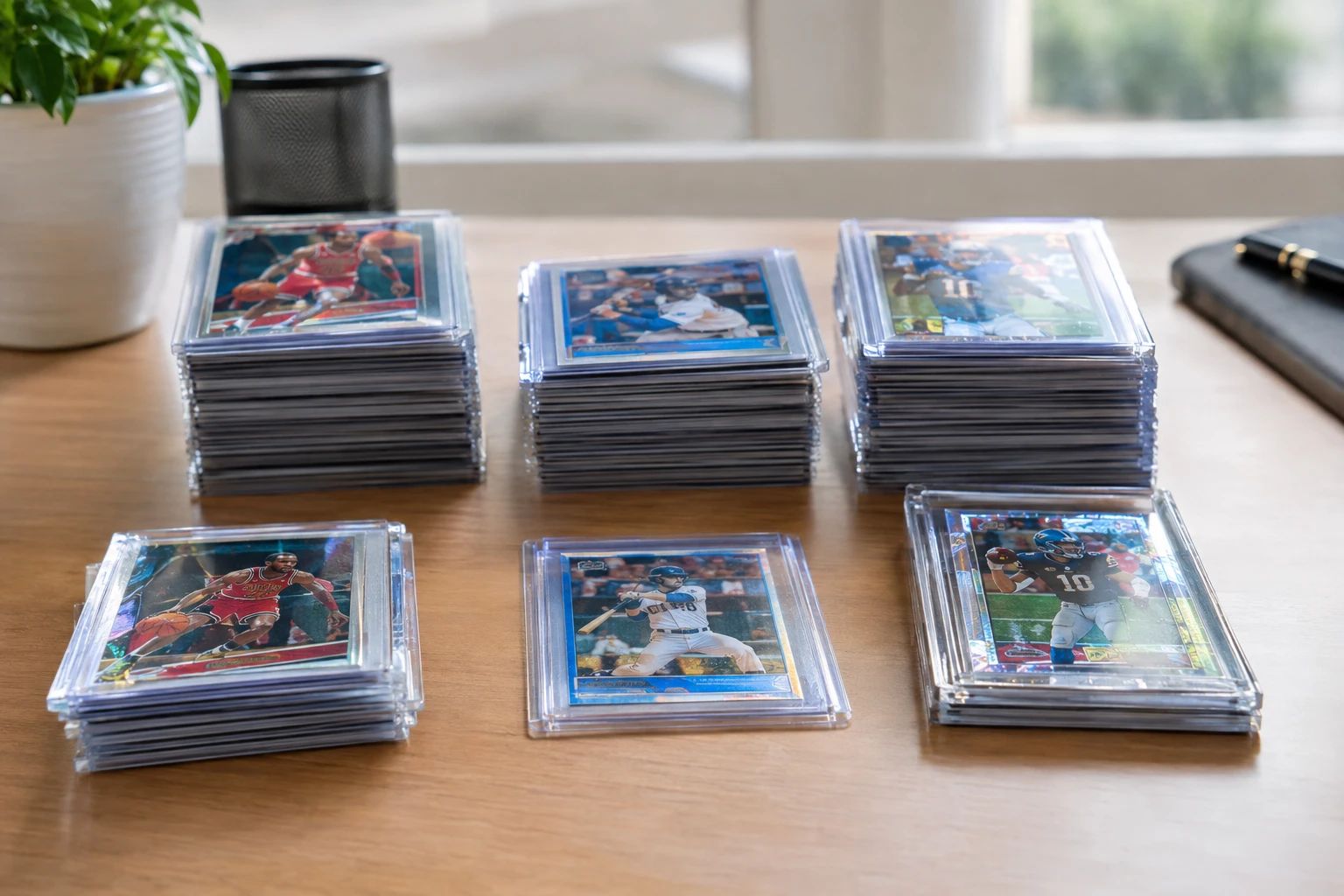
The Short Answer
- PSA's Value tier pause (June 2, 2026) pushed minimum grading cost to $79.99/card with a 40-50 business day turnaround.
- The backlog was 11.85 million cards as of August 11, 2026, with Value tiers projected to reopen in December 2026 to February 2027.
- CGC economy at $15/card is the cheapest grading option, with 60-100 day turnaround and strong TCG market acceptance.
- BGS base at $14.95/card offers subgrades and Black Label potential, but 75+ day turnaround.
- The three-path strategy: submit high-value cards to PSA Regular, route mid-value cards to CGC/BGS, hold low-value cards for Value tier reopening.
- Pre-grading with AI identifies which path each card should take, saving $1,776+ per 50-card batch in wasted submission fees.
The New Grading Landscape in August 2026
The card grading world looks fundamentally different in August 2026 than it did at the start of the year. PSA — the industry leader responsible for roughly 70% of all graded cards — paused its four cheapest service tiers on June 2, 2026, pushing the minimum submission cost from $24.99 to $79.99 per card. The backlog that triggered the pause has since fluctuated between 11 and 14 million cards and is not expected to clear to PSA's 5-million-card reopening target until late 2026 or early 2027.
Meanwhile, the industry is grading at record volume. July 2026 saw 3.61 million cards slabbed across all major graders — a 54% year-over-year increase. TCG cards now account for 71% of PSA's volume, with Pokémon alone representing 90% of all TCG submissions. Beckett and CGC have both more than doubled their year-over-year volume. The hobby has never been bigger, and the infrastructure to support it is straining under the demand.
For collectors, this creates both a challenge and an opportunity. The challenge is that cheap PSA grading is gone for now, and the alternatives are absorbing redirected volume, extending their own turnaround times. The opportunity is that pre-grading — evaluating your cards before submitting — has become the single most valuable skill in the hobby. With the right strategy, you can navigate the pause, route your cards to the right grader, and position yourself to profit when Value tiers return.
This guide is the complete playbook for grading during the PSA pause. It covers every alternative grader in detail, provides a card routing decision framework, explains how to build a pre-graded submission queue, and identifies specific market opportunities to exploit right now.
PSA Current Status: What's Open and What's Closed
As of August 2026, here is the complete PSA service tier landscape:
| Service Tier | Price | Max Value | Turnaround | Status |
|---|---|---|---|---|
| Value Bulk | $24.99 | $200 | — | PAUSED |
| Value | $32.99 | $500 | — | PAUSED |
| Value Plus | $49.99 | $1,000 | — | PAUSED |
| Value Max | $64.99 | $2,500 | — | PAUSED |
| Regular | $79.99 | $1,500 | 40-50 days | OPEN |
| Express | $149.99 | $3,000 | 15-20 days | OPEN |
| Super Express | $349.99 | $5,000 | 10-15 days | OPEN |
| Walk-Through | $599.99 | $10,000 | 7-10 days | OPEN |
The key takeaway: Regular at $79.99 is the new floor. That is a 220% increase from the old Value Bulk price of $24.99. The turnaround is actually reasonable at 40-50 business days — faster than the old Value tier's 95+ day estimate — but the cost increase means the economics of grading have fundamentally changed.
PSA has also opened a new grading facility in Plano, Texas, which became operational at the end of July 2026. This facility has not yet reached maximum capacity but should increase PSA's throughput over the coming months. The $200 million infrastructure investment continues, including the hiring of approximately 1,000 additional staff.
Active Collectors Club memberships (as of May 14, 2026) are being extended for free for the duration of the Value Bulk pause. If you had an active membership, check your PSA account to confirm the extension has been applied.
Alternative Graders: Complete Comparison
With PSA's Value tiers closed, collectors are routing submissions to CGC, BGS, SGC, and TAG. Each grader has distinct strengths, pricing, and market acceptance. Here is the complete comparison as of August 2026:
| Feature | PSA | CGC | BGS | SGC | TAG |
|---|---|---|---|---|---|
| Entry price | $79.99 | $15 | $14.95 | $15-25 | Varies |
| Turnaround | 40-50 days | 60-100 days | 75+ days | 40-50 days | Varies |
| Subgrades | No | Optional (+$10) | Yes (default) | No | Yes |
| Sports resale | Highest | Weaker | Strong | Strong (vintage) | Growing |
| TCG resale | Highest | Strong | Moderate | Weak | Growing |
| Membership required | $99/yr | No | No | No | No |
| YoY volume growth | +49% | +115% | +115% | -71% | +40% |
| Best for | $250+ cards, max resale | TCG, budget, bulk | Subgrades, Black Label | Vintage sports | Transparency, tech |
The structural story behind these numbers is significant. Collectors Holdings — PSA's parent company — announced in December 2025 that it is acquiring Beckett. That means PSA, SGC, and BGS would all sit under one corporate roof. This consolidation is the single biggest structural change in the grading industry, and it could affect pricing, slab design, and market positioning when the acquisition completes. For now, each brand operates independently, but collectors should watch this space.
CGC Deep Dive: When It Beats PSA
CGC (Certified Guaranty Company) has emerged as the primary beneficiary of PSA's Value tier pause. With economy pricing at $15-$18 per card and no membership requirement, CGC is the most accessible grading option in 2026. CGC's volume has surged 115% year over year, with sports card submissions up a staggering 311% — the largest movement in the industry.
CGC Strengths
- Lowest entry price: Economy at $15/card with a 25-card minimum. Standard service at $30-$35/card with no minimum.
- Strong TCG market acceptance: CGC is a legitimate first choice for Pokémon, Magic, Yu-Gi-Oh!, and other TCGs — not a compromise. CGC slabs are widely accepted on eBay and TCG-specific marketplaces.
- Optional subgrades: Available for an additional $10 per card. Useful for understanding why a card received its overall grade.
- No membership required: Unlike PSA, which charges $99/year for Collectors Club, CGC has no membership barrier.
- Growing population reports: CGC's pop reports are expanding rapidly, making it easier to research graded populations for specific cards.
CGC Weaknesses
- Weaker sports resale: CGC slabs trade at a discount to PSA in sports cards. For baseball, football, and basketball cards, expect 10-20% lower resale prices compared to equivalent PSA grades.
- Extended turnaround: Economy service has stretched to 60-100 business days as redirected volume from PSA has increased CGC's queue. Standard service is 35-55 days.
- Stricter centering: CGC tends to be marginally stricter on centering than PSA, which can affect grade outcomes on borderline cards.
When to Choose CGC Over PSA
Choose CGC when:
- The card is a TCG card (Pokémon, Magic, Yu-Gi-Oh!, One Piece, etc.) where CGC has strong market acceptance.
- The card is worth $50-$250 raw and you are not confident enough in a PSA 10 to justify the $79.99 fee.
- You are submitting bulk (25+ cards) and want the lowest per-card cost.
- You want subgrades without paying BGS prices.
- The card is not PSA-dependent for resale value (modern commons, non-key inserts).
BGS Deep Dive: Subgrades and the Black Label Chase
Beckett Grading Services (BGS) is the third-largest grader by volume and has seen 115% year-over-year growth, driven primarily by TCG submissions (up 159% YoY). BGS's unique selling point is its subgrade system: every card receives individual scores for centering, corners, edges, and surface, with the overall grade calculated from these four sub-scores.
BGS Strengths
- Subgrades by default: Every BGS slab shows all four sub-scores, giving buyers transparency into the card's condition profile. This is valuable for resale because buyers can see exactly where the card excels and where it has weaknesses.
- Black Label potential: A BGS 10 "Black Label" — all four subgrades at 10 — is the rarest and most valuable grade in the hobby. Black Label slabs command enormous premiums, sometimes 5-10x the value of a standard BGS 9.5.
- Competitive pricing: Base service at $14.95/card without subgrades, or $25-$35/card with subgrades included. Beckett is the cheapest per-card option if you do not need subgrades.
- Strong TCG growth: BGS TCG submissions are up 159% year over year, meaning growing market acceptance for BGS slabs in the TCG secondary market.
- Half-point grading: BGS uses half-point increments (8.5, 9, 9.5, 10), which provides more grade differentiation than PSA's whole-number scale.
BGS Weaknesses
- Longest turnaround: BGS economy is quoting 75+ business days — the longest wait in the industry. This ties up capital for over three months.
- Lower sports resale than PSA: BGS slabs trade below PSA in sports cards, though the subgrade transparency helps justify the price for condition-conscious buyers.
- Pending acquisition: Collectors Holdings (PSA's parent) is acquiring Beckett. Uncertainty about how the brands will be positioned long-term may affect future slab values.
When to Choose BGS
Choose BGS when:
- You want subgrades to understand the card's condition profile for resale marketing.
- You are chasing a Black Label on a card you believe is pristine across all four criteria.
- The card is a modern TCG card where BGS has growing acceptance.
- You can tolerate the 75+ day turnaround and want the lowest per-card cost.
- You are submitting cards where the half-point grade differentiation (e.g., BGS 9.5 vs. BGS 9) creates meaningful value differences.
SGC Deep Dive: Vintage Cards and Fast Turnaround
SGC (Sportscard Guaranty Corporation) occupies a unique niche in the grading market. While its overall volume has declined 71% year over year — making it the weakest performer by growth — SGC remains the preferred grader for vintage sports cards, where its black-tuxedo slab has genuine collector preference. SGC is now under the same ownership as PSA (Collectors Holdings), which has raised questions about long-term brand independence.
SGC Strengths
- Vintage preference: SGC slabs are the preferred holder for pre-1980 sports cards. Vintage collectors specifically seek out SGC slabs, and in some categories, SGC 10s command premiums over PSA 10s.
- Fast turnaround: SGC's standard service is quoting 40-50 business days — comparable to PSA Regular and much faster than CGC economy or BGS economy.
- Competitive pricing: Entry at $15-$25 per card, depending on service level and turnaround needs.
- Half-point grading: Like BGS, SGC uses half-point increments, providing more grade differentiation.
- Iconic slab design: The black-tuxedo label is instantly recognizable and carries brand prestige in vintage circles.
SGC Weaknesses
- Weak modern card resale: SGC slabs trade at significant discounts to PSA for modern cards. For anything post-1980, SGC is generally not the optimal choice for resale value.
- Declining volume: SGC's 71% year-over-year volume decline raises questions about long-term viability and market confidence.
- Limited TCG presence: SGC is not a meaningful player in TCG grading. If you are grading Pokémon or Magic, SGC is not a consideration.
- Ownership uncertainty: Being under the same ownership as PSA creates questions about whether SGC will continue as an independent brand or eventually be absorbed.
When to Choose SGC
Choose SGC when:
- The card is a vintage sports card (pre-1980) where SGC has collector preference.
- You want fast turnaround at a lower price than PSA Regular.
- The card is a tobacco card, pre-war card, or mid-century card where authentication matters more than the grade.
- You are building a vintage collection and want the iconic SGC slab aesthetic.
TAG Deep Dive: AI Grading with Full Transparency
TAG (Trading Card Authentication & Grading) is the newest entrant in the grading market and has been growing rapidly, with volume up approximately 40% year over year. TAG uses computer-vision grading with full subgrade transparency, appealing to collectors who want objective, reproducible grades rather than the subjective assessments of human graders.
TAG Strengths
- AI-powered grading: TAG uses computer vision to evaluate cards, eliminating human subjectivity. The same card should receive the same grade every time — a consistency that PSA, with its ~70% resubmission consistency rate, cannot match.
- Full subgrade transparency: Every TAG slab shows detailed sub-scores for centering, corners, edges, and surface, plus a visual condition map.
- Modern slab design: TAG slabs have a clean, modern aesthetic that appeals to newer collectors.
- Growing market acceptance: TAG volume is up 40% YoY, and the gap with established graders is narrowing, though it still lags significantly.
TAG Weaknesses
- Tier availability: TAG's budget tiers sell out regularly, making it difficult to access lower-priced service levels.
- Resale still lags: TAG slabs trade below PSA, BGS, and CGC in the secondary market. The brand has not yet built the trust and recognition of the established graders.
- Limited population data: TAG's pop reports are small compared to PSA's, making it harder to research graded populations.
- Uncertain long-term position: As a newer entrant, TAG's long-term market position is less certain than the established graders.
When to Choose TAG
Choose TAG when:
- You value grading consistency and objectivity over market acceptance.
- You want subgrade transparency without paying BGS prices.
- You are grading for personal collection rather than immediate resale.
- You can access a TAG tier that is not sold out.
The Card Routing Decision Framework
With five grading companies offering different pricing, turnaround times, and resale premiums, deciding where to send each card can feel overwhelming. Here is a practical decision framework that simplifies the routing process based on card type, value, and your goals.
Step 1: Determine Card Value and Type
First, identify the card's raw value and category. Look up recent sold eBay comps for the raw card. Is it a sports card, TCG card, or vintage card? The card type determines which graders have the best market acceptance.
Step 2: Pre-Grade to Estimate Grade Probability
Run the card through AI pre-grading to get a predicted grade and confidence level. This tells you whether the card is a PSA 10 candidate, a PSA 9 borderline, or a PSA 8 or below. The predicted grade determines whether the submission is profitable at each grader's price point.
Step 3: Apply the Routing Matrix
| Card Profile | Best Grader | Cost | Rationale |
|---|---|---|---|
| Sports, $250+ raw, PSA 10 candidate | PSA Regular | $79.99 | PSA premium justifies the cost |
| Sports, $50-$250, uncertain grade | CGC Economy | $15 | Lower risk if grade misses |
| TCG, any value, PSA 10 candidate | PSA or CGC | $15-80 | PSA for max resale, CGC for budget |
| TCG, $50-$250, uncertain grade | CGC Economy | $15 | CGC strong in TCG, low cost |
| Vintage sports, any value | SGC or PSA | $15-80 | SGC preferred for pre-1980 |
| Pristine card, Black Label chase | BGS | $25-35 | Only BGS offers Black Label |
| Under $50 raw, any type | Hold or sell raw | $0 | No grader makes economic sense |
| Bulk 25+ cards, mixed types | CGC Economy | $15/card | Lowest per-card cost for bulk |
This matrix is a starting point. Always run the expected value calculation for your specific card before submitting. The matrix tells you which grader to consider; the math tells you whether to submit at all.
Building a Pre-Graded Submission Queue
One of the most valuable strategies during the PSA pause is building a pre-graded submission queue — a organized list of your cards, each with an AI-predicted grade, a target grader, and a target submission tier. When Value tiers reopen, you will have a prioritized list of cards ready to submit immediately, taking advantage of the lower pricing before the inevitable rush.
Here is how to build your queue:
Phase 1: Inventory and Pre-Grade (Week 1-2)
Go through your collection and identify every card you might want to grade. Run each card through AI pre-grading at $0.19 per card (or use your 80 free credits on PreGradeCards for your first 4 complete grades). Record the predicted grade, sub-scores, and confidence level for each card.
Sort your cards into three categories:
- Submit Now: Cards with high PSA 10 confidence and $250+ value. Route to PSA Regular or an alternative grader based on the routing matrix.
- Hold for Value Tier: Cards with $50-$250 value where the $79.99 PSA fee is too expensive but $25-$33 Value pricing would be profitable. These cards go in your submission queue.
- Sell Raw: Cards with predicted grades below PSA 8 or raw values under $50. These should be sold as-is.
Phase 2: Market Research (Week 2-3)
For each card in your "Hold for Value Tier" queue, research the current market. Look up sold eBay comps for PSA 10, PSA 9, and PSA 8. Check the PSA population report. Calculate the expected value at Value tier pricing ($25-$33/card) and at Regular pricing ($79.99/card). Confirm that the card is only profitable at Value pricing.
Phase 3: Prioritize and Organize (Week 3-4)
Rank your queued cards by priority. The highest priority cards are those with:
- The largest gap between Value-tier EV and Regular-tier EV (i.e., cards that are clearly profitable at $25 but clearly unprofitable at $80)
- Low PSA population counts (scarcity means higher premiums)
- Time-sensitive market catalysts (a player's rookie card during a breakout season, a TCG card during a set's initial hype window)
- Highest AI-predicted PSA 10 confidence
Store your queued cards safely in Card Saver 1 holders, penny sleeves, and top-loaders. Keep them in a temperature-controlled environment away from direct sunlight. You want these cards to be in the exact same condition when Value tiers reopen as they are today.
Phase 4: Submit When Value Tiers Reopen
When PSA announces Value tier reopening, submit your queued cards immediately. There will likely be a rush of submissions from collectors who have been holding cards, similar to the surge that pushed the backlog from 10 million to 14 million before the June 2 pause. Being early in the queue means faster turnaround and earlier access to resale markets.
Use the pre-grading data you collected to submit only your best cards. Even at Value pricing, you do not want to submit cards that will grade PSA 7 or 8. The pre-grading you did months ago will save you from wasting even $25 on a card that has no chance of a profitable grade.
Market Opportunities to Exploit Right Now
August 2026 presents several specific market opportunities where pre-grading and strategic submission can generate outsized returns. Here are the most promising categories:
1. Cooper Flagg Rookie Cards
Cooper Flagg is the most anticipated NBA rookie since LeBron James. His rookie cards from 2025-26 Topps Chrome Update Basketball — which features Debut Patch Autograph redemptions — are seeing explosive demand. The first PSA 10 copies to hit the market will set price anchors. Pre-grade your Flagg rookies now, submit the cleanest copies to PSA Regular immediately, and sell into the initial hype window before the market floods with graded copies.
2. Pete Crow-Armstrong Breakout Season
Crow-Armstrong is putting up MVP-caliber numbers (7.5 bWAR, 26 HR, 30 SB, .286 AVG) with the Cubs in contention. His 2024 Topps Chrome refractors and image variations are seeing increased demand. Pre-grade your cleanest copies and submit to PSA Regular if the value exceeds $250, or to CGC economy for lower-value parallels. Fast-turn auctions will outperform fixed-price listings as hype builds.
3. Pokémon 30th Anniversary Cards
The Pokémon TCG's 30th anniversary is driving unprecedented demand. Mega Evolution—Pitch Black (released July 17) features Mega Darkrai ex and Mega Zeraora ex. The 30th Celebration expansion launches September 16 with Futuristic rares and 30 Pikachu inserts. eBay users search for Pokémon items 360+ times per minute. Pre-grade your pulls from these sets and submit the PSA 10 candidates quickly. The 30th anniversary hype window will not last forever, and the first graded copies command premium prices.
4. LeBron James 76ers Cards
LeBron's signing with the Philadelphia 76ers on July 27 sent his 2003 Topps raw rookie up 11.4% overnight. His pack-pulled 76ers cards will start appearing in 2026-27 products. Pre-grade any LeBron rookies or key cards you own and consider submitting to PSA Regular — LeBron's PSA 10 premium is consistently the highest in basketball.
5. One Piece OP-17 Treasure Rares
One Piece TCG's OP-17 set had a global simultaneous release on August 26. Treasure Rares and alternate art leaders from this set will see strong demand. CGC is a legitimate first choice for One Piece cards — not a compromise. Pre-grade your pulls and submit the cleanest copies to CGC economy for the best ROI.
6. Adley Rutschman Post-Trade Cards
Rutschman's trade to the Red Sox created a 12% overnight bump in his 2023 Topps Chrome rookie auto. If you held Rutschman cards through the trade, pre-grade them now. The market has not given up on him, and a change of scenery could reignite his career. Submit PSA 10 candidates to PSA Regular.
Preparing for Value Tier Return
PSA will eventually reopen its Value tiers. The company has tied that milestone to the backlog falling to 5 million cards, and as of August 11, 2026, the tracker showed 11.85 million — a gap of 6.85 million. At the current rate of 500,000 to 1 million cards cleared per month, the realistic reopening window is December 2026 to February 2027.
Several factors could accelerate or delay this timeline:
Accelerating Factors
- Plano, Texas facility ramp-up: PSA's fifth grading facility came online at the end of July 2026 and has not yet reached maximum capacity. As it scales, throughput should increase significantly.
- $200 million infrastructure investment: New equipment, automation, and hiring should continue to increase PSA's daily grading capacity beyond the current ~90,000 cards per day.
- Seasonal demand patterns: Card grading volume typically dips in September and October after the summer convention season, which could help the backlog fall faster.
Delaying Factors
- Holiday submission surge: November and December typically see increased grading submissions as collectors process cards from holiday product releases. This could slow the backlog reduction.
- New product releases: 2026 Bowman Chrome, 2026-27 NBA products, and Pokémon 30th Celebration (September 16) will generate new submission volume.
- Price and tier changes: PSA may change pricing, minimums, or tier structure when Value tiers return. Prior to the pause, Value Bulk had already increased from $19.99 to $24.99 and the minimum from 20 to 50 cards. Further changes are possible.
What to Expect When Value Tiers Return
Based on PSA's pre-pause pricing and industry analysis, here is what Value tiers might look like when they return:
| Tier | Pre-Pause Price | Possible Return Price | Notes |
|---|---|---|---|
| Value Bulk | $24.99 | $29.99-$34.99? | 50-card min, Collectors Club only |
| Value | $32.99 | $34.99-$39.99? | May have higher max value |
| Value Plus | $49.99 | $49.99-$54.99? | May reopen first (less volume) |
| Value Max | $64.99 | $64.99-$69.99? | May reopen first (less volume) |
These are speculative estimates based on pre-pause pricing trends and industry analysis. PSA has not announced return pricing. But the trend before the pause was clear: prices were rising and minimums were increasing. Collectors should expect Value tiers to return at slightly higher prices than they were before the pause.
The Strategic Position
The collectors who will profit most from Value tier reopening are the ones who prepare now. By building a pre-graded submission queue, you will have a prioritized list of cards ready to submit the moment Value tiers open. You will know which cards are PSA 10 candidates, which are PSA 9 borderline, and which should not be submitted at any price. You will have done the market research, calculated the expected values, and organized your cards for fast submission.
The collectors who do not prepare will be the ones submitting blindly when Value tiers return, hoping for the best, and wasting money on the 33% of cards that come back PSA 7 or below. Pre-grading is not just a pause strategy. It is the permanent discipline of a collector who treats grading as an investment, not a gamble.
The Bottom Line
The PSA pause is not a crisis — it is an opportunity. It is an opportunity to build better grading habits, to learn which of your cards are actually worth submitting, and to position yourself ahead of the crowd when cheap grading returns. Use AI pre-grading to evaluate your collection. Route high-value cards to PSA Regular, mid-value cards to CGC or BGS, and hold low-value cards for Value tier reopening. Build a pre-graded submission queue. And when Value tiers return, you will be ready to submit smarter, faster, and more profitably than ever before.
Frequently Asked Questions
What is the cheapest way to grade cards during the PSA Value tier pause?
When will PSA reopen Value grading tiers?
Should I submit cards to PSA Regular at $79.99 or wait for Value tiers?
Is CGC a good alternative to PSA for sports cards?
What is a pre-graded submission queue and why should I build one?
Will PSA raise Value tier prices when they reopen?
What cards should I definitely grade right now vs hold?
Sources & Further Reading
- PSA — Value Tier Submission Pause (Official)
- Sports Illustrated — July Card Grading Hits Another Record
- The Card Shop Finder — Card Grading in August 2026 Compared
- The Card Shop Finder — PSA Backlog Update August 2026
- CardGrader — PSA Grading Backlog 2026: Current Size, Costs & Worth It?
- Baseball America — PSA Backlog Still At 11 Million Cards
- Saavage — PSA Grading Pause Follow-Up: Collector Strategy
- PreGradeCards — AI Grading Accuracy Benchmark Study
Marcus Chen has evaluated over 50,000 sports cards and TCG cards across PSA, BGS, SGC, and CGC standards. Before joining PreGradeCards, he worked as a submission specialist for a major grading company and trained collectors and dealers on condition assessment.
Create a free account and get 1 free credit — enough for 1 complete AI grading with market pricing. No credit card required.
Sign Up Free →