The Short Answer
- PSA has real Canadian operations — PSA Canada accepts submissions at 5560 Explorer Drive, Mississauga ON, with domestic FedEx shipping and in-person pickup. No cross-border customs declaration required.
- EB Games (GameStop Canada) offers PSA drop-off at participating stores — the same retail-submission model as US GameStop, no PSA membership needed.
- Canadian grading companies fill the value tier — KSA Certification is the established domestic option for hockey and mid-value cards where PSA fees exceed the slab premium.
- CGC accepts Canadian submissions by mail — and with PSA's Value tiers paused, CGC is the fully-open major option for cross-border subs willing to handle customs paperwork.
- The hockey market is Canada's gravitational centre — Young Guns, OPC, and Tim Hortons issues have Canadian-specific grading quirks (OPC's rough-cut edges grade looser at PSA when disclosed).
- Pre-grade before choosing a channel. With domestic options the shipping excuse is gone — the remaining risk is paying $25–80 CAD to learn your card is a 7.
PSA Canada: The Main Option for Most Collectors
PSA operates a genuine Canadian arm — not a drop box, actual operations at 5560 Explorer Drive, Unit 101, Mississauga, Ontario. Canadian submitters get a dedicated psacanada.ca portal, the same online submission flow as the US site, domestic FedEx options (Int'l Priority, Economy, or Ground to the Mississauga facility), and in-person pickup if you're in the GTA.
What this changes versus the old ship-to-California workflow:
- No customs declarations on outbound — domestic shipment to Mississauga. The cards still travel to PSA's US grading operations internally, but the border friction is PSA's problem, not yours.
- Domestic S&H rates apply — a published CAD rate card scaled by item count and declared value (1–4 items under $3,000 declared runs about $19.99 CAD return shipping, rising with count and value).
- No surprise duty/brokerage on return — the historical tax on Canadian submitters was getting dinged at the border on graded returns; routing through PSA Canada sidesteps it.
The caveats: PSA's Canadian operation is a submission and logistics hub — grading still happens at PSA's main facilities, so turnaround times track the global backlog (Standard's 90–100 business days, Priority 70–80, with the Value family paused). And pricing is set by PSA's schedule — the entry point for Canadians is the same Standard-tier reality as Americans, just in CAD.
EB Games / GameStop Canada: The Retail Drop-Off
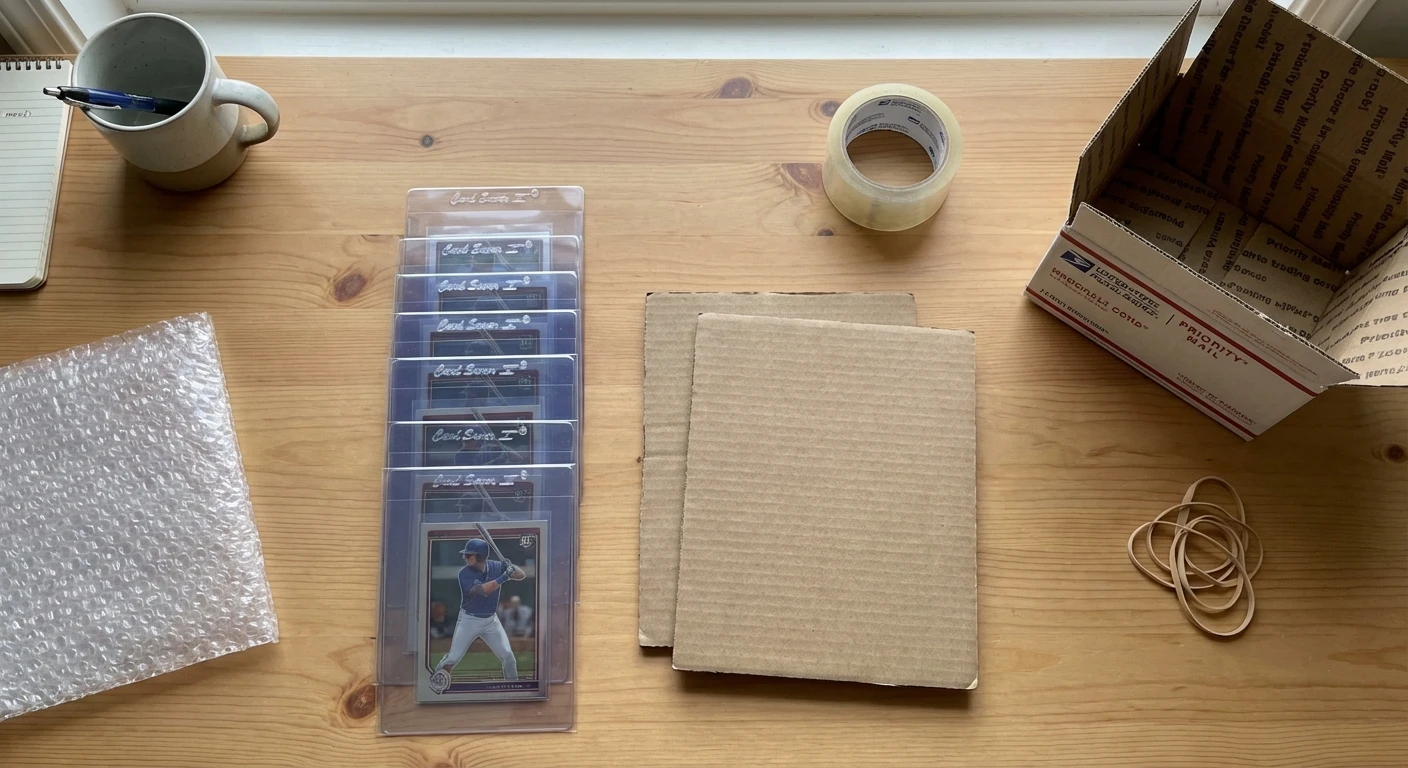
EB Games — GameStop's Canadian banner — participates in the same PSA retail drop-off program: bring sleeved, Card-Saver'd cards to a participating store, they handle packaging and consolidated shipment, you track through your store account and pick up in-store when the slabs return.
The trade-offs mirror the US version: you pay a modest per-card premium over PSA's membership-tier rates in exchange for zero membership, zero minimums, zero customs forms, and a physical drop-off point. For a Canadian collector holding five Young Guns or a stack of Pokémon hits, it's the lowest-friction path into a PSA slab that exists in the country.
The same cautions apply as at any retail channel: cards have declared-value caps (verify at the counter — the program's ceiling has moved around), you won't get a carrier tracking number during consolidation, and upcharges for higher-value outcomes are settled at pickup. Check store participation before driving — not every EB Games location runs the program, and staffing familiarity with it varies wildly.
Canadian Grading Companies: The Domestic Value Tier
Canada has its own grading ecosystem that exists precisely because PSA's fees don't pencil on mid-value cardboard:
- KSA Certification — the established Canadian grader, Ontario-based, long track record especially in hockey. KSA slabs carry modest resale premium versus PSA but grade on a defensible scale, turnaround is fast, and shipping never leaves Canada. The right call for cards worth $30–200 where a PSA fee would eat the whole premium, for personal-collection grading, and for cards destined for Canadian shows where KSA is a familiar holder.
- Local card shops as intermediaries — many Canadian LCSs run group submissions to PSA/BGS: you drop off at the shop, they batch everyone's cards into a single PSA Canada submission and handle the paperwork. Fees typically land between retail drop-off and a fully-loaded direct submission. If your local shop offers this, it's often the best cost-per-card deal in the country for 3–10 card batches.
The honest limitation: domestic graders' slabs don't command PSA/BGS resale multiples. If the endgame is resale at peak value on an international platform, a Canadian-holder slab mostly serves authentication and protection — not premium. Match the holder to the card's exit market.
CGC and Mailing to the US: The Cross-Border Path
CGC accepts direct Canadian submissions by mail, and with PSA's Value tiers paused through the backlog, CGC has become the de-facto fully-open major grader — Bulk $17 USD, Economy $20 USD, Standard $55 USD on their published schedule. The catch is customs: you're shipping collectibles across an international border, which means a properly filled customs declaration (declare them as goods for grading/return, use the right tariff descriptions), plus return shipping that can attract brokerage attention.
When mailing south is actually the right call:
- CGC-holder market fit — the card's buyers accept CGC slabs (TCG, modern sports) and the fee structure undercuts PSA's open tiers meaningfully.
- You're crossing intentionally — some collectors grade at CGC now with plans to crossover to PSA later when the paused tiers reopen; valid strategy on Pristine 10 candidates, but it pays the fee twice.
- US-based group submissions — Canadian submitters can piggyback on American group subs through hobby communities, though shipping to the US first adds the same customs friction.
Declared value discipline matters: under-declaring to dodge duties is a gamble that voids insurance exactly when you need it. Declare honestly at the tier's insured maximum.
The Hockey-Specific Notes Canadians Need
Canada's card culture is hockey-first, and hockey has grading quirks worth knowing before you pick a channel:
- OPC vs Topps vintage: O-Pee-Chee's Canadian print runs are distinct issues — rough-cut edges on vintage OPC are factory characteristics, not damage. PSA graders know the distinction but modern submitters sometimes don't; a "rough" OPC edge that is factory-cut grades better than the same look on a Topps counterpart.
- Young Guns: the 1990-present Upper Deck rookie staple. Modern YGs grade on centering and surface like any chrome-ish stock; the early-'90s French/English variants are separate catalog entries — label your submission correctly or the cert will say the wrong card.
- Tim Hortons Collector's Series: Canadian-exclusive issues with real graded premiums — redemption and die-cut cards in particular carry condition sensitivity from the pack.
- McDavid/Crosby/McKenna economics: Canadian star rookies carry PSA 10 premiums that justify grading — but only on verified-clean copies. The 2026 rookie class (McKenna-era) has already produced the usual flood of off-center retail pulls.
The practical upshot for Canadian submitters: hockey is the one sport where your domestic grader choices genuinely compete with PSA on buyer acceptance. A Gretzky OPC or a clean Young Guns guns straight to PSA Canada; a $40 Parkhurst mid-tier or a personal-collection binder card belongs at KSA. Splitting submissions by that line — premium cardboard to Mississauga, everything else domestic — is the single highest-leverage decision a Canadian submitter makes, and it's cheaper than learning it across a stack of fees.
The All-In Cost Comparison (CAD Estimates)
| Channel | Per-card cost | Shipping | Customs | Best for |
|---|---|---|---|---|
| PSA Canada (Mississauga) | PSA tier pricing (Standard ~$60+ USD-equiv) | Domestic ~$20+ CAD | None for you | PSA-holder value, any size submission |
| EB Games drop-off | Retail per-card fee + flat ship | Included | None | 1–15 cards, no membership |
| KSA / domestic | ~$15–30 CAD | Domestic | None | Mid-value, PC grading, fast turnaround |
| CGC/US direct | $17–55 USD + upcharges | Int'l both ways + brokerage risk | Yes — declare properly | TCG/modern where CGC is accepted |
| LCS group sub | Shop-negotiated, often best/card | Usually included | Shop handles it | 3–10 card batches, hands-off |
Rates as of September 2026 — PSA tier availability changes with the backlog; verify on psacanada.ca before submitting.
The Currency Reality Canadians Actually Face
PSA's fee schedule is priced in USD and converted at the point of sale — which means every Canadian submission carries an invisible exchange-rate layer on top of the printed fee. When the loonie sits around $0.72–0.74, a "$25 Value-tier card" is really a $34+ card before shipping, and a $60 Standard card lands closer to $82 all-in. The math changes decisions:
- The value floor rises. The rough rule that a card needs ~$80+ of graded-raw premium to justify fees becomes $110+ CAD of premium at current FX — and that premium has to be measured in the currency you'll actually sell in.
- Where you sell matters. A PSA-slabbed card sold on eBay to a US buyer earns USD and the FX wash evens out. The same card sold on a Canadian marketplace or at a local show transacts in CAD — you've paid USD costs to earn CAD revenue, and the margin math quietly gets worse on every marginal submission.
- Domestic graders hedge the FX. KSA and shop group-subs priced in CAD don't carry the currency drag, which widens the band of cards where a domestic slab beats a cross-border PSA fee on pure economics.
None of this argues against grading — it argues for grading deliberately. The collectors who lose money are the ones submitting whatever looked sharp in-hand; the ones who profit treat FX, shipping, and the 9-to-10 cliff as part of the fee, not an afterthought.
Pre-Grade First — Especially in Canada
Canadians pay an extra invisible tax on bad submissions: you can't just walk a card back to a counter and shrug. Every channel — PSA Canada, EB Games, KSA, CGC — still charges the full fee to tell you your card is an 8. And for cross-border submissions, a wasted grade also burned weeks of transit.
The filter is the same as anywhere: know the grade before you pay for it. Run candidates through an AI pre-grade — the scan flags the centering drift and edge whitening that kill modern hockey stock before you commit. The submission planner then matches each surviving card to the channel whose fee actually fits its value: PSA Canada for the keepers, KSA for the mid-tier, raw or sell-as-is for everything else.
Grading in Canada is finally logistically easy. The economics haven't changed — the card still has to be worth the fee.
Frequently Asked Questions
Can Canadians submit cards to PSA?
Yes — PSA Canada operates from Mississauga, Ontario (5560 Explorer Drive). Submit via psacanada.ca with domestic FedEx shipping or in-person drop-off/pickup, avoiding cross-border customs entirely on your end.
Does EB Games grade cards in Canada?
Participating EB Games stores accept PSA drop-off submissions — the same program as US GameStop: bring cards in penny sleeves and Card Savers, pay per card plus flat shipping, no PSA membership needed, pick up slabbed cards in-store.
Are there Canadian card grading companies?
Yes — KSA Certification is the established Canadian grader, especially known for hockey. Domestic graders are the right fit for mid-value cards, personal collections, and fast turnaround, though their slabs don't command PSA/BGS resale premiums.
How much does PSA grading cost in Canada?
PSA Canada charges PSA's tier pricing (in USD-equivalent/CAD as listed on psacanada.ca) — the entry open tier is around Standard at ~$60+ per card plus domestic shipping. Value-family tiers requiring membership remain paused as of late 2026.
Is it cheaper to grade cards in Canada or the US?
Per-card grading fees are comparable — the Canadian advantage is logistics: no customs forms, no brokerage on return, domestic shipping rates, and pickup options. CGC by mail can undercut PSA's open tiers on price but adds customs friction both directions.
Should I grade my Young Guns card?
Only verified-clean copies of cards with real PSA 10 premiums — McDavid, Crosby, McKenna-class rookies. Modern Young Guns carry a brutal 9-to-10 price cliff; a PSA 9 of most YGs sells near raw price. Pre-screen centering (UD cuts are notoriously off) before paying any fee.
Sources & Further Reading
- PSA Canada — official site
- PSA Canada Shipping & Handling
- PSA Canada FAQ
- PSA Service Levels & Pricing
- CGC Services & Fees
Sarah Williams leads PreGradeCards educational content and collector onboarding. She has been a full-time collector and dealer for 12 years, specializing in modern sports cards and Pokémon TCG, and has written grading guides read by over 300,000 collectors.
With submission floors rising, pre-screening is no longer optional. Use our AI Pre-Grade Calculator to score a card's PSA 10 odds before you pay, and the Submission Planner to pick the right tier.