The Short Answer
- PSA qualifiers flag one specific defect on a card that would otherwise grade higher
- OC = Off Center, ST = Staining, MC = Miscut, PD = Print Defect, MK = Marks, OF = Out of Focus
- A qualified grade typically sells at a 30-60% discount versus the same unqualified grade
- Submitters can request 'no qualifiers' — cards then just get the lower unqualified grade
- On vintage high-value cards, a qualified grade is sometimes preferable to a much lower raw grade
- Half-point grades (8.5) exist at PSA but are rare compared to BGS's half-point system
The Label Suffix That Changes Everything
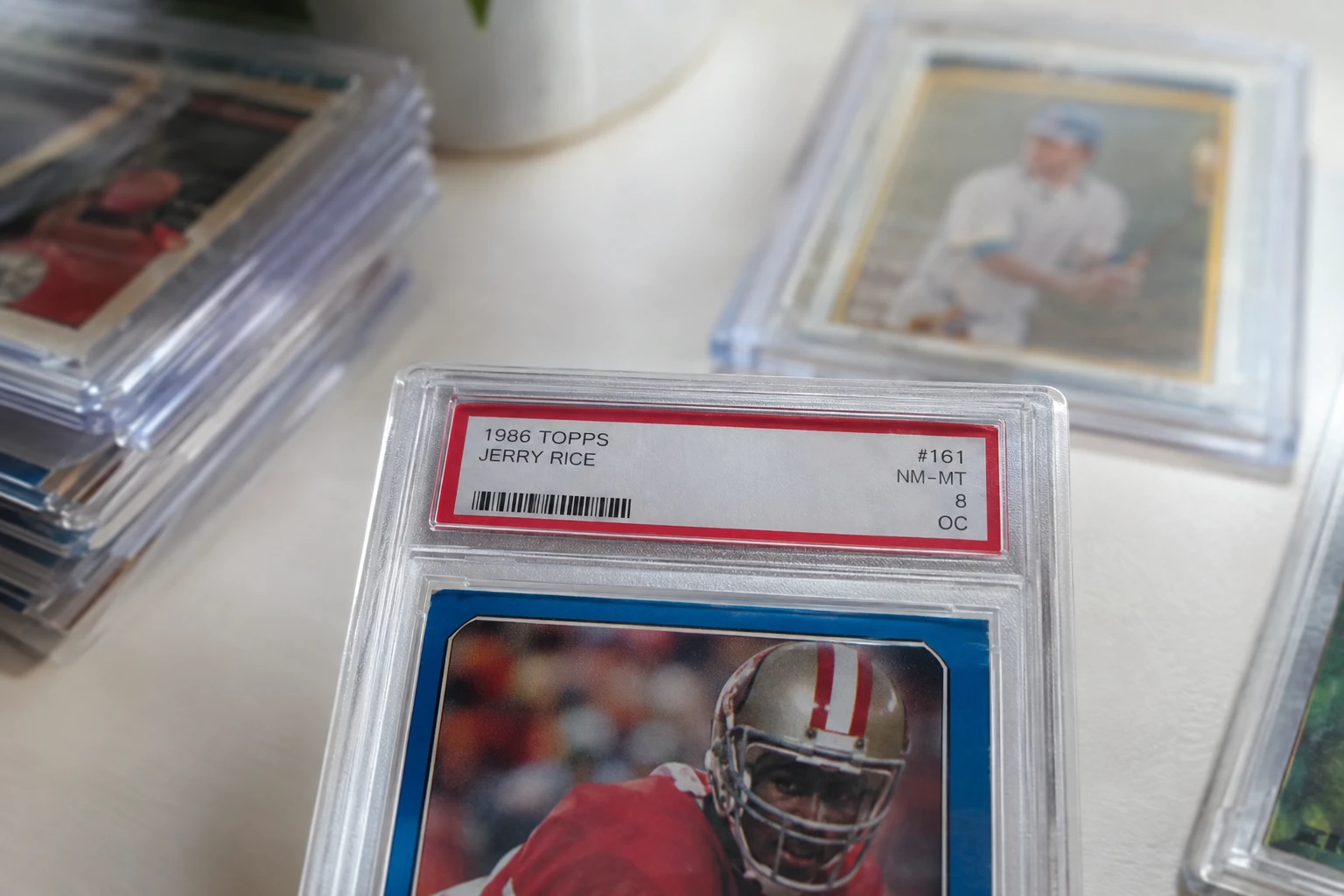
A PSA qualifier is a parenthetical notation on the label — like PSA 8 (OC) — indicating the card exhibits one specific defect that prevented the full grade. The card is otherwise the labeled grade; the qualifier names the exception.
Qualifiers exist because collectors wanted information, not just a number: a beautifully crisp vintage card that's badly off-center is different from a generally worn card, and the market prices them differently. This guide decodes every qualifier code, what each does to resale value, and the submitter's choice between accepting a qualified grade or taking a lower unqualified one.
What Are PSA Qualifiers?
During grading, a card is assessed across centering, corners, edges, and surface. If it fails only one criterion — for example, centering way outside tolerance while everything else is gem — PSA can grade it at the higher level but tag the defect with a qualifier. The card keeps its otherwise-earned grade with the flaw named on the label.
Two structural facts:
- Qualifiers are optional-ish: PSA's default behavior for qualifying defects is historically to assign them when the submitter's form allows; submitters can request qualified grades be suppressed, in which case the card simply receives the lower unqualified grade the defect warrants.
- One defect only: a card failing multiple criteria doesn't get a stacked qualifier — it just gets the lower grade it earned.
Every PSA Qualifier Code
| Code | Meaning | What It Flags |
|---|---|---|
| OC | Off Center | Centering outside the tolerance for the labeled grade |
| ST | Staining | Stains, spots, or discoloration (common on vintage) |
| PD | Print Defect | Printing flaws — ink spots, fisheyes, registration issues |
| MC | Miscut | Factory miscut — card off the intended cut line |
| MK | Marks | Writing, stamps, or marks on the card |
| OF | Out of Focus | Printing focus/registration blur |
| AQ | Authenticity Questionable (variant usage) | Questions about originality — rare |
Also seen on labels: "Authentic" (card is real but not gradable — trimmed, altered, or damaged), and Authentic Altered for cards with detected restoration or trimming. Those aren't qualifiers — they're separate authentication outcomes.
What Qualifiers Do to Value
Market pricing on qualified cards follows a fairly consistent discount structure:
| Qualifier | Typical Discount vs Same Unqualified Grade | Why |
|---|---|---|
| OC | 30-50% | Visible but doesn't damage card integrity |
| PD | 30-50% | Factory flaw; collector tolerance varies |
| MC | 30-60% (can add premium on extreme miscuts) | Oddball appeal exists for dramatic miscuts |
| ST | 40-60% | Visible damage; least forgiving |
| MK | 40-60% | Writing on cards is heavily penalized |
| OF | 30-50% | Print-quality issue |
Key dynamic: a PSA 8 (OC) generally sells for less than an unqualified PSA 8 — but often MORE than the PSA 5-6 the same card would have earned unqualified, because centering was the only flaw. The qualifier preserves value on otherwise-strong cards.
Vintage exception: on truly scarce vintage (pre-war stars, low-pop rookies), collectors prize eye appeal and accept OC discounts — a PSA 7 (OC) '52 Mantle with great eye appeal outsells a dull PSA 7 all day.
Qualified Higher Grade vs Unqualified Lower Grade
The submitter's fork: take the qualified 8, or decline qualifiers and take the unqualified 5-6?
Take the qualifier when:
- The card is vintage or high-value — a crisp OC or PD card has real eye appeal the low grade doesn't convey.
- The defect is OC or MC — the most tolerated qualifiers.
- Your buyer is a collector who reads labels, not a flipper who needs clean numbers.
Request no qualifiers when:
- The defect is ST or MK — stigma is heavy and market liquidity thin.
- The card is modern — modern buyers overwhelmingly want clean numeric grades; a qualified modern card is often harder to move than the lower grade.
- The card would drop only one grade point without the qualifier.
Half-Point Grades at PSA
PSA does issue half-point grades (e.g., 8.5), but sparingly — far less often than BGS, which built its brand on quarter-point subgrades. In PSA's system, half-points typically appear when a card falls between grade standards but doesn't merit a qualifier, or on regrade reviews.
Practical notes:
- PSA half-points are uncommon — don't expect them as a routine outcome.
- If granularity is what you want, BGS's subgrade system (corner/edge/surface/centering scores) or TAG's 3-digit Score provide it structurally — see our five-company comparison.
Submitter Strategy Around Qualifiers
- Know the failure before submitting. Centering-out cards are the classic OC candidate — measure first with a centering checker and decide whether the qualified outcome is worth the fee at all.
- Set your qualifier preference deliberately on the submission form — don't default it.
- Modern cards: lean no-qualifiers; the market wants clean labels.
- Vintage cards: lean accept-qualifiers on OC/PD — qualified vintage preserves eye appeal premium.
- Resale channel matters: qualified cards sell slower on eBay but can do fine with specialist auction houses that write descriptions.
Frequently Asked Questions
What does OC mean on a PSA label?
What are all the PSA qualifiers?
Is a PSA 8 (OC) worth less than a PSA 8?
Can you request no qualifiers on a PSA submission?
Does PSA give half grades?
What does PSA Authentic mean?
Sources & Further Reading
The PreGradeCards Research Team combines machine-learning engineers, grading analysts, and collector-education specialists to produce accurate, data-driven guides on AI card grading, professional grading standards, and collecting strategy.
With submission floors rising, pre-screening is no longer optional. Use our AI Pre-Grade Calculator to score a card's PSA 10 odds before you pay, and the Submission Planner to pick the right tier.