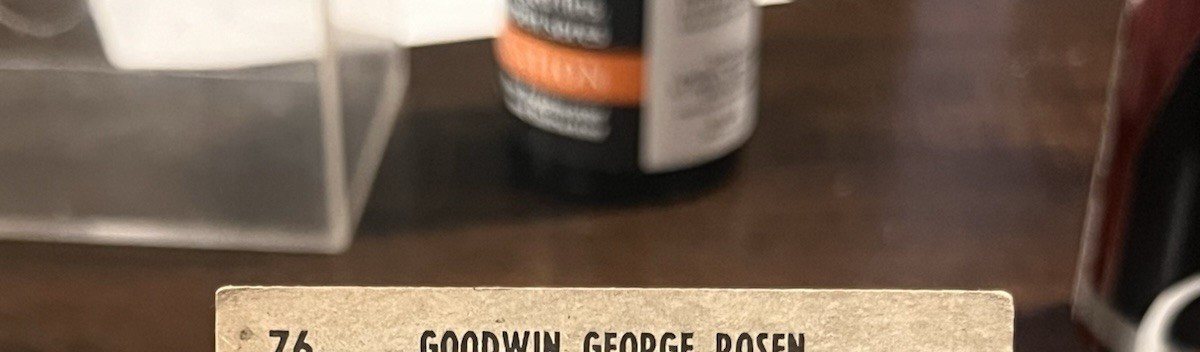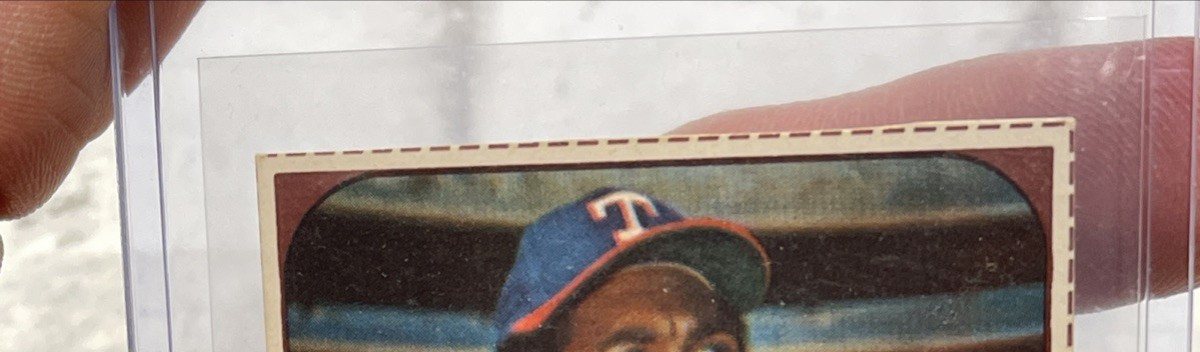
Topps
1938–present · United States
Topps is the longest continuously operating major American card manufacturer, maker of the 1952 Mickey Mantle rookie and the modern flagship, Chrome …
Every documented maker, publisher and brand owner behind sports cards, trading card games and entertainment cards — with founding dates, countries, brands, notable sets, image archives and the grading details that change how their cards are read.
Card manufacturing is easiest to read chronologically. Each era page groups the makers that defined it and explains what changed for collectors and graders.
The most documented entries in the current archive. Images are shown only when a local, cleared file exists.
1938–present · United States
Topps is the longest continuously operating major American card manufacturer, maker of the 1952 Mickey Mantle rookie and the modern flagship, Chrome …
1961–present · Italy
Panini is the Italian sticker and trading-card group whose American arm became the dominant NFL and NBA card licence holder from the late 2000s.
1875–1890 · United States
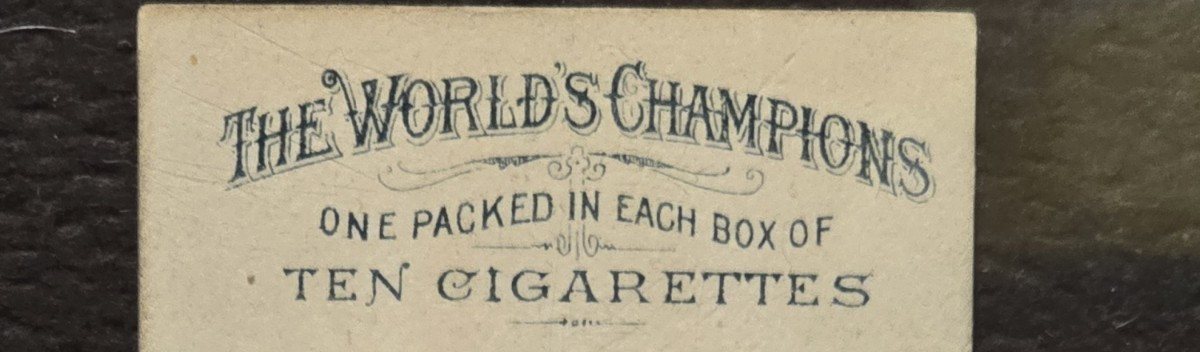
Allen & Ginter is the Richmond tobacco firm whose 1880s World’s Champions cards are among the most collected pre-war issues.
1954–present · United States
Donruss is the Memphis-born card brand that entered baseball in 1981 and now operates as a Panini America brand known for Rated Rookies, Elite and Op…
1989–present · United States
Hoops is the long-running NBA card brand launched in 1989 and now published by Panini America.
1988–present · United States
Score entered the market in 1988 with a low-cost baseball set, then became a defining football and basketball brand of the junk-wax era; it is now a …
1990–1995 · United States
SkyBox was the 1990s premium card maker whose Metal Universe, E-X and Flair lines pushed foil and design experimentation.
1948–present · United States
Bowman is the Philadelphia-era baseball brand that became Topps’ prospecting and rookie-autograph line.
Search by name, brand, game or country. The filters work without JavaScript; JavaScript simply applies them instantly.
39 entries
1988–1995 · United States
Action Packed was an embossed-card specialist known for 1980s and 1990s football and racing sets.
1875–1890 · United States
Allen & Ginter is the Richmond tobacco firm whose 1880s World’s Champions cards are among the most collected pre-war issues.
1890–1911 · United States
The American Tobacco Company issued the T206 set, the most famous tobacco-era baseball card issue and home of the Honus Wagner card.
1948–present · United States
Bowman is the Philadelphia-era baseball brand that became Topps’ prospecting and rookie-autograph line.
1987–1994 · United States
Classic was a draft-prospect card maker known for early cards of future stars across four sports.
1892–present · United States
Coca-Cola has commissioned sports and entertainment cards and promotional sets for more than a century.
1990–1998 · United States
Collector's Edge was a 1990s football-focused maker known for Edge Supreme and early serial-numbered inserts.
1954–present · United States
Donruss is the Memphis-born card brand that entered baseball in 1981 and now operates as a Panini America brand known for Rated Rookies, Elite and Op…
1901–1980 · United States
Exhibit Supply made arcade-style cards from the 1920s to the 1980s, including a long-running baseball photo series.
1989–present · United Kingdom
Futera is a British football and cricket card maker known for high-end autograph and memorabilia products.
1875–1890 · United States
Goodwin & Company produced the N172 Old Judge set, the defining nineteenth-century baseball card issue.
1933–1962 · United States
Goudey is the Boston gum company behind the 1933 Babe Ruth card and some of the most collected pre-war baseball sets.
1933–1941 · United States
Gum, Inc. produced the Play Ball baseball sets of 1939, 1940 and 1941, the last major pre-war baseball issues.
1893–1911 · United States
Hassan was an American Tobacco cigarette brand that carried T206 baseball cards.
1989–present · United States
Hoops is the long-running NBA card brand launched in 1989 and now published by Panini America.
1930–present · United States
Hostess issued baseball cards on snack-cake boxes in the 1970s, including a well-known 1975 set.
1998–2014 · Canada
In the Game was a Canadian hockey card maker known for vintage-themed memorabilia and autograph products.
1994–2010 · United States
Just Minors produced minor-league baseball autograph cards in the 1990s and 2000s.
1906–present · United States
Kellogg's commissioned food-issue sports cards, including the well-known 3-D baseball sets of the 1970s and 1980s.
1948–present · United States
Leaf is a vintage baseball brand revived as a modern autograph and prospect card maker.
1940–present · United States
McDonald's has used sports and entertainment cards in Happy Meals and promotional campaigns.
1946–1985 · Netherlands
Monty Gum was a Dutch card maker known for mid-century European sports and entertainment sets.
1933–1941 · United States
National Chicle produced the 1935 football set and the Diamond Stars baseball series, two of the most collected 1930s issues.
1985–2000 · United States
Pacific was the 1990s card maker behind Crown Royale, Revolution and a wide range of foil-heavy inserts.
1961–present · Italy
Panini is the Italian sticker and trading-card group whose American arm became the dominant NFL and NBA card licence holder from the late 2000s.
1951–1964 · Canada
Parkhurst was a Canadian hockey card maker whose 1950s sets are among the most collected vintage hockey issues.
1990–1998 · United States
Pinnacle Brands was the 1990s owner of Score and a premium card maker known for Select, Zenith and Summit.
1992–2011 · United States
Press Pass was a draft-and-prospect card maker known for football, basketball and racing autographs.
1989–1994 · United States
Pro Set was the 1989-1994 mass-market sports card maker known for huge print runs, parallel sets and a legendary volume of errors.
1995–present · United States
SAGE is a draft and prospect card brand known for autograph-heavy football and basketball sets.
1963–1993 · Australia
Scanlens was Australia’s defining football card maker, producing rugby league, VFL/AFL and cricket sets.
1988–present · United States
Score entered the market in 1988 with a low-cost baseball set, then became a defining football and basketball brand of the junk-wax era; it is now a …
1993–present · Australia
Select is the Australian card maker best known for AFL, NRL and cricket sets.
1990–1995 · United States
SkyBox was the 1990s premium card maker whose Metal Universe, E-X and Flair lines pushed foil and design experimentation.
1986–1990 · United States
Sportsflics was a 1980s novelty card maker known for holographic and motion-style cards.
1938–present · United States
Topps is the longest continuously operating major American card manufacturer, maker of the 1952 Mickey Mantle rookie and the modern flagship, Chrome …
1993–2012 · United States
TRISTAR produced minor-league and prospect sports cards with a focus on autographs.
1921–present · United States
Wonder Bread issued sports cards as bread-wrapper and package promotions.
No manufacturers match those filters.
Manufacturing centres and licensing hubs. Country pages list every documented maker in that market.
Sports cards, trading card games and entertainment lines have different production histories, licensing rules and grading expectations.
This directory uses a deliberately broad definition: a manufacturer is any company, publisher, licensor or brand owner that has issued or commissioned trading cards at commercial scale. That includes printers that sold cards as gum or tobacco promotions, sports-card companies that bought licences and printed under them, TCG publishers that design and distribute their own game, and entertainment licensors whose card rights moved between manufacturers.
The distinction matters for identification. A card can carry the name of a licensor, a publisher, a printer and a brand all at once. A 1990s football card may say NFL on the front, Topps in the copyright line and Stadium Club as the product name. The directory treats the manufacturer as the entity that produced the card, and lists brand lines as a separate field so a product name is never mistaken for a company.
The most reliable evidence is the copyright line on the back, not the logo on the front. Logos are often licensed marks owned by a league or a game publisher, and they can remain on a card after the manufacturer changes. Read the small print: the legal name, the city and the year usually identify the printer. On modern cards, the product code and the checklist design are additional evidence.
Three checks resolve most confusion. First, match the card to its set by year and design, then confirm the copyright line names the same company. Second, compare the card number with a published checklist: O-Pee-Chee and Topps editions can share artwork but use different numbering. Third, treat a brand line as a product, not a manufacturer — Bowman is a Topps brand, Prizm is a Panini brand, and O-Pee-Chee Platinum is an O-Pee-Chee product.
Manufacturers set the physical terms of the grade before a card reaches a grader. Stock thickness, coating, cutting equipment, print method and packing process determine what “centring”, “surface” and “edges” mean for a given card. A 1952 Topps card with 60/40 centring can be strong for its issue; a modern Prizm card with the same centring is noticeably off-centre. A chrome surface that scratches if you look at it cannot be judged with the same expectations as uncoated cardboard.
Manufacturer history also explains defects. Junk-wax-era production volume, vintage shears, foil curling and patch-card layering are manufacturer-specific conditions, not generic “wear”. When a profile lists grading notes, it is describing the defects that are normal for that maker's production, so you can tell a manufacturing flaw from post-pack damage.
Entries are compiled from public records, manufacturer histories and the PreGradeCards set catalog. Each profile has an explicit source list, an image provenance record for every file, a confidence level and an “unverified” field. A build validator checks the data contract, source references, local image files and tier-specific minimums for words, sources, timeline events, charts and media. An entry is published only after it passes the gate.
We do not sell placement, rank manufacturers or accept payment for a profile. Images are stored locally with a recorded source; we do not hotlink third-party images. Where a manufacturer's history is disputed or thin, the profile says so rather than filling the gap with invented detail.
If a founding date, country, brand line or set attribution is wrong, the correction link on the profile records the claim and the evidence. We review corrections against the cited sources and update the entry's “last verified” date when a change is made. Manufacturers, archivists and collectors with primary material — catalogs, trade advertising, pack wrappers, company histories — are the most useful sources for the long tail.
It is a sourced reference of companies, publishers and brand owners that have produced sports cards, trading card games and entertainment cards, with founding dates, countries, brands, notable sets, image archives and grading notes.
Candidates are compiled from public records and the PreGradeCards set catalog, then an editorial record is written with cited sources and an image archive. A validator checks sourcing and media minimums before an entry is published.
No. Entries describe documented history and collecting characteristics. We do not sell placement, and we do not present a manufacturer ranking.
Use the correction link on any profile or email the research desk. Substantive corrections are reviewed against the cited sources and the entry updated date is changed.